New mini-guide to help schools use AI legally
A new mini-guide from STIL makes it easier for schools to assess whether an AI solution is legal.

•
2 min read


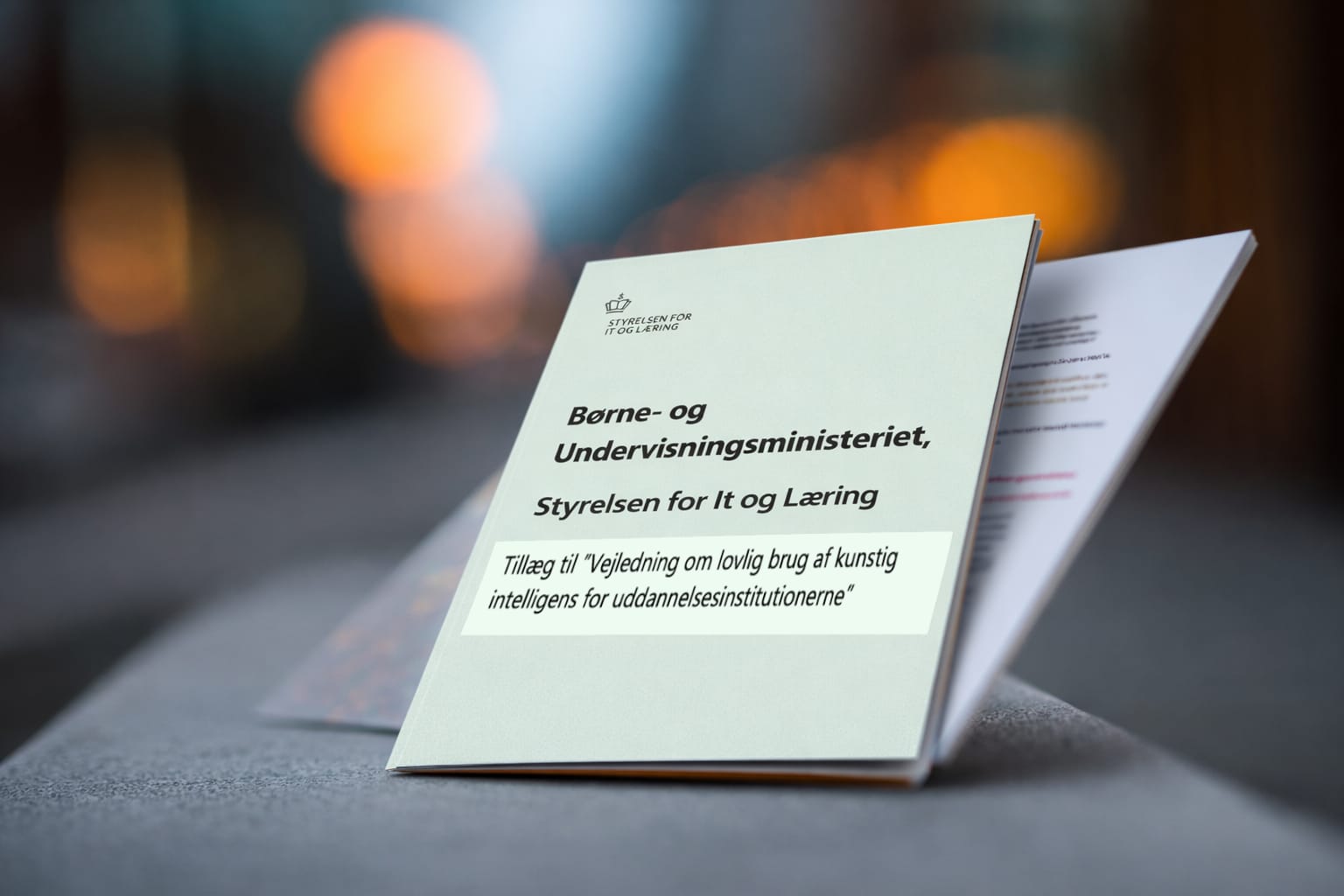
A new mini-guide from STIL makes it easier for schools to assess whether an AI solution is legal.
Styrelsen for It og Læring (STIL) (the Danish Agency for IT and Learning) has just published a mini-guide to make it easier for teachers, school leaders and other staff to assess whether the use of a specific AI solution is lawful. The mini-guide is a practical supplement to the earlier guidance on the lawful use of AI, which was primarily aimed at legal specialists and compliance officers.
The guide includes three case studies:
The mini-guide has been developed in collaboration with LISSI-netværket (the LISSI network) and Styrelsen for Undervisning og Kvalitet (STUK) (the Danish Agency for Education and Quality), which had requested practical, day-to-day examples.
As part of the materials, STIL has also prepared an Excel document that can be used as a guidance tool for the risk assessment of AI systems.
The mini-guide also makes it clear that the school's leadership has the final responsibility for how and when new AI tools are put into use.
Read more and download the guide here: