News of the week: Danes struggle to recognize AI content


•
10 min read



Another week has passed, filled with news about artificial intelligence. We have selected the most important ones that can be related to or have significance for the education sector.
The biggest story in Denmark has been the publication of the government's expert group's recommendations for developing and using artificial intelligence. While they are trying to rein in the technology, a report from SDU has made it clear that Danes have difficulty decoding when content is generated by artificial intelligence. That is why it is also interesting when the Office package with built-in artificial intelligence comes out in Danish, and technologies such as EMO - Emote Portrait Alive, come to influence the media image. Therefore, as a school, we must educate young people to understand the technologies. The Directorate of Education in Norway has prepared a page with advice on including artificial intelligence in schools. At the same time, Danske Gymnasier has published its new digitization strategy.
The newsletter has become a bit long, but quite a lot is happening now, and we hope you can follow along. In any case, we are glad that you are reading along, and we hope that the newsletter helps to illuminate both challenges and opportunities with technology in the education sector.
Happy reading
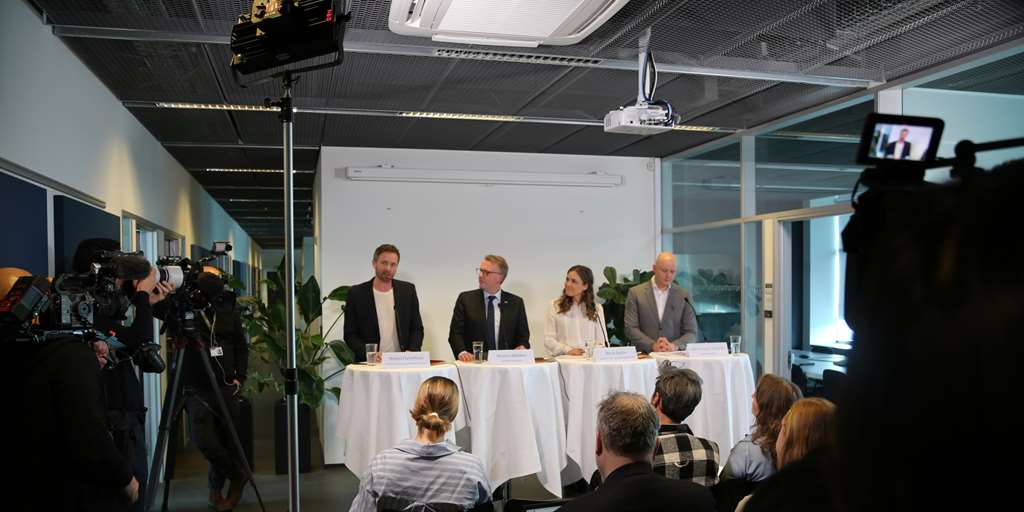
On 29 February, the expert group presented 13 recommendations on how society can take advantage of the possibilities of artificial intelligence but also ensure that the technology is not misused. The chairman of the expert group, Mikkel Flyverbom, a professor in digital transformations at CBS, tells DR that "all content will become potentially untrustworthy in the future" and that it will become more difficult to distinguish true from false.
Tech giants' co-responsibility for information credibility on their platforms
Protection of children and young people from harmful use and development of artificial intelligence on the services of tech giants
Regulation of tech giants' unauthorized use of copyrighted material
The market dominance of the tech giants in the development of artificial intelligence
Read all the recommendations below (in Danish):



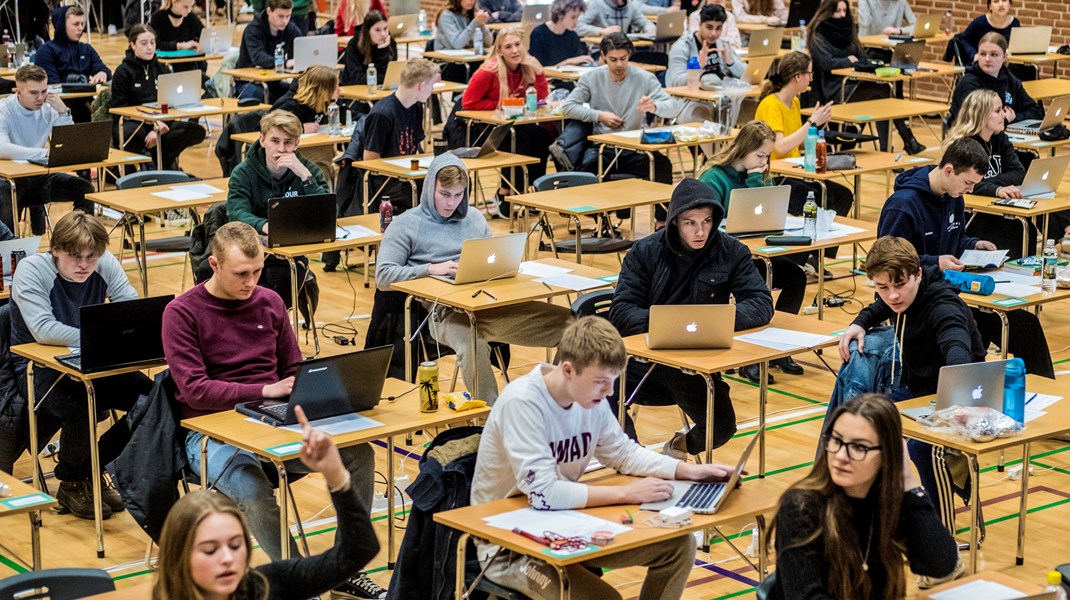
The Digital Democracy Centre, the Faculty of Social Sciences at the University of Southern Denmark, has published a new report examining Danes' understanding of and attitudes towards and using artificial intelligence.
The report highlights that the interest in and understanding of artificial intelligence is highest among men, the young, highly educated, and digitally skilled, which can help to reinforce digital inequalities. Danes generally find it challenging to identify AI-generated content. 71% of the population believes that generative artificial intelligence can exacerbate challenges with fake or misleading content.
In addition, the report shows that 40% of Danes have used generative artificial intelligence. Skepticism and lack of trust in AI are widespread, with only 15% of the population having a lot of confidence in the technology.
Read the entire report on SDU's website (in Danish).
Microsoft has announced that their version of artificial intelligence built into the office suite, Copilot, will be released in March/April. At the same time, Microsoft Copilot will also be available in their mobile app.

Last week, a new research paper from Alibaba's Institute for Intelligent Computing was also published with a new audio-to-video project. They have trained a model on over 150 million images and 250 hours of talking heads videos. EMO converts the sound and image into video, and tries to capture the small subtle facial movements that exist when people speak.
Below, we have selected two examples that show the new possibilities.
Character: Audrey Kathleen Hepburn-Ruston Vocal Source: Ed Sheeran - Perfect. Covered by Samantha Harvey
Character: AI Lady from SORA Vocal Source: Where We Go From Here with OpenAI's Mira Murati
We include it in our newsletter because EMO can be a good source if you have to work with deepfakes and misinformation as part of the teaching. Their many examples lead to an ethical and professional discussion about the possibilities for misuse of the technology.
See all examples on EMO's website.
 Linrui Tian

In Norway, the Directorate of Education has created a page where they share their collaboration with schools, municipalities, universities, and colleges within artificial intelligence. Here, they ask some basic questions about school and education:
On the page, you can find a lot of good advice about including artificial intelligence in school, and much of it can be translated into a Danish context.

Danske Gymnasier writes in their new strategy for digital technology that there is an urgent need to change both teaching and exam forms in high school. They suggest that all curricula be updated at least every five years and that an ambitious continuing education effort be launched so that upper secondary school teachers become familiar with the technological possibilities in their subject. In addition, they want digital technology understanding to be integrated into the existing subjects and at the same time introduced as a new compulsory subject in general upper secondary education.
Read the entire strategy here:
 Tekst_ Benjamin Mikkelsen Foto_ Keld Navntoft

 Bernard Marr
 Jacob Abernethy,

 Inga Strümke


 Noor Akbari

Below, we select articles or tools with a slightly more scientific perspective. These are articles that we read ourselves to stay up-to-date, and at the same time, we also know very well that they are not that interesting for most people.
Developments in language models aim to make them much more efficient. The latest method is to convert and develop language models to be 1-bit, which researchers from Microsoft Research and the University of the Chinese Academy of Sciences have developed. BitNet b1.58 has the same performance as the 16-bit models, but is more efficient in energy consumption, responsiveness, speed and processing power.
However, taking full advantage of 1-bit language models will require developing1 new specialized hardware.
 Shuming Ma

Artificial intelligence has been used in programming for a long time, and now, a new model called StarCoder2 has arrived. It is ServiceNow, Nvidia and Huggingface that have come together and created the model that is optimized for coding. The model has been trained on over 80 programming languages and has a large context window.
We recommend you check out their website if you are interested in programming.