This week's newsletter: Is AI cheating a symptom of a broken system?
High school students are using AI to cheat, but is it a sign of laziness or of an education system with misaligned priorities? The first newsletter of the year takes a close look at how we should use AI in teaching, and why the focus should be on learning rather than control.
This article has been machine-translated into English. Therefore, there may be nuances or errors in the content. The Danish version is always up-to-date and accurate. Read the original Danish article here.
Welcome back to a new year on Viden.AI. It is now 2026, and we remain focused on how artificial intelligence is affecting the education sector.
The first newsletter takes its starting point in AI‑related cheating, although I hope we can soon begin to see AI as more than just a tool for cheating. As with all technology, it can be used both for learning and to circumvent learning, but most importantly, we need to take a stance.
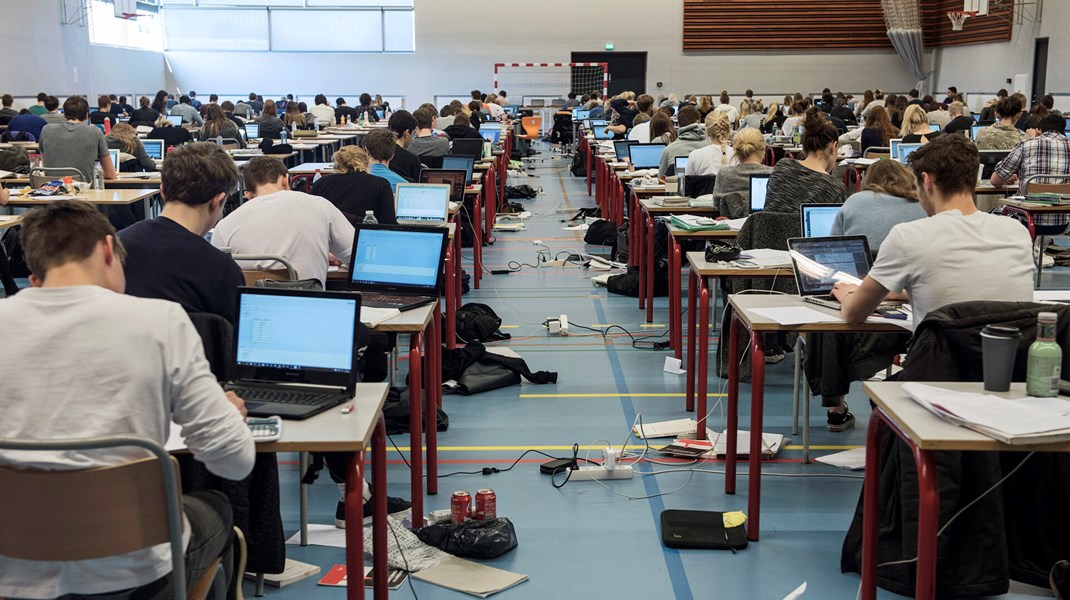
Shortly after the final newsletter in 2025, the story emerged about Romeo, who used ChatGPT to write 150 assignments in upper secondary school (gymnasium). He thought it was a favour to himself, but ultimately did not complete upper secondary school. The question is whether this is an expression of laziness, or a reaction to a system that rewards finished output rather than deep insight.
Associate Professor Christian Hendriksen warns in an opinion piece in Information against precisely this approach. Cheating is merely a symptom that we have built a school where efficiency and performance are valued higher than curiosity and relationships. For teachers, this can lead to what I have called professional grief – the feeling of loss when decades of subject expertise suddenly seem redundant.
Amid the zeal for reform, however, an important point is raised by the American researcher Frederick Hess. We must not forget traditional subject knowledge. He warns against blindly replacing disciplinary knowledge with “skills for the future” and maintains that deep knowledge in subjects such as history and mathematics is precisely the precondition for using AI critically.
Last week, Styrelsen for It og Læring (the Danish Agency for IT and Learning) published a mini‑guide that schools can use to navigate the lawful use of AI. At the same time, Linda Caroll has written an interesting article about how even if you wrote the prompt yourself, you don’t necessarily own the image, and you can get into trouble if it resembles others’ works too closely.
Upper secondary school student used ChatGPT for around 150 assignments
The upper secondary school student Romeo Sand Strawbridge used ChatGPT for around 150 submissions during his time in upper secondary school. After a verbal warning from a teacher, he chose to get to know the tool rather than stop using it. He did not, however, complete upper secondary school, which happened on the basis of a joint decision with the school. Today he works as a sales representative in a cybersecurity company.
Romeo does not believe it is cheating to use ChatGPT. He sees it instead as a necessary streamlining. He argues that books are outdated from the day they are printed.
Although the gymnasium is built on the idea of general education, Romeo believes that for many students it is a waste of time to read broadly if they already know their future career path. He therefore sees his use of AI as a favour he has done himself to be better able to succeed in the labour market.
Cheating with AI reveals problems in the education system’s values
Christian Hendriksen, Associate Professor at the Department of Operations Management at CBS (Copenhagen Business School), writes in an opinion piece in Information, that AI‑exposed cheating among students should not be seen as a technological problem, but as a symptom of an education system that rewards output rather than insight. He argues that the solution does not lie in more control, but in a fundamental rethinking of our institutions so that they foster curiosity, trust and real learning, rather than merely optimising performance and efficiency.
When students like Romeo Strawbridge use ChatGPT for submissions, it is not necessarily an expression of laziness or dishonesty, but a logical result of a system where the focus is on delivering the right output rather than understanding the content. AI makes it possible to “play the game” more effectively, and this therefore raises the question of whether the way we structure education and assessment is appropriate.
Christian Hendriksen believes we should not respond to AI with more control, but instead rethink our systems. It is about promoting curiosity, reflection and real learning rather than optimising for grades, KPIs and performance. If AI frees up cognitive capacity, we should spend it on what cannot be automated – namely relationships, conversations, meaningful wonder and engagement.
When AI becomes the scapegoat for a flawed education system
In a debate piece in Jyllands-Posten Daniella Alexandra Balagul writes that stories about cheating often dominate the public debate, but that we should look beyond isolated cases. She points out that many students do not use AI out of laziness, but as a tool to navigate an education system that requires a range of study skills they have not been taught.
She believes we have entirely forgotten to teach basic skills such as note‑taking and structuring one’s reading. She therefore argues that AI bans are merely symptomatic treatment for a teaching system in crisis, and that teachers and leaders should instead engage students in dialogue about what is missing in the teaching. Right now, the technology has become a necessity just to keep up.
Homework should be assessed as a process, not a product
I Gymnasieskolen teacher Anja Lea Olsen describes how AI has made a fundamental challenge in school practice visible. For years, we have used take-home assignments as a measure of pupils’ academic level without really knowing how they were produced. With AI’s ability to deliver well‑formulated and correct answers, this practice has become untenable. We no longer know whether the submitted product reflects the pupil’s own abilities.
AI is not the cause of the problem, however; it merely exposes an existing practice. Take‑home tasks have always been shaped by differing help, resources and time, yet have still been judged as comparable. Anja Lea Olsen therefore argues for a fundamental shift in forms of assessment from a focus on the product to a focus on the learning process.
She suggests working much more with process assessment through oral explanations, subject‑focused dialogues, drafts and feedback. At the same time, schools should increase the use of both diagnostic and summative tests under controlled conditions, so that grades are awarded on a more reliable basis.
AI thus becomes not a problem but an opportunity to rethink what we are actually assessing in teaching. Rather than responding with more control and mistrust, the piece urges us to focus on making thinking and subject knowledge visible in the process, and to let AI be an occasion to put learning, rather than performance, at the centre.
PROSA: AI should strengthen learning - not replace it
The IT trade union PROSA (the Danish IT workers’ union) urges Denmark to develop a national strategy for the use of AI in teaching. Union secretary Michael Holm believes that AI can revolutionise learning and text comprehension, but only if the technology is used properly. He warns against aimless use that can harm pupils’ critical thinking and understanding. Michael Holm points to Estonia as a model, where ChatGPT has been adapted for educational use and works by asking questions rather than delivering answers.
Instead of debating bans and cheating, the focus should be on how AI can support learning and motivation. He therefore proposes that pupils learn to code chatbots themselves, and that teachers are given the competences to use AI actively in their teaching, for example to create their own tests and learning sequences. Technological understanding should therefore be prioritised and placed on a par with subjects such as Danish and mathematics.
At the same time, PROSA warns against the commercial interests of the tech giants, which are often driven by data collection rather than by learning.
Skolelederforeningen (the Danish Association of School Leaders): Time for joint solutions for AI in teaching
Skolelederforeningens deputy chair Kristian Dissing Olesen writes in Skolemonitor that AI in teaching should be treated as an educational formation challenge on a par with reading, democracy and critical thinking. He notes that both parents and pupils have become far more aware of AI’s possibilities and risks, and that the school therefore has a responsibility to equip children to navigate a world in which AI plays a central role.
He highlights the need for joint Nordic solutions, because no institutions or countries can on their own handle AI’s impact on children’s learning and well‑being. Skolelederforeningen therefore proposes, among other things, a secure public AI system, new forms of examination, strengthened formation initiatives, upskilling for teachers and leaders, and regulated sandboxes where the technology can be tested without compromising children’s data and well‑being.
Feedback strengthens subject attainment more than grades
EVA (the Danish Evaluation Institute) writes in a commentary in Altinget that grades are only one among several assessment tools and are far from always the most suitable. As teaching is increasingly shaped by generative AI and practice‑based competence, ongoing feedback can have a far greater effect on pupils’ learning and well‑being.
EVA’s own studies show that, in particular, ongoing oral feedback strengthens motivation, academic self‑confidence and learning. It is the teacher’s presence and dialogue along the way during the work process that creates the best conditions for academic development.
The commentary highlights a pilot in the upper secondary school (gymnasium) sector in which first‑year students (1.g) received formative feedback instead of grades. The evaluation shows that this increased the likelihood that the students both completed gymnasium and started a higher education programme.
Focus on subject communities rather than more authority in classroom management
I Gymnasieskolen researcher Mette Alma Kjærsholm Boie from DPU (the Danish School of Education, Aarhus University) argues that increased authority and behaviour regulation are not the way forward in classroom management, especially when meeting today’s diverse student groups. Instead, she points to the need for greater pedagogical focus and shared subject processes in which pupils feel invited into meaningful learning communities.
Today’s pupils differ in motivation, academic level and well‑being, and therefore, according to Mette Alma Kjærsholm Boie, it is crucial that the teacher acts as a subject expert and participates in processes that work with questions, curiosity and source criticism rather than delivering ready‑made answers. This applies especially at a time when generative AI, such as ChatGPT, is changing the way pupils work with assignments.
Frederick Hess, researcher and editor for Education Next, argues that the advent of AI should not change schools’ focus on subject knowledge. On the contrary, he warns against the widespread belief that traditional subjects and knowledge have become irrelevant and that teaching should instead be about so‑called 21st‑century skills such as communication, creativity and collaboration.
According to Frederick Hess, it is a mistake to downplay subject content in favour of generic skills and technological understanding alone.
AI precisely presupposes that the user has deep subject knowledge in order to evaluate answers, pose relevant questions and use the technology responsibly. Frederick Hess therefore argues that schools should offer broad, content‑rich teaching in classic subjects such as history, mathematics, literature and science, not as the opposite of new skills but as a prerequisite for them.
New mini-guide to help schools with the lawful use of AI
Styrelsen for It og Læring (STIL, the Danish Agency for IT and Learning) has just published a mini-guide designed to make it easier for teachers, school leaders and other staff to assess whether the use of a specific AI solution is lawful. The mini-guide is a practical supplement to the earlier guidance on the lawful use of AI, which was aimed primarily at lawyers and compliance officers.
The guide contains three specific cases:
AI for feedback on student assignments
AI tools to detect cheating
AI-based facial recognition for attendance recording.
The mini-guide has been prepared in collaboration with LISSI-netværket and Styrelsen for Undervisning og Kvalitet (STUK, the Danish Agency for Education and Quality), in response to requests for concrete examples from everyday practice.
As part of the material, STIL has also produced an Excel document that can be used as an advisory tool for the risk assessment of AI systems.
The mini-guide also makes it clear that the school leadership has the final responsibility for how and when new AI tools are put to use.
Linda Caroll writes in a blog post about the legal and ethical pitfalls of using AI-generated images. It is an issue many users overlook. In the post she mentions, among other things, a designer who lost his job after a photographer discovered that an AI-generated book cover resembled his photograph. Although the designer believed he had created the work himself using prompts in Midjourney, he was, under the law, responsible for infringing copyright.
When you prompt an AI, you do not create a new work. Instead, you assemble a statistical collage of existing, often copyright-protected, images. This is where the trap springs. The user acquires no copyright in the image, but remains legally liable if the AI has "borrowed" too much from a living artist.
The article is a helpful reminder that we must move from naive use to critical judgement, including when it comes to images.
Estonia: Chatbots should ask questions – not give answers
Prosabladet reports on how Estonia has launched a national education programme called AI-springet. The aim is to ensure that AI is used actively for learning and not merely to give students ready-made answers.
At present, over 90 percent of Estonian upper secondary school (gymnasium) students use AI chatbots in their schoolwork, often to have tasks done for them. To counter this, Estonia is collaborating with companies such as OpenAI and local universities to adapt language models so that they guide students through questions rather than merely delivering ready-made answers.
The programme builds on research, including from MIT, showing that using AI for assignment writing can diminish cognitive understanding and critical thinking. The goal is therefore to avoid students developing so-called cognitive debt, which can hamper their learning in the long term.
The director of AI-springet, Ivo Visak, points out that the current grading system can motivate students to use shortcuts rather than engage in real learning, and stresses that motivation is crucial in the age of AI.
Finland has expanded its longstanding focus on media literacy in schools with a new priority area: AI literacy. From pre-school age, Finnish children already learn to recognise fake news and analyse media content. Now AI-specific teaching is being integrated so that children learn to spot AI-generated images, videos and texts—a skill that teachers and experts say is crucial in an era of widespread misinformation and deepfakes.
According to educators, it is important that students not only learn to recognise false content, but also understand how AI creates it. Teaching therefore focuses on practical tools and questions that help students assess the credibility of what they see online. Finnish schools and institutions work closely with both national and European security bodies to ensure that the population—from children to older adults—has the tools to withstand misinformation.