This Week's News: When AI Creates More Bureaucracy
New trends from the United States show AI being used to draft complaints that take extensive resources to handle. At the same time, three educators argue that exam rules need an overhaul and that we should make room for trust rather than control.
This article has been machine-translated into English. Therefore, there may be nuances or errors in the content. The Danish version is always up-to-date and accurate. Read the original Danish article here.
Here is this week's newsletter on artificial intelligence in education.
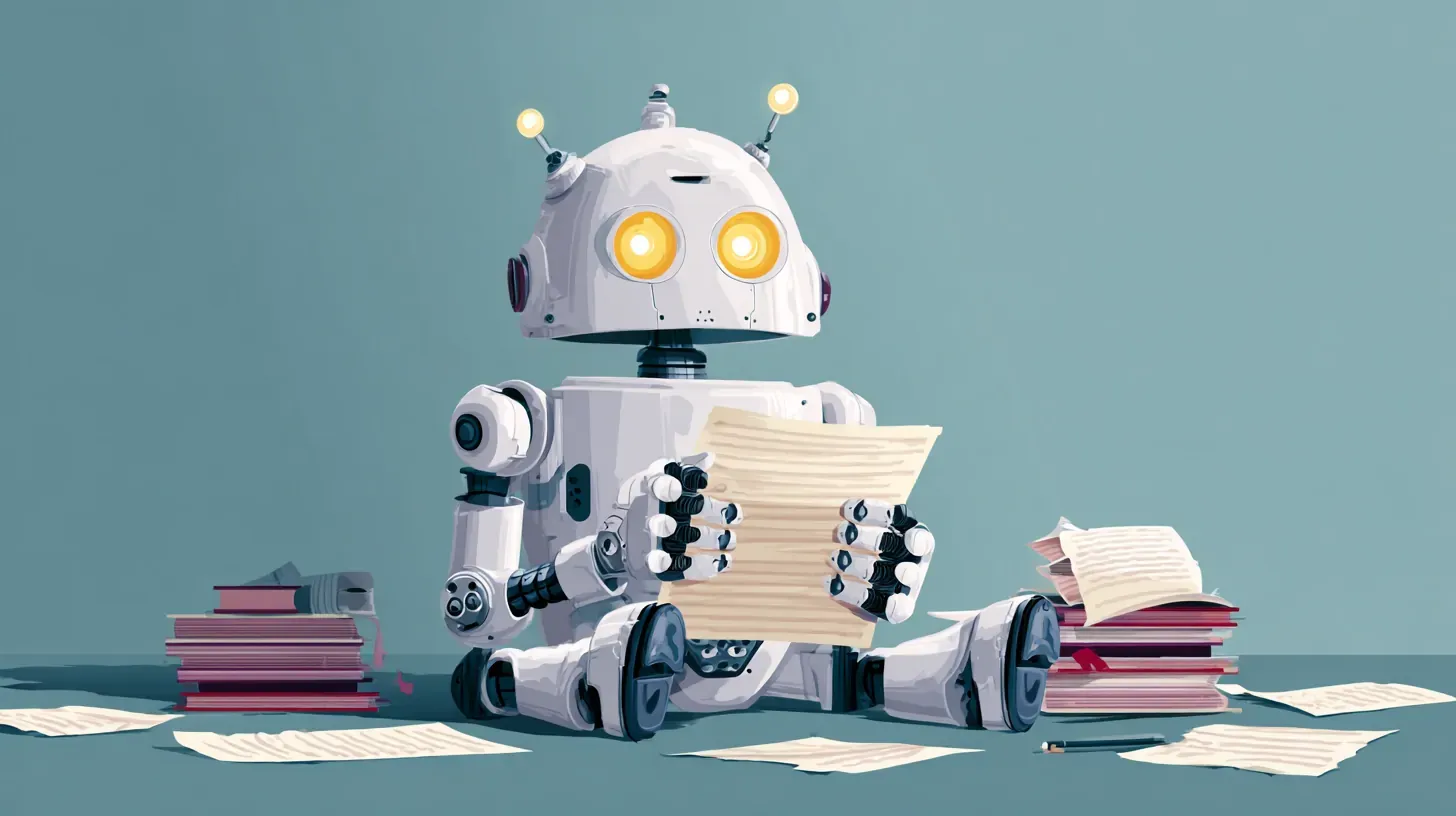
When we talk about AI, many see opportunities to use the technology to save time and avoid unnecessary bureaucracy. A new study from the US points in a different direction, as more schools have begun receiving AI-generated complaints from parents. It may take only 30 seconds to draft such a complaint, but it can take hours to unravel its legal aspects.
This week’s commentary digs a little deeper into what happens when AI is used to file complaints, and the challenges it creates.
There is still a need for action, and the chair of PROSA (the Danish Association of IT Professionals) writes in an opinion piece that AI should be put on the timetable.
Last week I published a new blog post about what happens when AI starts editing its own code to become a better version of itself. It is a bit of crystal-gazing about the future and how AI might come to affect teaching. But sometimes we also need to take the long view to understand where we may be heading.
AI creates new bureaucracy The idea that AI saves time is challenged by a new trend from the US, where the technology is used to generate lengthy, legalistic complaints against schools. This creates an imbalance: it is free to complain, but costly to process the case.
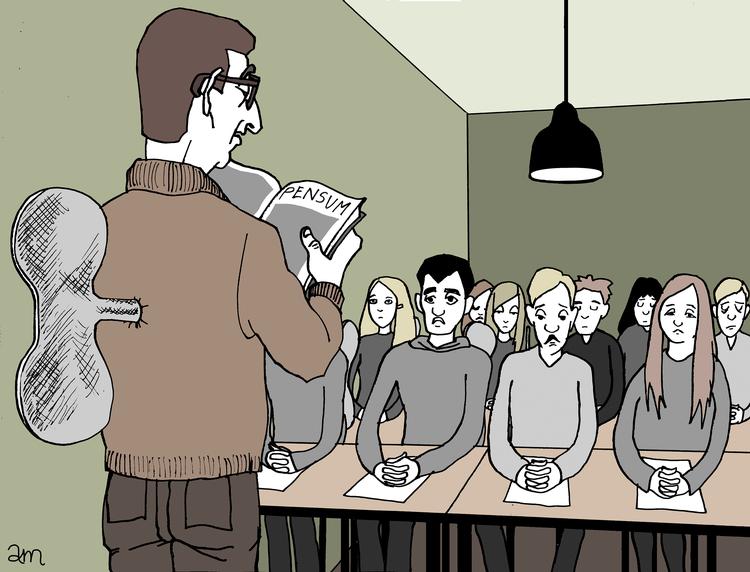
The struggle over AI in school While students call for renewal, teachers maintain that classical knowledge and technology-free spaces are the precondition for engaging critically with digital developments.
Enjoy the newsletter
USA: More schools are receiving AI-generated complaints
A new survey from the EdWeek Research Center shows that a growing share of educators report receiving complaints they believe were drafted with the help of AI. 6% of the educators surveyed are certain they have received an AI-generated complaint, while a further 10% suspect it but cannot prove it.
It is especially school and district leaders who report having received these complaints. Respectively, 16% and 19% state that this has definitely happened. Among teachers, only 2% are sure they have received an AI-generated complaint.
Many find that AI-generated complaints are often long, couched in legal language, and contain complex allegations that require substantial resources and legal review to answer.
One concrete example from a headteacher shows that a complaint which previously could be answered in 15 minutes can now take up to four hours, excluding the time a lawyer spends on the case. A quarter of the educators surveyed report that it takes longer to answer complaints thought to be AI-generated.
Teachers: Cut bureaucracy in upper secondary school exams
Calina Fuglsang-Damgaard, Kåre Blinkenberg and Bodil-Marie Gade, all teachers and members of GL’s Uddannelsesudvalg (GL’s Education Committee, the Danish association of upper secondary school teachers), write in Uddannelsesmonitor that the new, consolidated examination order should be used as an opportunity to simplify and modernise the examination system.
They point to the need for fewer bureaucratic rules and for clear and uniform frameworks for invigilation and the use of digital aids, and they warn against using examiners without a pedagogical background.
For example, the rules on internet access during exams are both complex and administratively burdensome. They propose a simplification under which students may use materials from teaching, as long as this does not include access to generative AI or any possibility of communication.
Finally, they call for examination formats to reflect the actual teaching to a greater extent and to allow more room for trust and subject knowledge.
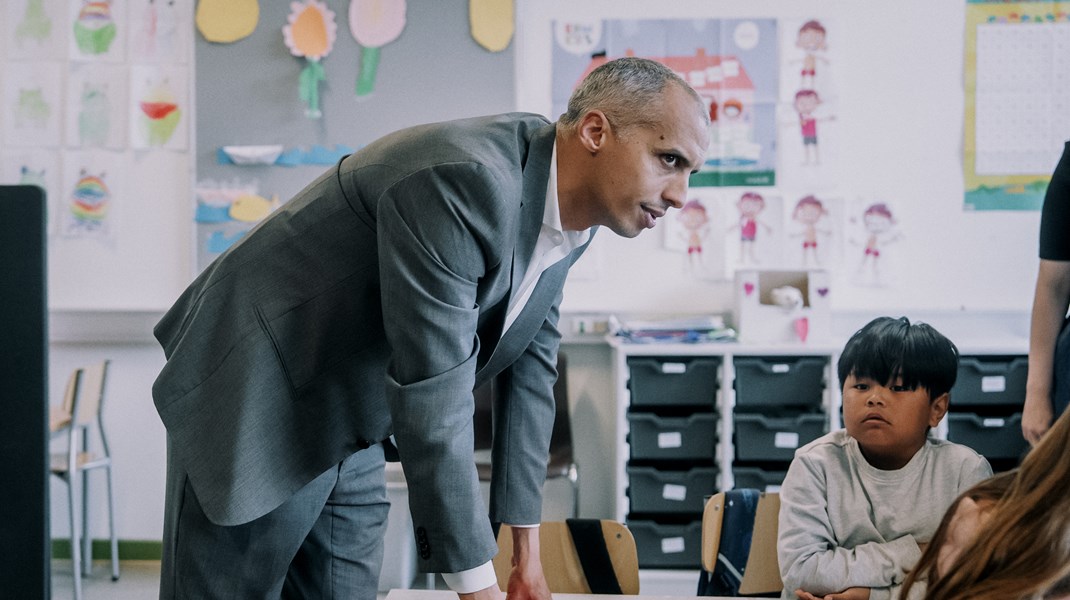
Niels Bertelsen, chair of Prosa (the Danish Association of IT Professionals), urges in a commentary the education minister and the digitalisation minister to prioritise technological literacy and AI in the Danish primary and lower secondary school (folkeskole). According to Niels Bertelsen, AI, and especially language models such as ChatGPT, have already become an integral part of young people’s everyday lives, both in school and in their free time. This means it is no longer a question of whether pupils should use AI, but how they learn to use it correctly and responsibly.
Niels Bertelsen criticises the lack of a Danish strategy for integrating AI into teaching, and he points out that other countries, such as the US and England, are already further ahead.
She stresses in particular that teaching in subjects such as economics and grammar is not just rote learning but conveys knowledge that equips pupils to understand and relate critically to society. Teaching Spanish verb conjugations, for example, helps strengthen linguistic confidence and the ability to cope without technological aids.
In the opinion piece she also defends the decision, in certain teaching situations, to minimise the use of technology to create presence, community and immersion.
At the same time, she rejects the idea of replacing teachers with AI and maintains that teaching is, first and foremost, about human encounters and critical thinking.
When pupils or parents use AI to generate a complaint, we as an educational institution face having to spend a disproportionate amount of resources dealing with it. I am sure many leaders will recognise this challenge, as we are already seeing it in Denmark.
In the past, a long, well‑written complaint demanded considerable effort from the sender. Today it takes just a 30‑second prompt. But for the recipient it still takes hours to read, understand and assess the legal aspects of the content.
The risk is that we end up in an administrative arms race, where schools feel compelled to use AI as well simply to keep up with the casework. But if we get to the point where one AI system writes the complaint and another AI system drafts the response, then we have, to a large extent, lost the human judgement and relationships that the school is built on.
Of course, one could turn it around and say that it also creates an opportunity for parents who are less confident with written language to formulate a well-argued complaint.
That is how it is with technology, and there are always both challenges and opportunities. But the consequence is that, inevitably, more time will need to be set aside for casework.
Here I see an effective solution in inviting the sender of the AI-generated complaint to an in-person meeting. The physical space is still free from artificial phrasing, and here we can talk about what the issue is really about.