This week's news: What do we want from AI once the safeguards are in place?
Following the Sorø meeting, the question is no longer just how schools curb AI-enabled cheating, but what we actually want to achieve with AI in education. This week's newsletter gathers new data, research, and debate on students' use of AI, learning, judgment, and teachers' competencies.
This article has been machine-translated into English. Therefore, there may be nuances or errors in the content. The Danish version is always up-to-date and accurate. Read the original Danish article here.
Here is this week’s newsletter on artificial intelligence in education.
But what, in fact, do we want from AI in school once the controls are in place?
The entire sector is talking about the challenges that AI brings into the classroom. Professor Ane Qvortrup from SDU (the University of Southern Denmark) has presented preliminary results from the evaluation of the ministry’s AI initiatives, showing that 37 percent of upper secondary school (gymnasium) students find it hard to do without AI when they start a written assignment. Only 17 percent believe that AI gets in the way of their learning.
That is exactly where ambitions collide with reality. Allan Kortnum, who is chair of Danske Erhvervsskoler og -Gymnasier – Lederne (the association of Danish vocational and upper secondary schools – leaders), criticises in Berlingske that gymnasium teachers can neither get nor buy access to the state’s own AI licence, because the funds are earmarked for other programmes.
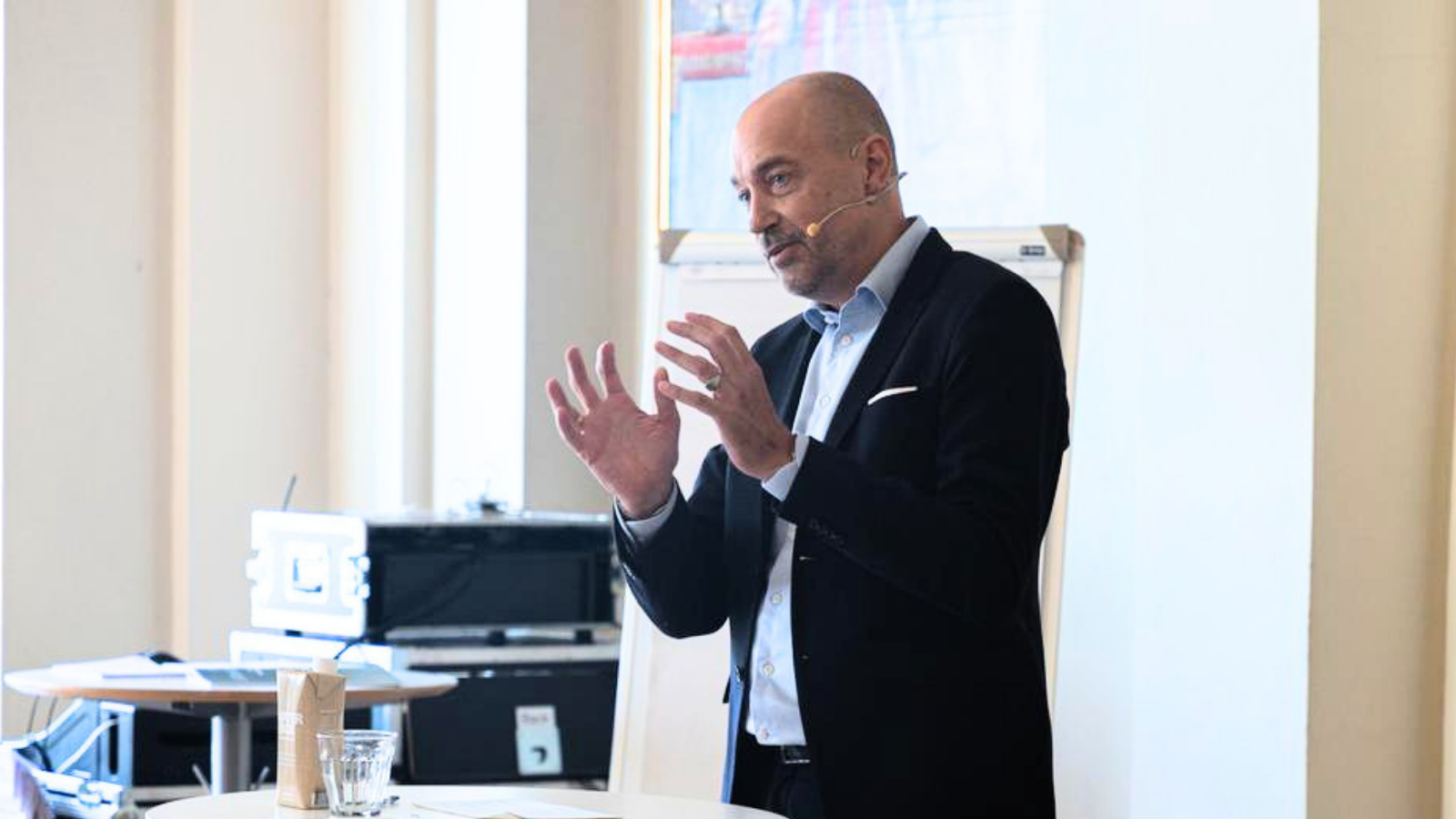
In the podcast Undervisning og Formidling, Anders Peter Nielsen asks Malte von Sehested about his impressions from the Sorø meeting, where politicians, teachers, student representatives and employers discussed AI in education.
Malte von Sehested especially highlights the need for rapid upskilling of teachers and for examinations that reflect what pupils are expected to be able to do.
According to Malte von Sehested’s account, 90–95 percent of gymnasium students have used AI, and 67 percent of them perceived their own use as cheating. He warns against students using AI to skip the learning work. Examples from Estonia and Norway also featured at the meeting, where participants discussed the need for swift action and ongoing adjustments.
The Sorø meeting debated the limits of AI in school
In a podcast from Altinget, Caroline Tranberg and Frida Flinch discuss the debate at the Sorø meeting. The Minister for Children and Education, Magnus Heunicke, asked the top of the education sector for input to a national AI strategy and presented his rapid-response package against AI cheating.
Gymnasiums to get screen monitoring and oral defence against AI cheating
Undervisningsministeriet (the Danish Ministry of Children and Education) states in a press release that Magnus Heunicke is launching three measures against AI cheating in gymnasiums. The package includes screen monitoring during exams, an oral defence of the SSO in hf, and more written assignments under controlled conditions at school.
Maja Bødtcher-Hansen, who is chair of Danske Gymnasier (the association of Danish gymnasiums), supports the measures but calls them insufficient. The government will later present a national strategy for AI in the school and education sector.
Unclear AI rules create mistrust among gymnasium students
On SDU's website, Professor Ane Qvortrup poses three questions that pupils, teachers and parents should all take an interest in. The article presents the preliminary results from the evaluation of Undervisningsministeriet’s four AI initiatives.
60 % state that "many use AI apps/chatbots to cheat on their schoolwork"
37 % answer "agree" or "strongly agree" that they "find it hard to do without AI tools to help me get started when I am working on written assignments"
27 %: "I find it hard to do without AI tools to find errors in my texts"
22 %: "I find it hard to do without AI tools to shorten texts"
Only 17 % think that "the use of AI tools stands in the way of my learning"
On this basis, Ane Qvortrup explains that it is, among other things, about having clear boundaries and ensuring that there is discussion of how AI is used and which rules apply, but also about how AI affects pupils’ academic well-being and how AI affects pupils’ written language.
One in four pupils use AI to get answers to school assignments
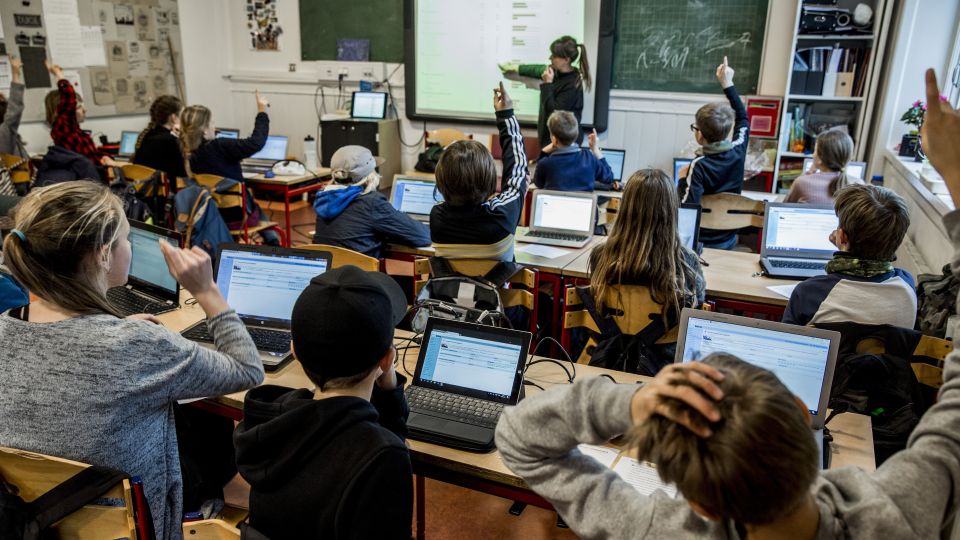
In Folkeskolen, Naja Dandanell writes about as yet unpublished figures from the Grundskolepanelet. They show that 44 percent of pupils in 6th and 8th grade use chatbots in their schoolwork, while 23 percent use them to get the answer instead of solving the task themselves.
The figures were presented at the Sorø meeting. Here, politicians called for faster work on a national strategy and discussed written assignments during school hours, guidelines, as well as exams and forms of assessment.
MIT study links ChatGPT to lower brain activity during essay writing
In Information, Louise Schou Drivsholm reviews a fast-tracked MIT study led by Nataliya Kosmyna. Here, 54 participants wrote short essays using ChatGPT, Google without AI, or entirely without help, while the researchers measured activity in 32 brain regions. The ChatGPT group showed significantly lower brain activity, performed worse, and felt less ownership of their texts.
Nataliya Kosmyna calls for faster regulation and warns that AI use may weaken critical thinking and problem-solving.
AI should be part of the curriculum, not a shortcut for pupils
In an opinion piece in Weekendavisen, former Minister for Children and Education Merete Riisager and Christian Stadil argue that AI should first and foremost be part of the curriculum. Pupils should understand how language models work, their biases and limitations, before using the technology as an academic aid.
Under the principle “Skills before screens”, the authors propose preparation at home and subject-focused processing in lessons. They also recommend written exams without digital aids, oral exams with a focus on argumentation, as well as controlled case-based exams.
Upper secondary school (gymnasium) should teach pupils to assess AI
In an op-ed in Information, senior lecturer Søren Otto writes that the debate about ChatGPT and bans overshadows the question of the gymnasium’s role in a society shaped by AI. He argues that access to information is no longer the bottleneck. The school must instead develop pupils’ critical judgement, so they can assess the quality of, and the premises behind, AI-generated answers.
Sine Zambach wants to strengthen teachers’ AI competences
In Uddannelsesmonitor, assistant professor and AI researcher Sine Zambach calls for three areas of action in the government’s forthcoming national AI strategy. Teachers need better AI competences, exam formats should be adjusted, and pupils’ use of AI should be given clear boundaries.
Sine Zambach suggests, among other things, more oral defences so that take-home assignments do not stand alone. She also highlights pedagogical and technical tools that ask pupils questions and challenge them instead of delivering ready-made answers.
Gymnasium teachers excluded from the state’s AI driving licence
In Berlingske, Allan Kortnum, chair of Danske Erhvervsskoler og -Gymnasier – Lederne, criticises the fact that gymnasium teachers can neither obtain nor buy access to the state’s AI driving licence. The course is already used by teachers in vocational and labour-market education programmes.
Center for IT i undervisningen (Centre for IT in Teaching) explains that the funds for the platform are earmarked for vocational and labour-market education programmes.
Since its launch in 2025, 3,000 teachers have started the course, and the centre has recorded 7,390 logins. Styrelsen for Undervisning og Kvalitet (the Danish Agency for Education and Quality) states that the money cannot be used for gymnasium programmes under the current framework.
Ingeniøren warns against ChatGPT in the Danish primary and lower secondary school (folkeskole)
Ingeniøren warns in its editorial against giving pupils in the Danish primary and lower secondary school (folkeskole) free access to ChatGPT and similar generative AI. The message is that premature use risks undermining basic skills. They recommend drawing on the experience from the 2012–2016 iPad rollout and demand documented gains before AI is rolled out widely in the folkeskole.
Include ed-tech suppliers in the school’s AI strategy
DI Digital urges politicians to involve edtech providers as the government negotiates a national AI strategy for the school and education sector. The organisation warns against a strategy made up solely of restrictions and calls for knowledge about the technology’s possibilities and limitations in teaching. DI Digital also highlights the need to provide continuing professional development (CPD) for teachers and help them get started with the tools.