Everyone is waiting for a national AI strategy. Meanwhile, high school students are holding their own AI summit, and Birgitte Vedersø is urging teachers to change their teaching now. Because the problem isn't just cheating. It's the assignments we give.
This article has been machine-translated into English. Therefore, there may be nuances or errors in the content. The Danish version is always up-to-date and accurate. Read the original Danish article here.
Here is this week’s newsletter on artificial intelligence in education, where we have selected the most important news and articles.
Minister for Children and Education Magnus Heunicke has signalled a step change, and the government has promised a national strategy for AI in the education sector. We have yet to see the strategy, while everyday life continues in schools.
That said, many are thinking carefully about what schools can do in the meantime. Here I have gathered some of the best suggestions.
It is striking that upper secondary school (gymnasium) students are not waiting for curricula and exams to be adapted to AI. On Monday, Danske Gymnasieelevers Sammenslutning (the Danish Upper Secondary School Students’ Association) held its first AI summit at Aarhus University with nine recommendations on the table. Among them are teaching in, with and about AI across all three gymnasium years, consistent rules across schools, and a national procedure when a student is accused of cheating.
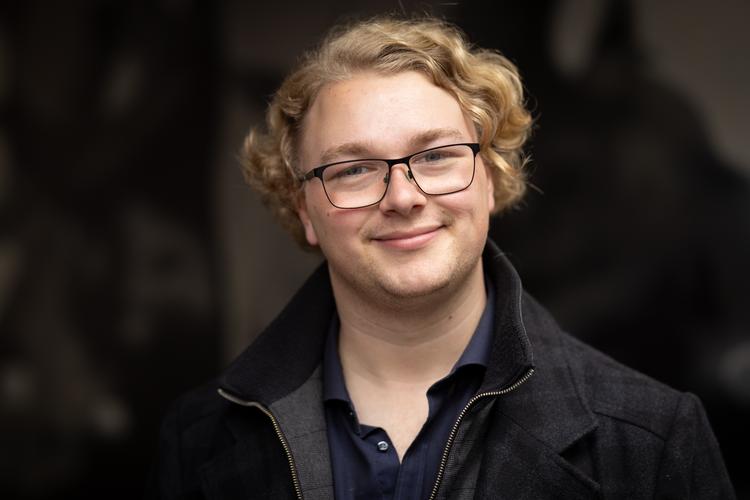
And I think it is important that we listen to voices like Oscar Tønsberg Hoffmann, who has himself experienced being accused of cheating. In Politiken he says that in 2.g he was given a grade of −3 for a biology assignment because he had used a term that had not been covered in class. He appealed and received a 10 in a new assessment.
Fonden for Entreprenørskab (the Danish Foundation for Entrepreneurship) has also set to work. On 7 September, the foundation gathered around 50 experts from education, research, technology, politics and business for the first of three roundtable discussions on AI and learning. I opened the day with a presentation on when AI strengthens learning, and when it weakens it. My answer was that the difference does not lie in whether AI is involved, but in who is doing the thinking. And that we need to know what is indispensable in school before we ask where the machine belongs.
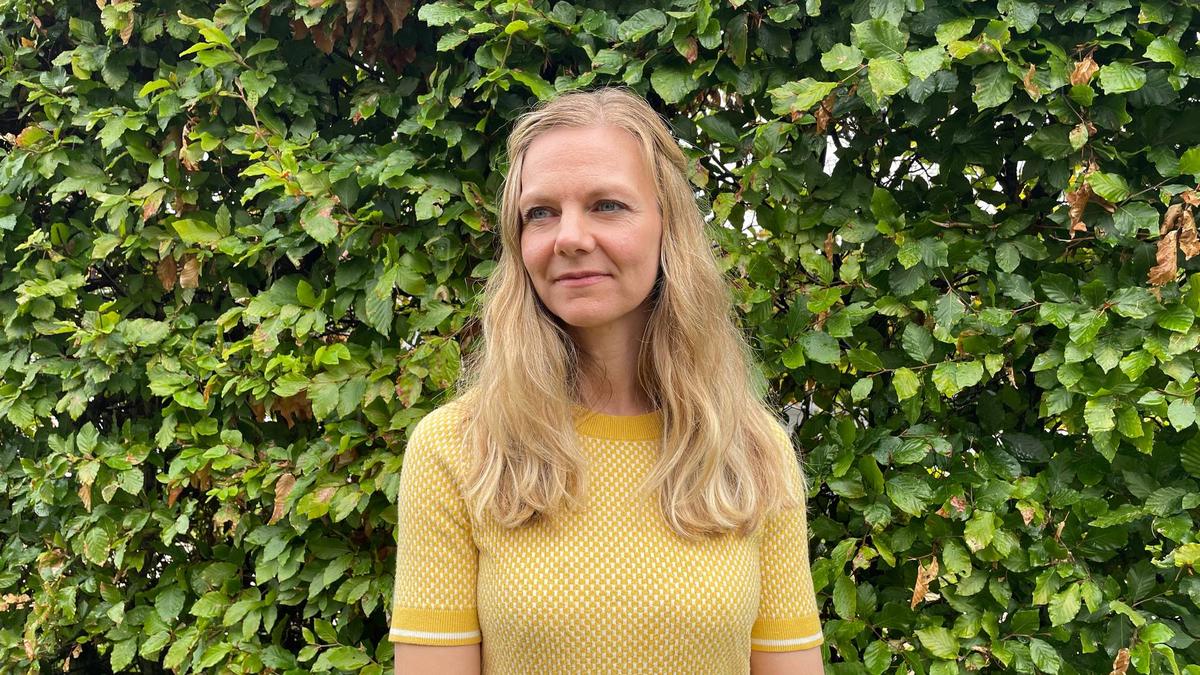
In Gymnasieskolen, Birgitte Vedersø, who led the expert group on ChatGPT, urges teachers to change their teaching now, even though the exam formats are the same. The occasion is a survey of 647 upper secondary school teachers. More than half say that AI makes the purpose of the teaching profession disappear, and more than one in four are considering leaving the job. On students’ shortcuts she says: “When they can use the technology to take shortcuts, it is because we are setting them the wrong tasks.”
I must admit, though, that it is sometimes easier said than done, because it requires both knowledge of the technology and time to adapt tasks. And perhaps this is precisely where a strategy could really make a difference, if teachers were given both continuing professional development and time to put the new knowledge into practice.
What is at stake for teachers can be read in the piece by upper secondary school teacher Merle Fabricius Westergaard, who has taught for 17 years. She says she leaves lessons with a knot in her stomach, and that AI has led to less dialogue and more mistrust in the teaching profession.
The message not to wait is repeated, by the way, in the book Strategic approaches to AI in school, which Malte von Sehested, Claus Scheuer-Larsen and I have written. Skolemonitor mentions the book this week. Here, Malte von Sehested describes work with AI as a school development project and not as an IT project.
But if the problem is the wrong kinds of tasks, what do the right ones look like? This week there are several good suggestions.
In Weekendavisen, Lise Dissing Møller, Marie Falkesgaard Slot and Thorkild Hanghøj give three examples from their own research and teaching. A Year 6 class first writes themselves and then guesses where in the text the machine takes over. A Year 9 class collects data from a local biotope and, with the help of AI, builds a simulation of the biotope’s possible futures. In a 1.g class, the students discover, for example, that Gemini reads the ballad “Torbens datter” through modern norms and swaps the names around.
Google Research also presents an experiment in which teachers use AI to build interactive simulations for their own teaching. More than 30 of the simulations are freely available and have all been reviewed by teachers.
But there is also good reason to hold on to what pupils should be able to do without AI. DPU (the Danish School of Education at Aarhus University) has published a research overview of 135 studies on children and young people's motivation to write, written by postdoctoral researcher Stine Heger and associate professor Kristine Kabel. Kristine Kabel warns that pupils who outsource their writing to AI also pay with their reading. The overview offers eight recommendations for how enjoyment and motivation to write can be strengthened among children and young people at school and in their free time.
We need frameworks and a strategy, but we cannot wait for them. The task right now is both to develop teaching in which AI makes academic sense, and to hold on to the parts of learning that pupils must go through themselves.
According to Red Barnet (Save the Children Denmark) and TrygFonden (the Tryg Foundation), one in seven children aged 9 to 17 has used an AI chatbot as a trusted confidant.
In this week's commentary, I look at which way we are directing the technology.
Enjoy the newsletter.
This week's commentary: The heart rate must not rise by more than 10 percent
There is a story from this week that made me think about which way we are directing the technology.
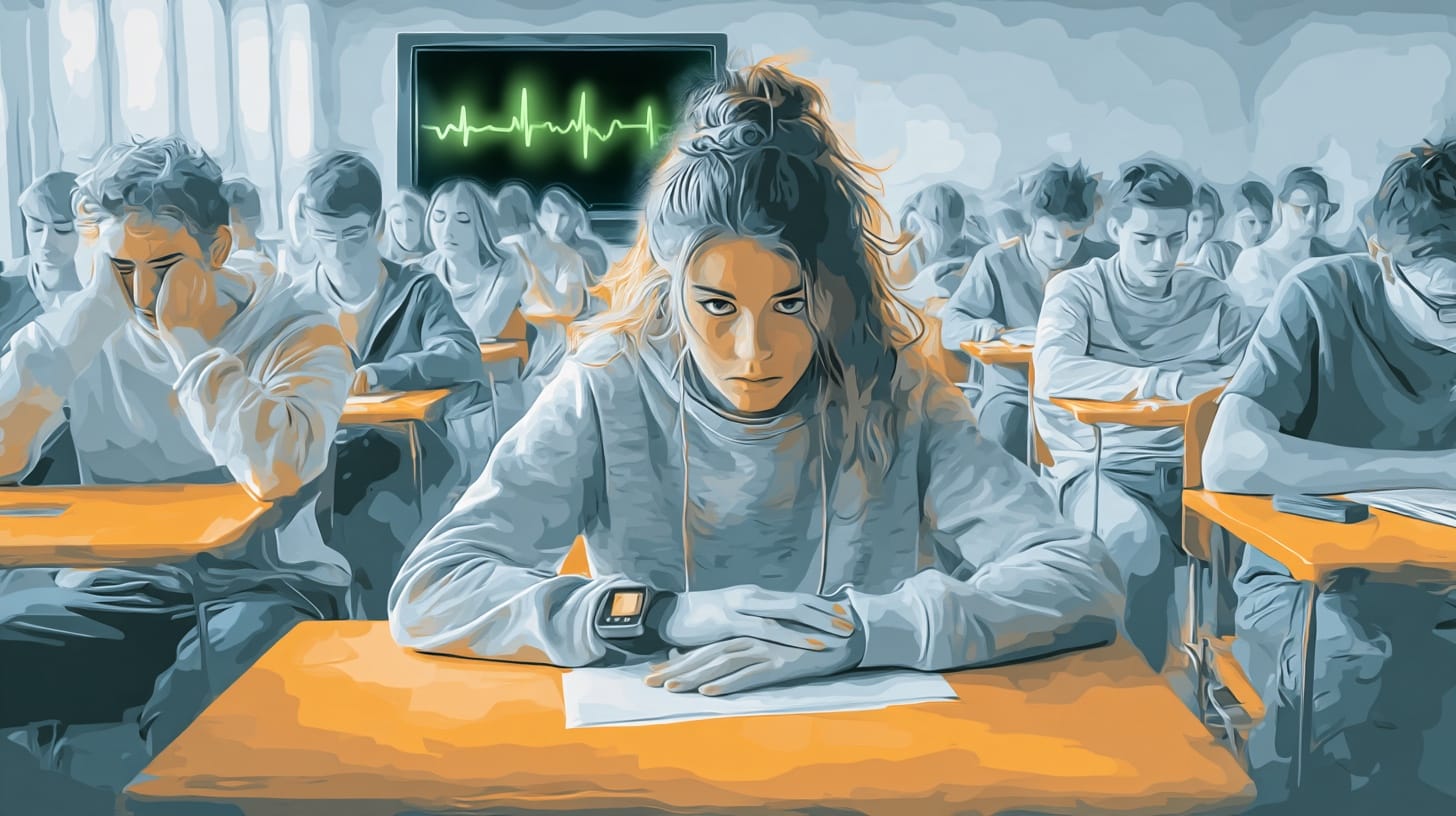
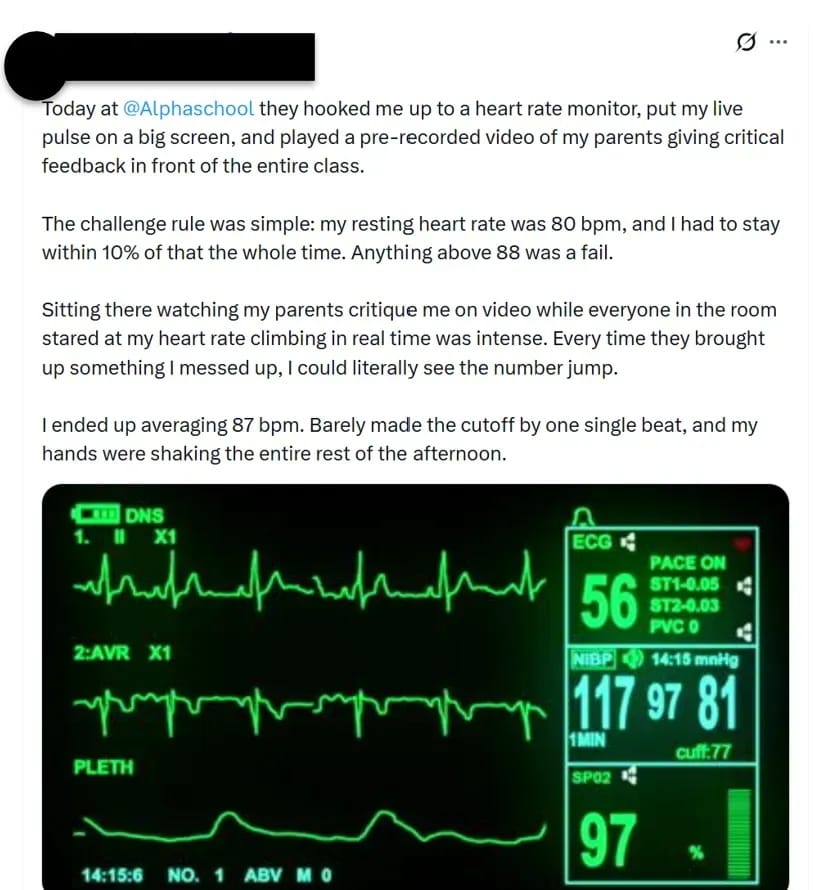
Futurism reproduces a post from a pupil who is sitting in front of the class with a heart-rate monitor, while a recording of the pupil's parents telling them off runs on the screen.
The resting heart rate is 80, and it may rise by at most 10 percent, so anything over 88 is a fail.
The pupil lands at 87 and says afterwards that their hands shook for the rest of the afternoon.
The post is from a prospective pupil at the American private school chain Alpha School, which markets itself with an AI-based teaching model. The test is part of an eight-week admissions programme for high school students.
In the same programme, they must complete an entire module of an Advanced Placement course in five days, without a teacher and only with chatbots. Futurism writes that it is unclear what pupils are supposed to learn from the heart-rate test, and the school has not responded to the criticism. One pupil simply explains that the programme is meant to prove that you deserve your place at the school.
In China, the device hangs from the ceiling, and Bangkok Post described in June how Chinese schools are installing AI cameras in classrooms. It began in 2018 with facial recognition at the entrance. Now the systems follow lessons and record attendance, participation and pupils' concentration. The newspaper cautions that it is unclear how widespread the systems are, but they do exist.
Alpha School and the Chinese classrooms are far apart, and both are far from our Danish school. Yet they have something in common, because in both places the technology is turned towards the pupil. It measures pulse and concentration, but it does not teach. And I think that behind every measurement lies an answer to what school is for. At Alpha School it is about selecting the right pupils, and in China about controlling their attention.
When I read the two articles, it was easy to shake my head, but we have our own, milder versions. We are monitoring more and more in everyday teaching when pupils have to show what they can do, and in exams, for example, ExamCookie follows along on their own computer. Here, too, the technology is turned towards the pupil.
I myself have walked among the pupils during the written exams, where they were very nervous about what was being monitored. Not because they wanted to cheat, but because they were afraid they had overlooked something in the rules and would therefore be suspected of cheating. And then the pulse rises even more during an exam.
I have nothing against keeping an eye on pupils during a test, because we have always done that with invigilators. But I think the rules should be the same at all schools so that pupils know what is being monitored. I only become concerned when surveillance moves into everyday teaching because we have no other answers to AI. Then it is the tasks and forms of assessment we need to change.
It is fine for the pulse to rise at school, but it should be because pupils have encountered intellectually engaging teaching, not because someone is watching them.