This Week's News: The strategy is coming—but what should it actually do?
The government has put AI at the top of the education agenda, and a national strategy is on the way. But what does the strategy actually need to do to be effective? Estonia has a clear piece of advice: Don't forget the teachers.
This article has been machine-translated into English. Therefore, there may be nuances or errors in the content. The Danish version is always up-to-date and accurate. Read the original Danish article here.
Here is this week’s newsletter on artificial intelligence in education.
As always, we write when everyday life allows, and therefore some time has passed since the last newsletter. Part of the reason is that we have thrown ourselves into a couple of book projects, and have therefore had to push other things aside.
Claus, together with Malene Moesgaard Ludvigsen and Michael Møller, has written a new book for media studies, which also includes a chapter on the use of artificial intelligence in media production. The book is available here:
At the same time, we have two other book projects at the printers, which will be published shortly, and we look forward to telling you about them.
Although we have been a bit quiet on the blog, there has been a lot of news over the past 14 days. Remember that you can always follow the overview here.
The new government has put AI at the top of the education agenda, and a national strategy is on the way. We have examined what the government platform says about artificial intelligence in school and compiled it in an article. Christina Egelund, who was reappointed as Minister for Higher Education, Science and Digitalisation, stated at Folkemødet (the annual Danish democracy festival), that AI is currently the sector’s biggest challenge. Therefore, the focal point of this week’s newsletter is also what a strategy actually needs to do in order to work.
There has been broad support for the direction. Professor Ole Sejer Iversen calls the plan to make technology comprehension a separate subject a piece of good news, and both Danske Gymnasier (the Danish Association of Upper Secondary Schools), Dansk Erhverv (the Danish Chamber of Commerce) and Københavns Professionshøjskole (University College Copenhagen) back it. Magnus Hermann from Danske Skoleelever (the National Union of School Students) says, however, that the fine words must be translated into teaching, and that teachers must receive in-service training.
It was therefore also interesting to read Gymnasieskolen’s article, where they travelled to Tallinn in Estonia to hear about the AI Leap project, which is completing its first year. The advice to Denmark is clear: Include the teachers from day one.
In a series of articles, Gymnasieskolen has asked how we learn with AI. Here I give my take together with Carsten Bergenholtz from Aarhus Universitet (Aarhus University) and Tine Wirenfeldt Jensen from DPU (the Danish School of Education).
However, there are also concerns about what happens when students outsource their thinking to a machine. Anders Frikke, chair of Gymnasielærerne (the Danish Upper Secondary Teachers’ Association), fears precisely that, and he calls the current exam system defenceless in the face of AI.
While the strategy is being sketched at national level, the upper secondary sector is fighting to be heard. The new government platform barely mentions the upper secondary schools, and while Maja Bødtcher-Hansen sees the silence as reassurance, Anders Frikke is disappointed.
We also came across two other interesting articles:
Uddannelsesmonitor describes how the reappointed Minister for Higher Education, Science and Digitalisation Christina Egelund (M), between two debates at Folkemødet, acknowledges that AI is currently the education sector’s biggest challenge.
The government will introduce a new national AI strategy which, according to the government platform, is to be both a “safeguard” against inappropriate use and a way to seize the opportunities of the technology. Which ministry will act as lead coordinator is still undecided, but Egelund makes it clear that her own portfolio will be a driving force and will collaborate with several ministries.
Broad support for a national strategy for AI in school
In Magasinet Skolen, reactions are gathered to the government’s plan for a national strategy for AI across the entire school and education sector, where a central element is to make technology comprehension a separate, timetabled subject in the folkeskole. Ole Sejer Iversen, professor and head of Det Nationale Videnscenter for Digital Teknologiforståelse (the National Knowledge Centre for Digital Technology Understanding) at Aarhus Universitet, calls the announcement a piece of good news and highlights the need to strengthen technology comprehension in the folkeskole.
Magnus Hermann from Danske Skoleelever (the National Union of School Students) underlines that the fine words must be turned into concrete teaching, and demands that teachers receive in-service training.
Maja Bødtcher-Hansen from Danske Gymnasier (the Danish Association of Upper Secondary Schools) calls the situation acute and, in the longer term, wants a new compulsory subject in digital technology comprehension in the upper secondary school (gymnasium).
Dean Jakob Harder from Københavns Professionshøjskole (University College Copenhagen) praises the government for taking a holistic perspective across compulsory schooling, youth education and higher education.
Mads Eriksen Storm from Dansk Erhverv (the Danish Chamber of Commerce) sees the strategy as crucial for Denmark’s competitiveness.
Estonia warns against an AI push without the teachers
Gymnasieskolen has travelled to Estonia, where the national programme AI Leap is about to complete its first year. The programme is to teach students and teachers to use AI so that the technology strengthens learning instead of replacing it. At the pilot school Rae Gümnaasium outside Tallinn, students work with a specially developed tool that does not give direct answers, but asks follow-up questions.
Students are already using AI without clear frameworks
In a series of articles, Gymnasieskolen has asked how we learn with AI. Associate Professor Carsten Bergenholtz from Aarhus Universitet says that the problem is not that AI is bad, but that it is too good and solves too many of the tasks for students. External Lecturer Tine Wirenfeldt Jensen from DPU (the Danish School of Education) warns against making AI use a taboo and urges teachers to enter into the conversation rather than leaving students on their own. The shared point is that learning requires friction, and that it is the teacher who must set the framework.
I have contributed my own perspective, and I believe a strategy should be a framework and a direction, not fixed rules that quickly become outdated. The framework must be followed up with time and pedagogical support. Otherwise, the responsibility lands with the individual teacher. You can find the article here.
GL chair fears the outsourcing of students’ thinking
In Uddannelsesmonitor, Anders Frikke, chair of GL (Gymnasieskolernes Lærerforening – the Danish Association of Upper Secondary School Teachers), responds to associate professor Casper Thode Mortensen’s criticism that GL has been passive on AI in the upper secondary school (gymnasium). He rejects the criticism and points out that GL has made its mark in the public debate, helped secure a national AI strategy in the government platform, and gathered experience from, among others, Estonia, where a digital strategy is combined with a strong focus on teacher competences.
He does, however, fear for students’ ability to think in a structured way when they outsource their thinking to a machine. At the same time, he believes that the current examination system is defenceless against AI.
Upper secondary sector demands answers on AI and epx
Gymnasieskolen has spoken to three key stakeholders about the new government platform, which says almost nothing directly about the gymnasiums. The chair of Danske Gymnasier (the Danish Association of Upper Secondary Schools), Maja Bødtcher-Hansen, reads the silence as calm and support for the adopted reforms. GL’s chair, Anders Frikke, is conversely disappointed that the gymnasiums are hardly mentioned, and he fears that the Danish primary and lower secondary school (folkeskole) will dominate the agenda of the new Minister for Children and Education, Magnus Heunicke. At Danske Erhvervsskoler og -Gymnasier (the Danish Association of Vocational Schools and Gymnasiums), chair Allan Kortnum warns that the time pressure towards 2030 could make epx “a copy rather than an original”.
Thousands of fake sources found in medical studies
On Videnskab.dk, Eldrid Borgan from forskning.no writes about a new study in The Lancet, which reviewed 2.5 million biomedical articles and found 4,046 fabricated references across 2,810 articles. The problem has grown markedly since 2023: from around 4 fake references per 10,000 articles to 56.9 per 10,000 at the beginning of 2026. Almost none of the articles have since been corrected. An international research team led by Maxim Topaz from Columbia University is behind the study, and he stresses that they have only scratched the surface.
Tove Godskesen, professor at Nord University, calls the hallucinated references a technical problem that becomes a moral one when the researcher does not read the source they cite anyway. She warns that references to research that does not exist can turn into “zombie studies” that live on and are cited again and again.
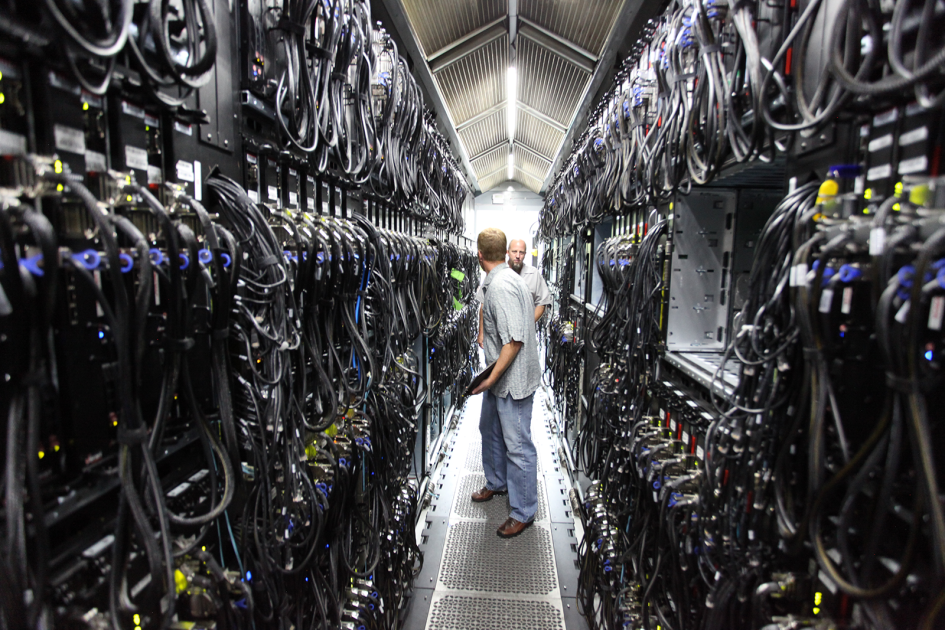
A new report from the UN University’s institute UNU-INWEH (United Nations University Institute for Water, Environment and Health) quantifies the environmental footprint that AI leaves through its energy use. The point is that AI is not just code, but also physical infrastructure in the form of data centres, chips, cooling water and electricity. The researchers, for the first time, quantify carbon, water and land together and stress that a green power source does not automatically mean low water or land use.
Key figures from the report:
The world’s data centres used around 448 TWh of electricity in 2025. If they were a country, they would be the world’s 11th-largest electricity consumer.
AI accounted for roughly 20 per cent of that consumption and is expected to reach 40 per cent in 2030.
Everyday use, not the training of models, is the main culprit. Inference accounts for 80 to 90 per cent of AI’s total energy use.
ChatGPT alone processes around 2.5 billion requests per day.
A single AI-generated high-resolution video can draw as much power as tens of thousands of simple text tasks.
Only 32 countries host specialised AI data centres, and over 90 per cent of the capacity is in the USA and China.
The report also warns of a rebound effect: when models become cheaper and faster, consumption simply rises, so the overall footprint grows despite efficiency gains. The researchers also point to a global imbalance, where neighbouring communities often bear the local costs in the form of pressure on water resources and pollution, while the benefits accrue elsewhere.