This week’s news: The education system is lagging behind AI development
Frustration is growing across education: Students use AI daily, but it’s still banned in exams. High school students and school leaders are calling for action, while the minister maintains a cautious approach. Meanwhile, a British report warns against over-testing.
This article has been machine-translated into English. Therefore, there may be nuances or errors in the content. The Danish version is always up-to-date and accurate. Read the original Danish article here.
This week’s news reflects growing frustration over a lack of action and unclear guidelines.
Over the spring, there have been many opinion pieces, columns and articles about an examination system under pressure because of AI. The newsletters were never meant to overflow with such pieces – but, on the other hand, they provide a useful insight into a debate that is raging.
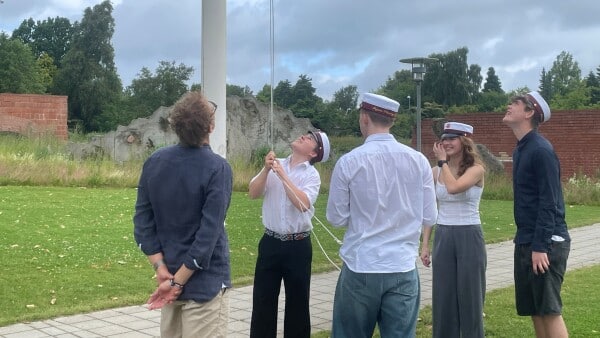
This week it is the students themselves who give voice to the frustration. At Vestfyns Gymnasium, this year’s first graduate and student council chair, Rasmus Møller Mogensen, has spoken openly about the artificial distance that arises when AI is part of everyday teaching – but banned in exams. His message is clear: exams must be adapted to the reality in which students already operate.
A British report warns, however, that there is a risk of over-testing students in the attempt to make teaching AI-safe. The report shows that the number of assessments at universities has risen sharply since 2020. We also link to the EVA report (from the Danish Evaluation Institute), which showed the same trends in upper secondary education.
As we head into the summer holidays, SkoleGPT has been updated to version 3 – a significant improvement over the previous model. At the same time, SkoleGPT can now find relevant materials, films, books, kits, etc., directly from CFU (the Danish Centres for Teaching Materials). You can try the new version yourself at https://chat.skolegpt.dk
At Viden.AI we have more or less started our summer holiday, but we will be back again at the beginning of August.
Have a wonderful summer holiday, and happy reading!
Exams must adapt to AI – not ban it
Several upper secondary schools (gymnasier) have introduced total bans on the use of AI in exams, but this is now meeting criticism from the students themselves. At Vestfyns Gymnasium, this year’s first graduate, Rasmus Møller Mogensen, who is also chair of the student council, marked his graduation with a clear message. Exams should not ignore AI, but instead be adapted to the reality in which students already operate. Rasmus explains that, during upper secondary school, AI has been a central tool for understanding the syllabus, organising notes and getting feedback. But when it comes to exams, AI is completely prohibited. He believes this creates an artificial distance between teachers and students and an unrealistic examination format.
Rasmus Møller Mogensen calls for a more balanced approach to AI use. He emphasises that although AI should not replace students’ own thinking and learning, it can serve as a valuable aid. Used properly, it is not about getting the work done, but about understanding the work.
The Minister for Children and Education, Mattias Tesfaye, has announced a series of pilots with AI in teaching and new examination formats at the country’s upper secondary schools, but faces criticism from Danske Gymnasier. Chair Maja Bødtcher-Hansen believes the minister’s initiatives are both “too little and too late.” She stresses that students already use AI at home, and that teachers are working to integrate the technology into teaching. Therefore, she believes pilots should quickly be launched with examination formats that test students’ ability to use AI appropriately, and not only pilots focused on teaching alone.
Mattias Tesfaye maintains a cautious approach, saying that schools and upper secondary schools “need to be a slightly conservative place”, where new rules are only introduced when there is a solid basis. The ministry points out that several development projects and individual pilots with new assessment formats are already under way, including an oral exam in Afsætning A where students are free to use AI when preparing the project report.
However, the criticism is that the pilot activities so far only cover a few subjects, and that broad experience with examination formats involving AI is still lacking. Particularly on stx (the general upper secondary programme), there is only one pilot with a pen-and-paper exam in Spanish, a move which, according to Danske Gymnasier, does not address the need for a real clarification of AI’s role in exams.
The ministry emphasises that, in total, the projects involve 75 institutions and 442 classes, and that the experiences will form the basis for further development of both teaching and examinations in an era of new technology.
AI challenges examination formats and sparks debate
The use of AI in teaching and exams is creating significant debate at Skive Gymnasium and Skive College. Principal Lars Erik Nielsen from Skive Gymnasium points out that it is especially take-home assignments that are losing relevance, because students can easily get AI to solve the tasks. He calls for policy reforms that remove take-home assignments as an independent basis for assessment and introduce oral defences so teachers can test students’ actual competence. He fears that teachers will lose trust in students and in the system if the rules are not adapted to AI developments.
Director Søren Christensen from Skive College believes the education system is struggling to keep up with developments. He is critical of the Minister for Children and Education Mattias Tesfaye’s proposal to return to paper-and-pencil exams. Instead, he wants AI to be actively included in assessment formats, so that students learn to use the technology wisely and critically. He suggests that in language subjects, for example, teachers should see students’ prompts and their appraisal of the AI material, shifting the focus more to process than product.
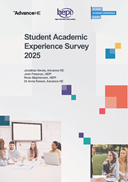
A new report from the UK’s Higher Education Policy Institute (Hepi) and Advance HE shows that the number of assignments and exams at British universities has increased markedly since 2020. In 2025, students now complete an average of 5.8 summative and 4.1 formative assessments per semester, compared with 5 and 2.5 respectively in 2020.
This increase comes in response to AI, which, according to the report, has made it harder to use traditional assignments to measure students’ performance accurately. Several universities are therefore changing their assessment methods, including by introducing more continuous assessment and, in some cases, more attendance-based evaluation, to counter, for example, AI-generated cheating. But according to experts, the many new demands can lead to students being overburdened and losing time for social activities, hobbies and reflection on their feedback.
Although it can be positive to break large assignments into smaller parts with ongoing feedback, researchers warn that over-testing can lead to stress and lower wellbeing among students, who are already under pressure from rising living costs and part-time work.
The EVA (Danmarks Evalueringsinstitut – the Danish Evaluation Institute) report Mapping assessment practice in upper secondary school (gymnasium) in light of generative AI also indirectly showed that the emergence of AI has led to an intensification of ongoing assessment in teaching.
ChatGPT can enhance teaching, but requires pedagogical courage
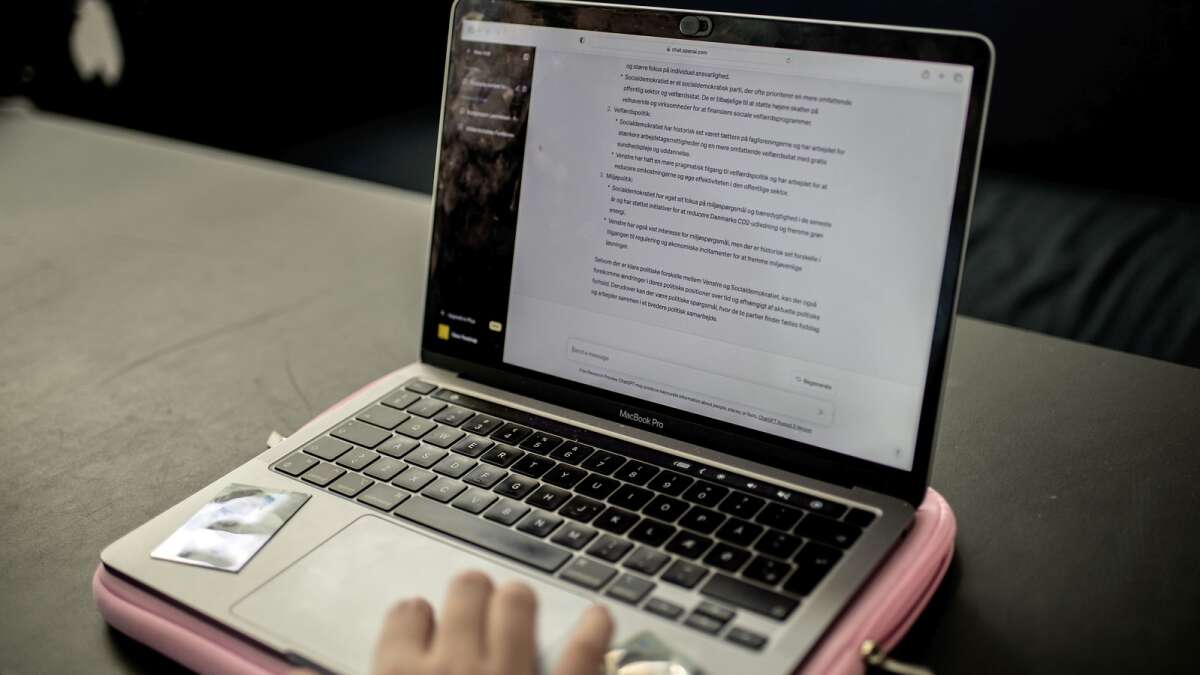
Preben Olund Kirkegaard, head of research at UCN (University College of Northern Denmark), argues that ChatGPT is already an unavoidable part of the classroom. Teachers should not ignore the technology but instead take active responsibility for how it is used in teaching.
He describes how ChatGPT can act as a temporary scaffold for students’ learning, inspired by Vygotsky’s theory. The AI tool can ask follow-up questions, give personalised feedback and help students formulate and deepen their understanding of subject content. Preben Olund Kirkegaard highlights that it can particularly support quiet or unsure students, who get the opportunity to test ideas before sharing them with the teacher or the class.
At the same time, he stresses that it is not the technology itself that creates learning, but the pedagogical framework in which it is embedded. It therefore takes courage and pedagogical reflection to use ChatGPT constructively, so that it becomes a tool for developing students’ language and reflection, rather than merely a shortcut to quick answers.
He points out that ChatGPT cannot, of course, replace a teacher’s judgement, build relationships or understand social nuances, but it can serve as a valuable additional voice in teaching. According to Preben Olund Kirkegaard, the discussion should not be about whether to use ChatGPT in teaching, but how to use it to best effect.
Google integrates AI into education with new tools for teachers and students
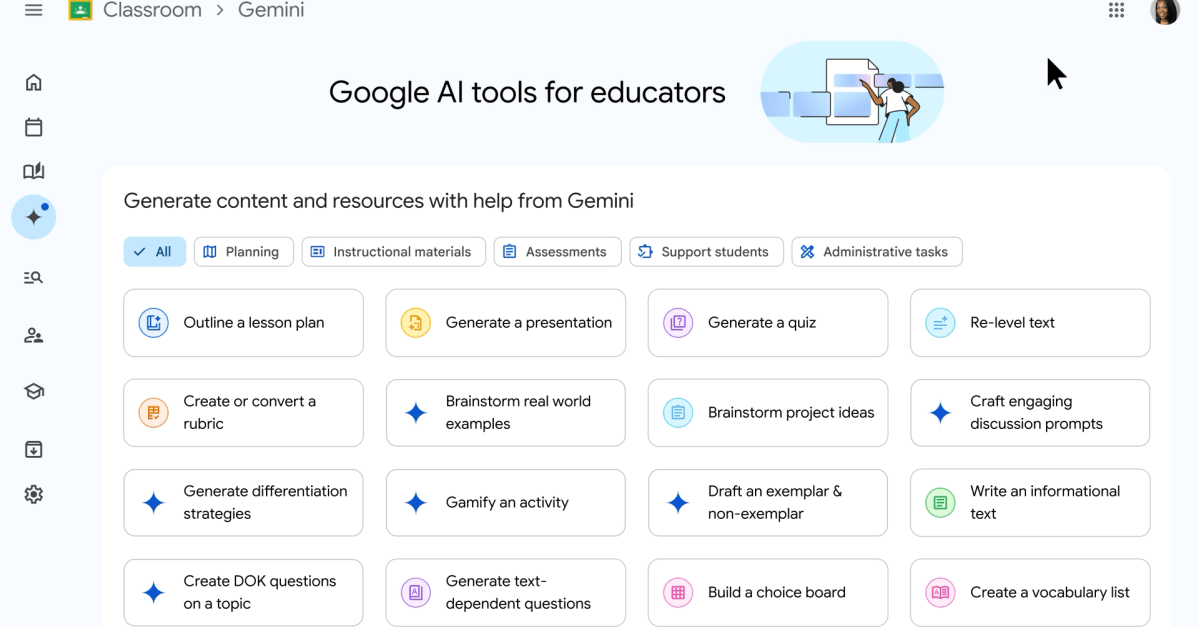
At the ISTE conference on 30 June, Google launched Gemini for Education — a suite of AI tools with over 30 features, now offered free to all users of Google Workspace for Education. This means that Danish schools already using Google’s platform technically have access to teaching tools such as Gems, NotebookLM, Class Tools, video and reading assistants, and more ().
The tools include, among other things, interactive diagrams, quiz generators and audio/video overviews via services such as Classroom, Forms, Notebook LM and Google Vids.
Teachers can create and customise their own AI assistants, “Gems”, which provide students with personalised and context‑aware support. In addition, “Class Tools” enables screen sharing and the closing of distracting tabs during lessons .
Here’s a brief overview of new or improved AI technologies that emerged last week.
Google has launched the open-source Gemini CLI – a command-line AI agent powered by Gemini 2.5 Pro with up to 1 million tokens of context. Kilde: Google
HeyGen introduced last week their Video Agent, “Creative Operating System”, which transforms scripts, documents or raw footage into fully edited videos – with AI-written scripts, storyboards, scene selection and final cutting. Kilde: HeyGen
Higgsfield’s new image AI model, Soul, focuses on “high-aesthetic” photos. Kilde: Higgsfield
DeepMind has presented AlphaGenome – an AI model that analyses up to 1 million DNA bases and can predict regulatory properties in non-coding regions, which may contribute to a better understanding of diseases and the significance of mutations. Kilde: Google DeepMind
Anthropic’s Claude Artifacts now allows users to build, share and interact with AI apps directly in the Claude chat – without coding, complete with a shareable workspace. Kilde: Anthropic
Google DeepMind has launched Gemma 3n – a multimodal AI model that can run offline on devices with only 2 GB RAM. It supports text, images, audio and video and is optimised for privacy-conscious, low-resource devices. Kilde: Google DeepMind
Meta has introduced a new feature in Facebook where users’ private photos from the camera roll can be used for AI training – unless you actively opt out. This happens via the “cloud processing” feature, which many risk accepting without reading the terms carefully. Kilde: TV 2
We collect some statistics via Matomo to better understand how the content is used and what our readers are interested in.
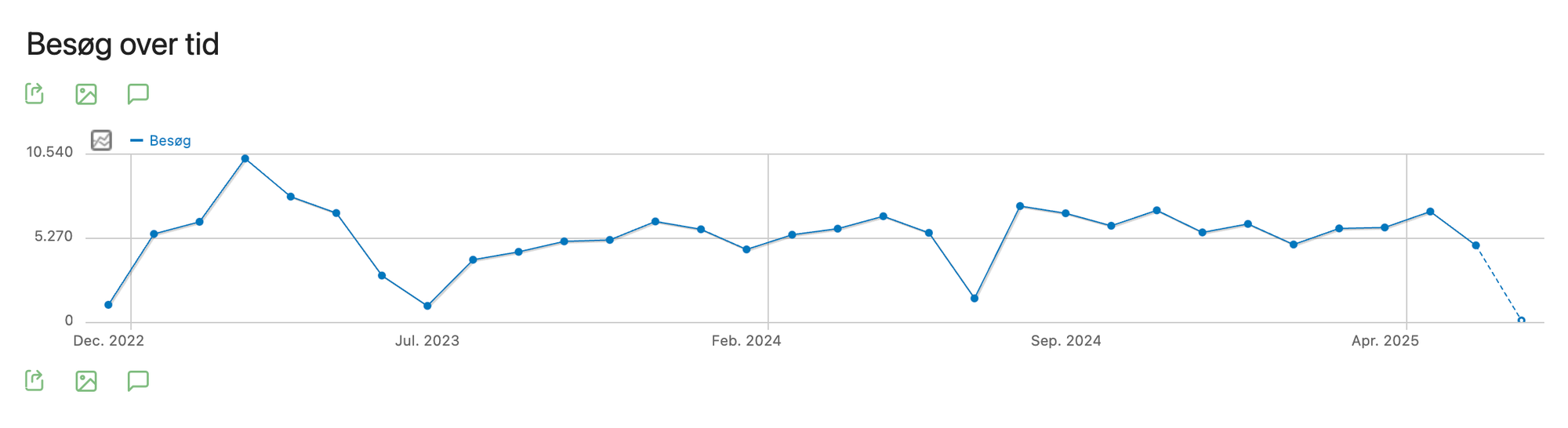
This school year, we have had 68,646 visits to the blog and published 66 posts – articles, newsletters and analyses. Since launching in December 2022, we have had 168,802 visits and published a total of 187 posts.
We continue to see growing interest in the content and are continually working to make the platform even more user-friendly and relevant for teachers and other professionals.