This Week’s News: The Battle for the Human Element
What do we lose when we strip away the awkward? In the final newsletter of the year, we take a close look at the battle for the human element in an era of virtual teachers, effective chatbots, and warnings from Anders Søgaard.
This article has been machine-translated into English. Therefore, there may be nuances or errors in the content. The Danish version is always up-to-date and accurate. Read the original Danish article here.
This is the second newsletter of the week, focusing on the more philosophical side of AI. In Monday’s newsletter it was about systems, rules and structural responses. Now we turn our gaze to the human dimension.
What happens to pupils when they ask a chatbot instead of their teacher? And what is lost when we try to remove the awkwardness? Professor Anders Søgaard describes this concern in a column in Information. He compares people to switchboards that receive and pass on information, and he warns that AI strengthens this function while at the same time weakening our capacity for improvisation, attentiveness, presence and creativity.
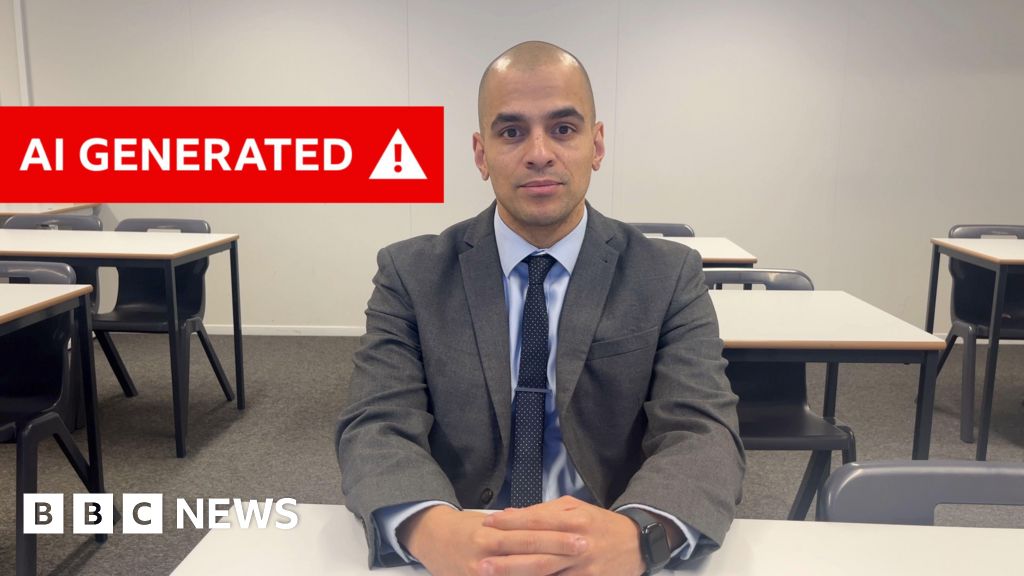
In the United Kingdom, however, a more radical approach is being taken and virtual teachers have been hired to teach pupils who live 300 kilometres away. This has led to strikes among teachers.
In a column in Information, Professor Anders Søgaard writes about how AI is changing the way we act as human beings, not only as conveyors of information but also as participants in the unpredictable and often awkward interaction with others.
Anders Søgaard describes humans as a kind of switchboard that takes in information and passes it on. He warns, however, that AI only strengthens this part of us while simultaneously weakening our ability to improvise and our attentiveness, presence and creativity. AI is effective at handling information, but not in human encounters.
When pupils choose to ask a chatbot rather than their teacher, or when people seek comfort from a chatbot partner, they miss the opportunity to practise the human qualities that only arise in the imperfect and the unpredictable. It is precisely here, according to Anders Søgaard, that we develop as pupils, colleagues and fellow human beings. If we delegate the human part of learning and interaction to AI, we will gradually lose the ability to be human among others.
Folkeskolen.dk has published an article in which the teacher Lis Zacho shares her experiences with AI in teaching and warns against the technology gaining too much influence over the teacher’s role.
As a member of the Employees’ AI Panel, she helped formulate recommendations for how AI should be used in the workplace. She stresses that AI should support learning and not replace the teacher’s professional expertise and judgement. Lis Zacho points out that AI is already changing many job functions, including the teacher’s.
She warns against a future in which AI takes care of lesson preparation and teachers merely deliver pre-prepared units. This may undermine the timeliness and authenticity of teaching. Experience with smartphones in school shows what can happen if technology gains too much power. This time, therefore, we need to be critical and deliberate. She believes pupils should learn to use AI in a constructive and honest way and not as a shortcut to cheating.
Instead of prohibiting its use, pupils should learn to state how and when they have used AI. The panel’s recommendations call for AI to be a helper and not a replacement. At the same time, there is an encouragement to use the technology to strengthen community, presence and academic depth.
A reluctance to engage with AI characterises the subject of history
Folkeskolen.dk reports how student teacher Niels Sigbjørn Ragnassøn Larsen experienced silence and reluctance regarding AI on the teacher education programme.
In his bachelor’s thesis in history, he concludes that the use of generative AI is still taboo among teachers, which hampers professional development. He calls for open discussions about the role of technology in teaching, so that AI can become a natural part without compromising the core of the subject.
Virtual teachers and AI divide teachers and parents in the United Kingdom
AI and virtual instructors are gaining ground in British schools, where the technology is used to alleviate teacher shortages and reduce workload. At The Valley Leadership Academy, pupils are taught maths by a teacher located 300 km away, and this has led to strikes among the school’s staff.
Maths teacher Emily Cooke puts the concern like this
Will your virtual teacher be there to dance with you at prom, hug your mum during results day, or high-five you in the corridor because they know you won the match last night?
She and many others believe that screen-based teaching cannot replace the human contact and support provided by teachers who are physically present.
AI changes the teacher’s role, but strengthens its significance
In an opinion piece in Nordjyske, Preben Olund Kirkegaard, associate professor and head of research at the teacher education programme at UCN (University College of Northern Denmark), argues that AI does not weaken the teacher’s role but, on the contrary, makes it even more important. AI is increasingly used by both pupils and teachers, but the technology fundamentally changes how teaching and learning take place. Pupils get answers from a technology that does not understand, assess or take responsibility. This makes it harder for the teacher to follow the pupil’s learning process while also placing greater demands on the pupil’s judgement.
Preben Olund Kirkegaard emphasises that the teacher must increasingly guide pupils to distinguish between right and wrong answers, understand what quality is and strengthen their critical sense. The teacher becomes less a supplier of information and more a guide in interpretation and reflection.
AI frees up time and strengthens differentiation in teaching
On folkeskolen.dk, two teachers explain how they use AI to support their planning and their work with differentiated instruction.
Both Sandra Rygaard and Julie Brahe Hansen find that AI gives them more time and a better overview during preparation, while also making it easier to adapt teaching to students’ different levels.
AI is used as a sounding board, an idea generator and a tool for creating differentiated teaching sequences. Both teachers stress that the technology should be used with professional judgement and always adapted to the specific student group.
They also encourage more teachers to demystify the technology and try out AI in the same way as they work with teaching resources. It is about adapting the material and making it your own so that it aligns with students’ needs and the aims of the teaching.
New free AI-kørekort for vocational education programmes
CIU (Center for It i Undervisningen – Centre for IT in Education) has just launched AI-kørekortet, which is a free online course aimed at teachers on vocational education programmes and AMU (adult vocational training programmes). The course is developed on the basis of teachers’ own questions and needs and is designed to help them understand, use and teach AI responsibly.
AI-kørekortet offers a practice-oriented approach with explainer videos, interactive elements and concrete teaching examples. It focuses both on technological understanding, the use of AI tools, and didactic guidance on the responsible use of AI. A test participant highlights that the course effectively bridges theory and practice, which many teachers have been calling for.
Behind AI-kørekortet stand CIU in collaboration with Jordbrugets Uddannelser, Uddannelsessekretariatet, EVU and HAKL. Viden.AI has contributed expert input to the content.
28 January: What is AI doing to our education system?
AI is here to stay. But how do we ensure that pupils and students learn with the technology rather than letting it take over? Exams may be the least of the problems. The real challenge is if AI ends up diminishing young people’s learning.
On 28 January, ATV (the Danish Academy of Technical Sciences) is holding a themed meeting that will take stock and discuss possible ways forward.
Before the Christmas break begins, Claus and I would like to say a big thank you to all 3,371 of you who read our newsletter every week.
2025 was the year when AI firmly made it onto the agenda in the education system, and when we have discussed both opportunities and challenges. There has been great interest in what we have written, and our content has reached quite far.
60,231 visitors have stopped by the blog and read a total of 86,000 pages.
3,371 now receive our newsletter regularly – thank you to each and every one of you.
Over the year we have sent out 42 newsletters.
We have written 16 articles on topics such as cheating, Bildung and much more.
New role, same mission On a personal note, the year also brings some news.
In January I will start as Head of IT and Communications at TietgenSkolen. This means that I now find myself in the midst of the dilemmas and decisions that schools face every day, this time seen from a leadership perspective. I see that as a great strength for Viden.AI.
The blog and the newsletter will continue unchanged. We will keep delivering analyses, news and perspectives, now with even more practical experience under our belt.
Thank you for reading along in 2025. We look forward to seeing you in the new year.