This Week's News: Teachers Can't Identify AI-Written Texts

•
8 min read



A week has passed, and here is a newsletter with the most important news on artificial intelligence and education.
In a new study, researchers from Germany conclude that teachers are challenged when assessing whether texts are written by artificial intelligence. Tim Dasey has also launched a petition to ban AI detectors, urging school leaders to prohibit the tools.
We also focus on Skolebot, a new service where pupils can work with guided language models. At the same time, a new text-to-music model has arrived that almost generates studio-produced music – if you teach music subjects, be ready to be surprised.
Lilach Mollick joins IT-vest’s webinar on 2 May, and it will be very interesting to hear her thoughts on how teachers can harness the strengths and opportunities of artificial intelligence.
A new article from Germany, to be published in the journal Computers and Education: Artificial Intelligence in June 2024, examines teachers’ ability to identify AI-generated texts submitted by their students. The study analysed the ability of novice and very experienced teachers to detect AI-generated assignments, and it shows that both groups are challenged and cannot reliably detect AI-generated texts. However, the study also shows that experienced teachers are more accurate in their judgements. Another interesting finding is that both groups are very confident in their conclusions.
The article concludes that with quite limited knowledge of prompting techniques, artificial intelligence can generate texts that are not traceable by teachers. It also concludes that AI-generated texts tend to be assessed more positively than student-written texts.
https://www.sciencedirect.com/science/article/pii/S2666920X24000109
Tim Dasey, who has, among other things, worked for MIT, has launched a petition to stop the many AI detectors that do not work. School leaders are therefore urged to ban the tools.
The rationale includes that many teachers mistakenly believe they can catch students using these tools, that it undermines academic integrity, that students are wrongly accused of cheating, and that the tools damage the crucial trust between teacher and student.
The website where you can sign links to a wide range of articles that discuss the problems with AI detectors and the consequences of relying on them.


Skolebot is another service you can use to work with language models in teaching, and pupils do not need to log in to use the service. It is the Norwegian company Teklos AS behind it, and they also offer Swedish and Norwegian versions.
On Skolebot you will find a range of guided language models where pupils, for example, encounter a chatbot that can only ask questions, a pessimistic bot, or a version that builds a character. We find it very interesting that each chatbot has a fixed function that it cannot break out of. In addition to the pupil-facing part, there is also a teacher section that can help educators plan lessons.
Skolebot runs on European servers and is based on the Azure version of ChatGPT, which should make it safe for use in teaching. As always, it is a good idea to consult the school’s data protection officer (DPO) on whether the service may be used.


Last week we were impressed by a new service called Udio, which can turn text into music. Unlike earlier services such as, for example, Suno, the underlying model has become significantly better at composing music and adding vocals. It is almost so convincing that you do not notice that it is an AI behind it, although parts of the music can sound like a poorly compressed MP3 track.
This raises numerous questions, such as what the model has been trained on to become this good, and what it will mean for the music industry. This is music’s answer to ChatGPT, and everyone working with music will need to engage with the technology. You should therefore also bring the service into lessons if you teach music, just as you would with a completely new instrument.
Below we have collected some of the best tracks, but the quality is not always that high – just try again. Udio is in beta, and for now you can generate up to 600 songs for free if you create an account.
OpenAI is rolling out ChatGPT-4 Turbo to all paying customers. Among other things, it has improved performance in mathematics, logical reasoning, coding and writing.
 Sarah Fielding
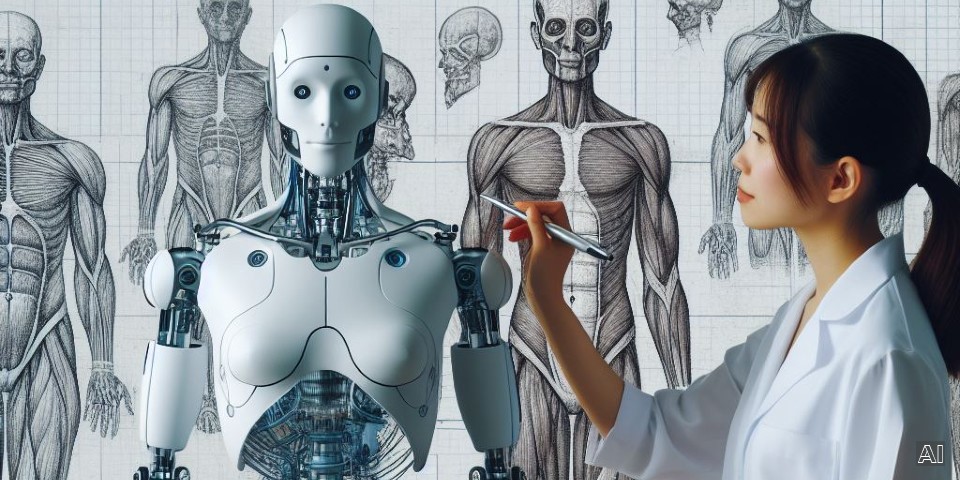
Lilach Mollick, Director of Pedagogy at Wharton Interactive, presents a range of tools and explains how teachers can leverage the strengths and opportunities of artificial intelligence. We are very much looking forward to the presentation from Lilach Mollick, who is one of the most influential figures in artificial intelligence and education.
The webinar is organised by It-vest (a network of collaborating universities). They publish many interesting webinars linked to special interest groups (SIGs) and focusing on how computational methods, understood as a new language, can renew teaching in various subjects. Read more below:





 Torben Blach

 Andreas Brandsæter


 Ben Williamson*

 Tommy Dalegaard Madsen, Senior Lecturer at Københavns Professionshøjskole (Copenhagen University College) and chair of the teaching staff in Den akademiske fagforening – DM (the academic trade union, DM)
 Jan Jørgen Skartveit, teacher and member of Oslo Ap (the Labour Party)

 Emma Lina Kruse Jensen emljejfm.dk

 See Ida's profile

 Helge Holden
 Nadia Tamez-Robledo
 Adam Tzur






