This week's news: Students are cheating themselves without realizing it
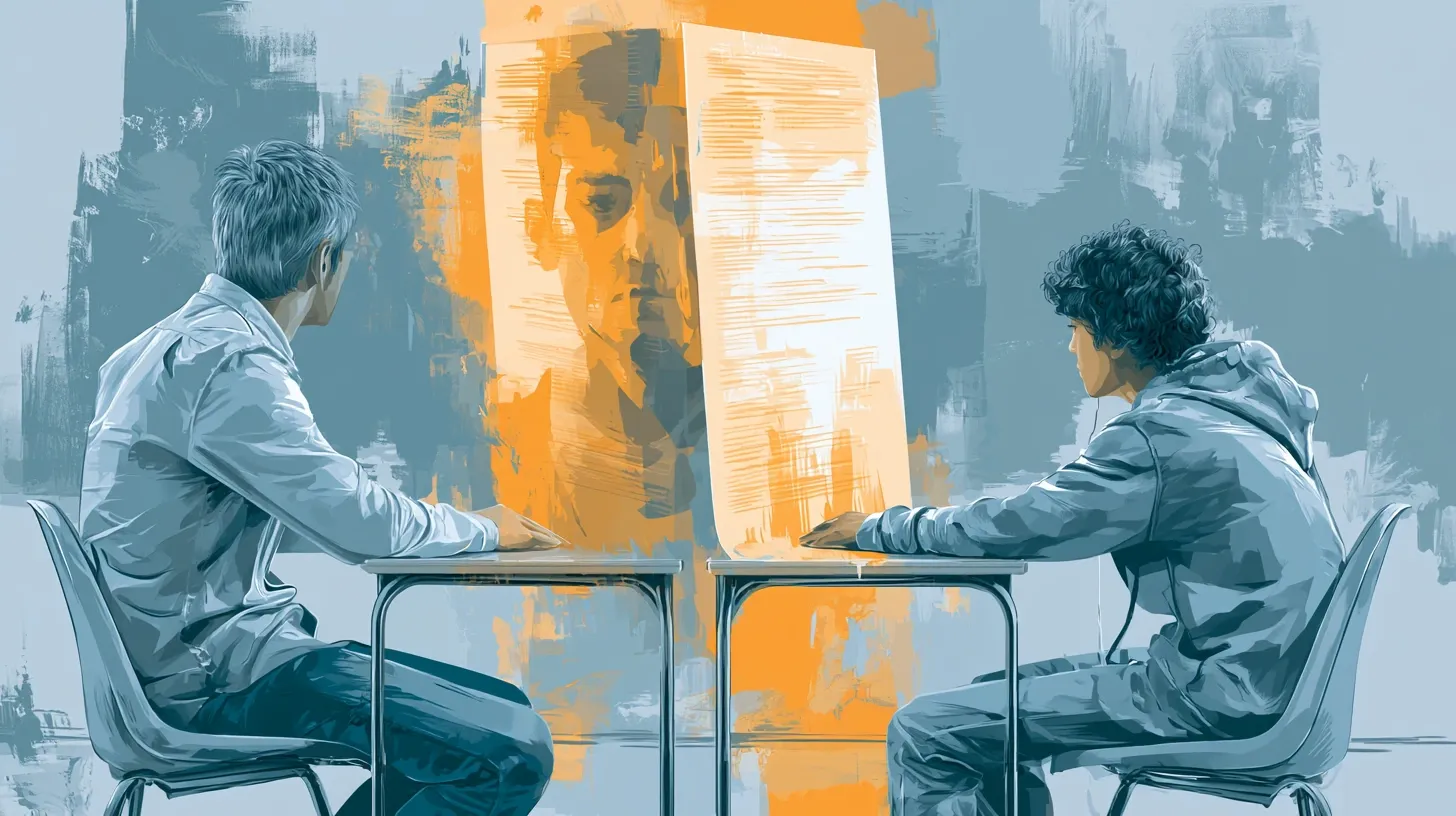
This week's theme is mistrust. A student censors their own language, another was accused by their favorite teacher, and new data from SDU shows that students are cheating themselves without knowing it. What happens to school when no one trusts anyone?
This article has been machine-translated into English. Therefore, there may be nuances or errors in the content. The Danish version is always up-to-date and accurate. Read the original Danish article here.
Here is this week’s newsletter on artificial intelligence in education.
The newsletter has changed slightly in character, so I now highlight the most important news and link to the others at the bottom. This week’s theme is mistrust: What happens at school when even the high-achieving pupils feel they have to prove their innocence?
An upper secondary school (gymnasium) with mistrust
We begin with the story of the upper secondary school student Anna Lorentzen, who has got off the train at Nørreport on her way to first period. Before the lesson even gets going, comes the sentence she can by now recite along with the teacher: "I do, of course, trust you, buuut I don’t know what you’re doing at home."
In an opinion piece in Politiken she describes how she now wonders whether her text sounds too good, or whether she has used a word that sounds too adult. She hasn’t cheated, yet she still feels she has to document her innocence before she has even been suspected.
Read her reflections on what it is like to be a high-achieving student in the Danish upper secondary school system:
New figures from SDU (the University of Southern Denmark) provide part of the answer
Professor Ane Qvortrup has presented the preliminary results from a large study with just under 6,000 student responses: 37 percent of students find it difficult to get started without AI, and 46 percent experience their AI-assisted texts as independent and original. Only 17 percent believe the tools get in the way of their learning.
In the article, Ane Qvortrup notes that students are not only cheating their teachers, but also themselves without realising it. They only discover this when it comes as a shock at the exam. At the same time, she warns against more cheating rhetoric and more tests, because that erodes precisely the trust-based relationship between teacher and student on which all good teaching rests.
The report will be submitted to STUK (the Danish Agency for Education and Quality) in September, and both Gymnasieskolen and Uddannelsesmonitor have written about the preliminary results:
Oscar Tønsberg Hoffmann is the new chair of Danske Gymnasieelevers Sammenslutning (DGS, the Danish upper secondary school students’ association) and part of the class of 2026, the first cohort to have AI at hand from first year through to the final exam.
In his second year, his favourite teacher gave him −3 for a biology assignment he had written himself. He was backed by the school management, but describes the episode as a fundamental breach of trust. That is why DGS is now calling for clear rules on when AI may be used, how use should be declared, and what should happen when cheating is suspected.
KU (University of Copenhagen) launches a major AI initiative worth 110 million kroner
While the gymnasium struggles with trust between teacher and student, Københavns Universitet is preparing itself for the new reality. The university is investing 110 million kroner in a comprehensive AI initiative and appoints Professor Morten Axel Pedersen as Prorector for AI.
Rector David Dreyer Lassen calls AI an organisational shock and emphasises that universities’ ability to verify knowledge and educate people with academic judgement becomes even more important as it becomes easier than ever to produce large amounts of content. In other words: When text no longer proves anything, it is judgement that must carry the weight.
The question of whom we can trust reaches far beyond Danish institutions. The New York Times ran a rather interesting article last week about how Google, Microsoft and other technology companies, through funding, free products and teacher training, have gained influence at almost every link in the American education chain.
The American teachers’ union AFT (the American Federation of Teachers) has received 23 million dollars from Microsoft, OpenAI and Anthropic for AI training for teachers, and Chromebooks accounted for 59 percent of the mobile devices delivered to US schools last year.
This raises the question of data sovereignty, which is also a concern here at home. What does it mean when Big Tech gains more and more power in teaching?
This leads to this week’s commentary, where I write about the difference between control and frameworks, and why control hits the wrong targets.
Happy reading.
This week’s commentary: Trust is what we cannot control our way to
In the nearly four years that generative AI has been part of the education sector, trust has been put to the test for both teachers and students. We saw this, for example, when Oscar Tønsberg Hoffmann received −3 for a biology assignment he had written himself and had to fight to convince the school that he had done it. He was backed by the management, but trust in his favourite teacher was broken.
The mistrust also means that students like Anna Lorentzen constantly try to rewrite their texts for fear that they sound too much like AI or too adult. Students hold back from practising the language, making mistakes and tinkering with sentences, because being too good has become suspicious. This mistrust hits all those who try, but not those who cheat. For those who really want to cheat, there are systems both to rewrite the text and to remove the watermarks that some AI tools embed.
Ane Qvortrup’s figures show that the problem cuts both ways. Students who do not use AI feel cheated because others get higher grades with the machine’s help. Students who write on their own are treated with suspicion. And the trust-based relationships that, according to research, are the foundation of good teaching are starting to crack. You can see it as a parallel to cognitive debt. Every control measure borrows against the relationship between teacher and student, and like cognitive debt, the debt of trust grows unnoticed until one day it has to be paid.
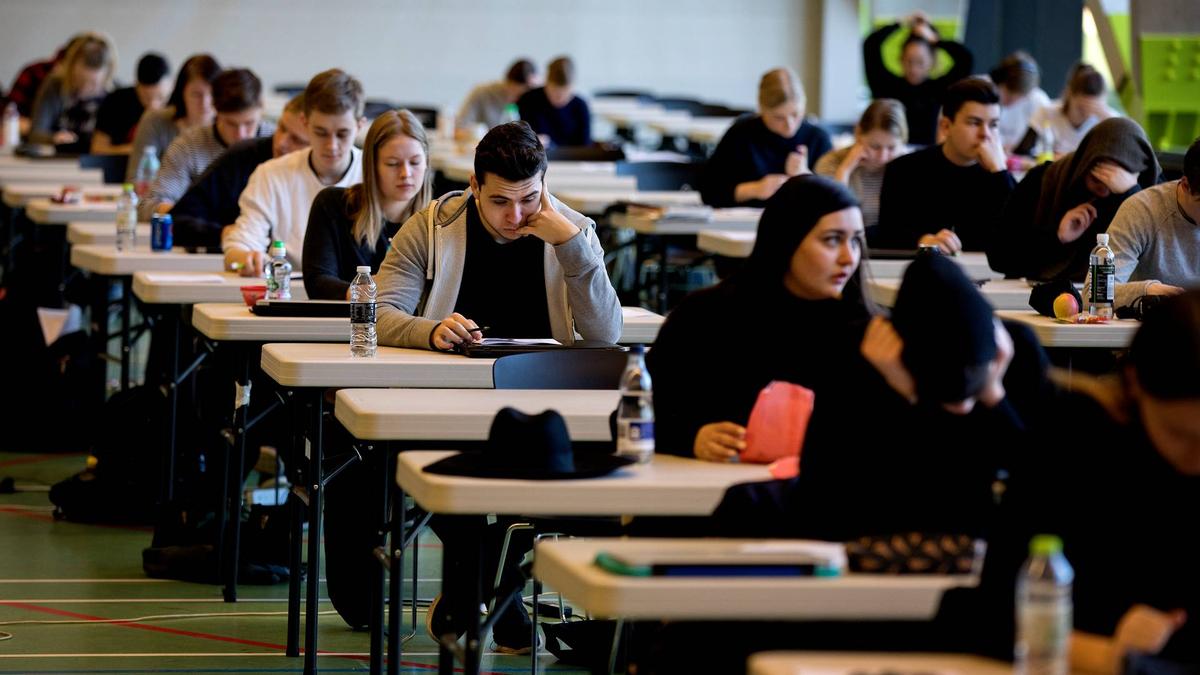
Amid all this, it is worth distinguishing between control and frameworks for AI. The ministry’s immediate action package urges the upper secondary schools (gymnasiums) to monitor students’ screens during examinations and to set more written assignments to be completed at school. It is understandable that schools follow that line. But as Ane Qvortrup notes, the package tackles cheating, not mistrust. DGS (the Danish Upper Secondary School Students’ Association) is calling for clear rules on when AI may be used, how such use is disclosed, and what happens when cheating is suspected. This should not be read as a demand for more control, but as a desire for predictability.
When we check for the use of AI, we tell students that we expect them to cheat. When we set a framework and say “here’s the agreement”, we tell them that we expect them to keep it. It may be naïve to think that solves everything, but the frameworks do not yet exist. When the frameworks are missing, control easily becomes the most visible tool. And then it risks hitting some of those who have in fact kept the agreement.