This article has been machine-translated into English. Therefore, there may be nuances or errors in the content. The Danish version is always up-to-date and accurate. Read the original Danish article here.

Over the past week we took a short winter break, so there was no Monday newsletter. But we’re back now, and here we’ve gathered all the latest on artificial intelligence and education. 

The past week has been a race between the major players in artificial intelligence, with several new products launched. Google unveiled its Gemini 1.5 Pro, which can handle a great deal of content, and OpenAI explained how they are working to build memory into ChatGPT. But the really big news has probably been that OpenAI has just launched a text-to-video model that, in many ways, raises the bar for what is possible. In this newsletter we put on our teaching hat and offer our own prediction of what it could mean for the learning materials of the future.

In addition, Denmark also introduced a new digitalisation strategy, and we have extracted the key points that concern the education sector.

Happy reading


OpenAI's Sora: Text to video

Last week, OpenAI unveiled its text-to-video model, called Sora. What sets Sora apart from systems such as Runway and Pika is its very high quality and the ability to generate videos of up to a minute. If you haven’t seen the videos, OpenAI has collected the most interesting ones here:

The model can also create multiple videos of the same situation from different angles:

0:00
/0:08

Access to Sora is still limited. Initially, only members of OpenAI’s Red Teaming Network are allowed to use the model to evaluate potential risks and negative consequences of the model. At the same time, a number of creative artists such as designers and film-makers are being given access. One issue that may prove to be a major problem with the technology is that it will become even easier to create fake videos. We have previously written about this on Viden.AI in the article: Ethical aspects of chatbots in education – misinformation and disinformation. Jyllands-Posten has also highlighted these challenges in an interesting article (behind a paywall): “Now it will be within everyone’s reach to manipulate videos and potentially create misinformation”.

Looking a little more closely at the videos, you’ll notice that they are of incredibly high photorealistic quality, and that people and objects in the background follow the camera’s movements. Sora appears to develop a strong 3D “understanding” of scenes, with characters and objects moving realistically in a continuous manner. If you’re interested in how Sora works, we recommend reading Mike Young’s article: How Sora (actually) works.

💡
Sora in the classroom
In future, the technology could be used in teaching to enrich learning resources. For example, Sora can be used to generate videos that visualise historical events or explain scientific concepts in ways that may enhance pupils’ understanding (provided, of course, that rigorous source criticism is applied). And if the pupil or teacher can describe the content, Sora will be able to visualise the ideas and thus unfold the content in an engaging way, tailored to the individual pupil.

At Viden.AI, we envisage that, over time, teaching materials will evolve into advanced multimodal, interactive and adaptive learning resources, tailored to the individual, where pupils themselves initiate their own learning experiences.
OpenAI’s Sora Turns AI Prompts Into Photorealistic Videos
OpenAI’s entry into generative AI video is an impressive first step.
Video generation models as world simulators
We explore large-scale training of generative models on video data. Specifically, we train text-conditional diffusion models jointly on videos and images of variable durations, resolutions and aspect ratios. We leverage a transformer architecture that operates on spacetime patches of video and image…
OpenAI launching new video creation tool which could spell doom for many Hollywood jobs
OpenAI launching Sora, a new video creation tool which could spell doom for many creative professionals in Hollywood.
False content from new AI service raises concern: This software operates on a new level
The company OpenAI, which is behind ChatGPT, has stated that a “text-to-video” solution called Sora is being tested, and this is causing concern from several quarters. A researcher fears that in future it will become difficult to distinguish between real and fake content.

Denmark’s new digitalisation strategy

On 8 February 2024, Denmark adopted a new digitalisation strategy, with the government allocating 740 million kroner for investments in digitalisation. Below, we have gathered the key initiatives concerning the education sector.

  • 160 million kroner are allocated in 2024–2026 to integrate technological understanding into teaching in the Danish primary and lower secondary school (folkeskole).
  • 10 million kroner are invested with a focus on further development of teacher education. This also includes professional development for educators.
  • 35 million kroner are allocated in 2024 for the development of digital competences and teaching in higher education.
  • 30 million kroner are invested in 2024–2026 in continuing education and retention of IT specialists, and in strengthening part-time industry master’s pathways (erhvervskandidatforløb) in IT degree programmes.
  • 61 million kroner are allocated to strategic initiatives for the use of artificial intelligence in the period 2024–2027, including the potential development of a Danish language model.

Read more about the agreement below:

Political agreement in place on Denmark’s new digitalisation strategy
Political agreement in place on Denmark’s new digitalisation strategy - DI Digital
The government has just reached an agreement on Denmark’s new digitalisation strategy. Thus, all parties in the Folketing (the Danish Parliament) agree to allocate 740 million kroner to investments in digitalisation across the public and private sectors.

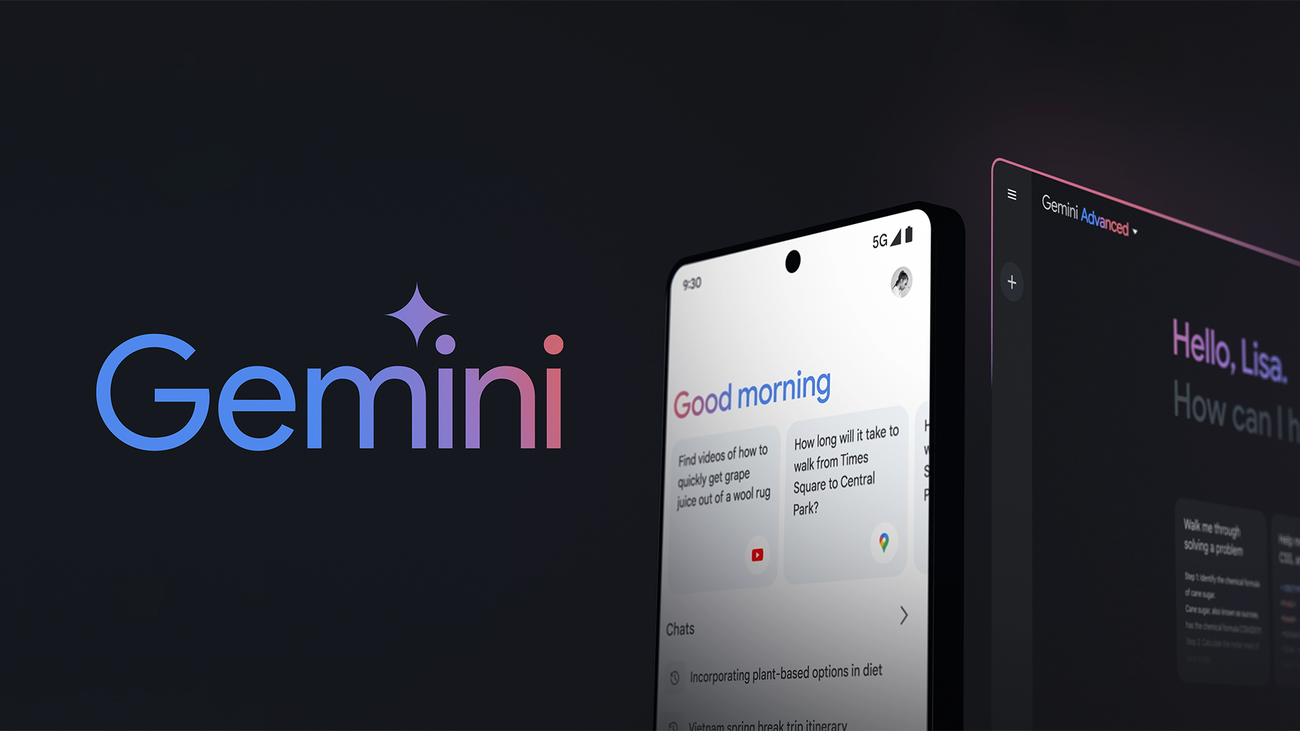
Google Gemini stores your conversations for up to three years

What you write to Google Gemini may be reviewed by humans and used to improve the model, and these data may be stored for up to three years.

Conversations that have been reviewed or annotated by human reviewers (and related data like your language, device type, location info, or feedback) are not deleted when you delete your Gemini Apps activity because they are kept separately and are not connected to your Google Account. Instead, they are retained for up to three years.

More generally, users should be very mindful of how they use language models. For example, ChatGPT stores conversations for 30 days, unless the user has an enterprise-level subscription.

Google Gemini Warning: Don’t Share Confidential Information
Gemini AI documentation warns: Confidential info may be reviewed by humans and included in AI training datasets
Google saves your conversations with Gemini for years by default | TechCrunch
In its privacy policy, Google reveals that it stores convos with its AI-powered Gemini apps for three years by default.

ChatGPT gets memory

OpenAI is rolling out a new feature for ChatGPT that lets the language model draw on information from earlier conversations, or you can have it remember something specific. For example, when designing teaching sequences, it can be useful for ChatGPT to know in advance that each module is 105 minutes, and also how you prefer everything to be set up.

The feature has been rolled out to a small group of users and will later be rolled out to a wider group.

Memory and new controls for ChatGPT
We’re testing the ability for ChatGPT to remember things you discuss to make future chats more helpful. You’re in control of ChatGPT’s memory.

Google launches Gemini 1.5 Pro

The new version of Gemini, called 1.5 Pro, can handle very large amounts of content in context, up to 1 million tokens (10 million tokens for research). This means the language model can find specific information in very large datasets. One example is a video analysis of Buster Keaton’s film “Sherlock Jr.”, where the model scanned every single frame and converted them into tokens. It was then possible to search the film for specific information. Watch the video below:

Our next-generation model: Gemini 1.5
Gemini 1.5 delivers dramatically enhanced performance, with a breakthrough in long\u002Dcontext understanding across modalities.

News overview

Empowering education: A Utah school district embraces AI in the classroom
In a forward-looking initiative, educators in the Jordan School District are incorporating artificial intelligence into their classrooms.
Language teachers and pupils work with AI in a new development project
Language teachers have become curious about what AI can be used for in teaching. How do pupils respond, and how do you shift from trying to guard against cheating to using AI constructively? In a new development project, teachers, pupils and CFU (the Danish Centre for Teaching Materials) consultants are exploring the possibilities together.
Municipality introduces an elective on artificial intelligence
In Vallensbæk Municipality, pupils will in future be able to choose an elective on AI.
State AI push resurfaces – SF wants an alternative to the tech giants
The reasons are lining up, if you ask Lisbeth Bech-Nielsen (SF). She believes that Denmark should as quickly as possible…
Behind paywall
What students use artificial intelligence for
The 2023 Study Barometer is ready, and for the first time the country’s students have been asked about their relationship to artificial intelligence (AI).
New rules: You may now use AI for your thesis or bachelor’s project
Aarhus Universitet (Aarhus University) has now relaxed the rules for the use of artificial intelligence in exams. To begin with, this applies to students who are to submit their bachelor’s project or thesis this summer. Get an overview of the new rules here
Political agreement in place on Denmark’s new digitalisation strategy
Artificial intelligence – does it hinder or promote learning?
(15.2.24) ChatGPT hit Norwegian schools like a bomb just over a year ago. Does generative artificial intelligence spell the end of writing practice as we know it…
Bard becomes Gemini: Try Ultra 1.0 and a new mobile app today
Bard is now known as Gemini, with a mobile app and an Advanced experience that gives you access to our most capable AI model, Ultra 1.0.
Search engines accused of promoting sexual content created by artificial intelligence
The field is evolving all the time, and therefore work is ongoing to improve safety, says Google.
OpenAI adds watermark to Dall-e images | Version2
Metadata contains information about who created the material and how.
Large language models and the Danish labour market
Tools for generative artificial intelligence (AI), such as large language models, are spreading rapidly. The best-known example is ChatGPT, which gained more than 100 million active users within two months.
Lecturer uses ChatGPT for student feedback: “It picks the low-hanging fruit”
It requires neither programming skills nor extra funding to turn ChatGPT into a qualified teaching assistant. Postdoc Mark Friis Hau from KU (University of Copenhagen) developed, with simple means, a chatbot that gave students useful feedback.
AAU (Aalborg University) researchers want to develop “digital twins” for teachers
A research project with funding from Villum Fonden (the Villum Foundation) will investigate whether artificial intelligence is the way to ensure more feedback for students.
V-JEPA: The next step toward advanced machine intelligence
We’re releasing the Video Joint Embedding Predictive Architecture (V-JEPA) model, a crucial step in advancing machine intelligence with a more grounded understanding of the world.
Taking technology out of Swedish schools … and the search for what the ‘science’ says (notes on Forsler & Guyard 2023)
Having come to power at the end of 2022, the current Swedish government (comprised of the ‘Tidö’ coalition of right wing parties) has been expressing strong doubts about the excessive and ‘hasty’ d…
How much electricity does AI consume?
How many watts and joules does it actually take to generate a single Balenciaga pope?

This week’s recommendation for the HR department

This article by Josh Bersin looks at the potential of autonomous learning platforms for companies, powered by artificial intelligence. The aim is to make knowledge management personal and a compelling user experience, making it engaging for employees to pursue further training. By using artificial intelligence, it becomes possible to make a company’s content dynamic and to create tailored courses that include videos and simulations.

This could mean a significant change in how companies upskill their employees.

Autonomous Corporate Learning Platforms: Arriving Now, Powered by AI
New AI-powered corporate learning platforms are bringing autonomous driving to corporate training, education, and support.

Share this post

Written by

Per Størup Lauridsen
MSc in IT | Co-founder of Viden.AI | Head of IT and Communications at TietgenSkolen