This Week's News: Should AI Be Brought Out of the Shadows?
Shadow AI is growing while the system hesitates. This week, we explore how to move from bans and uncertainty to a safe, pedagogically sound path forward for AI in education.
This article has been machine-translated into English. Therefore, there may be nuances or errors in the content. The Danish version is always up-to-date and accurate. Read the original Danish article here.
Here is this week’s newsletter, once again exploring the opportunities and challenges of artificial intelligence in education.
We begin with a challenge many education institutions are grappling with right now: Shadow AI. While IT departments say no to AI tools due to GDPR concerns, teachers and students are still using ChatGPT and other services, often without considering data security. This creates a vacuum in which sensitive data risks ending up in the wrong place.
The data security problem is not made any easier when even Microsoft 365 Copilot now offers AI models that send data to the United States and thereby potentially conflict with GDPR.
This week I’ve also selected a story that shows AI’s potential in practice. At Odinskolens SFO (after-school club), educators and children have used AI together in a creative way, with the technology acting as an idea generator for both hands-on making and deeper focus. The project clearly shows how AI can foster engagement when used within a pedagogical community.
While Odinskolen shows how AI can be used creatively today, international researchers point to far greater possibilities. In Noema Magazine, Greg Easley describes how AI could revolutionise the way we design teaching. But if the technology can create personalised learning pathways for every pupil, how do we safeguard community and equity?
A new large meta-study shows that AI feedback works almost as well as teacher feedback, though the difference remains clear. The greatest gains are achieved when AI and teachers work together, while human connection is lost if AI is used as a replacement. This underlines that the technology can support teaching but cannot replace the teacher’s role.
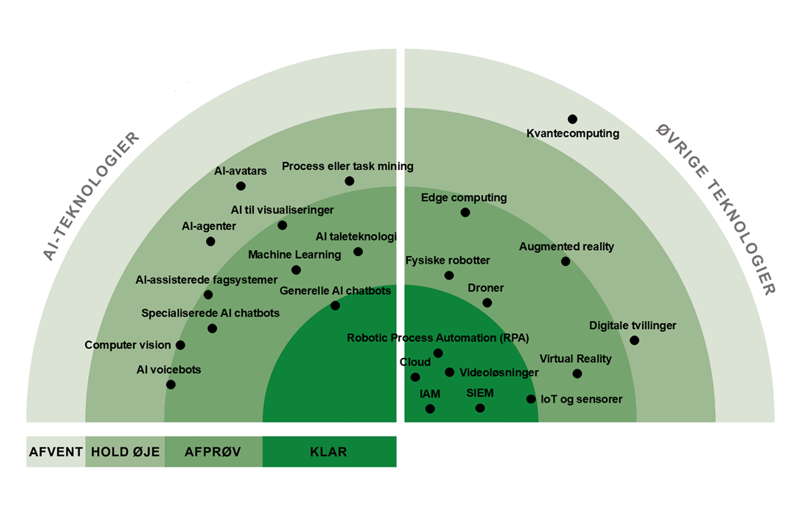
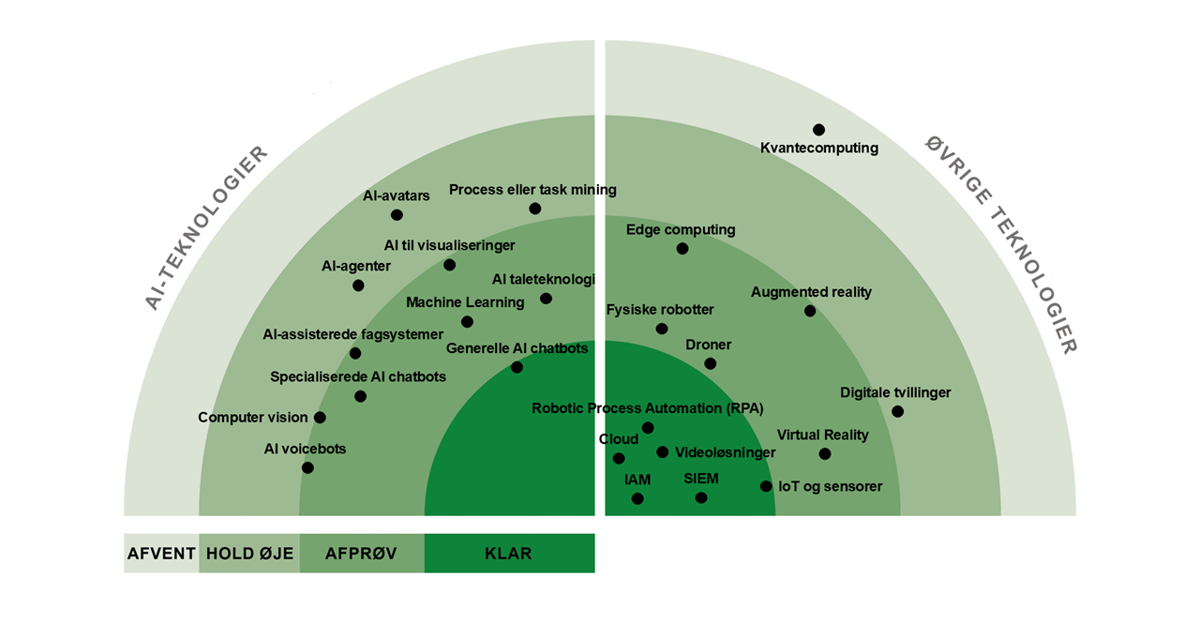
In the meantime, KL (Local Government Denmark) is working to equip municipalities with better tools through its updated technology radar, which shows which AI tools are mature enough for practical application.
Here are this week’s three key takeaways.
Potential in practice We are seeing concrete examples that AI can enhance both creativity and engagement when used as a pedagogical tool.
The system under pressure Lack of funding and outdated guidelines are creating a gap between political ambitions and the reality schools operate in.
The technology won’t wait The development of AI is accelerating and constantly challenging examination formats, data rules and pedagogical methods.
Enjoy the newsletter.
Comment of the week: We need to bring AI out of the shadows
Shadow AI, which I wrote about last week, is not a rebellion against the IT department, but a symptom of a system that fails to provide the tools and frameworks teachers and students need. When guidelines are outdated and funding is lacking, people find their own solutions, often without thinking about data security.
The solution is not to impose more bans, but to create a new dialogue. We should move the IT department from being the one that says no to being the one that finds a secure way to say yes. We need to shift the focus from what teachers mustn’t do to what we can actively offer them: secure tools, relevant professional development, and room for pedagogical experimentation.
Our task is to bring AI out of the shadows and into an enlightened pedagogical space where we can both experiment and learn together. Otherwise, we leave development to chance—and to the big tech companies.
More AI models and agents on the way to Microsoft 365 Copilot
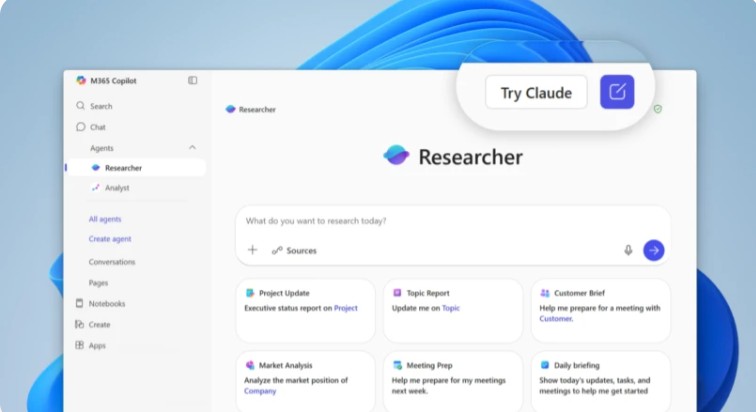
Microsoft has expanded Microsoft 365 Copilot so users can now choose between several different AI models. In addition to the well-known GPT models from OpenAI, users now also get access to Anthropic Claude Sonnet 4 and Claude Opus 4.1. Initially, they can be used in Researcher Agent and Copilot Studio, with plans to make them available in more Copilot features later.
If a school chooses to use Claude, data is sent to Anthropic via AWS in the United States. As a result, Microsoft’s EU Data Boundary does not apply, and you are instead subject to Anthropic’s own terms. Although Claude does not use customer data for training, the transfer of data to the United States presents a legal challenge and may create uncertainty in relation to GDPR, especially for public institutions.
AI sparked creativity and immersion in Odinskolens SFO
At Odinskolens SFO in Odense, a project using AI showed how the technology can motivate children who would not normally choose classic creative activities with scissors, glue and tape. The project took place in the school’s makerspace, where pupils in Years 2–4 worked with tools such as ChatGPT and Copilot to generate ideas and illustrations, which were then turned into physical creations such as castles, monsters and shops.
The educators, who were themselves beginners in using AI, experienced a special sense of community with the children because they were learning and experimenting together. AI acted as an idea generator and design tool, but the emphasis was on hands-on craftwork, where the children built and further developed their ideas. Many of the children improved on the AI suggestions so the products became personal and unique.
In Denmark, we have long been familiar with adaptive learning systems, for example in national tests and digital subject portals, where the level of difficulty is adjusted to the individual pupil. In an essay in Noema Magazine, however, Greg Easley points out that AI can take this a step further. Instead of merely adjusting pace and difficulty within a syllabus, the entire learning pathway can be built dynamically based on the pupil’s current level.
Easley calls this “adaptive threshold learning” (ATL). It is an idea reminiscent of Vygotsky’s zone of proximal development, but extended with AI’s data power. He also emphasises that the teacher still plays a central role as mentor and interpreter. The systems only make sense if they are designed with ethics and equity in mind.
The article does not offer new solutions to differentiation, but it asks an important question. Are we in Denmark ready to let AI support a more radical form of adaptive teaching than the one we know today?
AI feedback and teacher feedback produce almost the same results
A new meta-study, based on 41 investigations involving nearly 5,000 pupils and students, shows that AI feedback works almost in the same way as feedback from teachers or peers. Most studies focus on writing assignments and language teaching in higher education.
The results indicate no clear difference in learners’ learning outcomes. Learners are, however, slightly more critical of AI feedback, but the difference is not significant.
The study highlights that AI can be a helpful support because it can provide rapid and detailed feedback, but the teacher’s role remains crucial. In some cases, combining AI and teacher feedback appears to lead to both better learning outcomes and greater motivation.
How well it works depends on how AI is used, the types of tasks involved, and how transparent the tool is to learners.
Upper secondary schools (gymnasiums) must fund AI development themselves
Gymnasieskolen.dk reports that implementing AI in upper secondary schools (gymnasiums) is a major undertaking that requires both time and resources. Teachers need continuing professional development, teaching must be developed, and schools must find new ways to integrate the technology into everyday practice. Despite this, the government has refused to allocate additional funds.
Several key stakeholders, including Gymnasieskolernes Lærerforening (GL, the Danish Association of Upper Secondary School Teachers), Danske Gymnasier (the association of upper secondary schools) and Danske Erhvervsskoler og Gymnasier (Danish Business and Upper Secondary Schools), emphasise that AI is such a comprehensive change that current competence-development budgets cannot meet the need. In their view, this is an extraordinary task that requires extra funding. The government maintains, however, that schools must prioritise within existing frameworks.
The Ministry’s recommendations make it clear that all upper secondary teachers should have the competences to handle AI in teaching, and that it is the collective responsibility of schools to meet this challenge. The former chair of the expert group on ChatGPT, Birgitte Vedersø, calls AI a genuine revolution for gymnasium practice.
AU associate professor warns that AI renders old guidelines obsolete
Associate Professor Niels Lauritzen from Aarhus Universitet (Aarhus University) argues in an opinion piece that the university’s current guidelines for the use of AI have already been overtaken by technological development. He has used AI in his teaching since 2022 and allowed students to use it in exams, but the newest models, such as Gemini 2.5 Pro, fundamentally change the premises.
The new AI models can, with high precision, produce answers that draw directly on the syllabus while appearing flawless and well documented. They thus function almost like private tutors. Previous challenges such as incorrect references and file-handling problems have been largely eliminated. This creates a risk that the alignment between teaching, learning objectives and examination is broken. Students may submit answers that do not reflect their own understanding but the AI’s output.
As a consequence, Niels Lauritzen has chosen to ban the use of AI in his exams. He stresses that there is a need for a deeper discussion about how AI should be integrated into both teaching and assessment in future.
KL (Local Government Denmark) has updated its Technology Radar
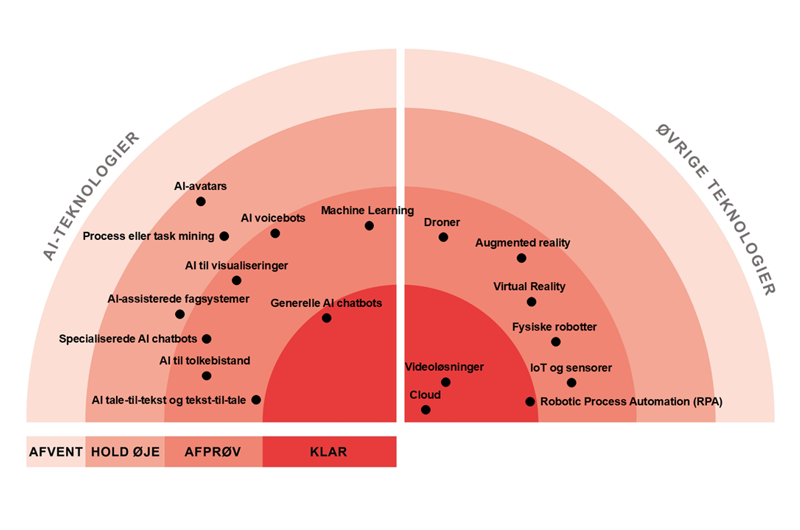
KL has just published the 2025 Technology Radar, which gives municipalities an up-to-date overview of the maturity of 24 technologies. This year has seen a marked development, with AI technologies now making up half of the radar.
Municipalities’ overarching Technology Radar 2025 and Technology Radar 2025 for early years provision and the schools sector
In the schools sector, general-purpose AI chatbots, cloud, video solutions and RPA are categorised as ready technologies, meaning they are widespread and technically mature.
AI voicebots, speech-to-text, interpreting support, specialised AI chatbots, AI for visualisations, machine learning, IoT, physical robots, VR, AR and drones are placed in trial, where several municipalities have tested the technology.
AI-assisted line-of-business systems, process mining, AI avatars and digital twins are assessed as technologies to keep an eye on.
The radar is a tool that municipalities can use to discuss new technology, prioritise initiatives and draw inspiration from other municipalities’ experiences.