This article has been machine-translated into English. Therefore, there may be nuances or errors in the content. The Danish version is always up-to-date and accurate. Read the original Danish article here.
31 October was one of those days when a great deal happened around artificial intelligence, and we have selected various news items we think may be of interest to the education sector. With all this news, it also means there will be another newsletter out this week ☺️
We begin with Skoleledernes Årsmøde 2024 i Odense, where the need for a shared AI strategy in the Danish primary and lower secondary school (folkeskole) was discussed. School leaders are calling for more central guidance and common guidelines to ensure equal access to AI-supported learning for all pupils. A need was also highlighted to invest in teachers’ professional development and to review assessment methods in the folkeskole.
A new webinar series focuses on how we as citizens can understand and relate to artificial intelligence in a democratic society. The series aims to create a shared foundation enabling everyone to take part in the discussion about AI’s impact on fundamental values such as freedom of thought and our view of humanity.
SDU (University of Southern Denmark) and LEGO are joining forces to establish a new IT campus in Vejle to educate the digital talents of the future. The campus will focus on IT and STEM programmes and is expected to attract both Danish and international students as well as researchers.
Skoleledernes Årsmøde 2024: Need for a comprehensive AI strategy in the folkeskole
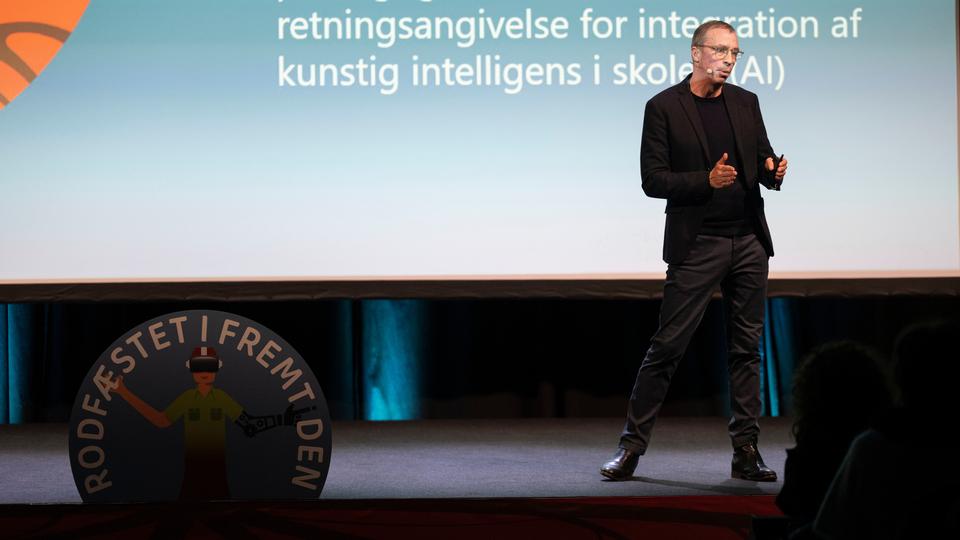
At Skoleledernes Årsmøde 2024 in Odense, it became clear that artificial intelligence demands increased attention in the folkeskole. Among the 2,200 participants and 120 exhibitors, AI’s role in teaching was a recurring theme, and school leaders highlighted that AI is easily forgotten amid the daily focus on screen time and mobile phone regulation, even though the technology has the potential to transform teaching.
Trine Hartelius and Carsten Løye noted that school leadership teams often lag behind teachers, who are already trying out AI in practice. Carsten Løye described AI as a technological development that “is running faster than we are”, and therefore called for more central guidance and regulation.
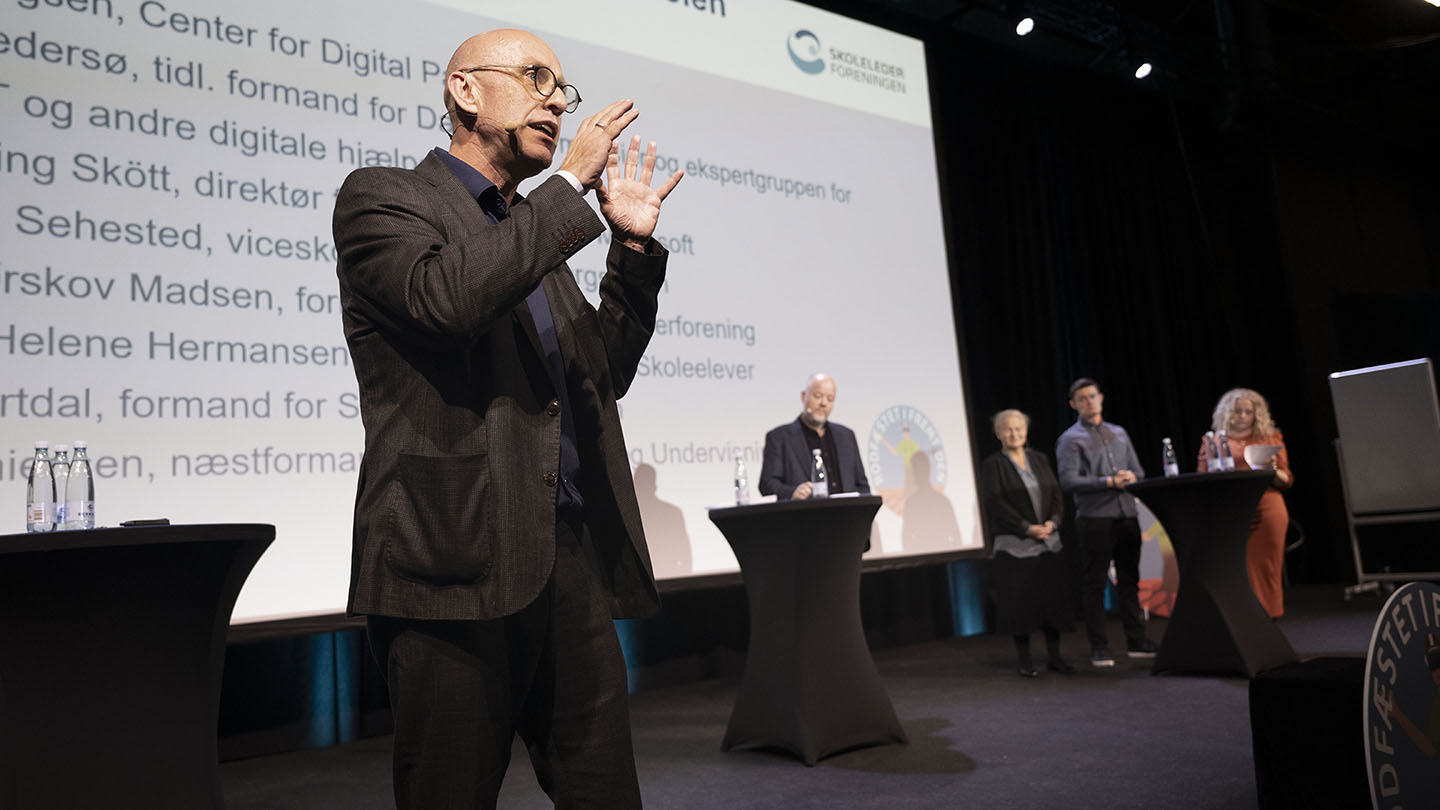
The panel debate “AI and the political governance of the school” pointed to the need for a national strategy to ensure that all pupils have equal access to AI-supported learning. Malte von Sehested warned that current differences between schools are creating an “AI lottery” with unequal opportunities for pupils. The chair of Skolelederforeningen (the Danish School Leaders’ Association), Claus Hjortdal, also called for common guidelines, but cautioned against excessive micromanagement that could stifle necessary pedagogical experimentation.
Participants agreed that an effective AI strategy requires investment in teachers’ professional development. Birgitte Vedersø and Morten Thiessen stressed that teachers need to be equipped both technologically and pedagogically so that AI can be used constructively and ethically. At the same time, there was a call to review assessment methods in the folkeskole, shifting the focus from grades to learning processes and collaboration. Emil Ludvigsen from Center for Digital Pædagogik (Centre for Digital Pedagogy) and Claus Hjortdal criticised the current examinations as too one-sided and not reflecting the school’s educational purposes, but rather functioning as a sorting tool for upper secondary (gymnasium) admissions.
The chair of Danske Skoleelever (the Danish School Students’ Association), Caroline Helene Hermansen, underlined that no one fully understands the complexity of AI yet. She urged schools to be curious and to try out AI in practice while awaiting a more concrete strategy from the political level. Moderator Klaus Majgaard summed up the debate with a call for a shared, flexible AI strategy that focuses not only on technological rules, but also on developing teachers’ competences and on creating more flexible forms of assessment that strengthen pupils’ engagement and learning outcomes.
Webinar series: How do we ask the right questions about AI, freedom of thought and democracy?
A new webinar series focuses on how we as citizens can understand and relate to artificial intelligence in democracy. The growing role of technology challenges fundamental values such as freedom of thought and our view of humanity, and many find it difficult to understand and question the technology’s complex mechanisms. The series therefore seeks to create a shared foundation where everyone – including amateurs – can take part in the discussion about AI and technology.
The webinars are held in collaboration with Algoritmer, Data og Demokrati (Algorithms, Data and Democracy) as well as Tænketanken Mandag Morgen (the think tank Monday Morning) and comprise four themes with inputs from experts.
The role of amateurs in the AI debate With Hanne Marie Motzfeldt, professor of administrative law and digitalisation, KU (University of Copenhagen), and Peter Hesseldahl, editor for digital transition, Mandag Morgen. 5 November 2024, 17:00–18:00. The first webinar explores how citizens without a technical background can understand and engage in AI discussions. What knowledge is necessary, and can the more invisible aspects of the technology be explained in an understandable way?
Technology and the formation of opinions WithSine Nørholm Just, professor of strategic communication, RUC (Roskilde University). 19 November 2024, 17:00–18:00 The second theme examines how the personalisation of information affects democratic processes. How do we deal with the fact that technology tailors political messages to each individual citizen?
Good and bad surveillance Speaker and date to follow The third webinar examines the role of surveillance in a digital society. How do we maintain a public sphere with room for both change and forgetting?
What should AI learn from us, and what should we learn about AI? Speaker and date to follow The final webinar discusses how we ensure diverse and fair data for AI, and how we can at the same time take a critical stance towards the technology’s answers.
The webinars are free, held on Zoom and require registration:
SDU and LEGO join forces on a new IT campus in Vejle - set to educate the digital talents of the future
In 2026, Syddansk Universitet (University of Southern Denmark) will open a new campus in Vejle, which will focus on IT and STEM programmes. The project is supported by Vejle Kommune (Vejle Municipality) and LEGO Koncernen (the LEGO Group), who are funding research centres and educational programmes within engineering and the natural sciences. The new campus will educate around 400 undergraduate students, about half of whom are expected to be international students. The aim is to meet the growing need for specialists in technology and digitalisation in Trekantområdet.
From 2026, SDU Vejle will offer programmes in artificial intelligence, software development and interactive technology. The new campus is also expected to attract international researchers and teaching staff and will promote sustainable growth and innovation both regionally and globally. The first cohort of master’s students is expected in 2028, and the first graduates will complete in 2030.
Artificial intelligence had limited influence on the 2024 election – but the future could change that
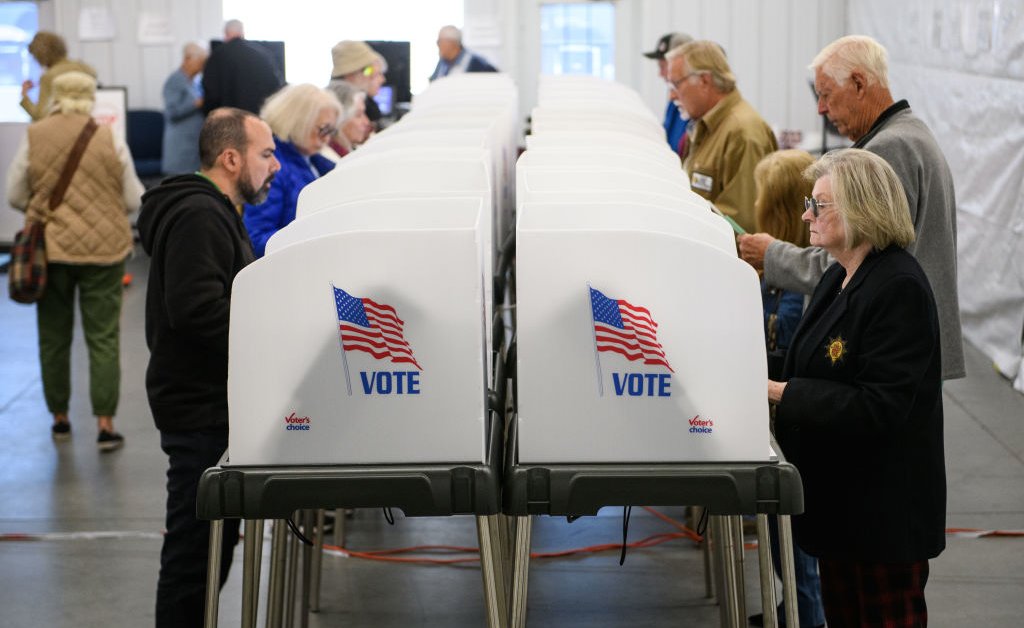
According to an article from TIME, the worst fears about AI’s influence on the 2024 US election were overstated. Ahead of the election, experts warned that artificial intelligence could cause chaos through misinformation, deepfakes and targeted campaigns, and a survey from the Pew Research Center showed that over half of Americans were concerned. Nevertheless, initial assessments indicate that AI had only a limited impact on the campaign.
Although deepfakes and AI-generated voices were used, they made up only a small share of the misinformation and did not significantly affect the election result. According to the U.S. Intelligence Community, foreign actors such as Russia attempted to use AI to influence voters, but they encountered limitations on the platforms.
TIME notes, however, that AI’s role could become more prominent in future elections. AI tools are already used for analytics, fundraising and targeted advertising, but according to Josh Berezin from Grow Progress, campaigns have so far been cautious in adopting the technology. Berezin notes that voters’ scepticism about AI’s role has made campaigns more hesitant.
According to researchers and sources in the article, more advanced AI tools could in future produce realistic deepfakes and targeted campaign messages much faster and more cheaply. Closed messaging services such as WhatsApp make it difficult to monitor AI-generated misinformation, and it will likely require more resources to identify and counter false information in future elections, warn experts such as Mia Hoffmann from Georgetown University.
OpenAI has also launched a new search feature for ChatGPT, which can now fetch up-to-date data directly from the web and include sources in its answers. ChatGPT’s new search model is based on an advanced version of GPT-4 and has been trained with synthetic data as well as input from partners in the media industry, such as Associated Press, Le Monde and Axel Springer. This integration with partners aims to balance AI-powered searches with journalistic quality and ethically responsible content.
Meta is secretly developing a web search engine to reduce its dependence on Google and Microsoft Bing and to deliver up-to-date information to its AI chatbot.
Denmark’s first AI supercomputer, "Gefion", is now ready for use and is expected to drive innovation in areas such as quantum computing, the green transition and life science.




 Marie Begtrup

 Andreas Brøns Riise
 Anders Peter Nielsen






 Andrew R. Chow


 Anna Bølling-Ladegaard Journalist