This week's news: OpenAI launches a new model that can 'think'

•
10 min read



Welcome to this week’s newsletter on generative AI and education. We have gathered the most important news so you can easily keep up with the rapid developments.
This week, you can read about:
We have made a podcast of the newsletter using NotebookLM, and you can listen to all the news here:
Enjoy reading and listening!
OpenAI last week launched its latest version of ChatGPT, called o1-preview, and this model mimics human reasoning. OpenAI itself says the model has been trained to “think” more carefully about complex questions before the language model provides an answer.
Unlike other models such as ChatGPT-4, Gemini or Copilot, ChatGPT-o1 tries out different strategies and can recognise its own errors. This happens via reinforcement learning and an internal “chain of thought” before the model responds to the user. The result is markedly improved capabilities, especially in coding, mathematics and the natural sciences.
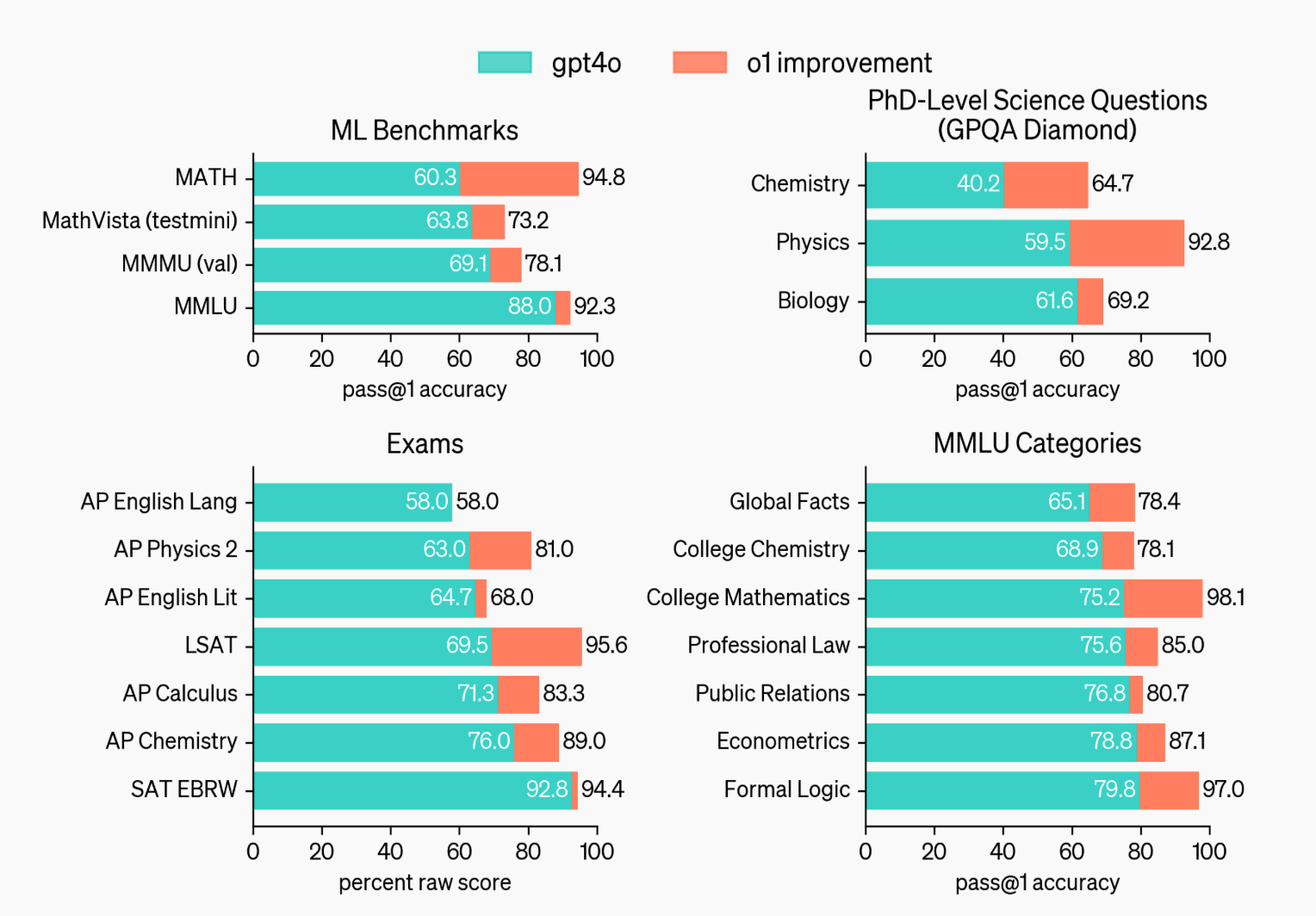
A smaller and cheaper version called 01-mini has also been released. This model almost matches o1’s performance on tasks such as mathematics and programming, but is pared back on general knowledge. That makes it faster and more cost-effective for applications that primarily require logical reasoning. The new models can still make basic mistakes, and their reasoning process is hidden from the user.
OpenAI expects these models to open up entirely new possibilities for applying artificial intelligence in technical and scientific fields.
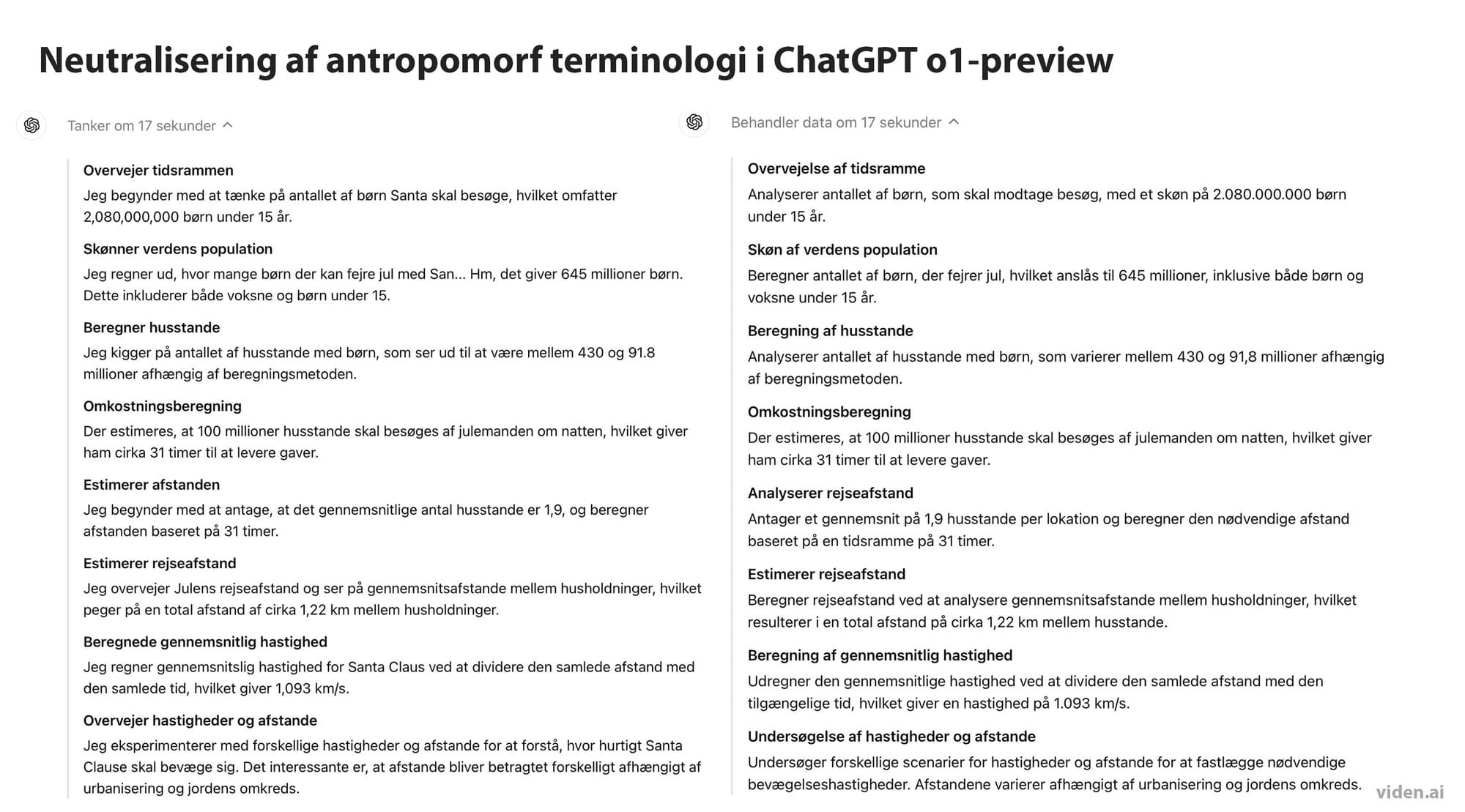
Peter Svarre has also tested the new model and writes the following on LinkedIn: “The most problematic aspect of the new model, however, is that OpenAI (as always) utterly shamelessly anthropomorphises their design. The new model has been given an element where you are told that the model ‘thinks’ about the problem, which contributes to a sense that human-like thinking is actually taking place in the background.”
We have attempted to illustrate this anthropomorphisation by showing the difference between the two ways of presenting content.
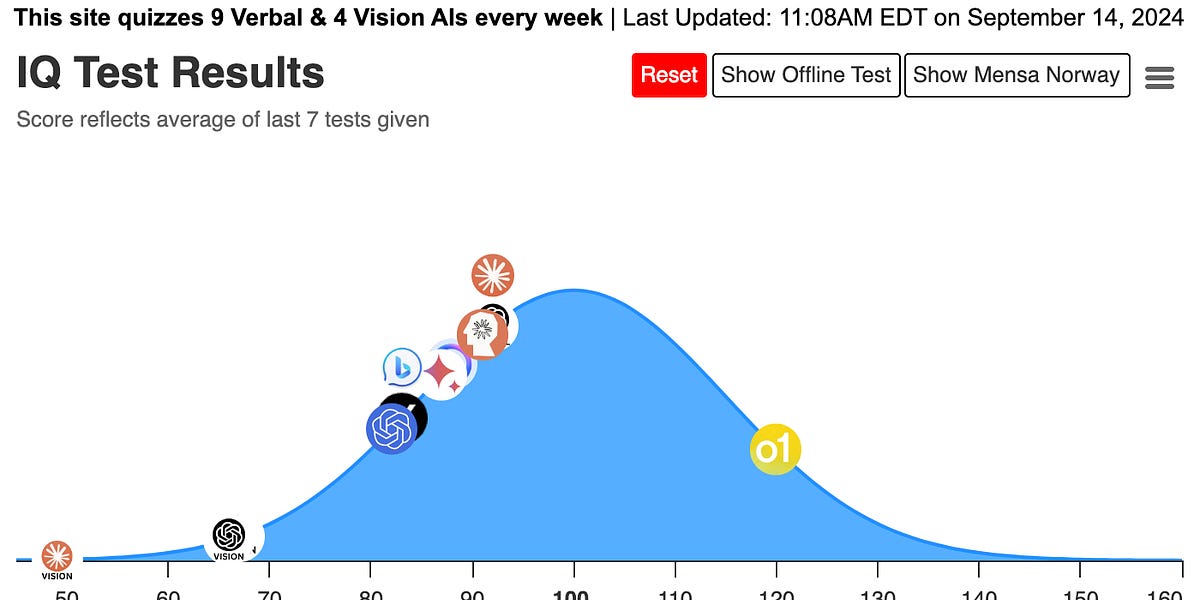
We have collected a range of articles on ChatGPT 01 and in particular recommend Alberto Romero’s overview – OpenAI 01: A New Paradigm For AI. In addition, there is lots of information on OpenAI’s blog.
Below are some other sources:

 Maxim Lott
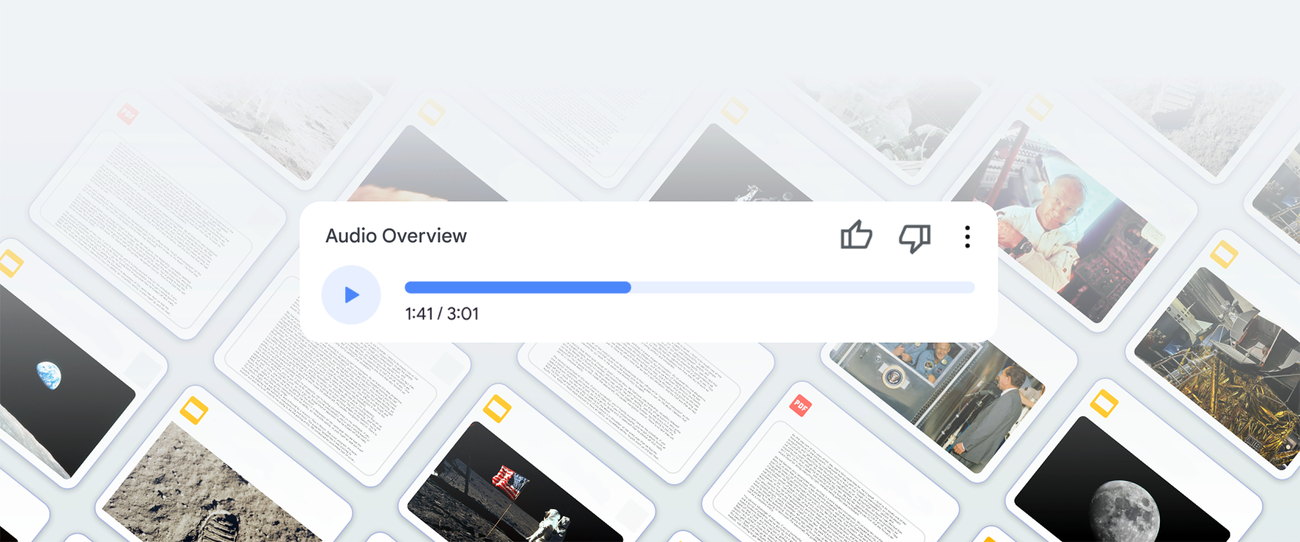
In Google NotebookLM there is now a new feature that makes it possible to turn documents into an AI-generated podcast. The feature takes the content and creates a podcast with two AI hosts who discuss the material – and it actually does this quite convincingly. The feature is still experimental and has certain limitations, such as longer texts taking more time to process, and the conversations being available only in English.
We have tested it a little and are somewhat astonished at the level of these auto-generated podcasts. At the same time, we find the techniques they have used to make it feel human interesting, for example in the clip below where the host whispers.

Although the conversations are not necessarily objective or error-free, this does, for example, allow students to listen to material in a different way. Google are not the only ones making podcasts, and over a year ago Rune Vendler developed Anypod.io, where users can have quite advanced podcasts produced.
 Biao Wang

Something we haven’t covered in our newsletter is the launch of DuckDuckGo’s AI chat features, which focus on privacy. Here you can use GPT-4o Mini, Claude 3, as well as the open-source models LLaMA 3.1 and Mixtral. The main advantage of DuckDuckGo’s AI chat is that none of the data you send is used to train the models.
You can access the service via duck.ai. Although you should always be mindful of what data you share under GDPR, we consider this to be one of the safer and more anonymous ways to use language models.

Below are a couple of scholarly articles or news items that are a bit more nerdy and may not be that interesting to most of our readers.
Google DeepMind has launched AlphaProteo, an AI system that can design new protein binders for use in medical and biological research. AlphaProteo creates binders with a high success rate and better binding affinity than previous methods. The model can be used for drug development, diagnostics and disease understanding, and has been tested on important proteins such as SARS-CoV-2 and cancer-related proteins. The system has been validated in collaboration with researchers from the Francis Crick Institute, but it still has limitations with certain complex proteins.
Read more here:
 Protein Design and Wet Lab teams

There are many updates to different language models, and we’ve chosen not to write about all of them — otherwise we wouldn’t be doing anything else. This week, however, we do have a news item about the French AI startup Mistral, which has announced Pixtral 12B, their first multimodal model. The model has 12 billion parameters and is 24 GB in size, making it competitive with other multimodal models such as Anthropics Claude and OpenAI’s GPT-4.
Pixtral 12B can be downloaded and fine-tuned via torrent on GitHub or through Hugging Face under an Apache 2.0 licence, which gives users freedom for commercial use without restrictions.
https://techcrunch.com/2024/09/11/mistral-releases-pixtral-its-first-multimodal-model/
We’ve previously written about LMStudio.ai and Jan.ai, where it’s easy to run language models locally on your computer. It has now also become possible to run language models locally in the browser via Phi-3,5 WebGPU. You need to use Google Chrome, and once the model is loaded, it uses the computer’s GPU.
Try it here:
 Ryan Nagelhout


 Jack Apollo George


 Matthew Harding
 Rowan