This Week’s News: New School Year, New Way to Share AI News
The first newsletter of the school year on AI in education covers secondary schools struggling with a lack of guidelines, Svend Brinkmann’s warning about AI art, new research raising questions about ChatGPT’s impact, and OpenAI’s launch of "Study Help".
This article has been machine-translated into English. Therefore, there may be nuances or errors in the content. The Danish version is always up-to-date and accurate. Read the original Danish article here.
Here is the first newsletter of the school year about artificial intelligence in teaching. Over the summer holiday, we adjusted how we handle news on the site. We read a lot, but when everything is buried in newsletters, it can quickly become unmanageable.
That’s why we have created a new subpage where we continuously collect news about AI:
We will now mainly use the newsletter to point to these updates and provide a weekly overview every Monday. This means you can both keep up as we go and receive a weekly summary. At the same time, we also plan to expand the page with more features, including a book section with recommended titles on artificial intelligence and education.
New this year, we also have a section with three takeaways you can bring from this week’s newsletter:
Rethink your assessment formats The challenges facing upper secondary schools (gymnasier) with written assignments suggest we may need to rethink how we evaluate students’ learning. Larger assignments can be usefully broken into smaller, visible processes, while the most important writing can take place in the classroom, where you can follow students’ thinking.
Teach students the difference between superficial and deep understanding Svend Brinkmann’s point about AI art also applies to written work. Ask questions such as: “What did you think when you read this?” or “Can you explain your reasoning behind this phrasing?” This helps students understand when they are using AI as a tool rather than as a substitute for their own thinking.
Use AI as a sparring partner, not as a shortcut Research suggests it’s about how we use AI. One approach is to design tasks where students evaluate and improve AI output instead of simply adopting it.
Below, you can dive into all the news and articles.
Upper secondary schools struggle with AI and a lack of guidelines
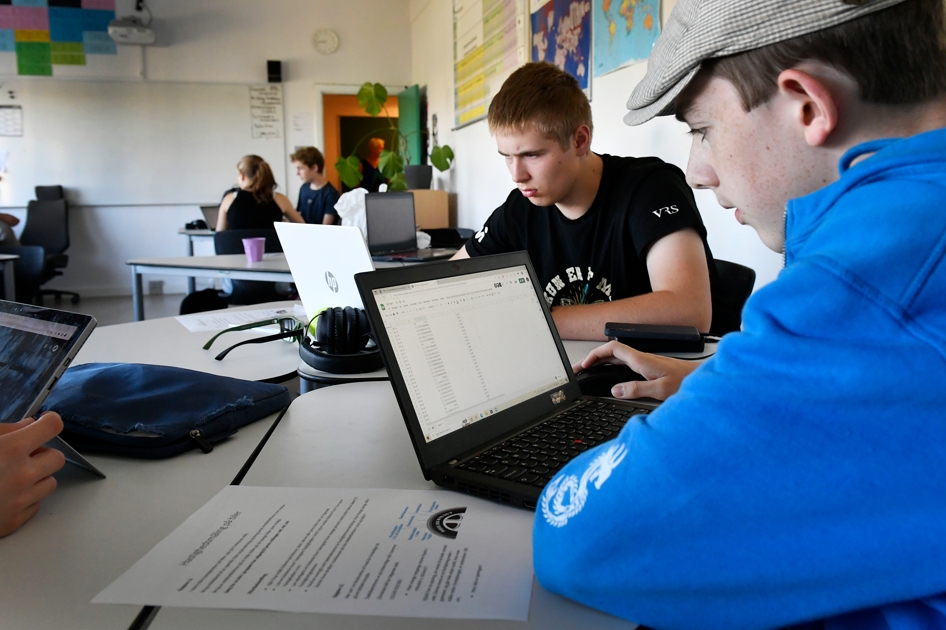
At several upper secondary schools (gymnasier), including Roskilde Gymnasium and Roskilde Katedralskole, teachers and principals are experiencing major challenges with how students use AI in their written assignments. The technology makes it almost impossible to assess students’ own academic abilities, as AI can deliver near-flawless responses. This has created growing mistrust between teachers and students because teachers often cannot discern who actually wrote the assignments.
Principal Henrik Nevers and upper secondary school teacher Jonas Paludan have therefore urged Børne- og Undervisningsministeriet (the Danish Ministry of Children and Education) to abolish the written year grades that currently appear on students’ exam certificates.
However, Education Minister Mattias Tesfaye has rejected the proposal. The challenge is that AI is used both to generate entire assignments and for linguistic improvement — but without the ability to detect and sanction such use, the basis for assessment becomes uncertain and inconsistent.
When AI creates art, we lose our connection to the world
In a thought-provoking op-ed in Altinget, psychologist and philosopher Svend Brinkmann argues that AI-generated art and content threaten our deep connection to the world. Taking the mysterious band The Velvet Sundown as his starting point — whose music may be 100% AI-generated — he raises fundamental questions about the nature and significance of art.
Through philosophical thought experiments, Brinkmann illustrates why context and provenance are everything: Just as an ant’s random line in the sand cannot be a portrait of Churchill, AI’s output cannot be genuine art, even if it sounds perfect. Art requires human intention, experience and emotion. It must come “from a place, a person, a heart”.
For the education sector, the message is particularly relevant: At a time when AI can produce seemingly perfect essays, pieces of music and images, it becomes vital to teach students the difference between surface and depth, and why authentic human creation still has irreplaceable value.
Svend Brinkmann’s point is clear: We must safeguard deep, authentic connections to the world before we drown in a surface of algorithmic content.
Does ChatGPT make us less intelligent? New research raises important questions
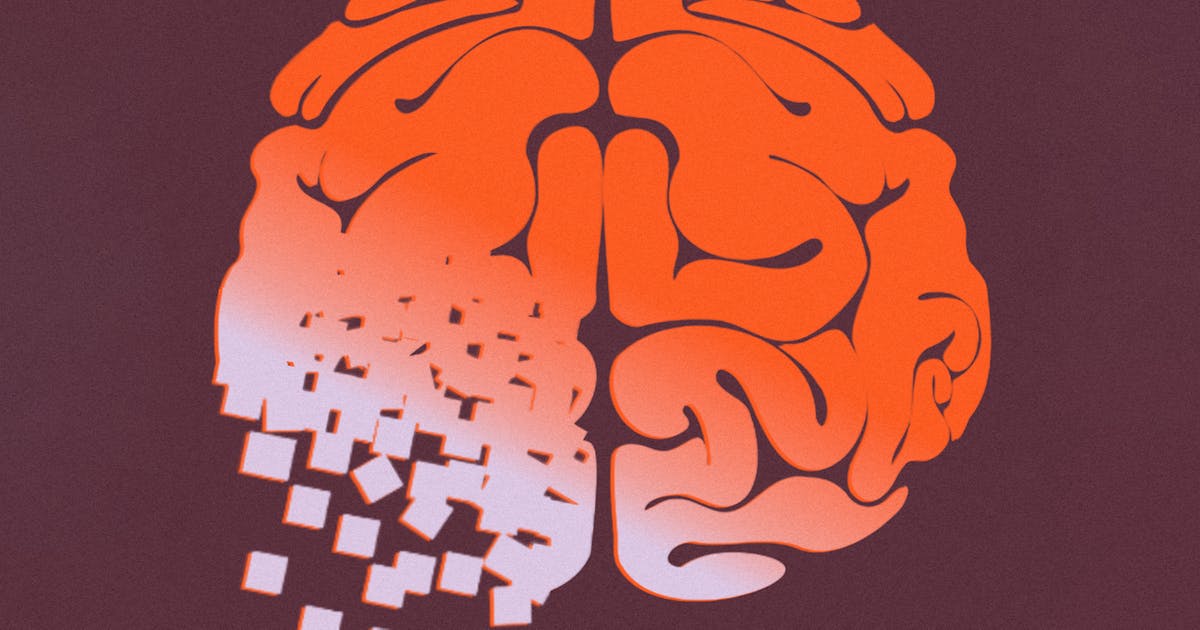
In an article in Zetland, Torben Sangild delves into the much-debated MIT research report “Your Brain on ChatGPT”, which has caused a stir worldwide. The report shows that people who use ChatGPT for essay writing display lower brain activity and less creative language — and seemingly become more “lazy” over time. But as Sangild points out, it’s not about avoiding AI, but about using it well.
The article explores the balance between harnessing AI’s potential while preserving our own capacity to think. As AI expert Ida Ebbensgaard puts it: We should see ChatGPT as “a hard-working assistant who is occasionally a little bit drunk” — not as a replacement for our own creative and critical thinking.
For the education sector, the message is clear: AI can be a valuable tool, but only if we teach students to use it as a sparring partner rather than a shortcut that skips vital learning processes.
OpenAI has launched Studiehjælp — a new learning feature that guides pupils and students through tasks with guiding questions. The feature is free for all users on the Free, Plus, Pro and Team plans and will roll out soon to ChatGPT Edu. The aim is to promote genuine learning rather than merely delivering ready-made answers.
Studiehjælp has been developed in collaboration with teachers, researchers and pedagogical experts and is driven by user-defined system instructions. The feature tailors feedback to the user’s goals and skill level via initial questions. Interactive prompts combine Socratic questions, hints and reflective prompts. Structured responses present information in clear, digestible sections with relevant context. The feature is especially aimed at university students.
Watch the video demonstrating the feature.
Initial trials with students have shown that Studiehjælp functions as a virtual, 24/7 tutor. The development roadmap includes clearer visualisations of complex topics and more detailed progress tracking.
Since the feature is currently governed by system instructions rather than direct training, behaviour may vary across conversations. The goal is to integrate the feature’s behaviour directly into the primary models to ensure greater consistency. OpenAI is exploring individual personalisation of the student’s learning experience and goal-directed learning. At the same time, through the NextGenAI initiative, OpenAI is collaborating on research into AI and learning outcomes.
The partnership with Stanford University’s SCALE Initiative will deliver evidence-based insights.
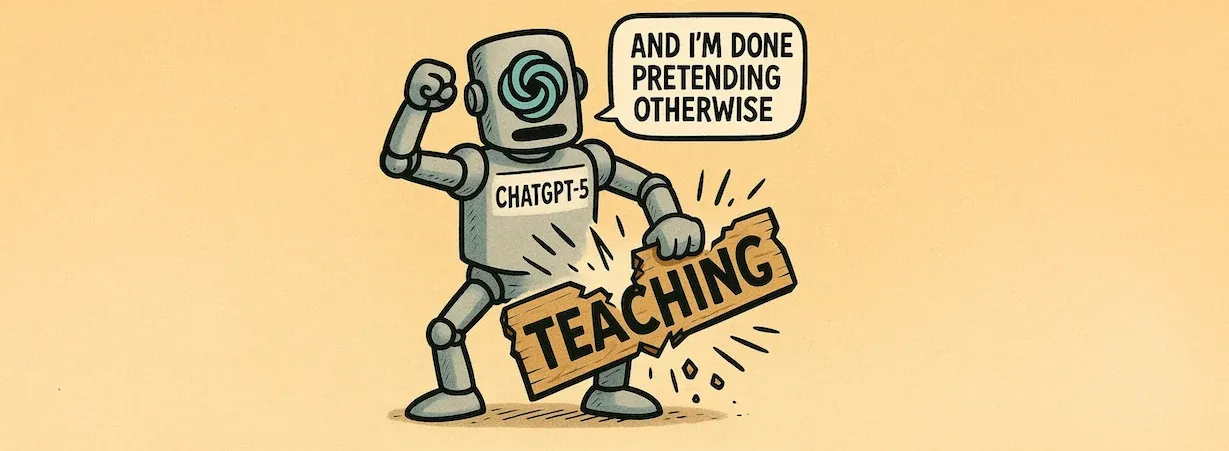
Martin Johannessen, teacher and education commentator, expresses a strong concern in a LinkedIn post about the use of ChatGPT-5 in writing instruction. He has previously been positive about technology in schools – including AI – as long as it was used thoughtfully. But after seeing ChatGPT-5’s capabilities, he judges that the technology no longer functions as a learning tool, but as a direct substitute for students’ own thinking.
He therefore argues that larger written homework assignments no longer make sense. Instead, all substantial writing should take place in class, under teachers’ supervision, and be broken down into small, transparent steps. For him, it is not about rejecting technology in general, but about protecting students’ capacity for independent reflection and critical thinking. If schools hand over thinking to machines, Martin Johannessen believes we risk raising a generation that trusts algorithms more than their own abilities.
There has been a lot of tech news, but we have selected the two most important.
GPT-5
OpenAI has released GPT-5, which is now available to all users – both free and paying. The biggest news is probably that GPT-5 has become better at avoiding hallucinations.
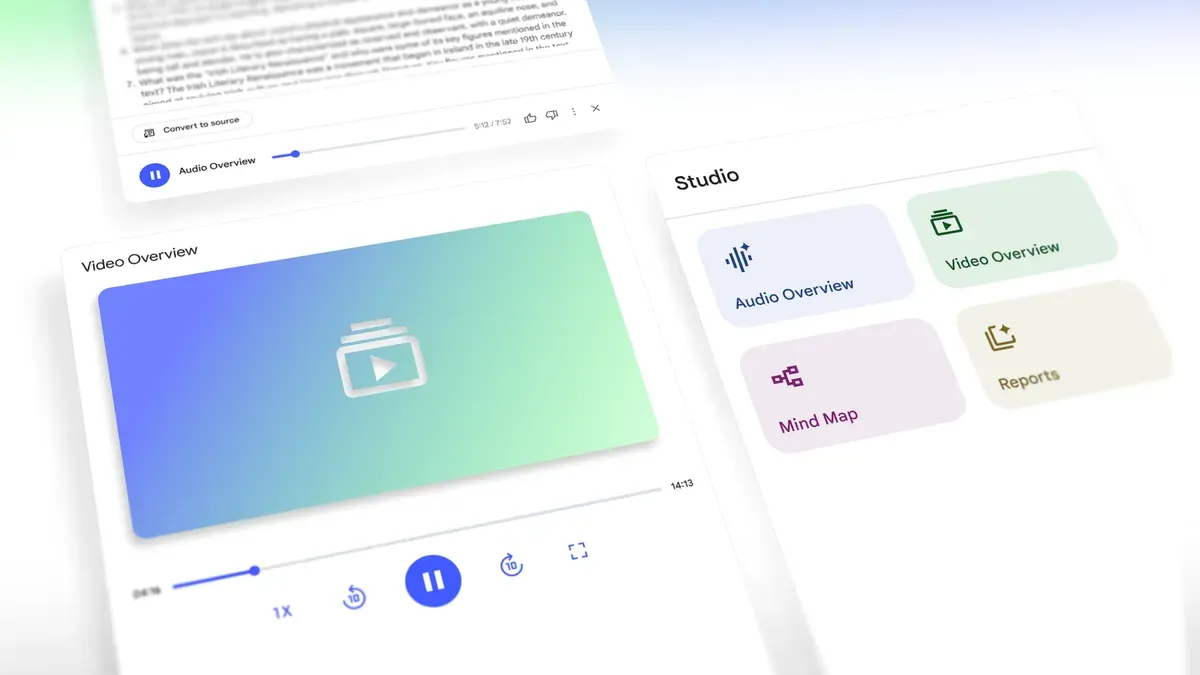
Just before the holidays, Google launched the latest version of NotebookLM, with the new feature being the ability to generate a visually annotated slide presentation.