This Week’s News: New Agreement for Danish Public Schools Introduces a New Subject

•
11 min read


Here is a news overview rounding up the most important news on artificial intelligence and teaching from week 12.
A new agreement on the Danish primary and lower secondary school (folkeskole) has been concluded, which means that technology comprehension will be introduced as a subject in the folkeskole – perhaps not at the level many had hoped for, so we have compiled a number of links on the topic.
We are also focusing on Norway, where quite a lot is happening around artificial intelligence. There they will establish 4-6 new research centres that will work with artificial intelligence, and at the same time UiO and NORA are publishing three new Norwegian language models. This stands in stark contrast to the fact that the Minister for Digitalisation, Marie Bjerre (V), does not believe there should be investment in a Danish model.
The Aalborg Intelligence project has published new teaching materials designed to integrate artificial intelligence into mathematics teaching. The materials are tailored to enrich the existing curriculum and give students hands-on experience with AI. At the same time, Videnskab.dk has published an interesting article on intelligence and chatbots.
In the scientific corner there is room for new diffusion models that can generate images from your own drawings, and the project LATTE3D, which shows how a diffusion model can make 3D models. We also take a look at the possibilities when robots are equipped with ChatGPT, and how we can expect to interact with robots in future.
This week’s recommendations are a set of podcasts from IT-vest and radio 24syv.
Happy reading, and Happy Easter.
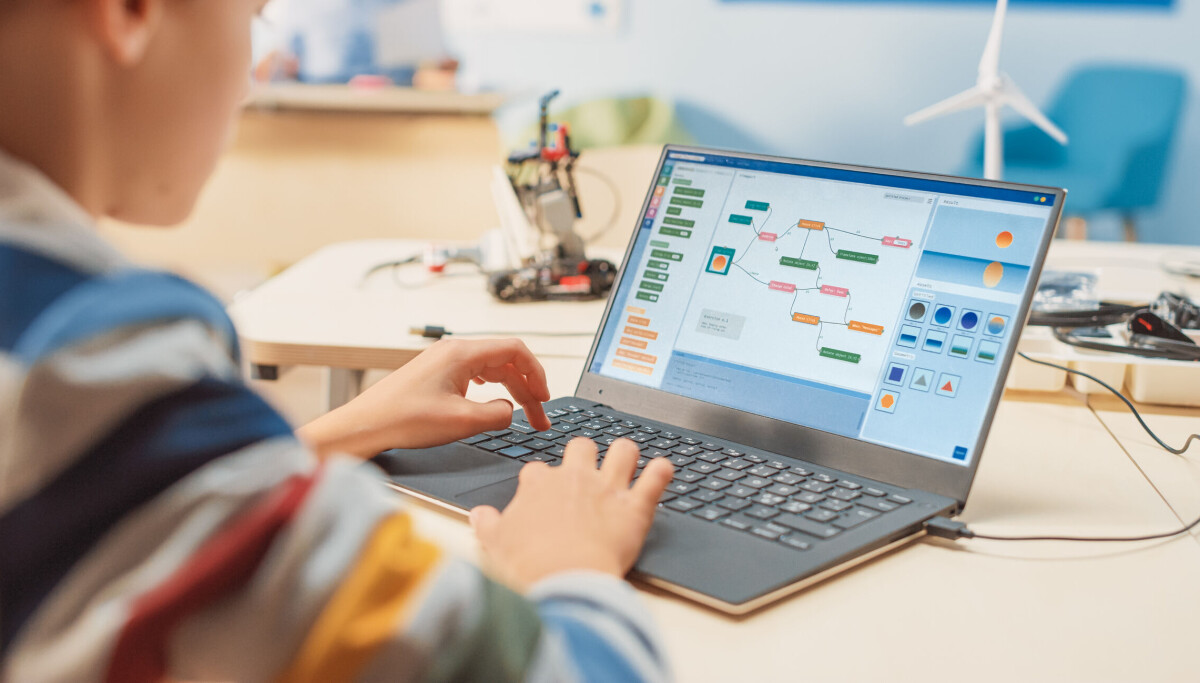
On Tuesday 19 March, the government, together with the parties behind the cross-party agreement on the folkeskole, presented a new folkeskole agreement, and for the first time in three decades a new subject is being introduced in the folkeskole. With an investment of 160 million kroner, technology comprehension will now be a permanent part of teaching from 1st to 9th grade, both integrated into selected existing subjects and as an elective in the final years.
However, the agreement has met quite a bit of criticism, as many argue that the technology comprehension subject should have been compulsory for all pupils, not only an elective for technology-interested boys.
Below you will find a collection of articles that delve into the details of the new subject.

 Jakob Aaberg Lauridsen
 Karen Ravn


During 2025, Norway will take an ambitious step by establishing 4 to 6 new research centres dedicated to artificial intelligence. Oddmund Hoel, Norway’s Minister for Research and Higher Education, highlights the importance of close collaboration between educational institutions, business and the public sector. The aim is to harness the positive opportunities that the technology brings while also navigating wisely with regard to potential negative consequences.
A budget of 850 million Norwegian kroner has been set aside to fund the new research centres, with each centre able to receive an amount between 75 and 200 million Norwegian kroner over a period of at least five years.
 Published 21. Mar 2024Del.cls-1{fill:#081319;}close-smallMailTwitterFacebookLinkedInDownload
As an alternative to the big tech companies’ language models, the University of Oslo (UiO), in collaboration with the national AI network NORA, has developed its own language models. The models are based on 30 billion words, including data from the Norwegian National Library. The aim is to create a national language model that more accurately reflects the Norwegian language’s nuances, culture and values. UiO also writes that it is a step towards technological sovereignty and the ability to handle sensitive data securely.
Two of the models are trained from scratch in Norwegian, while the third model is based on Mistral and subsequently fine-tuned in Norwegian.
In Denmark, the Minister for Digitalisation, Marie Bjerre (V), tells Børsen that the Danish state should not develop, own and operate its own language model.
 Gina Aakre

 Philip Sune Dam

 Benjamin Lillelund

 Elisa Nadire Caeli

 Daniel Strain

 Ivan Mehta

 Tomas Kepler, chair, Gymnasieskolernes Lærerforening

If you are looking for teaching units that combine mathematics and AI, Aalborg Universitet (Aalborg University) offers a new resource site that is regularly updated with new material. The project is funded with support from Novo Nordisk Fonden (the Novo Nordisk Foundation) and is anchored at Institut for Matematiske Fag (Department of Mathematical Sciences) at Aalborg Universitet (AAU). At the same time, the project is a collaboration with the five gymnasiums in Aalborg and will continue until 2026.
Read more on their website.

Luís Cruz-Filipe, associate professor and programme lead in artificial intelligence at Syddansk Universitet (University of Southern Denmark), has written an article for Videnskab.dk focusing on generative AI such as ChatGPT and MidJourney. Here he explains that these AI programs learn through examples without understanding the language or the images they create. However, the models lack a fundamental understanding of the material they work with and resemble parrots that repeat words without understanding them.
In the article, he argues that the future of artificial intelligence may lie in a hybrid approach that combines machine learning with symbolic AI, which is able to understand and interact with the world in a more meaningful way.
The article provides a good insight into where artificial intelligence stands right now, as well as the need for responsible use and further development of the technology.
 See Luís’ profile

Below, we select articles or tools that take a slightly more scientific perspective. These are pieces we read ourselves to stay up to date, and we also know that this is not especially interesting for most people.
Current diffusion models are slow to generate images because of the denoising process, but in the img2img-turbo project you can generate images using a prompt and your own drawings. What is interesting here is the speed at which images can be generated, and the new method for producing one-step, realistic image transformations.
The model can be tested on Hugging Face.

 GaParmar

LATTE3D is a new technology from Nvidia that transforms text into 3D models in 400 milliseconds—something that previously could take an hour. At the same time, the generated models are also sharper and more detailed compared with the earlier model ATT3D.
At the moment it is solely a proof of concept, and Nvidia has not released the code, and the model has been trained only on animals and everyday objects. But it offers a glimpse of what professionals working with 3D can expect in the near future.
Watch the video below, and read more on Nvidia’s website.


OpenAI has teamed up with the company Figure to develop a robot called Figure 01, which can speak and be used at home in everyday life. The robot can analyse images, text and voices, which means it can operate autonomously in the real world—something that is otherwise difficult because of the complexity.
The project is financially supported by Jeff Bezos (Amazon), OpenAI and Nvidia and is expected to accelerate the development of humanoid robots. Before you order the robot to take over your teaching, note that the price of the robot’s components can range from DKK 200,000 to 1,000,000 per unit.
Below is a video where the company presents the robot’s capabilities.


This week we are focusing on podcasts, and we recommend listening to the excellent podcasts from IT-vest, which focus on computational methods. In the two episodes we link to below, they visit the MASSHINE network at Aalborg Universitet (Aalborg University).
We also think the podcast Fremtidens forskning - VidensGab is interesting; the programme explores AI’s role in the future of research.
MASSHINE is an inspirational community at Aalborg Universitet that serves as a network for researchers at Det Humanistiske og Samfundsvidenskabelige Fakultet (SSH, Faculty of Humanities and Social Sciences), who in various ways use computational methods or have computational phenomena as their field of research.


In the podcast from 24-7, they discuss how digitalisation and artificial intelligence are transforming research and the medical field. Science journalist Lone Frank is a guest and talks about radical improvements in research methods towards 2050, when AI will be able to carry out and analyse complex data and experiments independently.
They also discuss how technology is democratising research practice through ‘citizen science’, where ordinary people contribute to scientific data collection.






