This Week's News: Learning, Laziness, or Mental Atrophy?
This week we look at the possible closure of Den Danske Ordbog and high schools' use of ChatGPT as a study buddy. The focus is on purpose-built AI that enhances learning, along with the debate over human craftsmanship versus technological efficiency.
This article has been machine-translated into English. Therefore, there may be nuances or errors in the content. The Danish version is always up-to-date and accurate. Read the original Danish article here.
This week’s newsletter is a little shorter than usual because the weekend was spent at Nær-festival on Langeland. As I listened to Carl Emil Petersen in a packed hall with a completely silent and attentive audience, it struck me how little artificial intelligence actually occupies in the real world. Imagine if he had mentioned that Frit Land was co-written with ChatGPT. It isn’t, but imagine if it were. For me, that would completely change the value of the song. It would remove the human imprint, the vulnerability and the lived experience that make art meaningful. As Nick Cave has previously written on his blog, artificial intelligence may be able to write a good song, but never a fantastic one. As he concludes:"...AI would have the capacity to write a good song, but not a great one. It lacks the nerve."
And that sense of value, authenticity and human authorship is precisely what is at stake. Last week it emerged that Den Danske Ordbog (The Danish Dictionary) is under threat of closure. While AI tools such as ChatGPT and other language models are surging ahead in education, we risk losing the very foundation of our understanding of the language.
From ban to use: The discussion is no longer about whether to use AI, but how to do so pedagogically responsibly as a partner.
Design is crucial: Specialised AI such as ChatTutor shows that the technology can be designed to strengthen learning and critical thinking, in contrast to generic tools.
Putting people at the centre: There is growing awareness that we must actively choose to strengthen deep work, craftsmanship and the unique human competences that AI does not possess.
We continuously collect news about AI in teaching at viden.ai/nyheder, if you want to keep up between newsletters.
Den Danske Ordbog under threat of closure
Den Danske Ordbog, Denmark’s most widely used dictionary of definitions, is set to close in 2026. The government’s Finance Bill does not allocate the necessary DKK 8 million annually to continue the work, and the first redundancy notices will be sent out already in September.
For the education sector, this threat comes at a particularly critical moment. While AI tools such as ChatGPT and other language models are gaining ground in teaching, we are simultaneously losing the most important Danish counterweight to algorithmic language processing. As Professor of Language Technology Bolette Pedersen emphasises, Den Danske Ordbog constitutes “the very essence of a bulwark against the standardisation and homogenisation accelerated by chatbots.”
How upper secondary school teachers use ChatGPT the right way
At Handelsgymnasiet Ikast-Brande (business upper secondary school), they have chosen a pragmatic approach to using AI in teaching. German teacher Line Mortensen puts it precisely: ChatGPT should be the students’ “makker” with two k’s, not their “maker”. In other words, a tool that supports learning, not one that replaces independent thinking.
The discussion at the Central Jutland upper secondary school (gymnasium) is highly topical for teachers across the country. While the ministry is reinstating pen-and-paper exams in language subjects, the school’s head of education, Lene Borg, points out that we should instead rethink exam formats and teach students to use AI responsibly. It’s about equipping students for a digital reality where artificial intelligence is unavoidable.
What happens to our brains when AI takes over knowledge work?
Peter Svarre poses a provocative question in his latest column in Copenhagen Review of Communication. If industrialisation gave us cars but robbed us of our physical fitness, what happens to our brains when AI automates our knowledge work?
He uses the term “mental atrophy” to describe how AI technologies, much like the machines of industrialisation, can lead us to lose competences we previously depended on. Just as we now go to the gym to counteract the physical consequences of industrialisation, he wonders whether in future we will need to cultivate “mental fitness” to keep our brains in shape.
Specially designed AI strengthens learning rather than replacing it
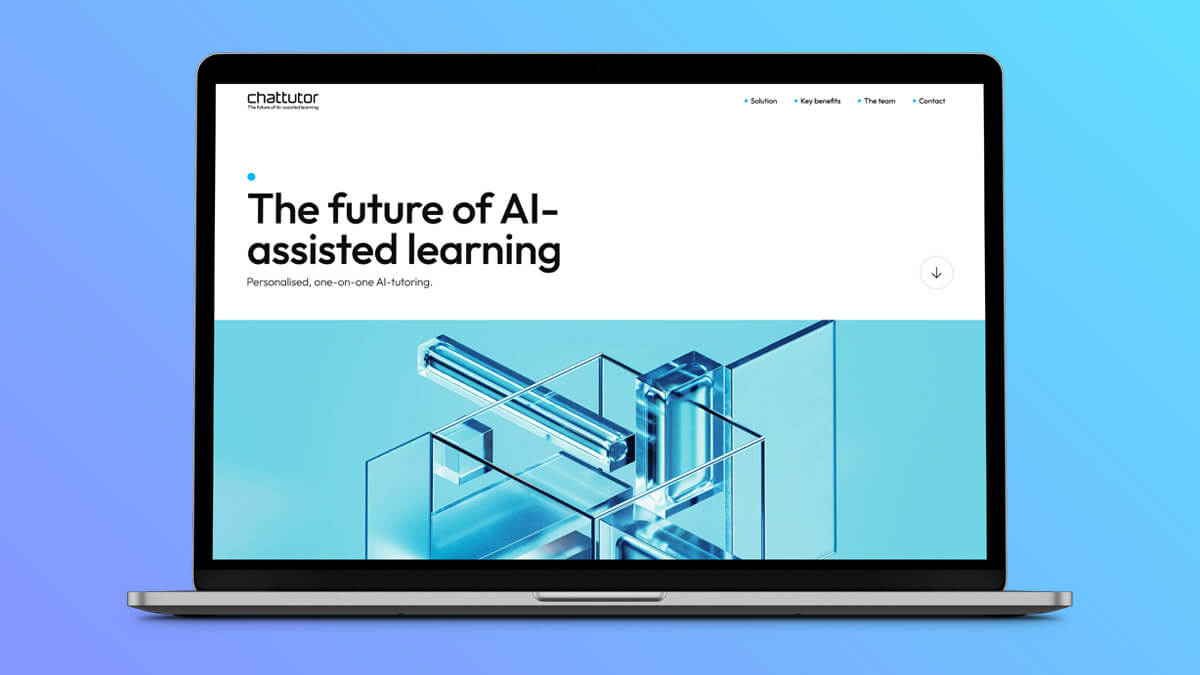
While the debate about artificial intelligence in teaching often focuses on the risk of cheating and lack of learning, new research from Københavns Universitet (University of Copenhagen) points to an alternative approach. Professor Guido Makransky and his team have developed ChatTutor, an AI tool that not only provides answers but also asks clarifying questions and promotes reflection among students.
The research challenges earlier MIT studies that showed reduced brain activity when using ChatGPT. The KU researchers, by contrast, document that their specially developed AI tutor actually increases learning outcomes, both compared to traditional teaching and to generic AI tools. The key is that the tool is grounded in learning theory and functions as a personal tutor who can be present for all students at once.
The results are relevant for the entire education sector, from the Danish primary and lower secondary school (folkeskole) to universities. They show that we should not fear AI but instead design it with learning in mind. It is about developing tools that support the active learning process rather than taking it over.
Should AI replace or amplify the human craft in teaching?
In a column in Information, Jonas M. Hoeck raises a central question for the entire education sector about how we should relate to AI when the technology both threatens to make us more “efficient” and at the same time offers new possibilities.
He points to two very different paths universities are now taking. While some are cutting back on the humanities in the name of efficiency, others, for example Karlstad Universitet in Sweden, are choosing to strengthen precisely the human skills through new programmes in the craft of writing. It is a conscious choice about the role people should play in an AI-driven future.
For educators at all levels, his point is important. Instead of seeing AI as a threat, we can choose to strengthen what technology cannot do—namely, deep focus, patience, and the joy of mastering a craft. It is about educating pupils and students to be creators rather than mere consumers of technology.