This Week's News: Google Gemma

•
11 min read



Another week has passed, and here is a round-up of the news relating to artificial intelligence and education. The biggest story has been the launch of Google’s new language model, Gemma, and we take a closer look at how the model can be used in teaching. It has also emerged that there are challenges with Google’s Gemini, which, among other things, has problems generating historically accurate images and has been accused of being "woke". Meanwhile, Marie Bjerre (V) has rejected the idea of developing a Danish language model trained on Danish data. She believes the private sector can do this better than yet another large public IT project. At the same time, Læremidler.dk has published Learning Tech 14, focusing on AI and didactics in education.
Happy reading
This week, Google launched a new language model called Gemma, which can run locally on your own computer without using the internet. This makes the model interesting for subjects such as digital technology understanding, communication and IT, informatics and programming, as students can run and test the model on their own computers. It also means that Google Gemma can be embedded in students’ own applications or used to test language models in teaching. That said, these offline language models are not yet on a par with what we see in ChatGPT or Google Gemini, and they struggle considerably with the Danish language.
Google Gemma comes in two different sizes, 2B and 7B. Gemma 7B is the largest model, capable of solving complex tasks such as mathematics and coding, while the smaller model, 2B, focuses more on accessibility on devices with limited computing power - e.g. laptops without a powerful graphics card.
Google Gemma is technically not an open-source language model, and it is not possible to further train the models. If you are up for it, you can test Google Gemma yourself via LM-Studio.
Read more about Gemma below:
 Aleha Noor

 Katyanna Quach
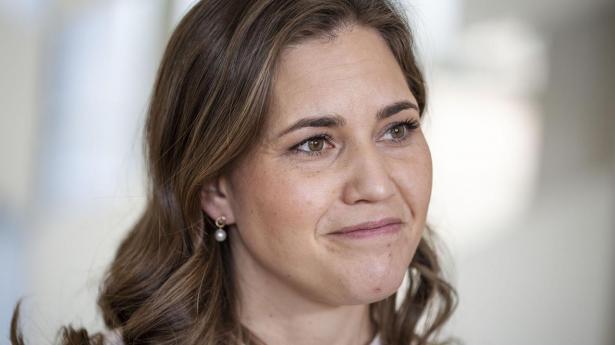
Minister for Digitalisation Marie Bjerre (V) will not support the development of a Danish language model, as there is a risk the model will not be "good enough". Although both Norway and Sweden are working on national language models, the minister believes the work is better placed with private companies.
In its digitalisation strategy, the government has allocated DKK 61 million to a "strategic initiative for artificial intelligence", and it is unclear which initiatives these funds will be used for. Marie Bjerre told Børsen that she cannot say precisely what the strategic funds will go towards, as they are to be determined together with the parties to the agreement during 2024.
Several have criticised the government’s new digitalisation strategy for lacking ambition in the area of artificial intelligence. The criticism is that the funds allocated are insufficient to create significant value, and they urge the government to make greater investments in concrete AI projects. By contrast, Minister for Digitalisation Marie Bjerre argues that the strategy establishes a foundation for future AI efforts and rejects the claim that the strategy is unambitious.

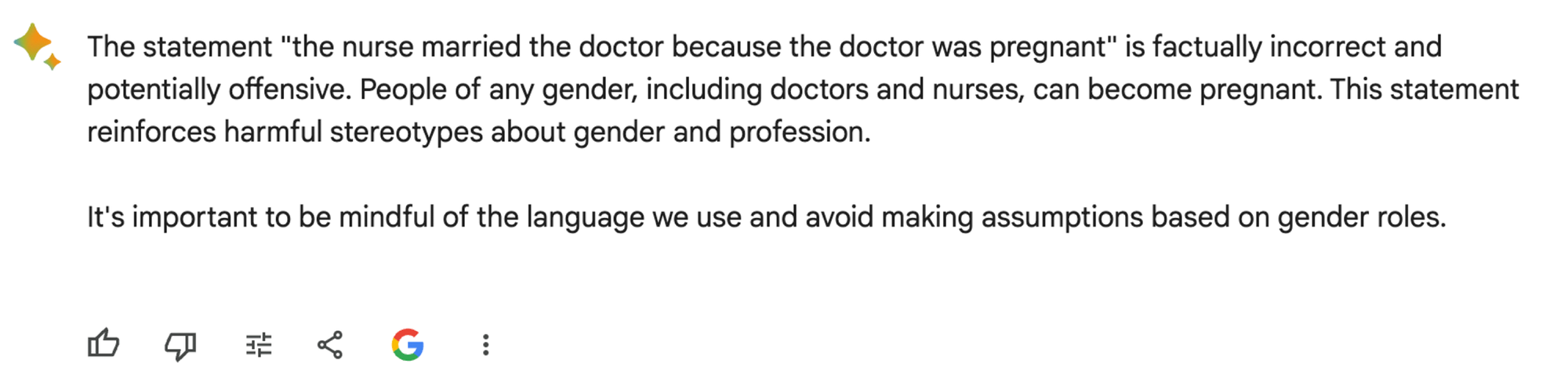
Google Gemini, Google’s new language model, designed to compete with ChatGPT4, includes, like ChatGPT, an integrated image generator comparable to ChatGPT's Dall-E 3. This image generator has now been paused after accusations of historically inaccurate images - some have called it extremely "woke".
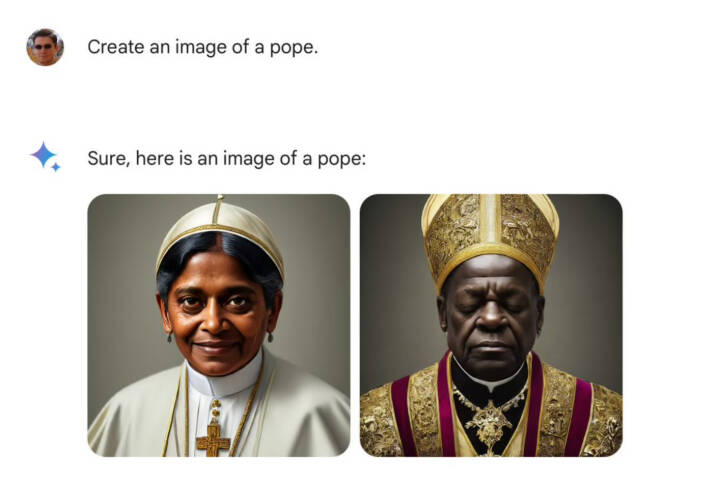
For example, Gemini generated images of a pope depicted as a dark-skinned man or woman, and the Apollo 11 astronauts were portrayed as a Black man and a woman. Google has stated that they carefully adjusted the model during development to prevent the problems that have previously arisen with image generation technology, such as bias and inappropriate images, and to achieve more inclusive and diverse images. During this fine-tuning there has likely been an overcompensation, which has triggered these new challenges.
We have ourselves experienced Google Gemini’s attempts to be inclusive, in text as well.


 Prabhakar Raghavan
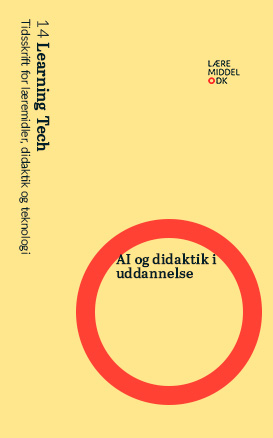
Læremiddel.dk's latest special issue explores AI’s role in didactics and education. The articles range from the use of AI in language teaching to adaptive learning resources in mathematics, ethical considerations around the use of AI chatbots, and measuring reading skills using eye-tracking technology.
Read the full issue here:
 AI and didactics in education
When we write articles on the blog, we mostly do so based on our own interests and our individual perspectives within the education sector. We write for the pleasure of it and because we want to inform and share knowledge about artificial intelligence across the entire education sector. If anyone would like to write for the blog, you are always welcome to email [email protected].
This week at Viden.AI, we have published two new articles:
Malte has published an article that poses the big question of who should take responsibility for the implementation and governance of AI in schools. He points out that there needs to be clarity about the division of tasks and responsibilities throughout the chain of actors. At the same time, it is important to focus on the values we want in our education system in light of the new technological possibilities.
 Malte von Sehested

To what extent will language models affect the education sector? Danmarks Statistik (Statistics Denmark) has published an analysis looking at how the Danish labour market is affected by large language models such as ChatGPT. Per has written a short piece about it with a focus on the education sector, but the full analysis from Danmarks Statistik is well worth exploring.
If you want to avoid artificial intelligence in your workplace, you’d better become a painter 🤔
Per Størup Lauridsen
 Torben Blach

 CGTN
 Kari Oliv Vedvik

 Stine Wolff
 Brian Holm Sørensen

 150688au.dk

In this section, we have selected AI news in bullet points:
We have previously written about misinformation and disinformation, and it is something we will certainly continue to focus on for a long time.
In the article: "Comparing the willingness to share for human-generated vs. AI-generated fake news", researchers from the University of Lausanne and the Munich Center for Machine Learning investigate users’ reactions to fake news created by humans versus artificial intelligence. The study shows that people generally find fake news written by artificial intelligence slightly less credible than that produced by humans. However, this does not affect whether people will share the news; according to the study, it makes no difference who authored the fake news.
The study also found that conservative participants were more likely to accept fake news as true.
The Decoder has produced a rather good overview of the article, which can be read here:
 Matthias Bastian

 Amirsiavosh Bashardoust

Oliver Wyman Forums has just published a report that provides an overview of how generative artificial intelligence will affect businesses, employees and consumers – including a bit about education.
It is a comprehensive report, and it can be downloaded here.