This Week’s News: From Quick Answers to Critical Thinking
AI gives students polished answers in seconds, but how do we teach them to think critically? From reflective friction in PE to tech giants’ power over education, this week is about preserving human judgment in education.
This article has been machine-translated into English. Therefore, there may be nuances or errors in the content. The Danish version is always up-to-date and accurate. Read the original Danish article here.
Here is this week’s newsletter on artificial intelligence, which is no longer the future but very much part of the present in Danish classrooms. It is a technology that in some places disrupts and undermines teaching, yet elsewhere motivates and develops new forms of teaching. AI is a double-edged sword that we are only now beginning to understand in terms of opportunities and challenges.
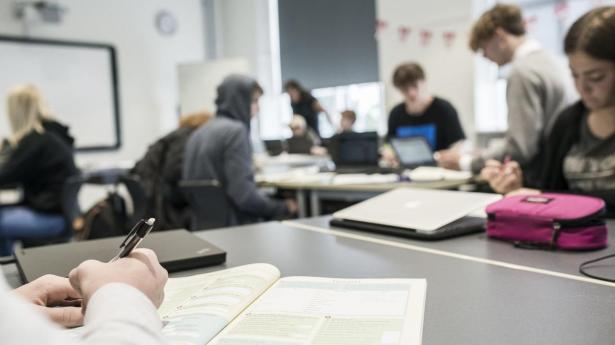
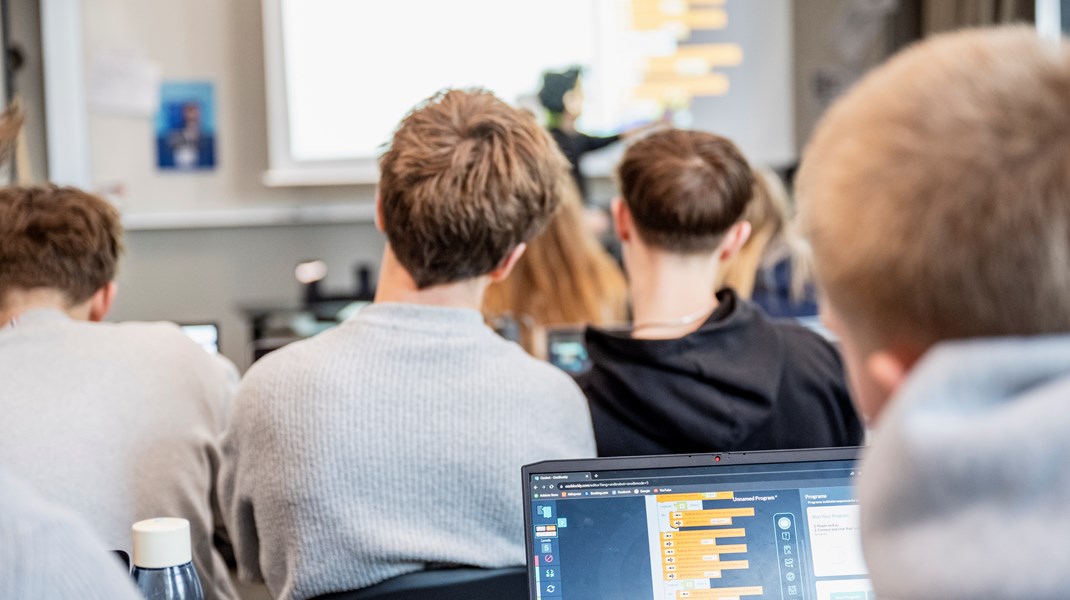
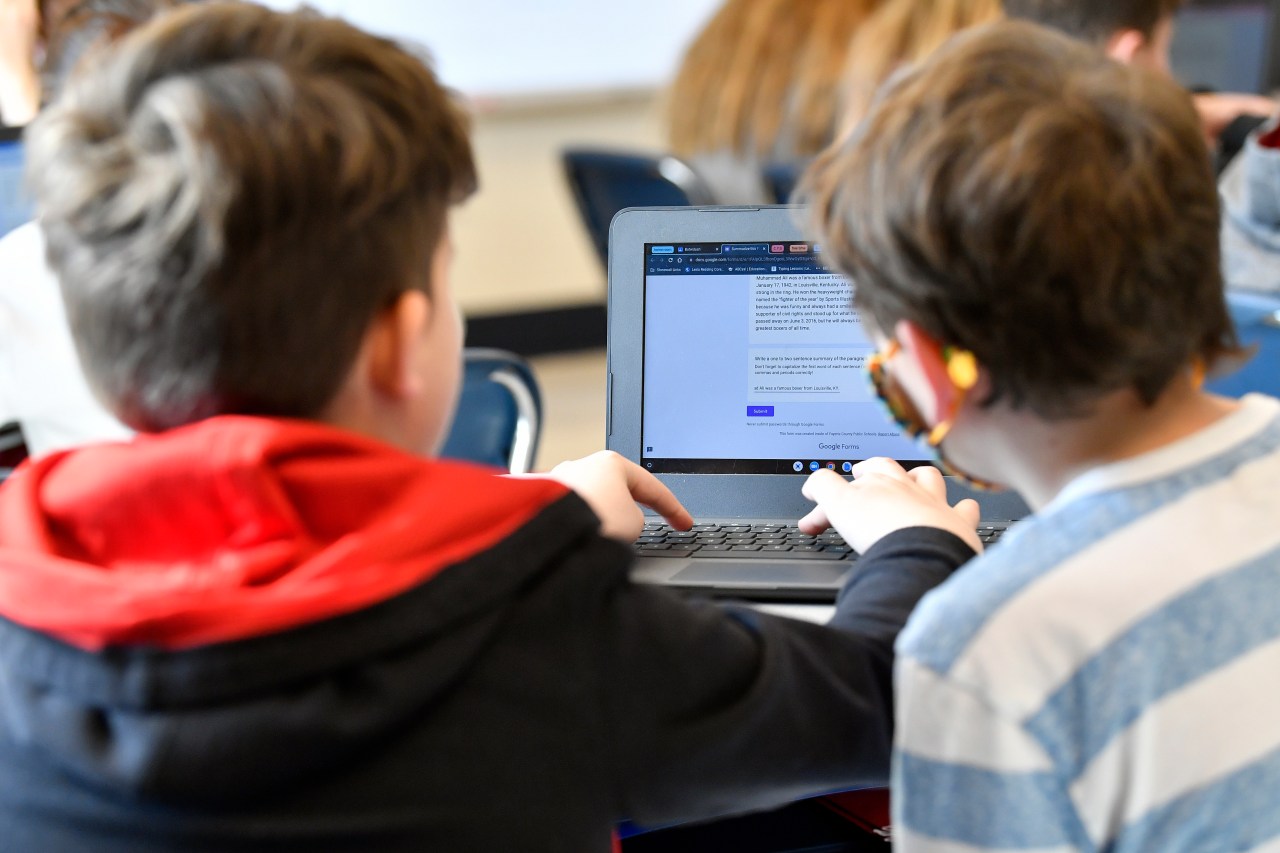
A concrete example of these challenges appears when pupils encounter AI tools in lessons. They gain access to a technology that can, in seconds, write more convincingly than they often can themselves. Too often, pupils struggle to see beyond the polished answer. I myself find that many are dazzled by it and often do not get beyond the first question. Part of the reason is that asking a question takes little effort, while validating whether the answer is correct takes knowledge. But the answers from language models feel closed. Even though the latest version of ChatGPT keeps suggesting what it can do, there is still something missing to prompt pupils to think critically.
That is why, here on the blog, we have written about Peter Dalsgaard’s concept of “Reflective Friction”, which is precisely about how we can design teaching that preserves pupils’ ability for critical thinking.
Reflective friction: Design tasks where pupils compare multiple AI answers or document their thought process.
Human strengths: Focus on creativity, empathy and collaboration — the things AI cannot do.
Democratic awareness: Be mindful of who controls the tools in the classroom.
Below you can delve into all the news and articles.
💡
We continuously collect news about AI in education at viden.ai/nyheder if you want to keep up between newsletters.
AI as the beginning of a renaissance - not the end of the world
In Jyllands-Posten (a Danish national newspaper), Rasmus Vind challenges the prevailing pessimism around artificial intelligence’s impact on society. Instead of seeing artificial intelligence as a threat to creativity and work, he argues that the technology can free us from trivial routine tasks and create space for what truly requires human judgement.
Rasmus Vind envisions a future where we spend less time on meaningless tasks and instead can focus on creativity, relationships and genuine value creation. He points out that our children may not ask: “Why didn’t you do anything?”, but rather: “Why did you bother to work so much?”
It is an interesting angle on how we can embrace technological development without losing what makes us human.
While investment in AI technology is rising sharply, skills development is seriously lagging behind. According to the World Economic Forum, every other employee globally must be upskilled or reskilled by 2030, yet most of today’s education programmes do not include AI at all.
Josefin Rosén from SAS Institute warns that the skills gap is not only a barrier to innovation, but also a democratic problem. Denmark is relatively well placed with 15 percent of companies using AI (versus the EU’s 8%), but lags behind on talent pool and patents compared with Finland and Sweden.
Peter Skat-Rørdam from Kata Fonden (the Kata Foundation) warns against educating children to become “second-rate robots” in a future dominated by AI. He emphasises that school should strengthen human competences such as creativity, critical thinking, empathy and collaboration through cross-disciplinary and project-based teaching.
Experiences from nine LEAPS schools show that this approach both raises academic standards and strengthens the abilities that machines cannot take over — something that requires courage, leadership and investment in rethinking school.
Read the full op-ed in Dagbladet Børsen (the Danish business daily).
Expert panel: How to use ChatGPT effectively in everyday life
In an extended Q&A session at DR (Danish Broadcasting Corporation), three Danish AI experts answer readers’ questions about how ChatGPT can best be used in everyday life — from writing job applications and understanding mathematics to navigating family conflicts and tackling creative tasks.
The panel, consisting of Anders Bæk (AI Revolutionen), psychologist Stine Helding Rand and researcher Sine Zambach, offers concrete advice on using AI as a sparring partner rather than a replacement, on maintaining a critical sense, and on avoiding common pitfalls.
Particularly valuable are their tips for parents on teaching teenagers responsible use of AI, as well as the discussion about the technology’s future role in the labour market and in the education system.
PE teacher uses AI as a sparring partner in teaching
Jacob Witt-Larsen from Byskolen in Nakskov demonstrates what reflective friction can look like in practice. He has created an AI sparring partner that helps him plan PE lessons, but the interesting part is how he avoids the “premature coherence” that Peter Dalsgaard warns against.
Instead of simply accepting AI’s first suggestions for circuit training programmes, he uses the Le Chat chatbot as a starting point for critical reflection. Which exercises suit the students’ level? How can they be adapted? And, most importantly, he plans to teach the students the same critical approach.
As he himself points out, PE is ideal for practising critical thinking with AI, because “you can’t get an AI to do your press-ups for you.” The physical dimension forces students to engage actively with AI’s suggestions. They can’t just copy and paste a solution; they have to evaluate, adapt and actually do the exercises. It’s reflective friction in its purest form.
Jacob Witt-Larsen plans to involve AI directly in teaching, with students themselves developing and critically evaluating exercises with support from the chatbot. It will be exciting to see how this hands-on approach to AI can inspire other subjects.
High-achieving students downplay their academic proficiency to avoid suspicion of AI use
Andreas Thorsager, political vice-chair at Landssammenslutningen af Handelsskoleelever (the National Union of Business College Students), describes a growing trend in which students in upper secondary schools (gymnasiums) and vocational education and training (VET) programmes deliberately write less well to avoid being suspected of using AI.
Suspicion arises when an assignment appears too professionally produced without concrete evidence, leading some to leave spelling mistakes in, avoid subject-specific terminology and generally dial down linguistic quality.
While we in Denmark are discussing AI’s pedagogical potential, a new article from Truthout raises some uncomfortable questions that are relevant for us too.
In Denmark we have a tradition of decentralised teaching and teacher autonomy, but with the growing use of international AI platforms from Google, Microsoft and OpenAI in Danish classrooms, we may not be immune to these risks. When the same tech giants provide the tools to both American and Danish schools, the question becomes how we ensure that our educational democracy is not undermined.
The author Nicholas Rabb argues that while AI tools are marketed as democratising solutions in the classroom, they simultaneously contain a far more worrying possibility. They could become the perfect infrastructure for centralised control over what and how students learn. In contrast to traditional education, where thousands of teachers have autonomy and can resist problematic education policy, AI-based teaching concentrates power in a few companies.
His message is clear: right now we have an opportunity to shape how AI is integrated into the education system, before it becomes too late to turn back.