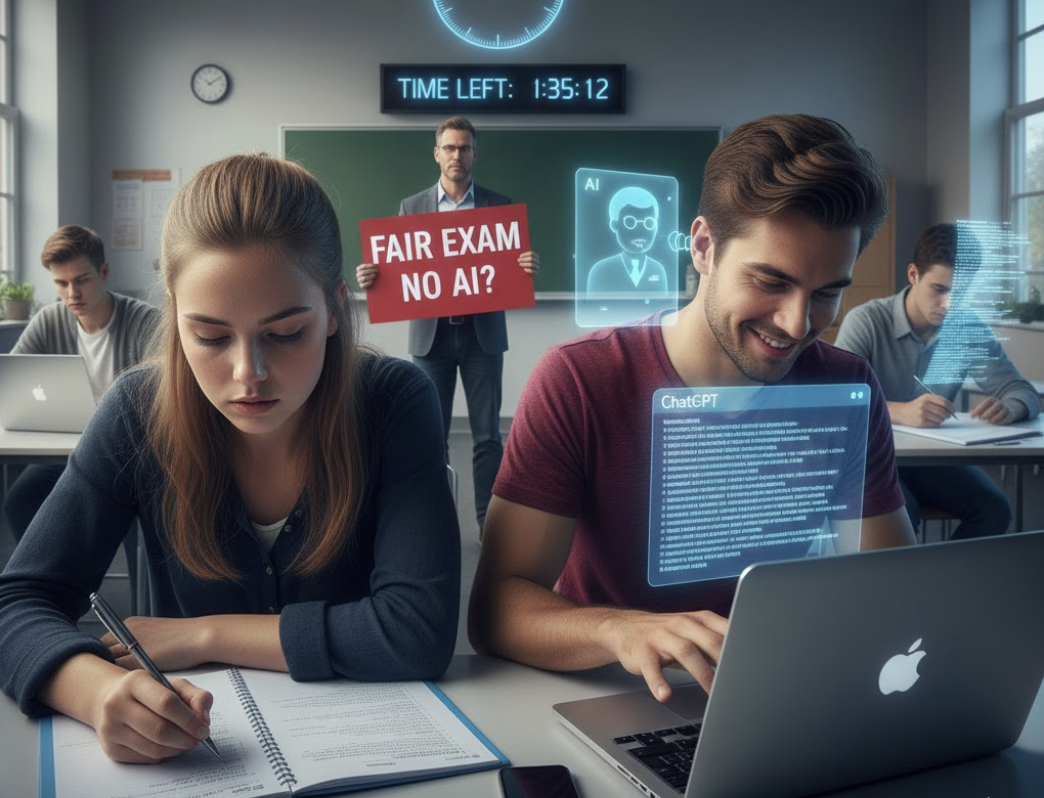
The EVA report has reignited the familiar debate about cheating. But the key finding is about fear. Fear creates a culture where students go underground instead of being equipped to navigate the technology.
This article has been machine-translated into English. Therefore, there may be nuances or errors in the content. The Danish version is always up-to-date and accurate. Read the original Danish article here.
Here is this week’s newsletter on artificial intelligence in the education system, where a new EVA report puts figures to what many have long known.
Nine out of ten upper secondary students use AI. Two thirds say they have cheated. At the same time, they are hardly taught about it. The report has triggered a wave of reactions, and we have collected a selection of articles at the bottom of the newsletter, so you can explore them yourself.
Right after the report was published, we wrote an explainer with the key findings, and you can read the article here:
The message, however, is the same. Pedagogy must come before technology, and teachers must have control. But that requires frameworks, resources and political will.
In this week’s commentary, I write about why the most interesting finding in the EVA report is not about cheating, but about fear.
Happy reading.
Students are ditching books and using ChatGPT
TV 2 writes about 26-year-old Lærke Juhl, who has changed how she studies on the master’s programme in International Business Communication at Syddansk Universitet (the University of Southern Denmark).
Instead of reading all the texts, she asks ChatGPT from OpenAI to produce short summaries of the chapters she has to go through. On that basis she writes notes and uses ChatGPT to have concepts and content explained in simpler language. According to her, the method has both saved time and improved her understanding, and she has achieved high grades.
According to Rettighedsalliancen (the Rights Alliance), it may be illegal to ask ChatGPT for summaries of specific books, while Professor Sten Schaumburg-Müller assesses that short and independent summaries may be lawful.
Researchers at the same time point to pedagogical risks. Sine Zambach from CBS (Copenhagen Business School) highlights that AI can make complex texts more accessible, but warns that students may lose important competences in analysing texts themselves and working with primary sources.
Lærke Juhl emphasises that she does not use ChatGPT to write assignments for her, and that she attends classes to engage critically with the material.
Business upper secondary school (handelsgymnasium) bans student-developed AI app
Three students from Handelsgymnasiet i Silkeborg (the Business Upper Secondary School in Silkeborg) have developed the app Smartclass, which can listen in to lessons and transcribe them as a kind of digital teaching assistant. The idea was to support classmates’ learning by making it easier to revisit the content of lessons. However, the app was only tested for a short period before it was banned at the Business Upper Secondary School.
The ban is due to the fact that several teachers felt uneasy that lessons could be recorded without their knowledge and consent.
AI in parent–school collaboration: support tool or distance between people?
Mikkel Aslak, educational consultant at VIA Center for Undervisningsmidler (VIA Centre for Teaching Materials), raises the question of what it means for trust between school and home if parents can no longer be sure that messages on Aula (the Danish school–home communication platform) are written by a human being. He finds that many teachers are enthusiastic about using chatbots in communication with parents, but points to the need for clear frameworks and reflection.
He emphasises that AI holds real potential. Chatbots can help make messages clearer, more polite and linguistically correct, especially for teachers who find written communication time-consuming or difficult. At the same time, he warns against both banning and uncritically embracing the technology. A blanket ban can lead to hidden and inappropriate use, while uncritical use can create distance and challenge the sense of authenticity in collaboration with parents.
Jeppe Klitgaard Stricker writes on his blog that the debate on generative AI in education often focuses on cheating and exams, while a more fundamental challenge is overlooked: the mental strain of constantly having to verify AI-generated content. Generative AI provides a mixture of correct information and convincing errors. It takes academic judgement to distinguish between them.
Previously, quality assurance was to a greater extent embedded in the education system through peer review, academically qualified teachers and well-developed materials. Today, the effective use of generative AI presupposes expert knowledge that students are still in the process of building. Thus, responsibility for quality assurance is shifting from the institution to the individual student.
The consequence is that mental energy moves from academic immersion to control and verification. The result can be that time is spent checking answers rather than building understanding, while linguistically polished AI texts conceal academic shortcomings.
Professor warns: Schools must take control of AI from the tech giants
Professor Jeppe Bundsgaard from DPU (the Danish School of Education) at Aarhus University sets out in Politiken a dystopia and a utopia for the future of teaching with AI. In his view, how things develop depends on whether schools and authorities take the lead themselves or hand it over to international tech giants.
In the dystopian scenario, AI is integrated into all the school’s systems, and every pupil has their own AI tutor. Teaching becomes highly individualised, but according to Jeppe Bundsgaard this risks leading to a de-democratisation of schooling, where tech companies, in practice, gain influence over what pupils learn. The teacher’s role is reduced to ensuring that pupils follow the technology’s directions, thereby weakening pupils’ creative and critical capacities.
In the alternative scenario, schools and authorities have taken ownership of the technology. Here, AI is used as an open and transparent tool that teachers and pupils can consciously choose to use or not. Jeppe Bundsgaard points to the possibility of open-source solutions developed under Danish auspices and to the importance of pupils learning to take a critical stance towards AI’s outputs, including biases and errors. The goal is for pupils to develop judgement and be able to assess when AI is relevant and when human dialogue is needed.
Put pedagogy first in guidelines for generative AI
Professor Helene Friis Ratner at DTU (the Technical University of Denmark) argues that Danish school leaders should develop guidelines for generative AI with pedagogy as the starting point, and not focus only on GDPR and data security. In her view, the technology raises fundamental questions about the role it should play in teaching, and about how pupils are equipped to live and learn in a world with generative AI.
She cautions against uncritically adopting tech companies’ narrative of learning optimisation through personalised chatbot solutions, as there are strong commercial interests at play and a risk of increased dependency on technology.
AI in schools requires teachers’ control and clear political frameworks
Laurits Rasmussen, founder and CEO of Miira, has written an opinion piece in Altinget, arguing that AI can become a real lever in teaching, but only if teachers are in control of the technology.
He is candid that developments are moving fast, and that many teachers are rightly sceptical. It takes resources to keep up. And the experiences from the digitalisation wave of the 2010s are not particularly encouraging: in many cases, the technology ended up limiting teachers’ pedagogical discretion and increasing screen time. We must not repeat that mistake. AI should be usable for teaching without screens and for improving work with screens — not as a replacement, but as a tool with a clear purpose. That requires solutions developed specifically for the teaching context, and access to such solutions presupposes a better market.
He therefore points to the need for competition and common standards. Clear requirements from the state and a shared model for data security can create a more transparent market with more solutions to choose from.
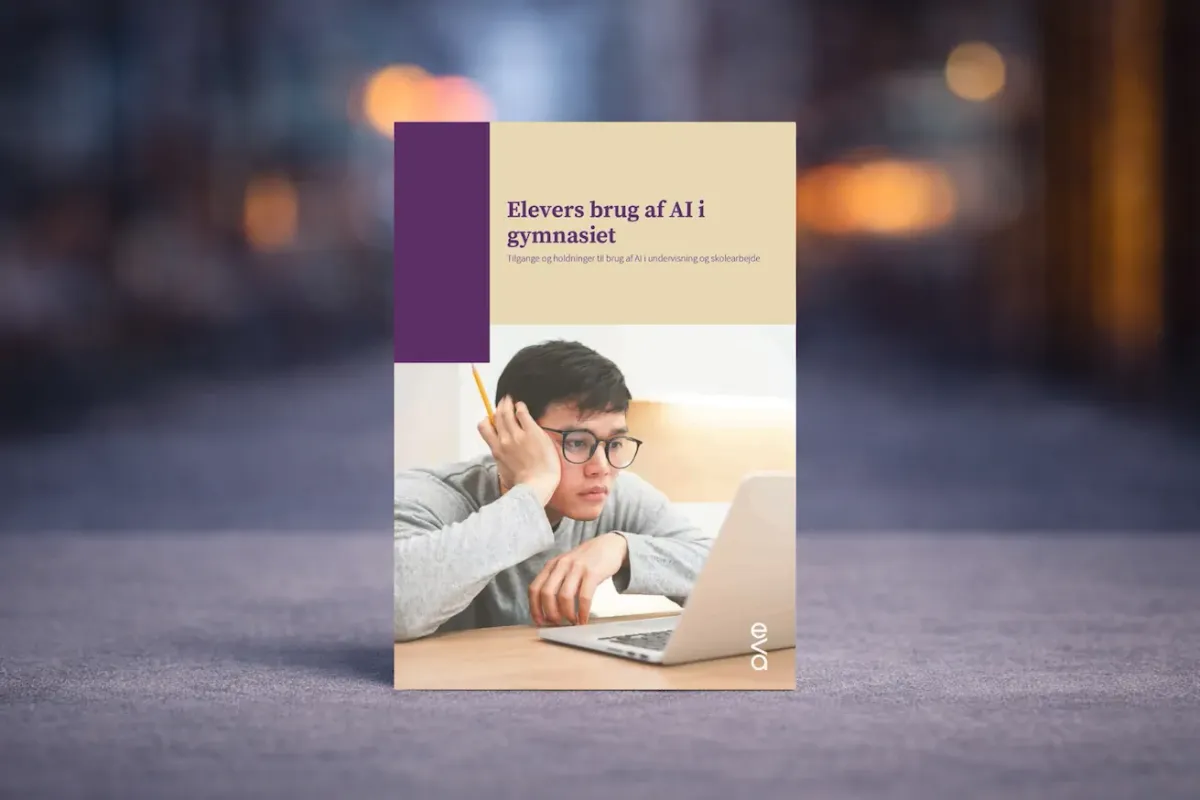
Another report on pupils’ use of AI has been published, and the report from EVA (the Danish Evaluation Institute) has sparked the familiar debate. Pupils cheat. Teachers lack tools. And politicians are calling for action.
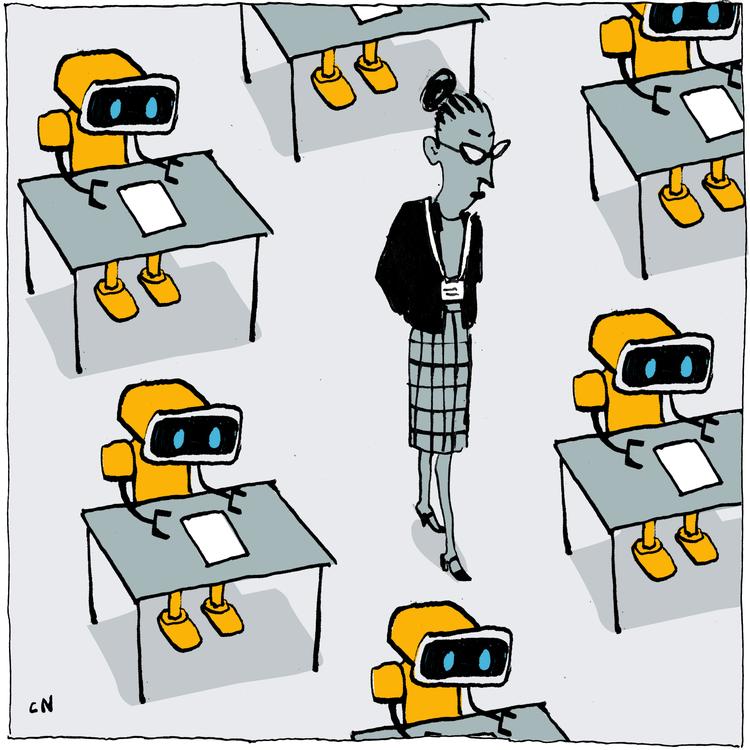
But on reading the report, the most interesting finding is not cheating but the fear of AI embedded across our school system. The pupils who say they do not use AI do so primarily because they are afraid of being caught cheating. Not because they understand when the technology helps and when it gets in the way. Simply because they are afraid.
I believe that is a serious problem, because that fear creates a culture in which pupils take their use of AI underground instead of being equipped to navigate it. When we tighten control, use simply moves to where it cannot be seen. We leave a whole generation with a technology that not even we ourselves have mastered.
The answer is not more control or more rigid, outdated rules. The answer is digital literacy and being curious together with the pupils.
Digital literacy is not about teaching pupils to use the tools. It is about teaching them to judge when the tools are relevant, and when they get in the way of their own thinking. It is about giving them a language for when the effort is the learning itself, and when it is just hassle. And it is about enabling them to make choices for themselves that no amount of control can make for them.
And all of this can be addressed pedagogically. Teachers can state explicitly what is indispensable in the subject and thereby show pupils when the effort is the very point, and when AI actually frees time for deeper understanding. They can create spaces where pupils feel the difference between getting an answer and understanding something. And they can involve pupils in the conversation about when AI should be used, and when it should be switched off.
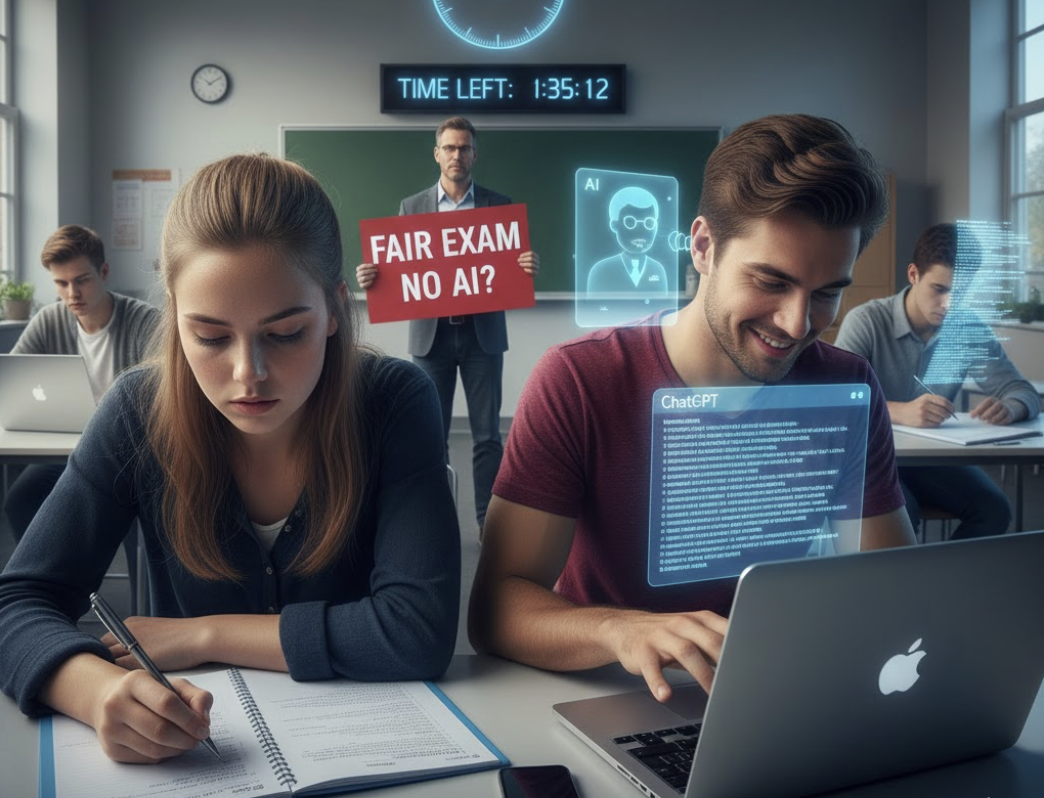
But that also presupposes that examinations keep pace. As long as we retain exam formats that reward the product rather than the process, we send a double message. We say that learning is what matters most, but we measure only the result. We talk about the formation of the whole person, but we assess the product.
Reactions to the EVA report
On the basis of EVA’s report, we have compiled below a number of articles written in response to it.