This Week's News: DTU Opens Up to AI in Teaching

•
11 min read



In this week’s newsletter we focus on the fact that students at DTU will, going forward, work with artificial intelligence as part of teaching and for use in examinations. At the same time, Italians are nervous about ChatGPT and believe that OpenAI collects users’ data and subsequently trains its language model on it (and thus breaches the GDPR). They have therefore asked OpenAI to account for this within 30 days.
On Thursday we also published an article about misinformation and disinformation, with concern about how it will affect a number of upcoming elections around the world.
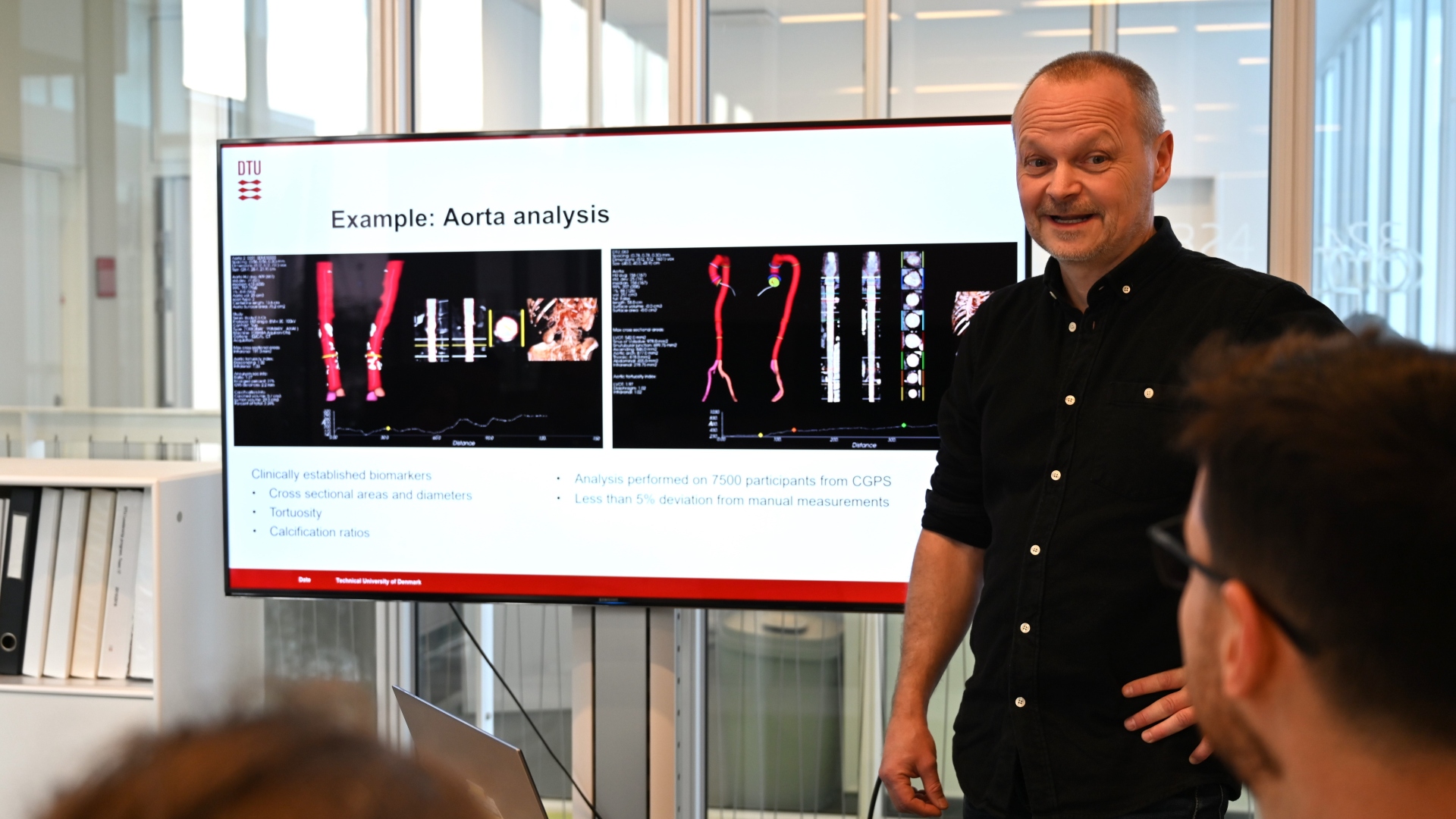
Danmarks Tekniske Universitet (DTU) (the Technical University of Denmark) has announced that artificial intelligence will be integrated into teaching and examination processes from 2024. This also includes language models such as ChatGPT.
The university writes that this is part of an ambition to harness natural and technical sciences for the benefit of society, and that they aim to offer leading engineering programmes in Europe. To this end, they will adapt teaching methods and exam questions and use artificial intelligence more systematically in courses and research.
The university has developed a set of guidelines for the ethical use of AI with a focus on academic integrity. These guidelines encourage students to use AI responsibly, including proper citation in their submissions.

Italy’s Data Protection Authority, Garante per la protezione dei dati personali, has officially notified OpenAI that it has found violations of data protection law. Last year, ChatGPT was blocked for four weeks because the authority had privacy concerns, something OpenAI “corrected or clarified”. In that context, the authority launched a “fact-finding activity”, which now claims to have found infringements of the GDPR.
According to the BBC, the violations relate to the mass collection of users’ data, which is then used to train the algorithm. They are also concerned that younger users may be exposed to inappropriate content.
OpenAI has 30 days to respond to these allegations and explain its side of the story.
In its final decision in the case, the Italian data protection authority will take into account the ongoing work within the special working group set up by the European Data Protection Board (EDPB).
 Lasse Skovgaard

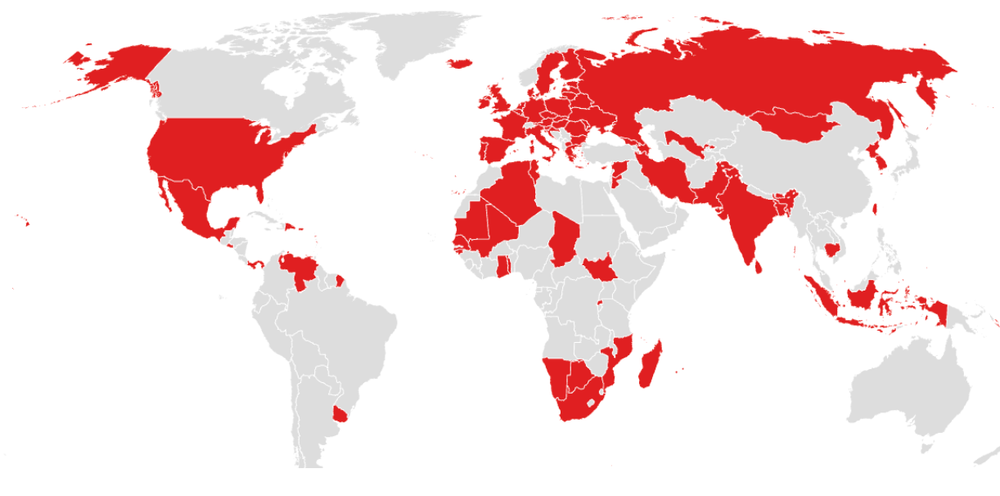
In 2024, at least 64 democratic elections are being held worldwide, but how will AI-generated texts and deepfakes affect these elections?
We have explored this in a short article, and during our research we discovered a website designed to generate and spread disinformation for only 400 USD per month. We have been in contact with the creators of this site, who have given us important insight into this problem and raised a serious question: How many similar systems already exist out there, and what impact are they having on all the world’s democracies?
We are surprised that this topic is not receiving more attention. Perhaps the general public has not yet realised that artificial intelligence can be – and probably already is – misused.
The solution to meeting this challenge is to educate young people (indeed the entire population!) in digital technological literacy. How else can they navigate critically in the digitalised world we live in?
 Per Størup Lauridsen

We also recommend listening to Prompt’s latest episode. Taylor Swift deep fakes and OpenAI in bed with the Pentagon and Fox News.
 Photo: Thomas Traasdahl/Ritzau Scanpix

 Tania Andersen
 Photo: Toby Melville/Reuters

 /ritzau/ and Mathias Mundbjerg matmujfm.dk



 Stig Linstow Partner, Associated Consultants
 Natasha Friis Saxberg CEO of IT-Branchen (the Danish ICT Industry Association)

 Text_ Johan Rasmussen Photo_ Private

 PTI

 Rune Fick Hansen
 Kalle Kehlet

Meta has just released its language model focused on coding, which has 70 billion parameters. Meta itself calls it ‘the largest and best-performing model in the Code Llama family’. Before you download it, note that it is 131 GB and requires a powerful GPU to run, as well as plenty of RAM.
EvalPlus, an evaluation tool for testing code generation by large language models; here, Code Llama 70B scores 65.2, but considerably lower than GPT-4 (85.4).
You can test the model here without logging in:

 Sergio De Simone


We recommend reading the journal Ledelse i morgen – on artificial intelligence in educational leadership. You can read the whole issue at the bottom of the page or click the headings below to go directly to the articles.
AI chatbot – now or never?
By Christian Aalborg Frandsen and Lars Due Arnov
This article looks at the advantages and disadvantages of AI chatbots and presents a range of pedagogical suggestions and ideas for how a school can get started working with AI.
Leadership and pedagogy with human freedom as the goal – technological understanding and digitalisation as the means
By Nikolaj Brandt Blæsild
The article addresses issues around technological understanding and digitalisation and the consequences for the formation (Bildung) perspectives in pedagogy and for children’s autonomy.
Digital technologies in school – It requires a certain balance as a leader
By Lillian Buus
This article considers how schools and leaders can relate to the many digital technologies currently pressing in. How can leaders support their teachers in using digital technologies in teaching? And are there particular issues leaders should pay special attention to?
Digital technological understanding – leading a new subject area in the Danish primary and lower secondary school (folkeskole)
By Jette Aabo Frydendahl, Karen Mikkelsen and Martin Thun Klausen
This article focuses on how, as a leadership team together with the pedagogical staff, you can create a shared language for capacity building around technological understanding in and as a subject, based on a reflective capacity model.
When ChatGPT was launched, teaching and examination methods in the education system became outdated overnight. Teachers tore their hair out trying to figure out how to avoid cheating with AI at hand. And fear of AI as a cheating tool is still keeping most schools from integrating AI into teaching. But shouldn’t we be getting skilled at using AI in the very world we are educating for?
Is AI, in fact, the solution for a school and education system that is under time and financial pressure? And how do we ensure that we maintain the social aspect of learning?
Blinde Vinkler is produced by Ingeniørforeningen IDA (the Danish Society of Engineers, IDA) and IT-Branchen (the Danish IT Industry Association). Hosted by the tech journalist, Marie Høst. Guests: Sine Zambach, Assistant Professor at the Department of Digitalization at Copenhagen Business School.





