This Week's News: Denmark's new AI research center, CAISA, has opened
This week's newsletter focuses on CAISA, Denmark's new AI center; the future of informatics as a school subject; hidden biases in AI tools; and a new meta-analysis documenting ChatGPT's positive effect on learning and the development of higher-order thinking skills in education.
This article has been machine-translated into English. Therefore, there may be nuances or errors in the content. The Danish version is always up-to-date and accurate. Read the original Danish article here.
Welcome to a newsletter on artificial intelligence in education, where we have selected a range of news and articles so you can stay up to date in the field. As always, we try to strike a good balance between home and abroad – and between the technical and the practical.
We start with a Danish story: Last week Denmark opened a new national AI research centre called CAISA. It will be interesting to follow what impact the centre will have on the development of AI in Denmark.
There is a lot happening on the AI front, and here are some of the other stories that caught our attention over the past week.
At STUK (the Danish Agency for Education and Quality), work is underway to explore how a more modern informatics subject, one that better embraces technological understanding, could look on STX. In that connection, a call went out last week to update the curricula. Claus from Viden.AI attended the meeting and took part in discussions on the academic content. We are not reporting from the meeting, but Videnscenteret for Digital Teknologiforståelse (the Knowledge Centre for Digital Technological Understanding) has written about it, and we link to their post on LinkedIn.
How do you work with AI in leadership? Here are two suggestions:
On LinkedIn we came across Steffen Löfvall’s model, which can be used to map teachers’ AI roles. We recommend reading Steffen’s full post, as it offers a good approach to developing an AI strategy for a teaching team.
Jeppe Klitgaard Stricker writes in his newsletter that you should experiment and not assume you can produce a finished strategy. He emphasises that it requires a safe environment, and that it is a culture leadership must support.
We have also found two academic articles that we find quite interesting.
When we use AI tools in teaching, teachers should be mindful that this does not limit students’ agency and dialogue. A new study indicates that you can save time by creating teaching materials with AI, but that the material can become monotonous.
Denmark’s new national research centre for AI, CAISA, officially opened on 9 May 2025. The centre brings together the country’s leading researchers from five universities and will contribute to a responsible, democratic and value-creating development of AI in Denmark. Københavns Universitet (University of Copenhagen) and Aalborg Universitet (Aalborg University) will take leading roles, while Aarhus Universitet (Aarhus University), DTU (Technical University of Denmark) and IT-Universitetet i København (IT University of Copenhagen) are also partners.
CAISA will both conduct research and advise decision-makers and businesses on how best to implement the technology in society.
CAISA is described as “AI’s answer to Statens Serum Institut (the Danish national public health institute)” and will serve as an interdisciplinary platform for research, collaboration and advice on AI.
The aim is both to strengthen Denmark’s digital sovereignty and to contribute to Europe’s competitiveness. The centre will initially receive DKK 50 million in public funding, and the ambitions are high: CAISA is to set the direction for responsible AI and launch major, long-term research projects – so-called moonshots.
The future of informatics in upper secondary school (gymnasium)
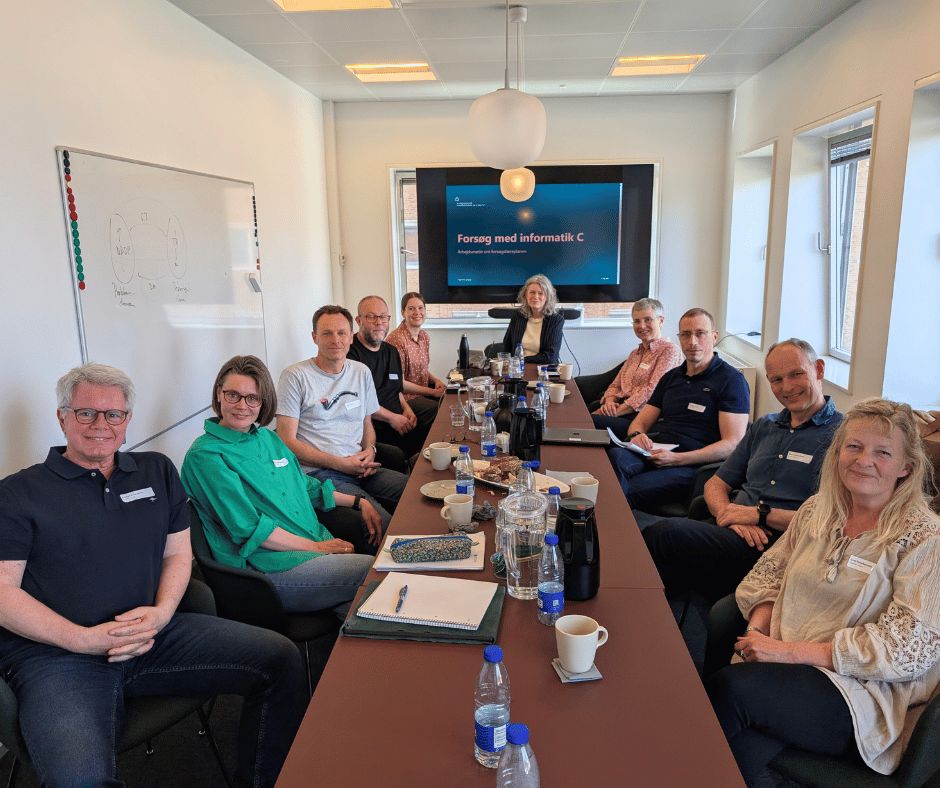
On 2 May a meeting was held at STUK about developing a possible pilot subject in informatics in upper secondary programmes, so that the subject can be included on STX.
The meeting was attended by representatives from STUK, IT-lærerforeningen (the Danish IT Teachers’ Association), It-vest, Videnscenter for Digital Teknologiforståelse, as well as teachers from STX, HHX and HTX.
The focus was on how to shape a pilot subject that both embraces current technological developments and contributes to meaningful digital citizenship for young people. Among the central questions were how children and young people can learn about algorithms, data and the design of IT systems in ways that are both application-oriented and broadly educational.
Particular emphasis was placed on the need to develop a subject with room for creativity, participation and real-world problems, while also taking into account technological trends such as generative AI, cyber security and predictive systems.
The work is still in development, but participants stressed the importance of creating a disciplinary identity in which students not only understand the technology, but are also able to engage with the digital world critically, responsibly and constructively.
AI is being hidden in research and threatens credibility
Several hundred scientific articles have been revealed to contain AI-generated text from chatbots such as ChatGPT, without this being stated in the studies’ methods sections. Researchers warn that this practice undermines research ethics and increases the risk of errors, fake sources and a lack of transparency.
We are repeating our mistakes with social media – this time with AI
The chair of Prosa, Niels Bertelsen, warns in an opinion piece that we are about to make the same mistake with AI as we previously did with social media — namely allowing the technology to spread without sufficient regulation and understanding of the consequences.
He points out how AI is already encroaching on our private lives via chatbots and personal AI agents that act as advisers, conversational partners and sources of emotional support. This rapid spread is happening without public guidelines and is driven by Big Tech companies with a financial interest in our data and attention.
According to Niels Bertelsen, we risk losing both human diversity and democratic discourse if AI becomes our primary dialogue partner, especially if we do not know how our data are used. He stresses the need for clear regulation, education in technological understanding and early awareness-raising, both in school and at home, so that AI is used responsibly and supportively rather than manipulatively. That requires action now, not in ten years.
New model maps educators’ AI roles and strengthens team collaboration
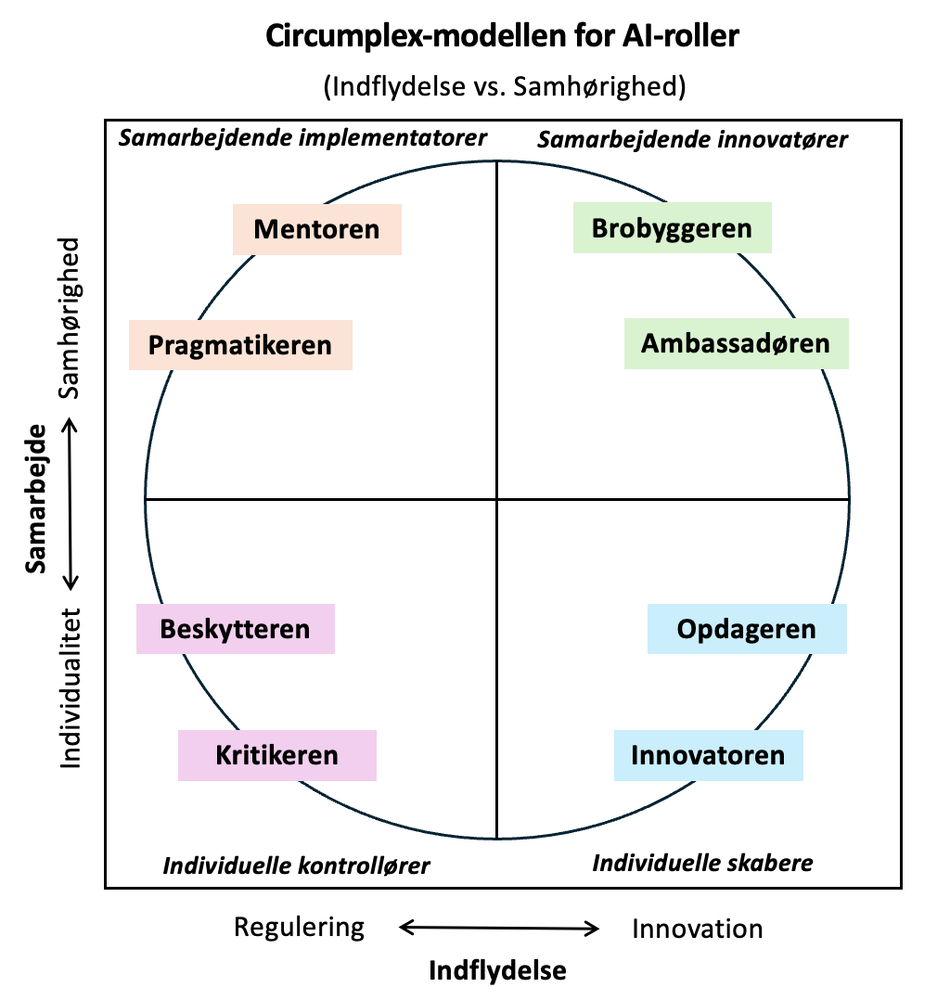
Director and external lecturer Steffen Löfvall (cph:learning, Copenhagen Business School (CBS) and the IT University of Copenhagen (ITU)) has developed a new circumplex model and a digital profiling tool to help teaching teams understand and strengthen their use of AI in teaching.
The model draws on social and personality psychology and places educators in eight different AI roles based on two dimensions: degree of innovation and degree of collaboration.
The aim is to provide insight into different approaches to AI and support balanced team development and strategy.
(c) Steffen Löfvall, 2025
The eight AI roles range from ambassadors and bridge-builders, who drive cross-cutting AI development, to protectors and critics, who safeguard ethics and formation. The model makes visible how both innovation and regulation are necessary perspectives in developing responsible use of AI in teaching. It is already being used in educational settings to promote reflection, collaboration and local strategy development.
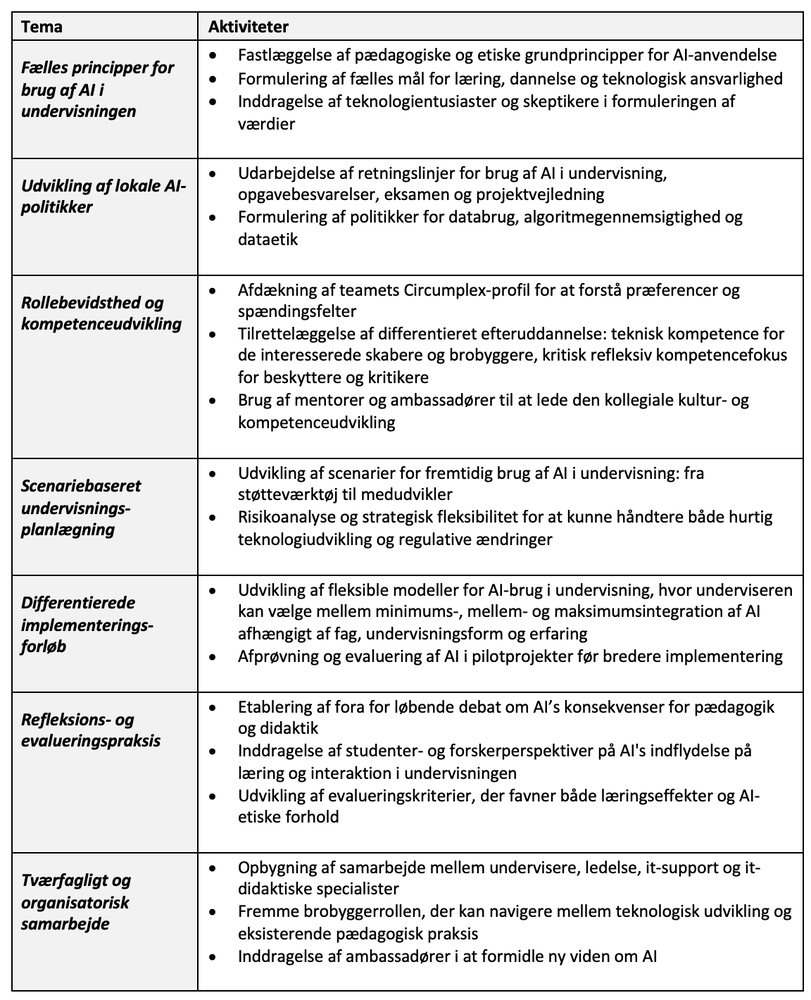
Below are a number of points that can usefully be included in the development of a local AI strategy for the teaching team:
Points for a local AI strategy for the teaching team. (c) Steffen Löfvall, 2025
The LinkedIn article argues that teams should actively identify their AI profiles to avoid conflict and imbalance—for example, excessive techno-enthusiasm without critical reflection, or conversely undue caution that hampers pedagogical innovation.
AI leadership requires the courage to experiment, not a finished strategy
According to Jeppe Klitgaard Stricker, there is still no clear guidance on how institutions should lead and implement AI in teaching. Experience from NEXT (a Copenhagen vocational education institution) shows that successful AI integration does not necessarily spring from a detailed strategy but rather from a culture in which educators freely experiment with the technology.
At NEXT this has resulted in more than 60,000 ChatGPT prompts per month, without an extensive, overarching plan, just access to the technology and the opportunity to try things out in practice.
Jeppe Klitgaard Stricker argues that effective AI leadership in educational institutions should be more about creating safe conditions for experimentation than about rolling out detailed plans. Transformation often happens from the bottom up through informal trials, knowledge sharing and collegial conversations. It is therefore important that leadership supports a culture in which it is acceptable to try out ideas, even without having to ask permission first.
The AI lead should therefore not be seen as a strategist but rather as a facilitator who creates space for learning and exploration. This approach challenges classical leadership logic but matches the reality educators face when integrating new technologies. To create real change, institutions must make it legitimate to try and permissible to fail.
AI tools in teaching carry hidden pedagogical biases
A new study shows that AI-based lesson-planning tools often promote outdated, teacher-centred forms of instruction. Through an analysis of 90 lesson plans from popular platforms such as ChatGPT, MagicSchool and School AI, the researchers document that AI-generated programmes largely limit students’ agency and dialogue. Students are rarely given the opportunity to set their own goals, choose methods, or contribute actively with questions and reflection.
Instead, AI typically structures teaching as teacher-driven activities with low student participation and limited variation in forms of dialogue. The study thus points to an important dilemma. While AI can save time and support teachers, it also risks reproducing monotonous and undemocratic learning environments.
The authors therefore urge educators to be critical users and to help shape the development of AI tools so that they support values such as student participation, creativity and critical thinking.
ChatGPT improves students’ performance and higher-order thinking, but with caveats
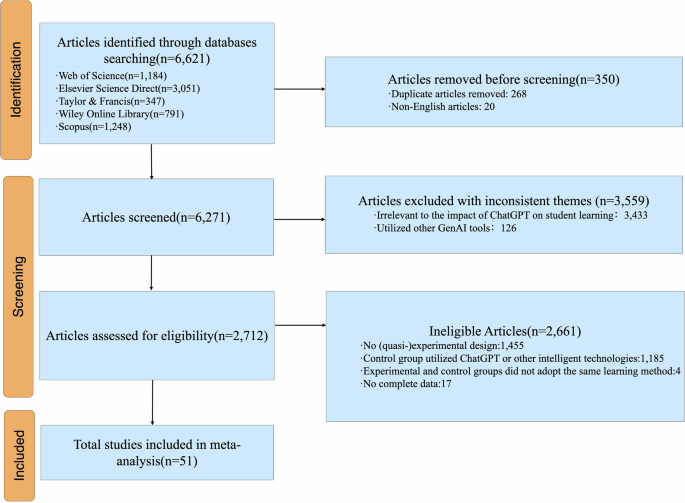
A new, comprehensive meta-analysis of 51 studies shows that the use of ChatGPT has a marked positive effect on students’ learning performance and a moderate positive effect on both their learning experience and the development of higher-order thinking skills. The study covers research findings from November 2022 to February 2025 and supports ChatGPT’s potential as a learning tool in teaching at all levels.
The effect on learning performance is greatest in subjects with clear learning objectives, such as STEM and languages, and when ChatGPT is used as part of problem-based learning. Teaching sequences lasting 4–8 weeks appear to yield the most stable results. In addition, ChatGPT has a clear positive impact when integrated flexibly as an intelligent tutor, learning partner or aid.
However, the meta-analysis also indicates that the use of ChatGPT in teaching should take place within clear didactic frameworks—for example, grounded in Bloom’s taxonomy—if the aim is to strengthen higher-order thinking.
The researchers also recommend that future studies probe more deeply into how ChatGPT can promote students’ reflection, creativity and understanding—especially because the effect here is more muted than for pure learning performance.