This Week's News: Denmark in a Technological Slumber

•
12 min read



Here is another look at the latest in artificial intelligence and the education sector. Many are currently on the autumn break, but there are still a couple of news items we think are interesting, and the tech world is not standing still – on the contrary, our new Minister for Digitalisation tells Børsen that we need to accelerate the technological express train so that Denmark and Europe do not fall behind.
Meanwhile, our ways of writing and communicating are changing as generative AI intervenes in our text culture. That is why a new basic research centre at Aarhus Universitet (Aarhus University) will investigate this impact – both the opportunities and the challenges.
Another news item that has caught our interest is that the videoconferencing system Zoom is working on having our digital avatar attend online meetings or reply to an email. That saves time that can be used for other things.
In our newsletters we have a strong focus on the environmental impact of artificial intelligence, especially because it is a very energy‑intensive technology. But perhaps it does not have to be that way, and a new scientific article explains how, in language models, floating‑point multiplications can be replaced with simple additions. Their conclusion is that energy use can be reduced by up to 95%. In the meantime, the tech giants focus on nuclear power to supply electricity to run their data centres.
Additionally, you can read about:
Happy reading and enjoy the autumn break – it’s beautiful out in the real world, so enjoy autumn’s vibrant colours.
Denmark’s new Minister for Digitalisation, Caroline Stage (M), underlines the importance of boarding the technological “express train” within artificial intelligence and digitalisation. She believes that Denmark and the rest of Europe need to wake up from their “Sleeping Beauty slumber” and take AI seriously in order to compete globally. To advance this, the minister will launch the new Dansk Data Space Forum, which will promote data sharing between businesses, researchers and public authorities. In addition, Denmark will join the European Gaia-X-organisation to increase data sharing.
The minister sees AI as a decisive factor for Denmark’s future competitiveness and points out that both the private and public sectors must participate in development if Denmark is to keep pace with global players. This may also affect how technology is integrated into the education system.
 Ulrik Horn, Nicolas Stig Nielsen

Aarhus Universitet is on its way to establishing TEXT: Center for Contemporary Cultures of Text, a new basic research centre supported by Danmarks Grundforskningsfond (the Danish National Research Foundation). The centre, which is expected to receive 38 million kroner in funding over the next six years, will examine how artificial intelligence, especially generative AI, affects our text culture. Professor Mads Rosendahl Thomsen will lead the centre, which will bring together researchers from disciplines such as computational linguistics, literary studies and education research.
The research will focus on the opportunities and challenges created by generative AI, including efficient information search and the risk of misinformation. In addition, the centre will work to develop tools to minimise these risks.
TEXT will promote interdisciplinary collaboration between researchers both in Denmark and internationally to understand the relationship between AI and text, including how language models may affect creativity and professional writing. Mads Rosendahl Thomsen emphasises that AI has created a marked before‑and‑after in our text culture, which the centre will explore in depth.
The videoconferencing platform Zoom is taking another step towards a future where you can send an AI avatar to meetings instead of attending yourself. As part of Zoom’s expansion with new AI features, users will soon be able to create a digital avatar that both looks and sounds like them. To create an avatar, the user records a video that Zoom’s AI uses to generate the avatar. You then write the message you want the avatar to deliver and let the AI speak on your behalf.
This feature will work via Zoom’s Clips feature, where users can send short video updates to their colleagues. Zoom is aware of potential risks such as deepfakes and has implemented advanced authentication and watermarking technology to ensure responsible use.
The AI avatars will launch at the start of next year as part of Zoom’s AI Companion add‑on, which will cost 12 dollars per month. If you use Zoom without this add‑on, you can still use preset AI avatars and voices, but you cannot create your own.
Zoom’s CEO, Eric Yuan, has previously talked about a future where AI can take meetings and answer emails on users’ behalf, freeing up time for other tasks.


In the article “Addition Is All You Need for Energy‑Efficient Language Models”, Hongyin Luo and Wei Sun present a new algorithm called L‑Mul that significantly reduces the energy use of large language models. The algorithm can save up to 95% of energy during both training and inference by replacing floating‑point multiplications with simple additions.
The researchers behind the method point out that it can be applied widely in AI models and could potentially improve energy efficiency in data centres, where the energy demands for AI processing are high. The next steps will be to develop dedicated hardware that can further optimise L‑Mul and to train AI models specifically designed to use this new algorithm.
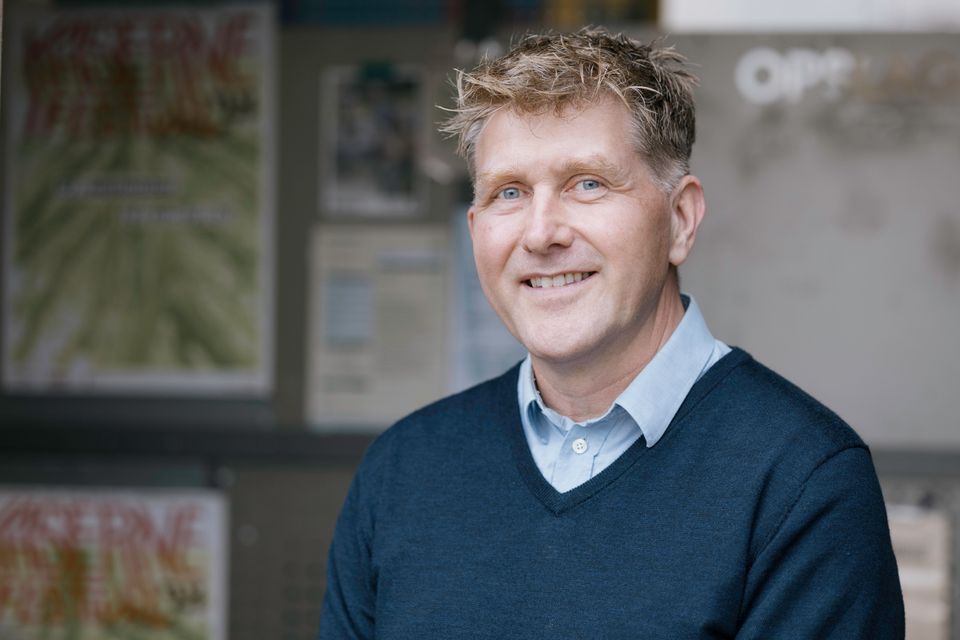
 Hongyin Luo

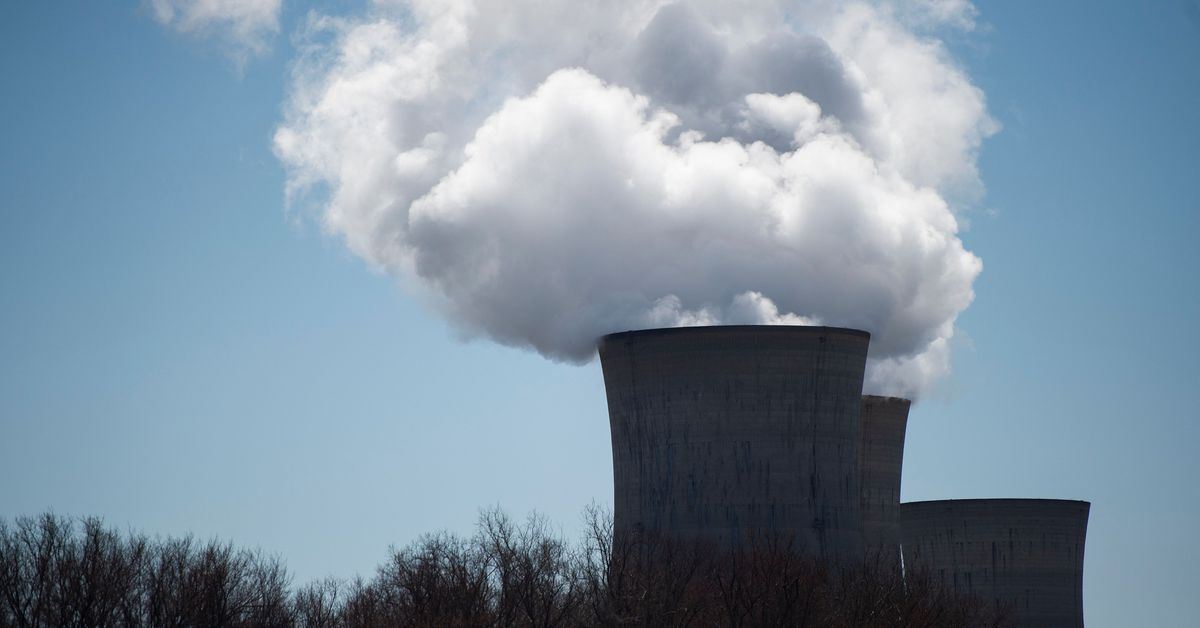
Large tech companies such as Amazon, Microsoft and Google are increasingly turning to nuclear power to supply their energy-hungry data centres. Microsoft and Amazon have already struck deals with US nuclear power plants, while Google is considering following suit. Nuclear power, which provides stable, round-the-clock energy, is a good fit for data centres that have a constant demand for electricity.
The tech companies see nuclear power as a way to reduce their CO2 emissions, as their rising electricity consumption, driven especially by artificial intelligence, makes it harder for them to meet their climate targets.
In the latest episode of Læreværelset, Morten Gundel talks with upper secondary school (gymnasium) teachers Laura, Sune and Simon about their experiences of using artificial intelligence in teaching. The starting point is an article from Magasinet Gymnasieforskning, which covers experiences from six East Jutland upper secondary schools that have explored both the opportunities and pitfalls of AI. The teachers share their own experiences and reflections, inspired by the article.
The mathematics teacher, Sune, highlights how high-attaining students can use AI to deepen their learning, while lower-attaining students often lack the necessary skills to get the full benefit from AI. Laura, who teaches Danish and English, observes that students sometimes use AI as a shortcut instead of developing their own language skills, which can hinder their learning. She has therefore introduced draft notebooks to gain better insight into students’ own abilities without help from AI.
The three upper secondary school teachers say that AI can be a useful tool in teaching, but that it also creates challenges, especially when it comes to maintaining students’ critical thinking and engagement. The teachers also discuss how AI can affect the assessment of students’ performance, and whether teaching should in future focus more on the process than on the final product.
Listen to Lærerværelset here:

Geoffrey Hinton, often called “The Godfather of AI”, and John Hopfield, both distinguished researchers, have been awarded the Nobel Prize in Physics for their groundbreaking work on artificial neural networks, which laid the foundations for today’s AI technologies. Since the 1980s, their discoveries have enabled the development of machine learning in which neural networks mimic the brain’s way of forming connections. This has revolutionised areas such as image recognition and language models.
Hinton, who developed the Boltzmann machine, and Hopfield, behind the Hopfield network, have had an enormous influence on AI’s advance. Hinton has, however, expressed concern about AI’s potential dangers and left his position at Google in 2023 in order to warn about the very technology he helped to develop.

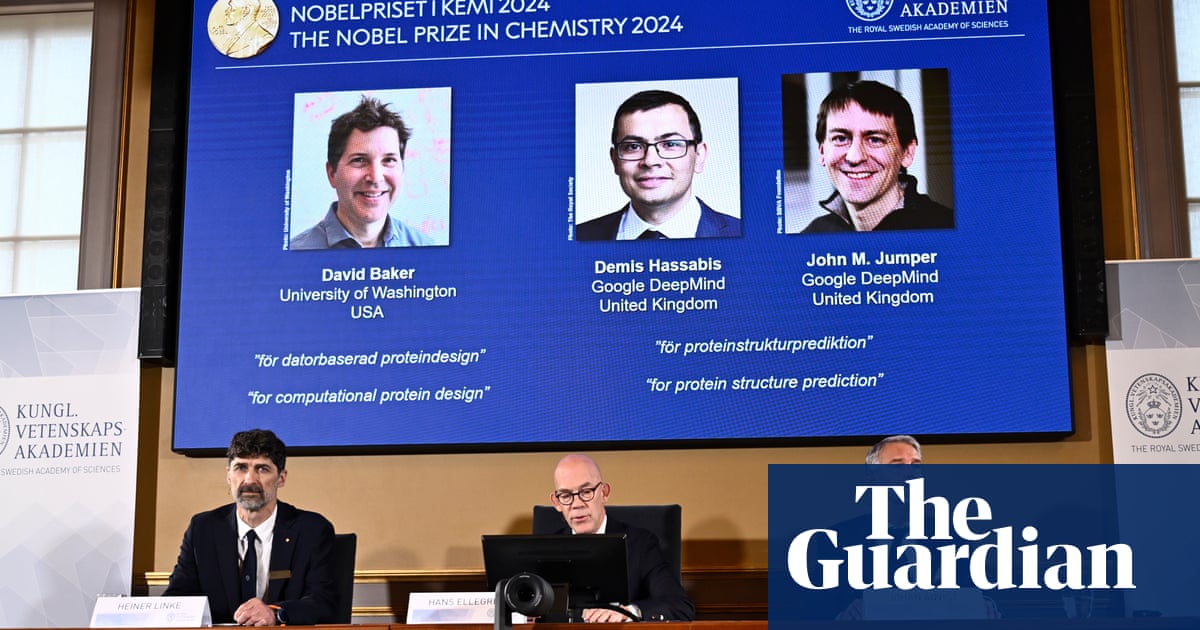
At the same time, Demis Hassabis and his colleague John Jumper from Google DeepMind received the chemistry prize for their breakthrough with AlphaFold, a program that predicts protein structure, one of science’s great challenges.
 Hannah Devlin
In an article by Jeffrey R. Young from EdSurge, he discusses what smart glasses could mean for education. Meta recently unveiled its prototype Orion glasses, which combine the physical world with digital holograms and, according to Young, could change how we use technology in classrooms in the future.
Young points out that there is already a trend towards banning mobile phones in schools because they often disrupt students’ concentration. The introduction of smart glasses, which may be even harder to regulate, raises entirely new challenges. There are already reports of students using smart glasses to cheat, with AI and built-in cameras helping them to find answers to exam questions.
Although the technology is not yet ready for the public, Young also sees potential for positive uses. He highlights that smart glasses combined with AI could create new learning opportunities. The glasses could provide real-time feedback by using AI to analyse and respond to tasks such as laboratory exercises. Augmented reality could also create more interactive and collaborative learning environments, which could improve students’ engagement and learning outcomes.
Young emphasises, however, that educational institutions will need to find ways to navigate between technological advances and the ethical challenges that come with them, especially regarding academic integrity and potential cheating.
 Jeffrey R. Young

 KYODO NEWS

 Authors Info & Claims

 Ida Smith
 Caitlin Cassidy