This week's news: Dangerous and incorrect answers from Google's AI

•
9 min read



In this newsletter, we have selected a number of stories from the past week — a short round-up of those relating to artificial intelligence and education. We begin with something that has not yet reached Denmark but could significantly affect how we search for information in the future.
It has emerged that Google’s AI Overview has problems providing correct answers, which means we will increasingly have to judge for ourselves whether the content is accurate. In fact, there are several examples where the result could be directly harmful to the user if followed.
Last week there was a hearing at Christiansborg (the Danish Parliament) in Erhvervsudvalget (the Business Committee) and Udvalget for Digitalisering og IT (the Committee for Digitalisation and IT) on artificial intelligence. We attended and have prepared a summary of the key messages with a focus on education. At the same time, Dansk Erhverv (Danish Chamber of Commerce) has published 25 recommendations on how Denmark’s AI effort can be accelerated towards 2025.
DTU Compute has also released an interactive questionnaire where you can help test which language models write the best texts. We have included it in the newsletter and hope that many will try it and thereby help assess the models’ results. It is very well put together, and the questionnaire can be easily integrated into teaching.
Professor Jason Gulya has also written an article arguing that it is no longer tenable for educators to ignore or exclude artificial intelligence from teaching. We list the key points, but encourage you to read Gulya’s thought-provoking article.
Those were the stories we selected for the final newsletter in May. Thank you for reading.
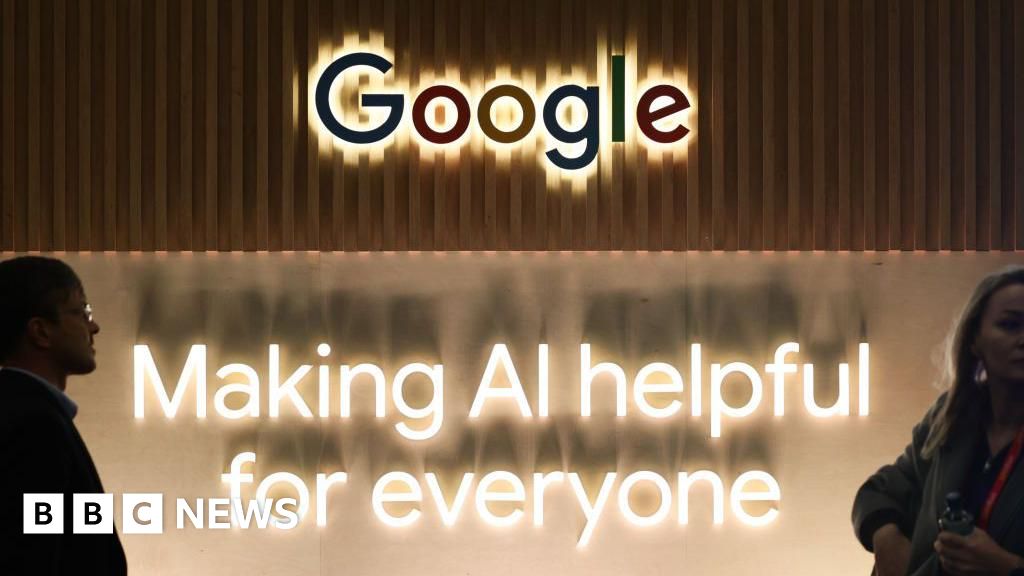
On 11 May, Google launched a new addition to its search engine in the US and the UK, where artificial intelligence produces a short summary of the search results. But various examples are now starting to surface online where it provides incorrect and even downright dangerous answers.
We have compiled an overview below of the wildest examples:


A Google spokesperson told Business Insider that the majority of AI Overviews provide accurate information with links for verification. Many of the examples appearing on social media are what she called “extremely rare queries” and not representative of most people’s experiences.
These kinds of challenges with generative artificial intelligence that produces text are not new, and Claus has previously written two articles about how language models hallucinate (When language models generate falsehoods – “hallucinate” – part 1 and part 2). Here it simply becomes very clear, because we do not expect the search engine to generate misinformation for the user.
Google AI Overview is scheduled to roll out to the rest of the world during 2024.
Read more about Google AI Overview below.


 Geoff Weiss
 web2media


 Jyoti Mann
Last Thursday, we at Viden.AI went to Christiansborg (the Danish Parliament) to listen to the hearing in Erhvervsudvalget (the Business Committee) and Udvalget for Digitalisering og IT (the Committee for Digitalisation and IT) on artificial intelligence.
The hearing was organised by Louise Elholm (V), Chair of Erhvervsudvalget (the Business Committee), and Lisbeth Bech-Nielsen (SF), Chair of Udvalget for Digitalisering og IT (the Committee for Digitalisation and IT).
Below, we have selected the most important messages relating to the education sector.


Marie Bjerre (V), Minister for Digitalisation and Gender Equality, delivered an opening address highlighting an ambitious and responsible approach to artificial intelligence. She emphasised the importance of Denmark being at the forefront of AI development while ensuring that ethical and social aspects are handled appropriately. Marie Bjerre noted that, in February, a broad political agreement was reached on an ambitious and responsible strategy for Denmark’s digital development, comprising 29 initiatives, including a strategic effort on artificial intelligence.
The Chief Executive of IT-Branchen (the Danish ICT Industry Association), Natasha Friis Saxberg, underlined the importance of promoting diversity in the technology sector by motivating more girls to take an interest in and work with technology through early exposure and positive uses of technology. She warned against cuts to study places and stressed the need for a skilled workforce in IT and technology. She pointed out that society must invest in education to compete globally and keep up with technological development.
The Chair of Dataetisk Råd (the Danish Data Ethics Council), Johan Busse, discussed the ethical considerations in using AI in teaching. He noted that AI systems must be transparent, and that attention should be paid to which data the language models are trained on and the biases that may be embedded in the models. He suggested that society and educational institutions should work together to create an ethical framework for the use of AI.
Professor Anne Gerdes from Syddansk Universitet (University of Southern Denmark) stressed the importance of developing language models that are aligned with Danish values and administrative practice to ensure that the education system can use AI in accordance with Danish norms and legislation. Professor Peter Schneider-Kamp from Syddansk Universitet highlighted that using legally trained language models based on Danish data will benefit both pupils and students. Both professors emphasised the need for transparent and ethically sound AI technologies tailored to Danish conditions, which is essential for their use in the education system.
At the hearing there was strong agreement among experts and politicians on the importance of a responsible and ambitious approach to artificial intelligence. At the same time, the message was also that if Denmark is to be part of AI development, it will require investment in education and research.
You can watch the entire hearing below.
https://mobiltv.ft.dk/embed/20231/ERU/tv.9234
The business organisation Dansk Erhverv (Danish Chamber of Commerce) has prepared and submitted 25 recommendations on artificial intelligence to the Minister for Digitalisation and Gender Equality, Marie Bjerre (V), focusing on how Denmark’s AI effort can accelerate towards 2025.
In their report, they stress the importance of integrating artificial intelligence into teaching to prepare young people for the future labour market. Among other things, they call for technology comprehension to be introduced as a compulsory subject in the Danish primary and lower secondary school (folkeskole).
They also urge the government to allocate more funding to higher education programmes in IT and digitalisation to ensure that all qualified applicants can be admitted. The workforce of the future must not only have technical knowledge of AI, but also be able to understand and handle ethical and democratic dilemmas. They therefore also call for graduates to be educated with a focus on critical thinking, fake news and source evaluation, and for a digitalisation audit to be carried out across all programmes to ensure they are ready for the future labour market.
Read all the recommendations here:

The Danoliterate project at DTU Compute (Technical University of Denmark) is currently testing how well language models such as ChatGPT, Claude, LlaMa and Mistral perform in Danish across different use scenarios. The project lets users evaluate the models by interacting with the models’ answers and deciding, via human feedback, which models write the best texts.

You can help by testing the language models yourself in Danoliterate’s interactive questionnaire, and the results will later be made publicly available and contribute to the open-source development of Danish language models.
The project is supported by Danish Pioneer Centre for AI and is maintained by Søren Vejlgaard Holm, who has also written a Master’s thesis at DTU Compute (Technical University of Denmark) in collaboration with Alvenir.
Read more below:

Jason Gulya, who teaches English at Berkeley College, has written an article emphasising that educators can no longer avoid engaging in the discussion about artificial intelligence in education. With the latest updates from OpenAI and Google, it is no longer tenable for educators to ignore or try to exclude artificial intelligence from teaching.
He notes that current products from the tech giants are often aimed at high-performing students and do not take account of the wide range of student needs in real classrooms. If artificial intelligence is to be included effectively, all learners must be catered for, and the technology must be adaptable to different teaching contexts.
Gulya urges teachers, parents and students to take part in the debate on artificial intelligence in education, and especially that students’ voices are also heard in this discussion.
Read the article below:
 Jason Gulya

 Marie Trier

 Alyson Klein

 Kirsten Dam Pedersen


 Emilie Palm Olesen






