Cheating, comma errors, and professional anxiety dominate this week's debate about AI in high school. And in my commentary I argue that what really breaks is not the exam, but the relationship between teacher and student.
This article has been machine-translated into English. Therefore, there may be nuances or errors in the content. The Danish version is always up-to-date and accurate. Read the original Danish article here.
Here is this week’s newsletter on artificial intelligence in education. Once again, the week has brought a strong focus on cheating with AI in exams. And once again, the big question is what a submission can actually be used for when AI has taken over both the thinking and the product.
In Berlingske, an anonymous student, whom the newspaper calls Noah, says that he uses AI for virtually all assignments and exams. He also says that he deliberately makes comma errors so the submission doesn’t look too good. At the same time, ExamCookie can’t catch him, because AI controls the whole computer anyway.
Weekendavisen also has a major article that describes it as the Age of Cheating. The paradox is that upper secondary school (gymnasium) teacher Søren Arne Thygesen now welcomes a comma error. Responses have become markedly better since autumn 2022, but that very error suggests a human behind the text.
This is not only a challenge in Denmark. Senior researcher Igor Chirikov from UC Berkeley has published a study with more than 95,000 participants. Two thirds used generative AI, and among the daily users 26 percent said they had cheated, compared with 7 percent among the monthly users.
Anonymous upper secondary school (gymnasium) student describes extensive cheating with AI
In Berlingske, an anonymous gymnasium student, called “Noah”, says he deliberately makes comma errors in his submissions. His teacher became suspicious because the comma placement was too good and assumed a language model was behind it.
The student describes a gymnasium where AI is present in every lesson, and where he uses the technology for virtually all assignments and exams, even though the rules label it as cheating.
The schools’ countermeasures have not made an impression on him. When the class has writing days with the monitoring programme ExamCookie or has to write in locked text fields, he points out that AI can still control the entire computer and do the assignment.
Weekendavisen describes how the cohort graduating from gymnasium this summer is the first to have had access to generative AI throughout their education.
The article lets anonymous students speak openly about their practices. One student explains that AI has levelled opportunities compared with classmates who have resource-strong parents or expensive tutors, while another describes how students deliberately make AI-generated assignments worse by removing commas and swapping difficult words.
Gymnasium teacher Søren Arne Thygesen says that students’ responses have become markedly better since autumn 2022, and that he now welcomes comma errors because they suggest the student wrote the assignment themselves. He says the very contract of teaching has been broken.
Senior researcher Igor Chirikov from UC Berkeley is behind the largest study to date of university students’ use of AI, published in Science. More than 95,000 students at 20 research-intensive US universities took part in the survey, and about two thirds used generative AI. At least 9 percent of users said they had used the technology to cheat, and the share increased the more frequently they used it. Among daily users, 26 percent said they had cheated, compared with 7 percent of those who used AI only monthly.
However, Igor Chirikov highlights another difference as more important than cheating. Students from low-income families, ethnic minorities and women used AI less, and that inequality may grow as the strongest models become more expensive. When many employers demand experience with AI, students who cannot afford the best tools risk falling behind — not because of their abilities, but because of their access.
He also warns against blanket bans, which he says neither stop cheating nor prepare students, and instead recommends that individual subjects develop their own rules and assessment formats that cannot be done with AI.
In Zetland, editor-in-chief Lea Korsgaard writes about a concept she first heard in a conversation with Anders Frikke, Danish and history teacher at Middelfart Gymnasium og HF and chair of the country’s gymnasium teachers. The concept is subject grief, and it covers the feeling of loss that arises when students are no longer in dialogue with the subject, but with the technology. As Frikke says: “Then your subject crumbles, and with it also part of your identity, part of your soul.”
Anders Frikke describes how the relationship of trust between teacher and student has turned 180 degrees, and how teachers have taken on a policing role they do not want. Frikke draws a wider line, because writing, in his view, is not just a disciplinary skill but a technology of thinking, where the ability to unfold a line of argument is now under threat. The first teachers have already resigned citing AI.
At Virum, Ordrup and Aurehøj Gymnasium, the leadership teams find it harder to assess what students can do themselves when assignments are submitted well written and thoroughly worked through, possibly with help from AI.
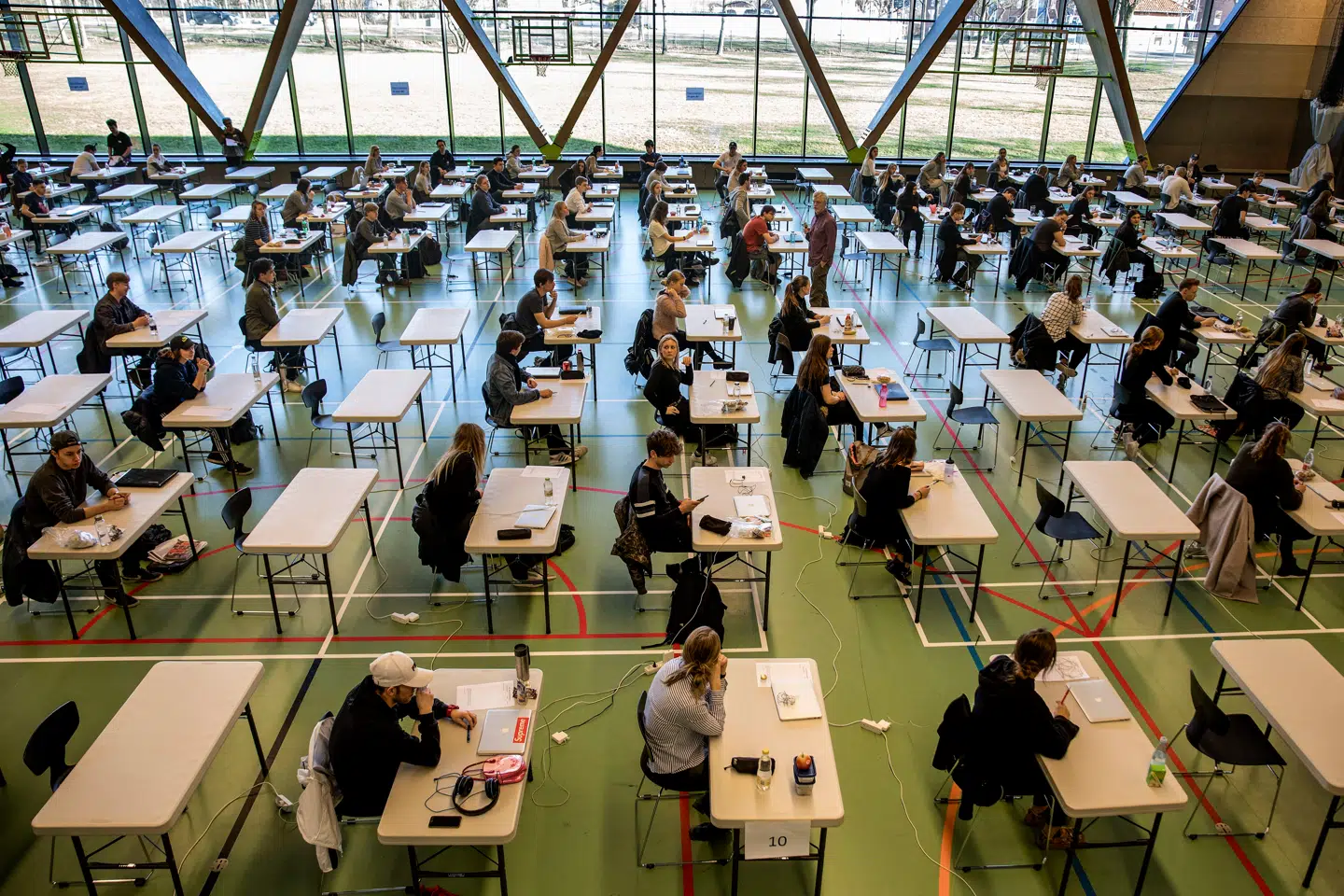
The principals say this has created greater mistrust between teachers and students because cheating has become harder to detect. Therefore, several gymnasiums are now conducting writing exercises and tests at school where students work under controlled conditions or write by hand.
Therefore the principals are also calling for new rules, because the current framework does not match the reality students and teachers face. Dansk Industri (the Confederation of Danish Industry) wants AI to become a much more integral part of the upper secondary school (gymnasium), including through technological literacy, a compulsory subject on technology comprehension, and more open access to AI in teaching and in exams.
Dansk Industri wants to allow AI in gymnasium exams
In a new policy proposal, Dansk Industri suggests that AI should become an integrated part of the gymnasium. All students should have a distinct, compulsory subject in digital technology comprehension at least at C level, and AI should by default be a permitted tool for both students and teachers, including in exams. The proposal follows on from the forthcoming epx-uddannelse and contains four proposals in total to strengthen stx, hhx and htx.
To enable open use of AI, Dansk Industri wants to make it easier to change exam formats, so that students only need to be informed of the format no later than one year before the exam. At the same time, trust between teachers and students must be restored. Beyond AI, the organisation points to higher academic standards, greater focus on students’ subsequent education choices, and a significant strengthening of mathematics and science.
More parties want to review exams and teaching in the gymnasium
Several political parties are ready to look more closely at how exams and teaching in the gymnasium can be adapted to an everyday reality where AI already features in many students’ schoolwork. The debate comes after Danske Gymnasier (the Association of Danish Upper Secondary Schools) and upper secondary teachers expressed concern about how this year’s final-year students (3.g) will cope with their leaving examinations. They are the first cohort to have had access to AI throughout their time in the gymnasium, while AI is not permitted in exams.
Several parties recognise the need for changes, but emphasise different solutions.
Enhedslisten warns that shorter exams may increase pressure on students who are already struggling, and points out that there is also a lack of clear guidelines for the use of AI in day-to-day teaching.
Dansk Folkeparti supports the idea of one overall grade and proposes more tests with pencil and paper in in-person teaching, so teachers can better assess what students can do on their own.
Moderaterne, by contrast, believes that standards should not be relaxed but that there should be more assignments and tests without aids.
SF is also open to looking at adjustments to exams and teaching.
There is broad political interest in finding solutions, but no agreement yet on whether the emphasis should be on shorter exams, more tests without aids, clearer AI guidelines or revised grading models.
Jeppe Klitgaard Stricker writes on LinkedIn about the first cohort in the gymnasium to have had access to generative AI throughout their studies and now have to sit exams without AI. He sees the exams as an important test of students’ independent academic ability and calls for clearer political and pedagogical frameworks.
He urges us to uphold education as formation. Students should not only be able to hand in answers, but also think critically, evaluate sources, analyse arguments and understand why they know what they know. It is not only about exam results, but also about democratic competences and society’s ability to resist simplified answers to complex questions.
The public conversation about AI begins in primary and lower secondary school
A suspended journalist at Berlingske prompts Kathrine Tschemerinsky to call for a broader conversation about AI. It begins at school, she believes, where students should encounter clear rules and zero tolerance for breaches. Only then will they learn to think for themselves.
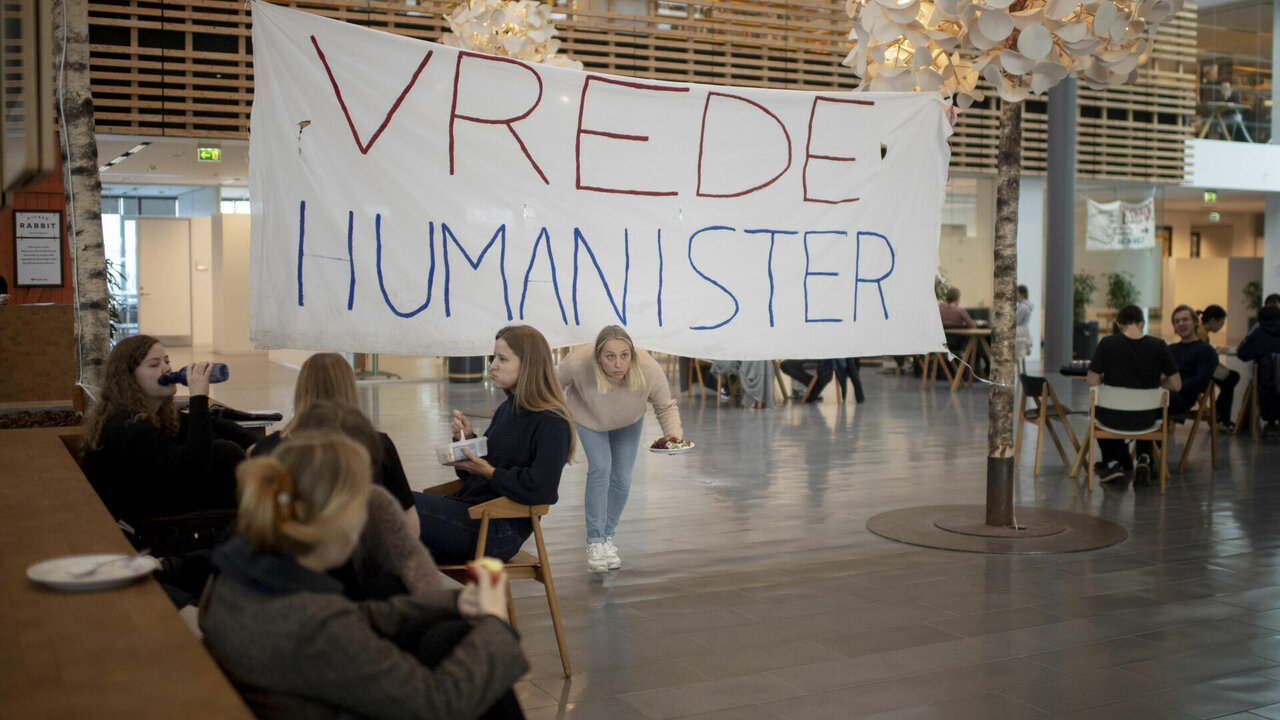
The humanities are necessary to understand what AI does to us
In an opinion piece in Kristeligt Dagblad, Professor Cathrine Hasse and Associate Professor Charlotte Engberg argue that the humanities are becoming ever more important as AI spreads. AI gives us access in seconds to knowledge from around the world, but not to the human experience that lies beyond what science can map.
According to the authors, the humanities are not resistance to technology but a way of thinking that enables us to understand what technology does to us. That is why the humanities are central to a society’s ability to think clearly and take a critical stance towards technology.
He used to read to find the student’s voice in the text and give academic feedback. Now he reads to find out whether the student is there at all. He looks for a misplaced comma, a slightly awkward sentence, a trace of the human being that indicates the student wrote the text themselves.
In my view, the debate right now is far too busy trying to patch the hole that has now become visible. Some want ExamCookie and locked text fields. Some want pen and paper. Others want zero tolerance for breaches of AI rules in primary and lower secondary school.
I have deliberately stayed out of that debate, because all the solutions being proposed are conceived as ways of turning the teacher into a better police officer.
None of them makes him a teacher again.
For what really breaks is not only the credibility of the exam. It is the relationship between a teacher who wants to see his student and a student who wants to be seen. And that is precisely what we must not lose in teaching. AI can write the essay, but it can never be the reason why a young person wants to be read.
And trust disappears on both sides. The student hides behind deliberate comma mistakes, while the teacher hides behind monitoring software. Two people who once met through a text now hide from each other behind it.
I therefore don’t believe we can control our way back to trust. Rules can and should protect the exam, but they cannot protect the relationship.
And if we lose that relationship, we have lost what school is really for.
I’ve also shared the comment on LinkedIn, where a good debate is already under way, including a sharp question: What happens when a teacher lets AI write the feedback? Read more and join the discussion.