This Week's News: Between Saucepan-Bending and Artificial Intelligence
The ministry is opening the door to using AI in English exams, while researchers warn about the "optimization trap." Read about the tension between innovation and concern in this week's newsletter.
This article has been machine-translated into English. Therefore, there may be nuances or errors in the content. The Danish version is always up-to-date and accurate. Read the original Danish article here.
Here is this week’s newsletter on artificial intelligence in education, where this time I look at both concrete initiatives in upper secondary schools (gymnasium) and concerns about how the technology is affecting the Danish school system.
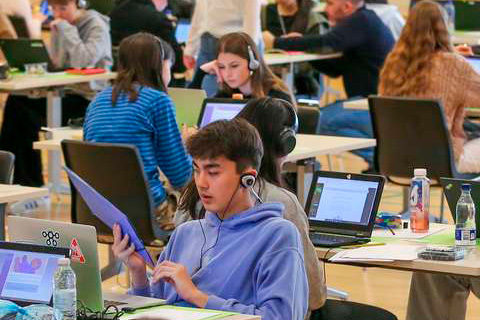
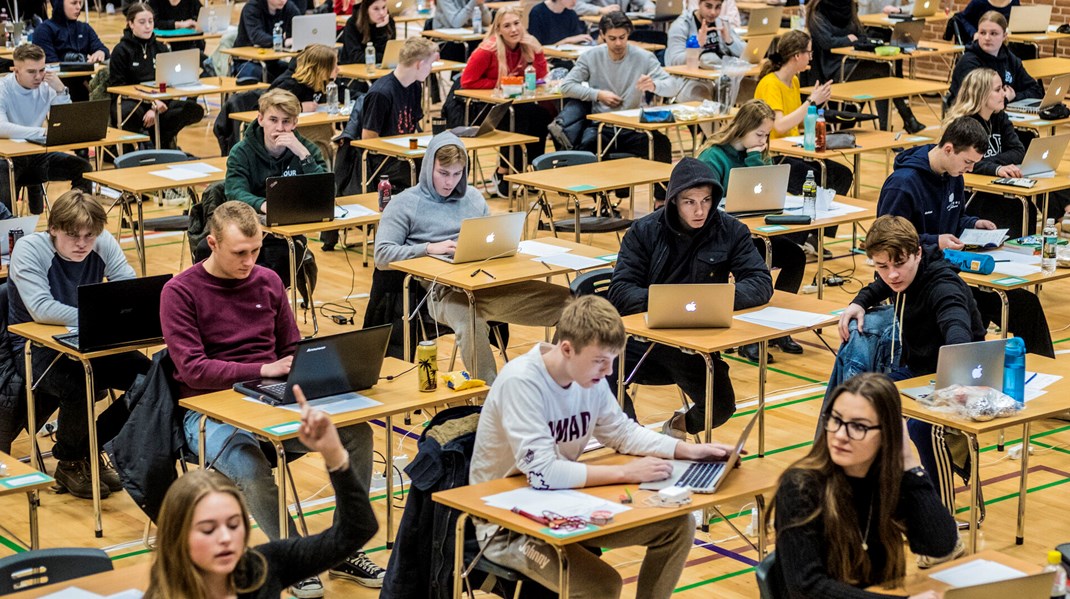
Last Friday, Børne- og Undervisningsministeriet (the Danish Ministry of Children and Education) introduced a new pilot on the use of AI in English exams at stx. Students will now be able to use AI in the oral part of the exam, while the written exam is split. The first part is completed analogue with pen and paper, and the second part is completed digitally with limited options in a text field.
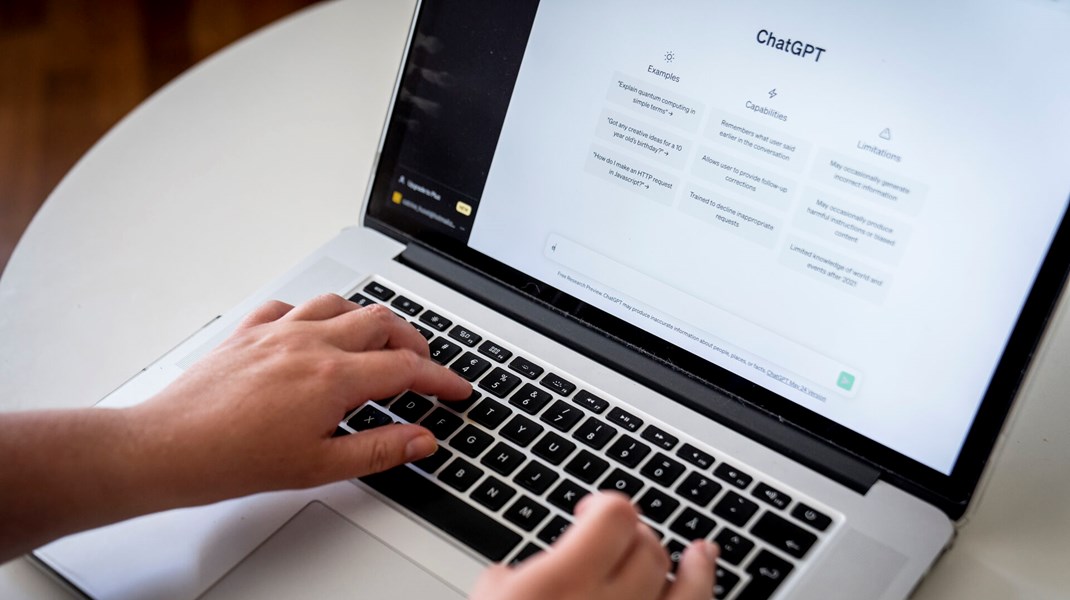
At the same time, researchers and teachers warn that the technology can create an “optimisation trap”, where students become accustomed to quick answers rather than deep thinking. Jeppe Klitgaard Stricker describes how AI tools follow a pattern reminiscent of gambling addiction. Each refinement of the prompt brings satisfaction and keeps the user engaged, while the deeper cognitive process is gradually replaced. It is also noteworthy that GPT-5 from OpenAI often ends each answer with a suggestion for what you might ask next.
The criticism is strong from many quarters. Upper secondary teacher Anders Sigsgaard Skov calls AI a “rotten brain” and points to research from MIT showing that students learn less when they use AI. Professor Sine Nørholm Just warns that AI’s pattern recognition cannot replace humans’ ability to explain and build trust.
Despite language models’ attempts to keep users engaged, I find it worrying that not all students actually learn from using AI. According to Norwegian researchers, the technology may exacerbate inequality in education. More advantaged students use AI as a sparring partner, while others skip the learning and therefore learn less. It is also problematic if students are left to their own devices when they have to learn to use AI.
The question is therefore no longer whether AI should be used in teaching, but how we design learning that strengthens students’ intellectual resilience rather than weakening it. That is why it is important, as Nynne Afzelius from HTX Køge writes in Altinget, that every subject defines its core disciplinary competence. Students must know what they should be able to do themselves, and what AI may assist with.
While we discuss AI’s impact on teaching, it is also worth noting a positive development. Here on the blog we take a strong interest in AI’s environmental impact, and until now the figures behind language models have mostly been guesswork. Last week Google finally published figures for how much energy a single query uses in their data centres. Although the figures remain high, especially for video and images, Google has significantly reduced the environmental impact compared to the first models.
Three points to take away this week:
Analogue and digital exam formats: More subjects are now experimenting with combining analogue exam formats with controlled AI use.
The optimisation trap: Be aware of the psychological mechanisms in AI tools that can replace deep thinking.
Core disciplinary competence: Each subject must define which competences are irreplaceably human.
We continuously collect news about AI in education at viden.ai/nyheder, if you want to keep up between newsletters.
Pilot allowing AI in English exams at stx
In the 2025/26 school year, a pilot with new exam formats in English A at stx will be conducted and trialled at the summer exams in 2026. The aim is to find a balance between analogue and digital working methods, so that students are both challenged in independent linguistic formulation and learn to use digital tools, including AI, in an appropriate way.
The written exam is divided into two parts: The first part is done analogue with pen and paper without aids, while the second part is conducted digitally in a restricted text field with limited options. The oral exam is also changing, with all aids, including generative AI, allowed during the preparation time. Here, students have a shorter presentation time, but must in return relate a known text to the set text.
The background is growing challenges with cheating as well as difficulties for examiners in assessing independence in digital submissions. The minister emphasises that AI must be used as a learning tool, not for cheating, and that students must be equipped for a reality in which both analogue and digital skills are necessary.
At the same time, more analogue exam formats are being introduced in language subjects such as French, Italian, Spanish, German and Latin, while new curricula, including in Arabic, Japanese, Russian and Turkish, are on the way. Experience from earlier pilots, including in Spanish, has shown that analogue exams can strengthen students’ independence and reduce cheating.
When AI tools train students to avoid deep thinking
In a new article, Jeppe Klitgaard Stricker describes how generative AI can create an “optimisation trap” for students. The instant reward systems in AI tools accustom users to expect quick answers instead of developing the patience for complex thinking.
Interaction with ChatGPT follows a pattern reminiscent of gambling addiction – each improvement to the prompt brings satisfaction and keeps the user engaged. This iterative system gradually replaces the deeper cognitive process of working through complex problems without technological help.
For educators, this raises the question: How can we design learning that strengthens students’ intellectual resilience? The article suggests concrete measures such as “AI-free zones” and teaching the psychological mechanisms behind AI interactions.
AI = rotten brain – “saucepan conjugation” = fresh brain
Upper secondary teacher Anders Sigsgaard Skov delivers, on Gymnasieskolen’s blog, a sharp rebuttal of the AI enthusiasm that seems to pervade the education sector.
He points to research from MIT showing that students become less knowledgeable when they use AI for problem-solving: they may perform better on the tasks, but learn very little, and their overall brain activity declines. According to Anders Sigsgaard Skov, the school’s task is not to solve the tasks, but to become wiser.
He defends the “saucepan conjugation” – the basic, seemingly dull exercises such as rote learning and verb conjugation – as absolutely crucial for brain development.
In the blog post, he argues that schools should educate in the knowledge of the past rather than the technology of the future, since we actually know something certain about the past. Knowledge of language and culture expands consciousness and creates a “creative reserve” of competences.
Pattern recognition must not replace human judgement
Professor Sine Nørholm Just from the ADD project argues that the implementation of artificial intelligence in the healthcare sector should be regarded as experiments rather than standard solutions. Although AI can deliver accurate diagnoses faster and more cheaply than humans, it lacks the ability to explain the results and build trust.
Her central point is that humans and machines are good at different things. AI is good at pattern recognition and probability calculations, while humans can articulate tacit knowledge and explain why something is the case in a specific situation.
The perspective is also relevant for the education sector, where AI tools are increasingly being implemented. As in healthcare, the question is not whether AI should be used, but how humans and machines can collaborate as effectively as possible.
Researchers from Universitetet i Oslo and teachers in Asker Kommune are currently investigating how pupils actually learn when they use AI in lessons. The findings indicate that it requires far more effort from both pupils and teachers than previously thought. While some pupils receive strong support for idea development, language work and proofreading, others show signs of skipping the cognitive effort — they do not read the answers carefully and do not ask the system follow-up questions.
The project Læring i algoritmenes tidsalder shows that differences in outcomes can become substantial. For the most resource-strong pupils, AI can act as a powerful sparring partner that lifts their writing level several years ahead. For others, it can instead mean they learn less because they are not themselves practising language comprehension, memory or problem-solving. In this way, AI can both support and amplify inequality between pupils.
A key finding is that AI should be designed and used in ways that stimulate pupils’ cognitive processes rather than simply doing the work for them. It is crucial that teachers help pupils distinguish between learning about the technology and learning with the technology. The researchers also stress that younger pupils cannot judge for themselves whether AI’s answers are correct — teachers’ support is central here.
Although the challenges are significant, the researchers point out that AI can become a valuable tool in teaching if it is closely tied to subject knowledge and used deliberately. The experiences from Asker are planned to be scaled nationally in Norway from 2027, when the first pedagogical models are expected to be fully developed.
What should pupils be able to do on their own – and what may AI help with?
Principal Nynne Afzelius from HTX Køge writes in Altinget about the challenge that AI development poses to upper secondary schools (gymnasiums). She compares the situation with the introduction of CAS tools in mathematics 20 years ago, when there was also confusion and resistance.
Her central message is clear: Every subject must now define its core disciplinary competencies — that is, what pupils should be able to do unaided, and what they should be able to do with AI. As she quotes a colleague: "I don’t teach AI because I love AI. I teach AI because I love my pupils."
Nynne Afzelius argues that the conversation about the ‘indispensable’ in each subject should happen now, in staff rooms and professional networks, and not be left to the ministry. She points out that mathematics’ experience with a two-part exam can serve as inspiration for other subjects.
From apprehension to ally – a teacher let her pupils teach her about AI
History and social studies teacher Louise Urth from Lemtorpskolen in Lemvig describes on Folkeskolen.dk how she moved from being sceptical about AI to incorporating it actively in her teaching. The starting point was a unit on the Danish Realm, where some pupils began using AI for source-based tasks. At first she was frustrated, but then decided to turn the situation into a learning opportunity, asking the pupils to teach her how to use AI while they applied it in a political role-play about Greenland’s future.
The pupils created their own role descriptions with help from AI, and the teacher noticed that they became more engaged and at the same time more critical.
Urth points out that AI can be used to make large amounts of information more manageable and to support differentiation, for example for bilingual pupils. At the same time, she highlights the limitations, since AI cannot capture the human and tactile dimensions embedded in historical sources. She therefore reflects on how AI is best used in practice, for example by having pupils present and justify their prompts instead of assessing only the written products.
Google has published a new technical report that for the first time provides a consolidated overview of how much energy, water and CO₂ a Gemini query uses.
According to the report, an average text query requires 0.24 watt-hours, emits 0.03 grams of CO₂ and uses 0.26 ml of water — roughly five drops. That is equivalent to less than nine seconds of watching TV.
The figures are significantly lower than many earlier assumptions, and Google highlights that consumption has fallen sharply: in one year the energy use per query has been reduced by a factor of 33, while CO₂ emissions have fallen by a factor of 44. This is due to new model architectures, optimised algorithms, custom-built TPUs and more efficient data centres.
Google emphasises that many previous calculations of AI’s climate footprint counted only the active chip power. In their more comprehensive method, CPUs, memory, backup machines and cooling in data centres are also included. If you count only chip power, the energy comes out at 0.10 watt-hours — far below the actual figure.
The aim of the report is to create greater transparency and pave the way for common standards for measuring AI’s resource consumption. According to Google, the method should enable more accurate comparisons across models, hardware and data centres and at the same time help the industry find new ways to reduce AI’s climate footprint.