This Week’s News: Between Paper-Based Exams and AI in Student Advising
In this week’s newsletter, we explore the tensions between paper-based exams and AI-powered student advising. Read about international research findings, critical perspectives, and new initiatives shaping the future of education—in Denmark and around the world.
This article has been machine-translated into English. Therefore, there may be nuances or errors in the content. The Danish version is always up-to-date and accurate. Read the original Danish article here.
In this week’s newsletter on artificial intelligence in education, we focus on news from Denmark and abroad and look at the latest developments.
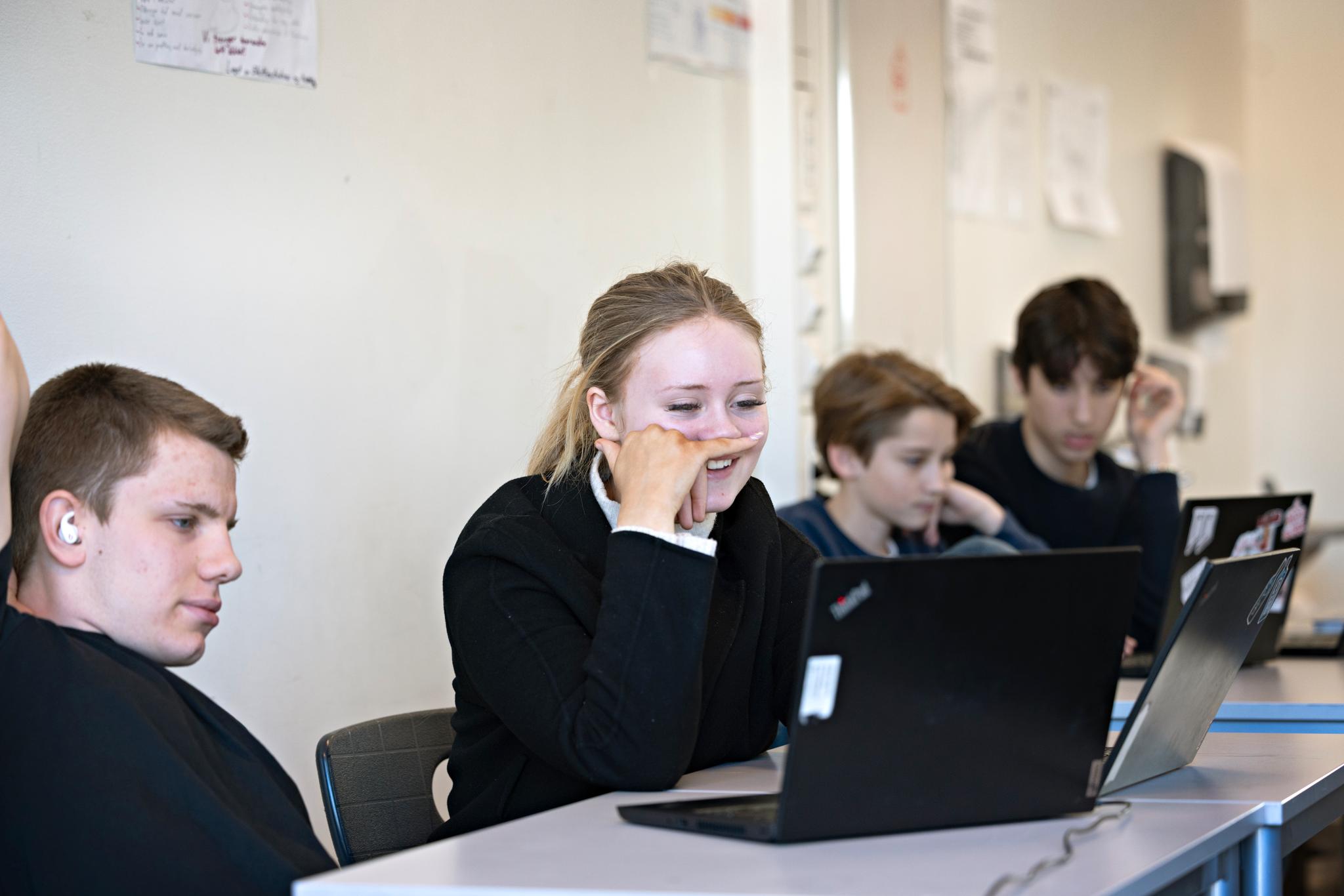
Gymnasieskolen has investigated what the new exam formats in a number of language subjects mean in practice in schools. Here they spoke with Spanish teacher Trine Louise Vinter from Greve Gymnasium, who is positive about the analogue exam format, while Danske Gymnasier (the Association of Upper Secondary Schools) criticises the return to pen and paper.
AI does not only play a role in teaching itself. Alex Ahrendtsen, education spokesperson for Dansk Folkeparti (the Danish People’s Party), wants AI to become part of study and careers guidance at EPX. At Viden.AI we have read their piece in Gymnasieskolen and examined what they are proposing – perhaps it is not quite as straightforward as it first sounds.
At the same time, AI solutions are being used worldwide in education, and in the magazine Forbesthey write about the new opportunities. AI may help more people gain access to quality education.
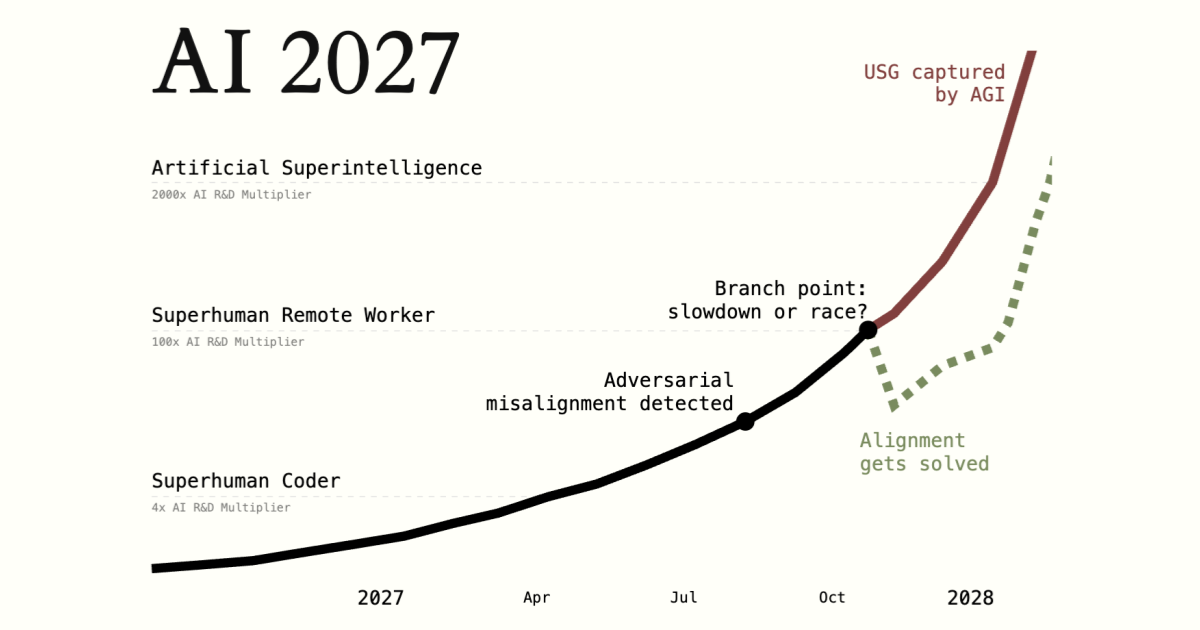
But amid all this: What happens when generative artificial intelligence becomes smarter than humans – that is, achieves superintelligence and surpasses us on every parameter? The AI Futures Project examines this and offers a prediction on a new interactive website.
Last week we also published an article about AI agents. We believe this will be the next big thing in education and in how we interact with a computer.
New written exam formats in language subjects are to strengthen academic standards
The Danish Minister for Children and Education has decided to make a new exam format in Spanish at level A permanent, and it will also be extended to French and Italian beginner’s language at level A from the next academic year. The new exam format requires students to complete both parts by hand, using pen and paper, and the first part has been extended by half an hour. The Spanish teachers at Greve Gymnasium who took part in the pilot are very positive about the change.
According to Trine Louise Vinter, a Spanish teacher at Greve Gymnasium, the new exam format gives a more realistic picture of students’ abilities and has led to better results. The school has introduced screen-free Spanish teaching, where students do all written work in exercise books at school. This has made students more independent language users with a considerably larger active vocabulary than before.
Although Danske Gymnasier has criticised the exam format for not incorporating artificial intelligence and called it a “step backwards”, Trine Louise Vinter believes the new approach has created better alignment between oral and written skills. She emphasises that she still uses digital tools such as Quizlet and Duolingo in teaching, but that it is the teacher who decides when and how. The handwritten exam format has, in her view, first and foremost made students more proficient.
Students learn more with chatbots – but the effect on the lowest-attaining is still unclear
A new review of international research shows that students in both upper secondary school (gymnasium) and at universities often learn more when they use AI chatbots in teaching.
In a Norwegian study, students performed 33% better in a test after using ChatGPT compared with traditional teaching. At the same time, the research indicates that AI particularly strengthens students’ reflection and participation – provided its use is supported and guided.
In Osloskolen, teachers such as Nina Eriksdatter have actively integrated AI into teaching, and students report that they experience more structure and get better help with assignments. However, there is still a lack of research on how the academically weakest students are affected. Preliminary observations suggest that AI can motivate quieter students and make it easier for teachers to target their attention.
The research also highlights that uncritical use of AI – for example when the technology simply writes the assignments – does not lead to learning. Experts therefore urge seeing students and AI as a hybrid form of collaboration, where it is important to assess both process and understanding.
Critical voices, however, warn about cultural differences in the research base as well as AI’s tendency to invent false facts.
ChatGPT makes students dumber and impairs learning
Associate Professor Are Bøe Pedersen from NLA University College warns in an opinion piece against too rapid an integration of AI tools such as ChatGPT in teaching. Referring to new research, he argues that students do not use AI to improve their work, but as a response to stress and workload. According to Are Bøe Pedersen, this leads to poorer performance, more procrastination and a weakening of cognitive abilities such as memory and critical thinking.
He believes that when tasks can be solved by AI, the possibility of real learning is lost. At the same time, he urges that teaching instead focus on tasks that can only be solved by the human mind. Are Bøe Pedersen questions whether the haste with which AI is being implemented actually benefits students – or whether it instead risks undermining their learning and judgement.
DF: AI should be included in study guidance at EPX
When the new youth education programme EPX launches in 2030, AI will become part of study and careers guidance. The proposal comes from Alex Ahrendtsen, education spokesperson for Dansk Folkeparti, who believes that AI can be a good supplement – especially because the government does not wish to allocate money for more guidance counsellors. The aim is to help students choose a direction in their education – for example, whether they want to be a baker, bricklayer or nurse. AI should support this choice, but not replace human guidance.
Several, however, warn against using AI. Gymnasieskolernes Lærerforening (the Danish Upper Secondary Teachers’ Union) and Ungdomsuddannelsernes Vejlederforening (the Association of Guidance Counsellors in Youth Education) emphasise that good guidance requires relationships and personal contact. They fear that AI may lead to stereotypical answers and a deterioration in quality.
Study bots with illegal content worry publishers and rights organisations
A survey conducted by Rettighedsalliancen (the Danish Rights Alliance) shows that a large proportion of Danish students upload study books to AI chatbots without realising that it is illegal. In the survey, as many as 72% say they do not know the rules, and one in four students has tried to share textbook material with a chatbot. This practice is causing major concern among Danish educational publishers and rights organisations, who find their books being used without permission in user-created bots, especially on platforms such as ChatGPT’s GPT Store.
OpenAI and Anthropic compete for students in the US and Canada
OpenAI and Anthropic launched several new initiatives aimed at higher education almost simultaneously last week. On Wednesday, Anthropic introduced Claude for Education – their first major AI venture in academia.
This new version of Claude offers a dedicated Learning Mode that uses Socratic questioning to foster critical thinking rather than delivering direct answers. In addition, Anthropic has formed partnerships with, among others, Northeastern University, LSE and Instructure – the developer behind the Canvas platform – focusing on equitable access and the integration of AI in teaching.
OpenAI, which has been active in the university sector since 2024, responded the following day by announcing that ChatGPT Plus is now free for all university students in the US and Canada until May. In addition, OpenAI is already working with NextGenAI Consortium, a collaboration with 15 universities and an investment of 50 million dollars. Earlier this year, the company also signed a deal with the entire California State University system.
In an article in Forbes, AI researcher Cornelia C. Walther examines how AI can act as a driver of a more equitable and inclusive global education.
The starting point is that in 2025, 234 million children are expected to have their schooling disrupted, and 85 million will not attend school at all.
Here, Cornelia C. Walther explains that AI can offer scalable, tailored solutions that can address both access issues and quality disparities in education. The article highlights a number of concrete initiatives where AI is already creating positive change.
In Lebanon and New York, schools use YetiConfetti, which combines AI and human guidance to remove linguistic and cultural barriers.
The Hunu app in Ghana supports children with special needs.
In India, MakerDost works with AI-supported makerspaces to equip young people for the future labour market.
According to Cornelia C. Walther, the intention is not for AI to replace the teacher, but rather to strengthen the teacher’s role as mentor and facilitator. She also explains that education should be based on hybrid intelligence, where human and artificial intelligence complement each other.
AI Futures Project is a new non-profit organisation working to forecast how AI may develop in the future. They have just published their first major scenario, called AI 2027, which offers a take on how the world might look in a few years with more advanced AI. The scenario was developed in collaboration with Lightcone Infrastructure and is based on a series of workshops and exercises with experts and decision-makers.
Behind the project is an experienced team with backgrounds from, among others, OpenAI, Harvard and various AI research institutions. They work in particular on drafting policy recommendations and practical exercises that can help society handle AI development responsibly. The scenario is both a tool for understanding risks and opportunities and can serve as a basis for discussions about future technology.
Try the interactive narrative below, and make your own choice about how we regulate ASI (an AI system that surpasses humans in all domains – that is, superintelligence).