This article has been machine-translated into English. Therefore, there may be nuances or errors in the content. The Danish version is always up-to-date and accurate. Read the original Danish article here.
This week we focus on Professor Bent Meier Sørensen’s excellent op-ed, which strongly questions whether artificial intelligence in education is really a good idea. Bent briefly touches on the challenges around the GDPR, which is also the focus of Max Schrems, who recently brought a case against OpenAI to have personal data removed from ChatGPT. In response, OpenAI has set up a page where one can request data to be removed, but they themselves write that it is practically impossible.
The OECD has just updated its AI Principles, which promote the use of AI that is innovative and trustworthy and respects human rights and democratic values.
Earlier this year, a public hearing was held focusing on how artificial intelligence affects our society, and the report has just been published.
Professor warns: Artificial intelligence threatens originality and creative thinking
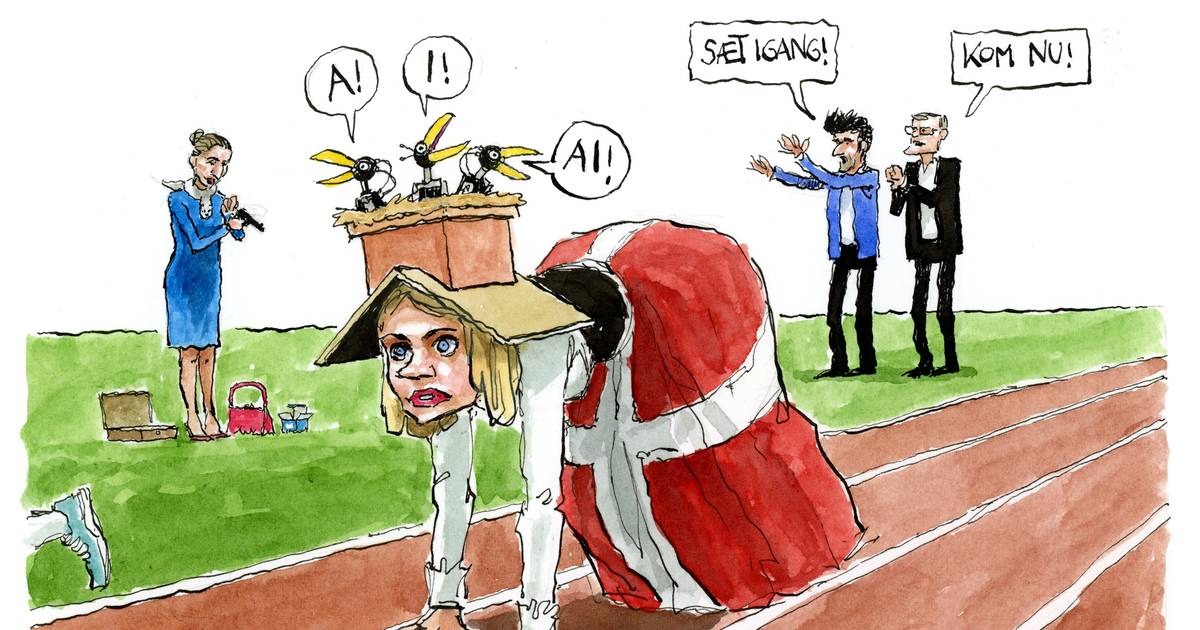
Professor Bent Meier Sørensen from CBS (Copenhagen Business School) has written an article about artificial intelligence in the education system and our society. He argues that the massive hype around artificial intelligence, especially chatbots, is excessive and not credible.
He points out that students’ use of chatbots does not necessarily lead to deeper understanding or original thinking, and he also warns that the strongest students may be inclined to submit poorer work.
In the op-ed, Bent Meier Sørensen calls for action to rein in the uncritical spread of artificial intelligence in order to preserve human originality, critical thinking and cultural diversity.
Read Bent Meier Sørensen’s full op-ed in Politiken below:
ChatGPT accused of repeated violations of the GDPR
Max Schrems and his organisation, Noyb, have just filed a case against ChatGPT for repeated breaches of the GDPR. They claim that ChatGPT repeatedly provides false information when the language model is asked about details of individuals, and that it does not correct them. This is contrary to the GDPR’s requirements on accuracy and accessibility of information about individuals. OpenAI has acknowledged that it cannot correct incorrect information, and it refuses to comply with the GDPR’s requirements to rectify and erase erroneous data.
Noyb argues that it is problematic and potentially harmful when systems like ChatGPT generate false information about people. They have filed the case with the Austrian Data Protection Authority.
💡
Maximilian Schrems is known for the case, Schrems I, where as a law student he complained that Facebook Ireland unlawfully shared his personal data with the US government. This led to the invalidation of the Safe Harbor data transfer agreement between the EU and the US. Schrems has since brought multiple cases against Meta and other tech giants regarding GDPR compliance. He is also the author of the book "Kämpf um deine Daten" and an active speaker on the GDPR and data protection.
OpenAI has added a form on its website that allows individuals to request the removal of their personal information from ChatGPT. Even if you submit a request, it is not certain that the information will be removed from ChatGPT’s outputs.
OpenAI will verify and consider your request, balancing privacy and data protection rights with public interests like access to information, in accordance with applicable law. Submitting a request does not guarantee that information about you will be removed from ChatGPT outputs, and incomplete forms may not be processed. OpenAI Personal Data Removal Request
OpenAI itself writes that there are certain limitations to removing personal data from the models, since it is very labour-intensive to adjust a model once it has been trained. At the same time, the model will still contain personal data in its base model, and even if certain prompts are blocked, there is no guarantee that this data will not surface in other prompts.
There is a form on OpenAI’s website where you can request to have personal information removed.
The OECD’s AI Principles have been updated
The OECD’s Recommendation on Artificial Intelligence, adopted on 22 May 2019, was the first intergovernmental standard for AI and has just been updated to reflect technological developments.
The main points of the changes are listed below:
Ensure there are strong safety mechanisms to manage or disable AI systems that may behave undesirably or harmfully.
Emphasise the importance of combating disinformation and protecting authentic information, especially in connection with AI that can generate content.
Ensure companies act responsibly throughout the AI system lifecycle, including collaboration with both suppliers and users of AI.
Clarify what information about AI systems is necessary to ensure transparency and accountable handling.
Clearly highlight the importance of environmental sustainability, which has become increasingly important.
Emphasise that international cooperation is necessary to ensure coherent rules and policies for AI, as the number of initiatives in the field is rising.
In the education sector, it is recommended to invest in research and development of artificial intelligence to promote innovation and understanding. At the same time, there is a call to prepare the labour market for the new opportunities through education and reskilling.
On 3–4 February 2024, TrygFonden (the Tryg Foundation), Digitaliserings- og Ligestillingsministeriet (the Danish Ministry of Digitalisation and Gender Equality), the research and analysis institute Verian, Professor Kasper Møller Hansen from Københavns Universitet (University of Copenhagen) and the Digital Democracy Centre at Syddansk Universitet (University of Southern Denmark) held a public hearing on artificial intelligence. The main goal was to foster a democratic conversation about how artificial intelligence affects our society. The public hearing brought together 356 participants, who discussed topics such as the labour market, welfare and digital security with the aim of informing future policies on artificial intelligence in Denmark.
The report from the public hearing has just been published and underlines the importance of education and public information to strengthen Danes’ trust in artificial intelligence. It highlights that all citizens should have the necessary competences to navigate an increasingly digital world, and it stresses how important it is that everyone becomes digitally literate to prevent the technology from leading to inequality in the population.




 Bent Meier Sørensen Bent Meier Sørensen is professor of management philosophy, CBS, and a member of the Tech og Trivsel network
 Dan Jensen Editorial Director




 Stine Grynberg



 Per Michael Johansen Rector, Aalborg Universitet (Aalborg University)
 By: Jan Aagaard Published: 29.04.2024



 Elizabeth Mønsted Johansen

 Tinne

 Marc Watkins

 Natalia Kucirkova

 See Tanya's profile


 Holly Clark