This Week's News: AI Tools Support Students with Cognitive Challenges

•
12 min read



Here is an overview of some of the most important news and perspectives on artificial intelligence in teaching.
First and foremost, a new study from Lunds Universitet (Lund University) shows that pupils with cognitive challenges such as difficulties with concentration and impulsivity benefit particularly from AI tools in their schoolwork. These tools help them complete tasks that they would otherwise have struggled with.
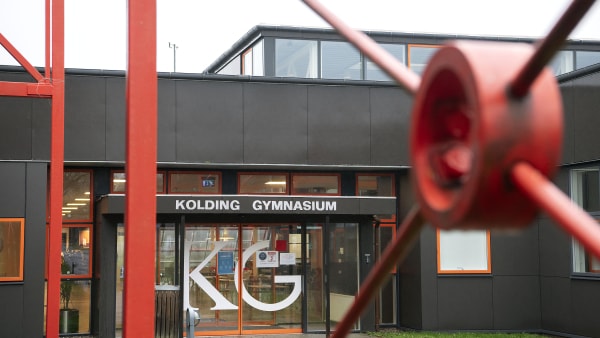
At the same time, a survey from Voxmeter shows that 7 out of 10 young Danes consider AI skills important for the future, but many lack knowledge about how best to make use of the technology. In this connection, Google, together with tech expert David Guldager, has visited upper secondary schools (gymnasiums) to teach students to use AI effectively.
We have previously written about DR’s article, which has to a large extent focused attention on the high climate costs of AI technology. However, a number of experts cast doubt on these figures, and the whole question of AI models’ energy consumption is highly complex.
In an opinion piece in Politiken, the editors behind Denmark’s national encyclopaedia, Lex.dk, underline the importance of ensuring access to reliable knowledge in Danish in a digital age marked by misinformation.
Upper secondary school teachers in pædagogikum (the teacher training programme for the gymnasium) now have the opportunity to write about and use generative AI in the theoretical assignment.
A study from Københavns Universitet (University of Copenhagen) shows that ChatGPT performs well in Danish but still has challenges with linguistic nuances.
In this week’s recommendation we link to Ethan Mollick’s new article, where he writes about how AI can already do most homework and tests for students – the so-called “Homework Apocalypse”.
In our article series on faglig sorg I am running a little behind. The fourth article was meant to be published last Thursday, but at the last moment a rather interesting perspective emerged that I had not considered. Therefore, it will be published this coming Thursday.
Enjoy the newsletter!
In a new article published in the journal Frontiers in Artificial Intelligence, researchers from Lunds Universitet investigate the relationship between cognitive challenges and the use of AI tools for schoolwork. They studied 750 students aged 12–19.
The study shows that students with cognitive challenges such as difficulties with concentration, impulsivity and planning experience significant benefits from AI tools like ChatGPT in their schoolwork. These tools particularly help students complete tasks that they would otherwise have found difficult to manage on their own.
However, the researchers behind the study emphasise the need to develop clear guidelines for the use of AI in school, as there is uncertainty about whether these technologies might hinder the development of students’ cognitive abilities. They call for teachers to be better equipped to guide students in a balanced use of AI tools, so that these can support learning without undermining students’ independent cognitive development.
 Johan Klarin

Voxmeter has conducted a survey for Google showing that 7 out of 10 young Danes consider the ability to use artificial intelligence (AI) an important future competence. However, many lack knowledge about how best to make use of the technology. To meet this need, Google’s Danish Head of Communications, Jesper Vangkilde, and tech expert David Guldager are visiting upper secondary schools across the country to teach students to use AI effectively. The students gain hands-on experience in writing effective prompts for AI systems and are introduced to various AI tools.
It is no longer enough for upper secondary students only to be able to ‘google’ – they also need to be able to ‘prompt’, says Jesper Vangkilde, Head of Communications for Google in Denmark, to Sjællandske Nyheder.
The event also includes discussions about the ethical challenges and potential downsides of AI, which supports students’ understanding of the technology’s complexity.
Read more about the events below:
 August Tærsker Høgh

 Emilie Broe Pedersen empedfyens.dk
 Kasper Haagen Skovse

The use of AI chatbots such as ChatGPT and similar technologies has a significant climate footprint. Data centres that handle these AI tasks require enormous amounts of energy and water for both operation and cooling. In an article on DR, calculations are cited showing that a single query to a chatbot can use as much energy as 40 mobile phone charges.
Although the full climate footprint is still unclear, projections indicate that data centres’ energy consumption could reach the level of Japan’s entire electricity use by 2026. The big tech companies such as Microsoft and Google have already postponed their climate targets because AI development is challenging their sustainability initiatives. There is also growing attention to the enormous water consumption, which creates local challenges, especially in areas with water scarcity.
However, through our network at Viden.AI we hear considerable doubt about these data, and it is clear that the question of AI models’ energy consumption is highly complex.
For example, as pointed out in Jesper Andersen’s thread on LinkedIn, we simply do not have precise enough data to conclude anything definitive about ChatGPT’s energy consumption, and the calculations that exist may not be directly comparable with real-world scenarios.
At the same time, there is speculation as to whether the figures cited are based on experiments with GPT-J on outdated consumer hardware, which would be a poor proxy for assessing the energy consumption of modern, commercial AI models such as those from OpenAI. Without open and precise data from actors such as OpenAI, we are forced to rely on estimates and proxies that may be misleading.
For example, training Meta’s LLaMA3 emits the equivalent of 7.2 tonnes of CO2 per year, which corresponds to 405 Danes’ annual CO2 consumption (the training emits 1,900 tonnes of CO2, and each Dane uses on average 4.69 tonnes of CO2 per year in 2020).
On the basis of the above, we are very unsure whether DR’s figures are correct. We lack both the basis for their calculations and concrete information from some of the big tech giants before we can carry out these calculations.
We recommend reading the comments thread on Jesper Andersen’s post on LinkedIn, where these figures are hotly debated.
 Jesper Andersen

 meta-llama

 Theis Ehler Molin

The leaders behind Lex – Denmark’s national encyclopaedia – stress in an opinion piece in Politiken the importance of ensuring access to reliable, research-based knowledge in Danish at a time when the internet is characterised by misinformation and manipulation.
They emphasise that democracy and public debate are under threat when shared knowledge is replaced by echo chambers and algorithm-driven distortions of fact. They point out that new AI technologies amplify these problems, as they can easily produce content that resembles the truth but often is not. Therefore, they argue that, as a society, we must reinvent the encyclopaedia as a modern source of enlightenment that can underpin a shared democratic conversation.
In Denmark, the Lex.dk initiative has proved a success, with millions of entries and a strong research foundation. To secure a shared reality in the future, they call for collaboration between politicians, researchers and the education sector to prioritise and protect this common knowledge resource.

The themes for this year’s pædagogikum candidates have now been published, and one of the new themes is "Learning through generative artificial intelligence". This gives candidates the opportunity to explore and trial generative AI in an educational context. As part of the assignment, candidates can implement AI in their teaching and collect empirical data, which they must subsequently analyse theoretically.
In the outline for Theme 2 there are several references to Viden.AI, which we are very honoured by ☺️
In addition to the AI theme, Theme 1 focuses on disciplinary reading, and, as something new, an elective theme has also been added. At the same time, it is now also possible to use generative AI in the submission itself, as long as good academic practice is followed.
You can read about the three themes here:


A new study by language researchers at Københavns Universitet and Det Danske Sprog- og Litteraturselskab (The Society for Danish Language and Literature) shows that ChatGPT performs well in Danish but still struggles to understand linguistic nuances such as ambiguous words and figurative language. This is partly because ChatGPT is primarily trained on English texts and then translates into Danish, which can result in linguistic errors and biases. Although ChatGPT 4.0 handles many tasks well, challenges remain, especially when it comes to abstract and culturally specific language. The study points to the need for further training of the models on Danish material to ensure they can handle complex linguistic tasks accurately.



In a new article, Ethan Mollick describes how the so-called ‘Homework Apocalypse’ has become a reality, with AI able to complete virtually all types of homework and tests for students. The spread of AI has been astonishingly rapid, and studies show that a large proportion of both university and school students already use AI to support their schoolwork. Although many teachers still regard AI use as cheating, there are a number of illusions that hinder an effective response to the problem.
The first illusion, the ‘Detection Illusion’, is teachers’ mistaken belief that they can easily spot AI-generated work, which in reality has become very difficult. The second illusion, ‘Illusory Knowledge’, affects students who fail to realise that AI assistance can actually weaken their learning, even if it earns them higher marks on homework.
Mollick argues that AI should be integrated into teaching in ways that promote thinking rather than merely serving as a shortcut for students. Research shows that AI can be beneficial if used wisely, for example as a teaching tool that pushes students to reflect on their own knowledge. The teacher’s role is therefore central in guiding the use of AI in education, so that it becomes a means to deeper learning rather than simply a substitute for students’ own effort.
Read Ethan Mollick’s full post here:
 Ethan Mollick
 Ethan Mollick

 Lars Lindevall larslhelsingordagblad.dk

 PYMNTS
 Peter Christian Bech-Nielsen






