This Week's News: AI to save 6,900 full-time equivalents in education
Artificial intelligence is set to save 6,900 full-time equivalents (FTEs), a confidential analysis shows. Universities drop bans on AI, vocational schools warn against the Alpha School model, and Lex launches Denmark’s first chatbot for research knowledge.
This article has been machine-translated into English. Therefore, there may be nuances or errors in the content. The Danish version is always up-to-date and accurate. Read the original Danish article here.
Here is this week’s newsletter on artificial intelligence in education. This week we have gathered a range of articles without it getting too technical.
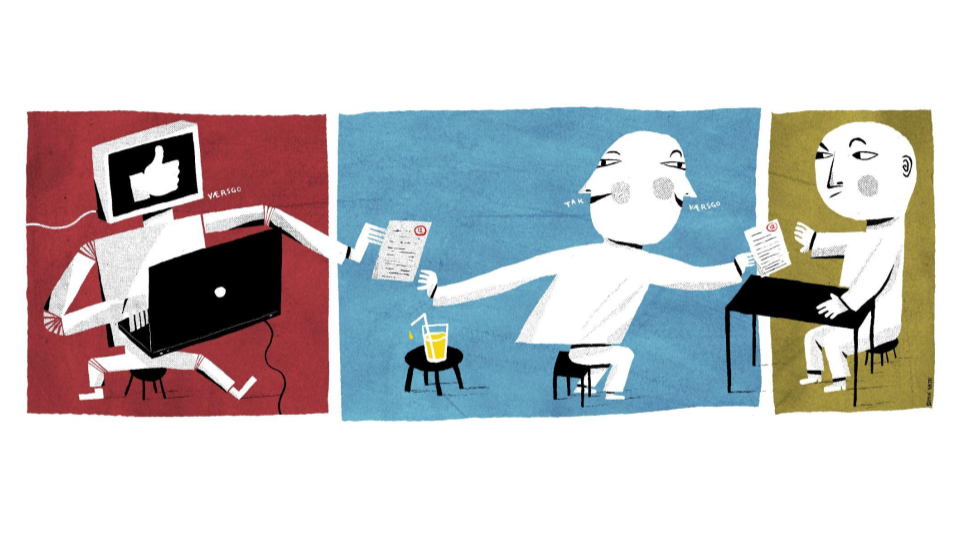
We often see AI portrayed as a tool for efficiency, and the government talks about 30,000 public-sector positions to be eliminated by 2035. A formerly confidential analysis from Boston Consulting Group points to education as one of the three main areas where artificial intelligence has the greatest potential. Here, AI is to help teachers plan lessons, mark assignments and detect cheating, as well as guide pupils through virtual mentors. In research, AI programs should help with applications and structuring large datasets. In total, this could save 6,900 full-time equivalents in the education and research sector.
But the path to get there is anything but simple. Working with AI requires staff upskilling, and right now it is difficult to navigate the jungle of systems and solutions. While pupils are quickly adopting AI, we as educators are left with a sense of losing control and subject expertise in the classroom.
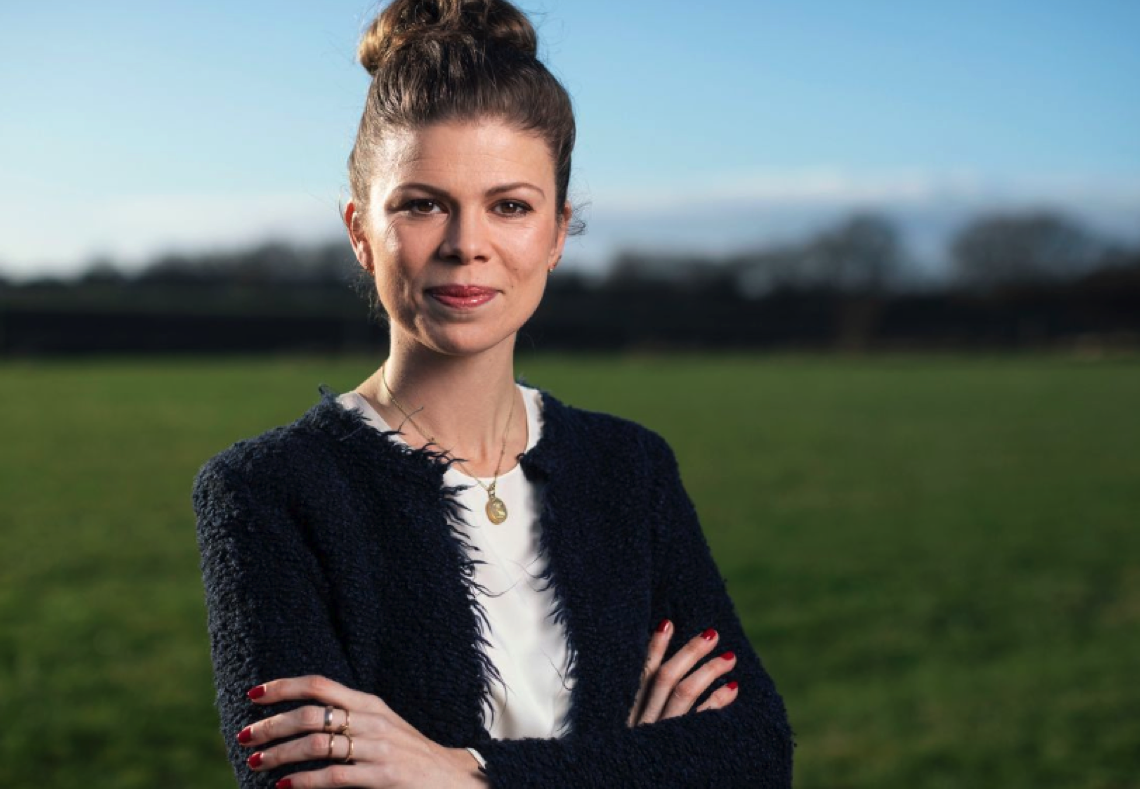
Perhaps the most important question is not how, but what kind of education system we want. Futures researcher Louise Fredbo-Nielsen predicts that all school pupils will soon get a “digital twin” – a dataset that is continuously updated with the pupil’s academic development and day-to-day state. However, I believe we must ensure that AI does not take over the teacher’s professional judgement and empathy. Data-informed steering of teaching can constrain the teacher’s agency and at the same time risk reducing pupils to data points rather than whole human beings.
We already see some of this at the US Alpha School, which leaders at vocational schools are cautious about. Here, AI has taken over the teaching, and the teacher functions more as a coach than as a subject expert. They believe the technology should support the teacher – not replace him or her.
While we discuss AI in the compulsory school (primary and lower secondary) and in upper secondary school (gymnasium), all Danish universities now allow the use of AI for written exams, unless otherwise specifically stated. A lecturer at DTU (Technical University of Denmark) puts it bluntly: “A chatbot can get 10 or 12 in my bachelor course.” Teaching and forms of assessment therefore need to be rethought from the ground up.
While many AI services often hallucinate or give incorrect answers, Lex has launched Denmark’s first chatbot built on verified Danish research knowledge. For educators seeking reliable sources for teaching and preparation, this could become a valuable alternative to existing AI solutions.
Here are three key takeaways from this week:
The government wants to save 6,900 full-time equivalents in the education and research sector with AI — but how?
The universities have dropped the ban and are now working to integrate AI.
The teacher’s role is changing with AI towards becoming more of a guide or coach, but human qualities are becoming even more important.
We continuously curate news on AI in education at viden.ai/nyheder if you want to keep up between newsletters.
The government wants to save 6,900 full-time equivalents in the education sector with the help of AI
Ingeniøren (the Danish engineering magazine) has obtained documents through a freedom-of-information request concerning a hitherto unpublished analysis from the consultancy Boston Consulting Group, which has worked with the government’s Digital Taskforce for Artificial Intelligence in the run-up to the AI plan. The analysis reveals the government’s concrete plans to save 30,000 full-time positions in the public sector by 2035 through AI solutions in three focus areas.
The analysis highlights education as one of the three main areas where artificial intelligence is considered to have the greatest potential. Here, AI is to help teachers in the Danish primary and lower secondary school (folkeskole) to plan teaching, mark assignments and detect cheating. In addition, a virtual mentor is to support pupils with homework and answer questions.
In the research area, AI programs are to help with applications and with structuring large datasets. According to the plan, this can in total save the public sector 3,000 full-time equivalents in education and a further 3,900 in research.
The school of the future: When all pupils get a digital twin
Within a few years, Danish school pupils will have a digital twin, a dataset that is constantly updated with everything from academic development to day-to-day state. That is the prediction of futures researcher Louise Fredbo-Nielsen in a new blog post on minlæring.dk, where she sees artificial intelligence as a potential change in Danish teaching, if we use the technology with healthy scepticism while keeping the focus on human values.
Around the world, schools are already experimenting with AI-driven learning platforms and personal teaching assistants. In the USA, the “2 Hour Learning” concept has compressed academic instruction to just two hours a day using adaptive apps that adjust to each pupil’s level and pace. Algorithms will also gain ground in Denmark, where part of teaching will be governed by how each pupil performs best.
The teacher’s role will not become less important, but it will shift to being more of a facilitator and mentor. AI assistants can handle personalised feedback and language simulations. That gives teachers more time to focus on empathy, creativity and other human qualities that will become even more important in a future shaped by technology.
AI should not replace the teacher but strengthen teaching
In an opinion piece in Uddannelsesmonitor, Allan Kortnum and Rikke Christoffersen from Danske Erhvervsskoler og Gymnasier-Lederne (the association of Danish vocational schools and upper secondary schools – the Leaders section) argue for a more nuanced approach to artificial intelligence in the education system. They reject the US Alpha School model, where AI has taken over teaching, but at the same time urge us to look with curiosity at the potential of the technology.
The authors point out that upper secondary school (gymnasium) teaching today often follows a classic “one subject, one teacher, one classroom” model, which does not account for pupils’ different starting points. Here they see potential in AI-based support functions that can adapt the level of difficulty to the individual pupil while freeing up time for teachers’ strengths, relationships and communities.
With over 45,000 young people not in employment or education, they argue for targeted trials with AI in upper secondary education – not to replace teachers, but to support teaching and equip young people for a labour market where AI already plays a central role.
While the debate about AI in education often focuses on pupils’ and students’ use, new US research from Anthropic shows that educators are also increasingly using artificial intelligence. An analysis of 74,000 conversations with international professors shows that AI is used for both teaching materials and administration. According to a Gallup survey, US teachers save on average 5.9 hours a week using AI tools.
The study shows that educators abroad primarily use AI to develop lesson plans (57%), conduct academic research (13%) and assess students’ performance (7%). Particularly interesting is that many international educators are developing their own interactive tools, from chemistry simulators to automatic marking schemes, by exploiting AI’s ability to create functional resources.
Ingeniøren reports how all Danish universities have had to change their approach to artificial intelligence in teaching. Whereas ChatGPT and similar tools were previously banned, they are now permitted in written examinations unless otherwise stated. The rationale is that today’s exam questions can often be answered satisfactorily by a chatbot, which challenges the traditional exam format.
DTU (the Technical University of Denmark) and Aarhus Universitet (Aarhus University) were the first to experiment with AI in teaching and have set up working groups to explore how AI can be integrated into both learning and assessment. A distinction is drawn between two types of subjects: In foundation courses, where students must acquire basic skills such as mathematics and programming, AI is generally not desired. In problem-solving courses, by contrast, AI is regarded as a natural tool on a par with other aids.
At the same time, the universities have adapted their examination formats to meet this development. Several take-home exams have been converted into oral defences or short written tests without internet access. In addition, students are required to explain how they have used AI and to assess the quality of the answers the tools provide.
Lex launches Danish AI chatbot based on 250,000 research articles
Lex has launched an early test version of Denmark’s first chatbot built on Danish research content. The chatbot gives users access to knowledge from Lex’s extensive collection of articles written by more than 6,000 Danish researchers and professionals. It is intended to serve as a reliable alternative to international AI services.
The chatbot has been developed in collaboration with Aarhus Universitet and provides answers with clear source citations. It specifically addresses the current information crisis, in which AI often spreads unsourced and incorrect information. With features that can tailor responses to different user groups, from children to researchers, the solution represents a new approach to knowledge dissemination.
If you would like to become a test user, you can register here.
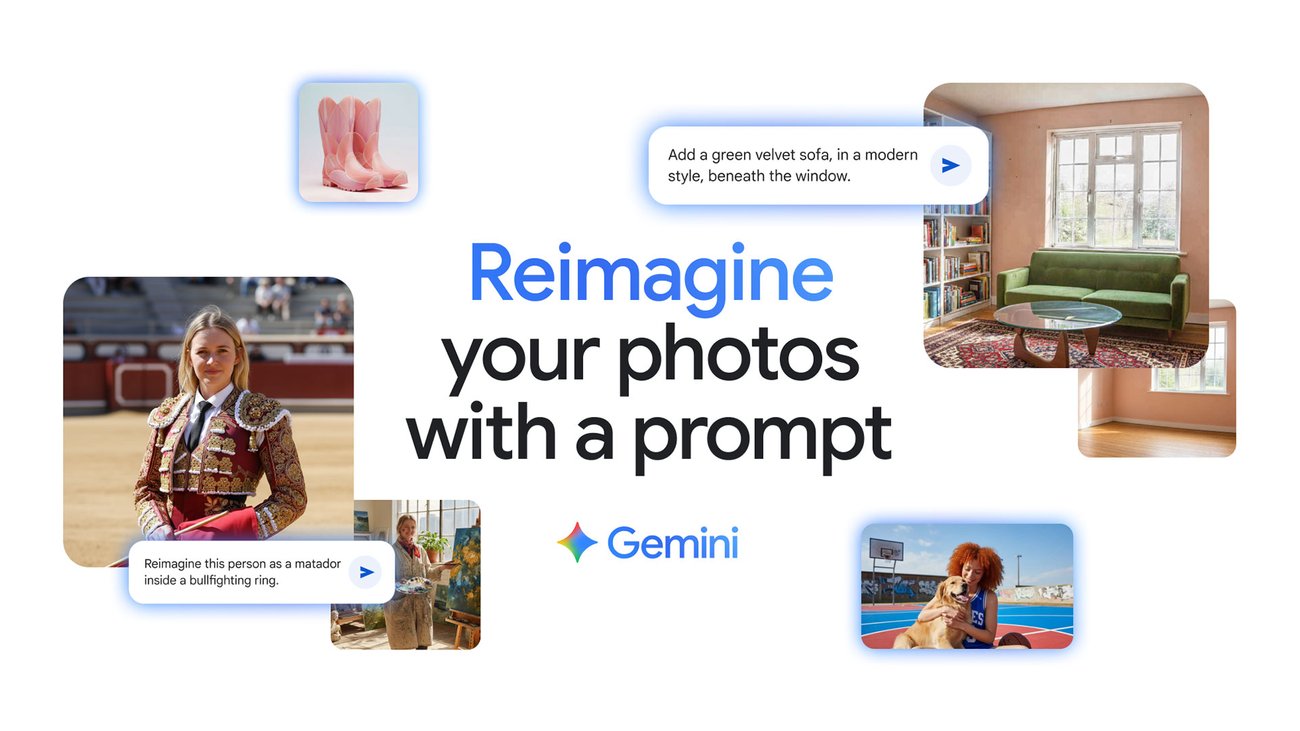
A great deal is happening in AI, and last week Google launched Nano Banana – an advanced AI image generator. Below you can see examples of what it can do.
0:00
/0:08
0:00
/0:20
Read more about Nano Banana here, and try it yourself in Google's AI Studio.
Microsoft has launched VibeVoice, a tool that can turn text into natural conversations with up to four different voices. What’s special about VibeVoice is that it can generate up to 90 minutes of continuous speech, which makes it particularly well-suited to podcasts and longer audio productions.
At the same time, VibeVoice is open source, and it can be downloaded here: