This Week's News: AI Cheating Puts the Education System Under Pressure
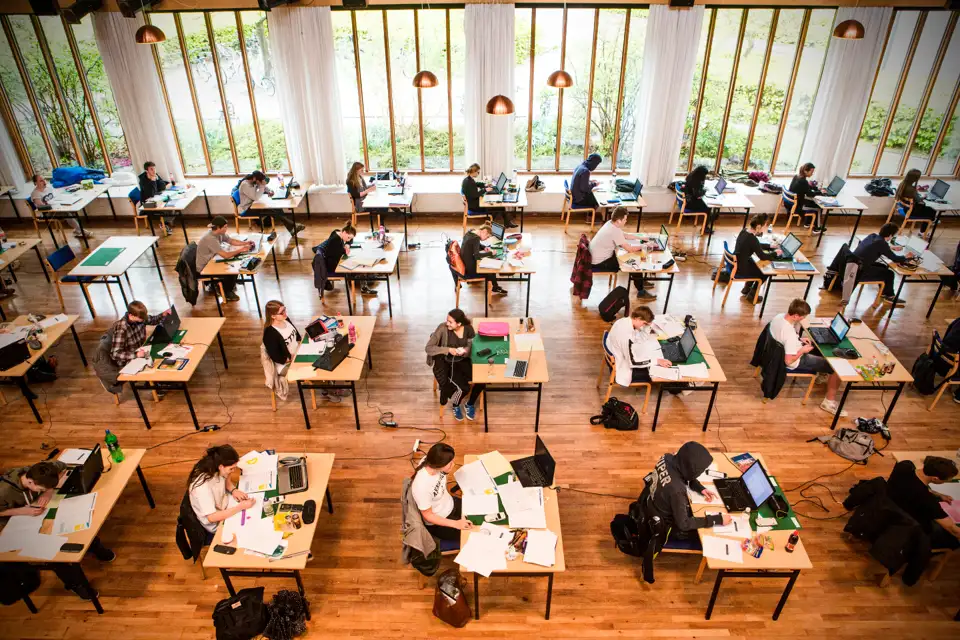
AI cheating is spreading across the education system—from high school to university. Teachers feel powerless as students use ChatGPT for assignments and tweak the output to make it sound like their own voice. Schools are reintroducing handwritten assignments, while experts call for new assessment…
This article has been machine-translated into English. Therefore, there may be nuances or errors in the content. The Danish version is always up-to-date and accurate. Read the original Danish article here.
In this week’s newsletter, we have found a number of articles that address the whole issue of cheating with AI in everyday life and in examinations.
But before we get to that, we would like to turn the spotlight to Undervisningsministeriet (the Danish Ministry of Children and Education), which launched four new AI initiatives in the upper secondary school (gymnasium). In this connection, Gymnasieskolen interviewed me, and below you can read my and Sine Zambach’s critique of the pace and scope.
When we curate news and articles, we do not choose a focus in advance, but last week cheating was apparently on the agenda. We think that makes good sense given the time of year, as programmes are finishing their school year.
Weekendavisen has a major article about the widespread cheating with AI in the gymnasium, where both teachers and the chair of GL (Gymnasieskolernes Lærerforening, the Danish Upper Secondary Teachers’ Union) comment. The article touches on an area we have deliberately chosen not to publish about on Viden.AI, namely adapting AI so that it appears to be your own voice. We have actually written a blog post with our technological insights, but it is in the drawer — and will stay there — because it could be misused.
In the the Danish primary and lower secondary school (folkeskole) there are challenges too. According to Thomas Balle Roswall, a teacher at Nordsjællands Efterskole, we are not measuring what we think we are measuring — and at the same time we are not testing pupils’ ability to immerse themselves. Instead, we are testing their ability to remember what AI says they should say. Again, new forms of examination are being called for that reflect the technological reality in schools.
That brings us to another rather interesting article from Weekendavisen about what Danes actually use ChatGPT for. And it varies greatly, and readers of our blog will probably recognise themselves in some of the descriptions. At the very least, all teachers will recognise the 18-year-old gymnasium student who uses it as “the assignment crusher”.
Let’s move abroad, where they are also debating the whole issue of cheating with AI.
During the week, the WIRED podcast Uncanny Valley also delved into the tension between cheating and learning in school. We highlight the key takeaways, and in any case it is worth a listen.
While we are debating cheating, students are uploading more and more study books to, for example, ChatGPT. RettighedsAlliancen (the Danish Rights Alliance) has just published a major report produced by Epinion. Here, 72% of students do not know that it is illegal. This suggests a mismatch between how students use the technology and what the law says. Perhaps the solution lies not only in enforcing existing rules, but also in finding new ways to balance educational needs with the interests of rights holders.
Tech news
As a supplement to the newsletter, we have compiled an overview of the latest AI news from the tech world. Here you can quickly get an overview. This section is not particularly targeted at teachers, but it offers a glimpse into a hyped technology train that is thundering along.
Cheating with AI in the gymnasium: Teachers call for political action
Gymnasium teachers Anne Solbjerg and Stefan Flensmark warn in Weekendavisen about how students are increasingly using AI to cheat in written assignments. Both describe a widespread feeling of powerlessness among teachers, where technologies such as ChatGPT and Claude make it hard to assess what students have written themselves.
Anne Solbjerg finds that students have quickly learned to adapt AI output so that it appears in their own voice. Stefan Flensmark emphasises that it is often the most capable students who cheat most effectively, because they manage to use AI strategically and discreetly — which makes it almost impossible to detect.
“This is something teachers are tearing their hair out over. All the time. And we feel powerless,” Anne Solbjerg.
Some students train AI models on their own previous texts to make the language more personal, while others use AI to correct and improve their assignments. According to Stefan Flensmark, teachers see a large gap between the quality of homework and work written under exam-like conditions, which creates mistrust and challenges the purpose of teaching. He also notes that many students engage in so-called “hybrid writing”, where AI is used for selected parts of the text, which makes it even harder to assess the degree of independence.
Several schools are now responding by reintroducing handwritten assignments and examinations without computer access. In some subjects, computers are completely banned in the exam, which changes the structure of teaching and places new demands on students’ handwriting.
The chair of Gymnasieskolernes Lærerforening (GL), Anders Frikke, confirms teachers’ concerns and calls for political action. He points to the need for a national exam reform that is quickly and purposefully adapted to AI’s influence on teaching.
AI tools such as ChatGPT pose new challenges to the integrity of the folkeskole leaving examinations. Teachers and examiners find it has become easier for pupils to cheat, especially because AI-generated texts are often unique and therefore cannot be detected as traditional plagiarism. A survey of teachers shows that almost one in three are seeing more cheating than before. Many schools have therefore introduced a range of technical and practical measures to counter this.
The measures include, among other things, real-time monitoring of computers, collection of mobile phones, the use of software to analyse document revision history, and firewalls that block access to AI services. However, teachers have limited options to follow up on suspicions, as the marking of written exams is carried out externally. This makes it difficult to detect if a pupil performs at a level that deviates markedly from what is expected.
“Right now, we are not measuring what we think we are measuring. We are not testing pupils’ ability to immerse themselves. We are testing their ability to remember what AI says they should say.” Thomas Balle Roswall
At oral exams, especially in Danish, it is, according to teachers, even harder to control the use of AI in the preparation phase. This raises doubts as to whether the exams actually test pupils’ academic competences or merely their ability to reproduce content generated by AI. It also raises questions of equity, as access to AI could potentially level out differences in the home’s academic resources.
Experts and teachers point to the need for a reform of exam formats. They urge the ministry to act quickly to adjust the examination system so that it reflects technological reality and either integrates AI tools or develops new formats that ensure authentic pupil performance.
An article in Weekendavisen presents a series of personal accounts from Danes who have used ChatGPT in very different ways in their daily lives.
They range from an existential business coach who uses AI as a creative sparring partner to a gymnasium student who uses it to support assignment writing — but with a critical eye. Several users nevertheless express a certain ambivalence, as they know they are talking to a machine yet still experience a kind of relationship and understanding.
This underlines how AI has begun to challenge the boundaries of what we normally associate with human interaction and guidance.
The WIRED podcast Uncanny Valley discusses how AI, especially ChatGPT, affects our view of cheating and learning in school.
Through reflections, personal experiences and concrete examples, the hosts discuss when the use of AI is a useful learning tool, and when it crosses the line into cheating. It also highlights how both students and teachers are experimenting with AI. Some teachers use it to prepare lessons or give feedback, while students use it to improve essays or simulate their own voice.
The discussion also touches on the tools used to avoid AI detection, as well as the need for better AI literacy among students and shared guidelines at educational institutions.
The podcast calls for solutions that balance the use of AI with academic rigour, such as oral exams, discussion-based assignments and teaching on AI ethics and AI use.
The podcast concludes that AI itself is not the problem, but how we as a society choose to use and regulate it in education.
Students use AI for widespread cheating – and it’s changing the entire education system
An article from New York Magazine describes how the use of generative AI for cheating has become commonplace at US universities. Students such as Chungin “Roy” Lee from Columbia University admit that they let AI write most of their assignments. AI is used not only to do homework, but also to cheat in job interviews using tools that hide AI assistance from employers. A growing number of students – including at top universities – use AI for almost all academic tasks, from essay writing to coding and exam preparation.
Several instructors report students submitting blatantly AI-generated assignments, but university policies and technological limitations make it difficult to intervene. The situation is leading some instructors to consider their future in the profession.
The spread of AI cheating has consequences not only for academic standards and grading – it affects the very understanding of what education is.
With AI’s growing role in both task completion and feedback processes, teaching risks being reduced to a dialogue between two machines – with the student as the intermediary.
Students upload textbooks to chatbots without knowledge of copyright
A new survey from Epinion, conducted for RettighedsAlliancen (the Rights Alliance), shows that the illegal sharing of textbooks remains widespread among students, and that AI technology now plays a central role in this practice. 25% of the students surveyed have uploaded entire textbooks or excerpts to a chatbot – often without realising that it is illegal. Only 28% of students know the copyright rules in this area, and three out of four (72%) are unaware that it is illegal to upload textbooks to AI chatbots.
Here is a brief overview of new or improved AI technologies that emerged last week.
We start with new versions of Claude:
Anthropic has launched the language models Claude Opus 4 and Sonnet 4. Opus 4 is designed for complex tasks with in-depth reasoning, while Sonnet 4 is optimised for everyday use and coding.
Anthropic has simultaneously activated AI Safety Level 3 protections in connection with the launch of Opus 4. This means tighter safeguards and specific restrictions intended to prevent misuse in the development of chemical, biological, radiological and nuclear weapons.
OpenAI has also announced new developments:
OpenAI has acquired Jony Ive’s hardware startup and set up a new startup called IO. Together they plan to develop a new AI device that is neither a phone nor glasses, but an "AI companion", designed to integrate AI into everyday life.
Google has held its I/O conference, where it showcased a range of new technologies:
Google has introduced Flow in the US. Flow combines models such as Veo, Imagen and Gemini to help users create coherent, cinematic scenes and stories.
Google has also released Veo 3, an AI model that generates realistic videos with synchronised audio.
Google has also launched Gemma 3n, an AI model designed to run efficiently on mobile devices. It supports text, images, audio and video and is optimised for fast responses and low resource consumption.
In programming, Mistral AI’s Devstral and GitHub’s new Copilot agent mark a shift towards more autonomous, efficient and accessible AI assistants for software development:
Mistral AI has introduced Devstral, an open-source AI agent specialised in software development. Devstral can resolve real GitHub issues and serves as a local code assistant.
GitHub has updated Copilot with a new agent feature that can handle complete development tasks.