This week's news: AI boosts teacher productivity, but not everyone is on board

•
14 min read


This week we have gathered some of the latest news on artificial intelligence and education. Let’s start with a new study showing that AI can improve teachers’ productivity, but not everyone is making full use of its potential. The study indicates that the biggest gains are achieved when AI is used for strategic planning rather than merely to automate tasks. In the same vein, another study reveals that as many as 94% of AI-generated exam submissions remain undetected, even when evaluated by experienced educators. This naturally raises questions about the integrity of our current assessment systems.
At Viden.AI, we have published the first three parts of our article series on professional grief, and last week we published the article focusing on the sense of powerlessness that can arise when students use generative AI in lessons.
For a broader perspective on AI’s impact on society, we recommend the new documentary “AI på liv och död” on SVT Play. The documentary gives quite a good insight into how AI affects different areas, from the military to healthcare and social media. We hope it will be shown on Danish TV at some point.
AI researcher Serge Belongie from Københavns Universitet (the University of Copenhagen) warns that popular AI tools such as ChatGPT may dilute Danish culture by favouring American values and narrative traditions. At the same time, a study from MIT shows that the use of artificial intelligence can hamper learning if it is used as a shortcut to problem-solving.
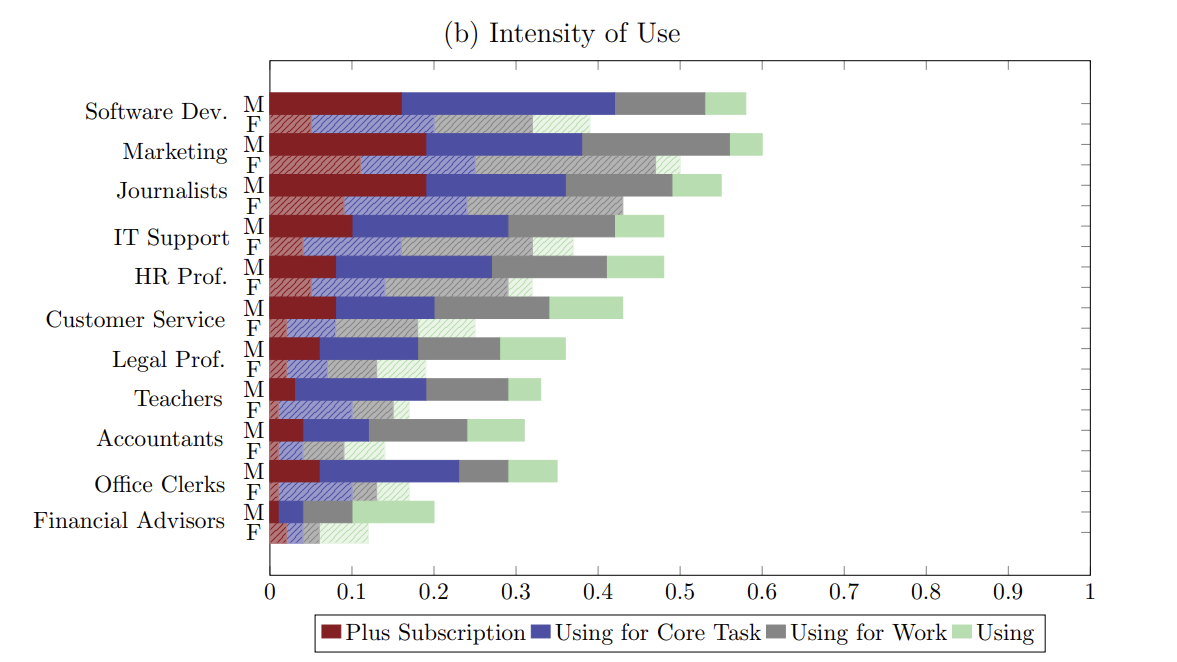
When it comes to the use of ChatGPT in the workplace, men are in the lead, while women and older employees lag behind, often due to a lack of training. Researchers urge employers to offer targeted AI training to reduce the gender gap.
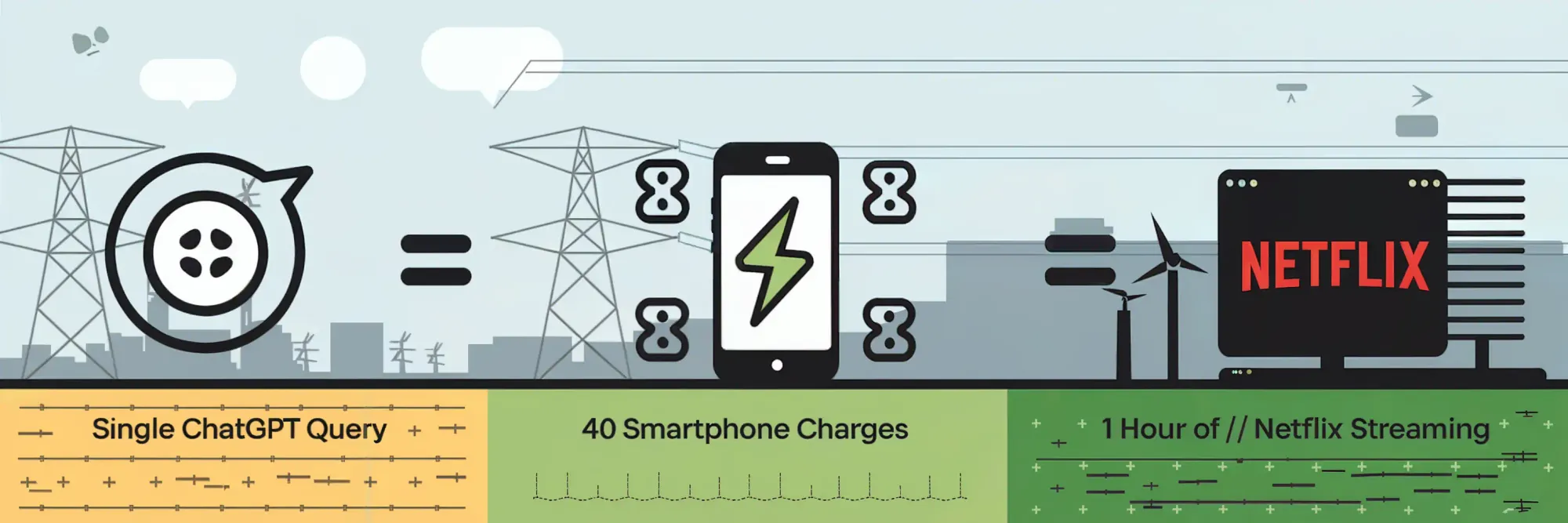
Finally, it is worth noting that AI’s environmental footprint is still very large, and it does not appear to be shrinking. AI models require enormous amounts of energy, and estimates suggest that a single ChatGPT query uses as much electricity as 40 mobile phone charges. With data centre energy consumption expected to double by 2026, the tech giants face a significant challenge to their climate targets.
Apologies that the newsletter ended up so long, but happy reading!
A new study on the use of generative AI among US K-12 teachers shows that AI tools such as ChatGPT can improve both workflows and productivity. The study followed 24 teachers over the 2023-2024 school year and identified three groups of teachers:
The findings indicate that teachers who used AI to generate ideas and input for planning experienced the greatest productivity and higher quality of work. By contrast, teachers who primarily used AI to create materials did not report the same productivity improvements. Those who achieved the biggest gains integrated AI as part of their “backward planning”, starting from the learning objectives and working backwards to identify relevant tasks.
At the same time, the study shows that a significant number of teachers either avoid using generative AI due to ethical concerns or because they are unsure about the technology’s role in their teaching. Some were worried that AI would encourage cheating among students, while others lacked the time to familiarise themselves with the new tools.
Read the study here:

In another academic study, 94% of AI-generated exam submissions went undetected, even when assessed by experienced educators. The research, carried out at a reputable UK university, tested AI in the education system by submitting 100% AI-written submissions in five undergraduate modules across all years of study in a psychology degree. The results showed that, on average, the AI submissions received grades about half a grade boundary higher than real students achieved. In 83.4% of cases, the AI submissions outperformed a random selection of the same number of real student submissions.
Read the study here:
 Peter Scarfe ,
At Viden.AI, we are in the process of publishing a series of articles on professional grief, and last week we published an article about the sense of powerlessness that can arise when students ask about or (mis)use generative AI in lessons. We have received quite a lot of positive feedback that many recognise themselves in all the situations mentioned. The next article will be published on 29 August 2024.
Articles in the professional grief series:
Inga Strümke hosts a new documentary on SVT Play that offers a timely and nuanced insight into how AI affects everything from the military to healthcare and social media. Through a series of examples and interviews with experts, the documentary sheds light on the opportunities and challenges we face as a society.
The documentary focuses on a number of important questions: What does the increasing use of AI mean for us as individuals and as a society? How can we harness the potential of AI while addressing the ethical dilemmas that come with it?
You can stream the programme in Denmark, but unfortunately there are no Danish subtitles.
 Sveriges Television AB, Stockholm, Sweden

Videnskab.dk has published an interesting article discussing the challenges of generative AI when language models are primarily trained on American data.
Serge Belongie fra Københavns Universitet (University of Copenhagen) points out that popular AI tools such as ChatGPT often favour American culture and values. For example, ChatGPT’s narratives may reflect American moral values rather than Danish or Nordic storytelling traditions. Over time, this can lead to a dilution of cultural nuances that are otherwise crucial to our sense of identity and shared understanding.
Søren Hauberg fra DTU (Technical University of Denmark) notes that the fear of American cultural dominance is not new, but that AI technology amplifies this challenge by tailoring content and recommendations to the individual user, which can lead to cultural echo chambers. Belongie is working on a model designed to preserve cultural differences by offering AI users a global perspective on values and attitudes.
Read the article here:
 See Ida’s profile

A study at MIT illustrates how the use of artificial intelligence can negatively affect learning. Students were divided into three groups to solve a task in an unfamiliar programming language. One group used ChatGPT, another used Meta’s Code Llama, and the third group used only Google. The ChatGPT group completed the task fastest, while the Google group was slower, as they had to analyse the task in smaller parts.
When students were subsequently tested without aids, the results were turned on their head. Those who had used ChatGPT remembered almost nothing and failed. Half of those who had used Code Llama passed, while all who had used only Google did well. The study indicates that rapid problem-solving with the help of AI can undermine deeper learning and understanding.
However, AI can also be used productively in learning contexts if it is used as a tool that stimulates reflection and provides rapid feedback. The challenge is to find a balance so that AI does not become a shortcut that hampers deeper understanding, but instead serves as a catalyst for learning.
 Esther Shein

According to a large Danish survey of 100,000 employees, women are hesitant to use AI tools such as ChatGPT in their work. Younger men in particular are leading the way, while women and older employees lag behind, often due to a lack of training. However, the women express a desire to use the technology, but point to insufficient training as a barrier.
The researchers behind the study, Anders Humlum and Emilie Vestergaard, emphasise that employers can play a central role in reducing the gender imbalance by offering targeted training in AI. At the same time, they warn that technological advances such as ChatGPT have historically exacerbated inequalities unless active steps are taken to include all employees.
In addition to the gender differences, the study shows that the use of ChatGPT can increase both pay and efficiency, but that this requires companies and employees to rethink workflows to fully exploit the potential of AI technology.
Read more below
 Jacob Ø. Wittorff Editor for digital business development and innovation
Every time an AI model answers a query, it requires large amounts of energy because the task is sent to massive data centres. These centres, powered by thousands of powerful computers, use enormous amounts of electricity and water for cooling. Calculations show that a single query to ChatGPT uses as much energy as 40 mobile phone charges, or the equivalent of an hour of streaming on Netflix.
It is estimated that energy consumption in data centres could double by 2026 and approach the current consumption of all of Japan. At the same time, major technology companies such as Microsoft and Google are postponing their climate targets, as the intensive development of AI demands significant resources. The training of AI models such as Meta’s Llama3 has already resulted in substantial CO2 emissions, and the tech giants generally keep their cards close to their chest when it comes to their climate impact.
This development means that attention is now focused on how to make both AI technology and data centres more sustainable. One solution could be to create less energy-intensive AI models, but this requires a balance between efficiency and accuracy.

 Theis Ehler Molin
 See Tanya's profile
 Jacob Ø. Wittorff Editor for digital business development and innovation
 Claus Scheuer-Larsen

 Louise Holmgaard Nielsen loniefyens.dk

 Peder Reitbakken

 Niels Chr. Sauer


 Leif Tore Sædberg

 Annette Vee

 Maroussia Lévesque

 Jens Bostrup Journalist