This week's news: AI as a tool, a challenge, and a culture-bearer
This week's newsletter highlights the tension between traditional methods and new technologies. Tesfaye defends the use of pen and paper, while several school leaders see great potential in AI. We also take a closer look at AI as a language partner, a theatre production, and a democratic challenge.
This article has been machine-translated into English. Therefore, there may be nuances or errors in the content. The Danish version is always up-to-date and accurate. Read the original Danish article here.
This week’s newsletter on artificial intelligence in education covers a lot of ground – the debate is in full swing.
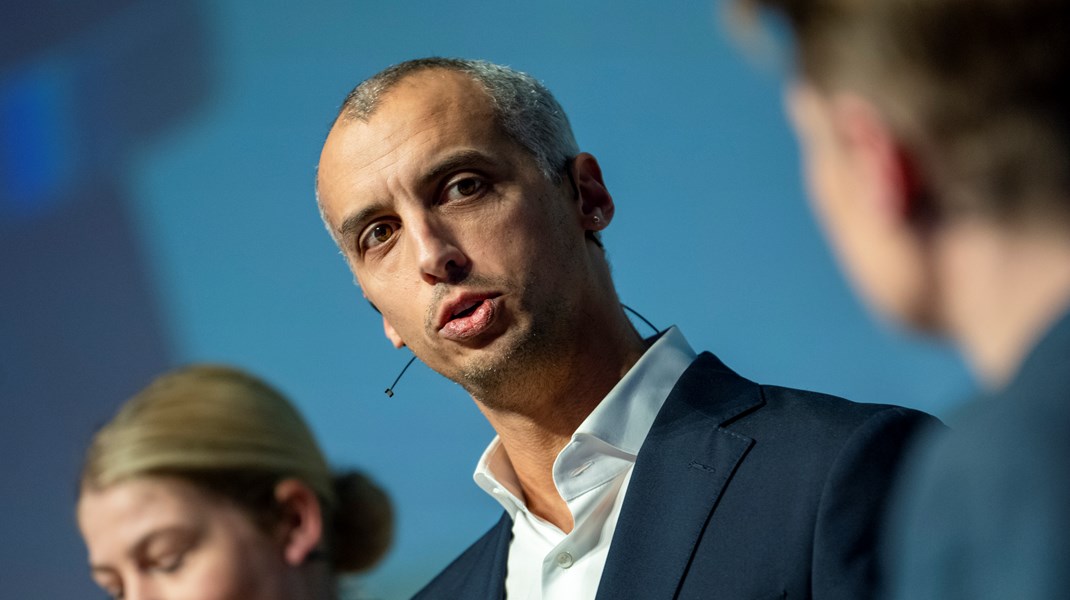
In response to Danske Gymnasier’s (the Danish Association of Upper Secondary Schools) opinion piece, which we covered last week, Mattias Tesfaye in Altinget writes that he does not wish to abolish technology in teaching, but that, in his view, students only learn when they are forced to think for themselves. Therefore, written exams in certain subjects will in future be sat with pen and paper as a response to AI.
We don’t think the discussion about AI in teaching and examinations is over; it’s something we’ll be debating continuously for many years to come...
Here is a selection of other articles from Denmark and abroad:
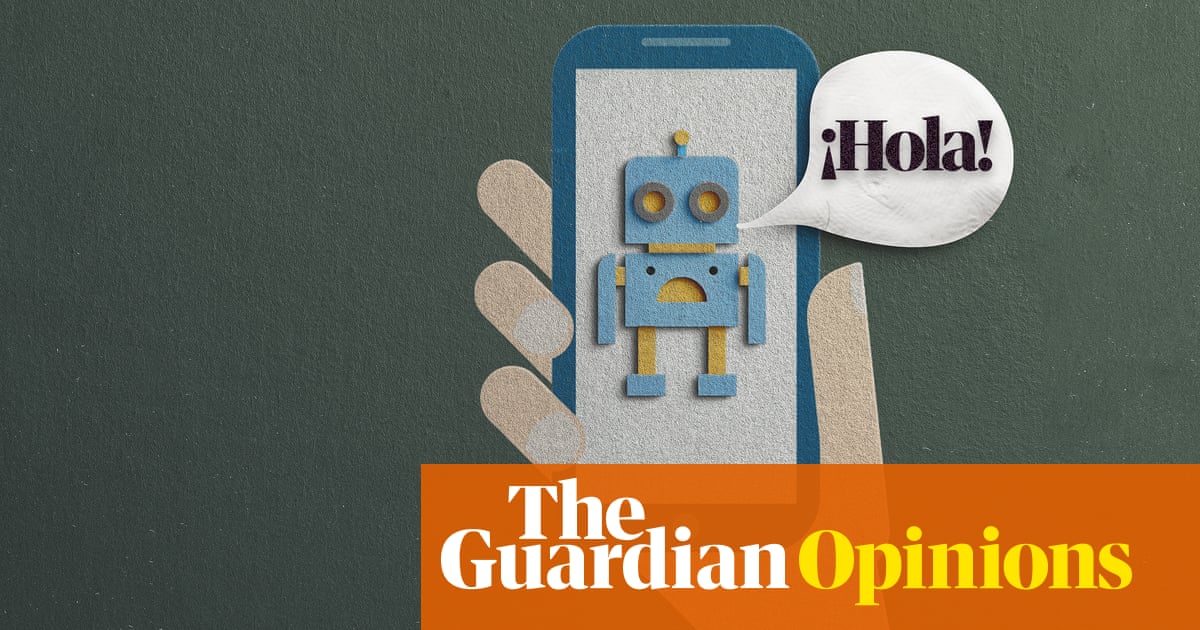
In an interesting article, Spenser Mestel in The Guardian explains how he finally made progress by using an AI bot to learn Spanish. He concludes, however, that teachers still have an important role, but that AI can be a good supplement.
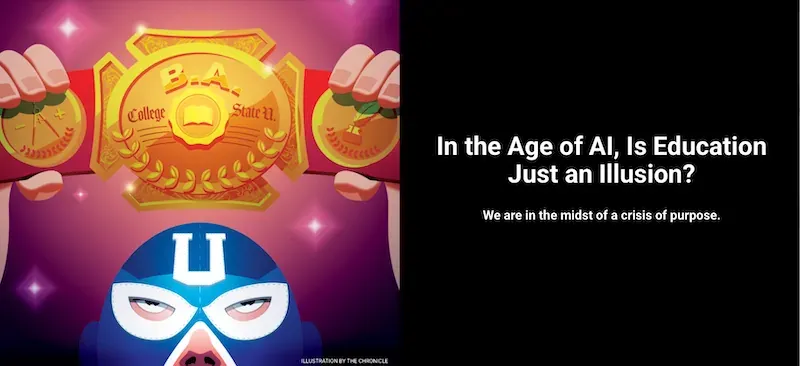
In The Chronicle of Higher Education, Dan Sarofian-Butin reflects on how ChatGPT has turned teaching into a kind of staged theatre, where both students and instructors play along without genuine engagement or purpose.
Live Håberg, Associate Professor of Norwegian, shares her candid experiences with AI in teaching and questions whether the technology truly provides relief or inspiration.
RettighedsAlliancen (the Rights Alliance) rejects the EU’s draft code of practice for generative AI because it does not give rights holders the ability to enforce their copyright.
Last week we published a new article on Viden.AI. We took a closer look at a report from EVA (the Danish Evaluation Institute). It focuses on how to ensure a fair and meaningful assessment of students’ academic attainment. This comes at a time when AI has become a natural part of upper secondary students’ everyday lives. Below we have summarised the most important points:
Pen and paper as a counterweight to AI – Tesfaye wants to strengthen students’ independent thinking
Minister for Education Mattias Tesfaye rejects the criticism raised by Maja Bødtcher-Hansen, chair of Danske Gymnasier (the Danish Association of Upper Secondary Schools) — namely the accusation that he wants to return to old-fashioned forms of teaching such as “stone tablets”. But he maintains that paper and pencil still play an important role — especially at a time when AI makes it easy for students to let the machine do the thinking for them.
According to the minister, it is important that AI does not become a shortcut that deprives students of the opportunity to develop deeper understanding and critical thinking. He also agrees that technologies such as AI are here to stay, and that school should reflect the society we live in.
Therefore, examination formats should be rethought so that they both incorporate the technology and challenge students. He suggests experimenting with different types of exam, where it is not predetermined whether aids are permitted or not.
Mattias Tesfaye also writes that if students do not learn to think critically and express themselves independently without help from a “robot”, we risk ending up with a society that is more vulnerable to populism and totalitarian ideas. That could, he says, affect our entire democracy.
Chatbot as language partner: AI builds confidence and learning in realistic conversations
In The Guardian, Spenser Mestel describes how, after two decades of struggling to become fluent in Spanish, he found new motivation through using AI. Despite initial scepticism, he set up a profile on the chatbot platform Langua and began practising conversations in the role of a personal trainer in Spanish.
The chatbot “Christian” replied in natural language and asked follow-up questions, giving him the opportunity to practise realistic and subject-specific phrases without fearing being judged.
Unlike classic language apps such as Duolingo, AI chatbots provide access to spontaneous, context-based conversations with ongoing feedback, glosses and grammatical input. This made it possible to practise the language actively and purposefully, without the performance anxiety that often arises when interacting with real people.
Even so, it is clear that AI cannot replace the human relationships and social nuances that a teacher like Maria brings. She shares life stories, asks unexpected questions and responds with emotion — all part of what language also encompasses.
Spenser Mestel’s experience is that AI is not a solution in itself, but a valuable supplement to developing confidence, vocabulary and speaking skills. The real test only came when Spenser Mestel had to use the language in practice with Spanish fitness clients who reacted, asked questions and joked for real.
In a column in The Chronicle of Higher Education, Dan Sarofian-Butin describes how ChatGPT has fundamentally changed both teaching and learning. Not only do students use AI to write assignments; instructors also use the tool, especially for feedback and evaluation. It all happens with a tacit acceptance, where the illusion of genuine academic activity is maintained even though it is common knowledge that much of it is staged.
I was walking around my classroom the other day, observing as students were supposedly doing a quick bit of online research to a question I had posed. One student was playing sudoku; another student’s computer was off (“It ran out of power,” she claimed); another student said they couldn’t access the internet. All of them, I knew, would turn in superb reflection papers on the topic once class had ended. (Did I mention that, with the press of a button, the late assignment you didn’t really understand or care about is miraculously written?)
Dan Sarofian-Butin draws a parallel to the wrestling term kayfabe, where all participants know the performance is fake yet continue to play along. In the classroom, this means that both students and instructors perform their roles, but without necessarily engaging for real. AI has made teaching slick, fast and efficient, but also hollow and stripped of the friction that genuine learning requires: immersion, time, struggle and reflection.
We are not facing a cheating crisis. We are in the midst of a crisis of purpose.
Dan Sarofian-Butin describes a growing fatigue among instructors — not only about cheating and the dominance of technology, but also about the demand to maintain an illusion. When teaching becomes performative and superficial, you risk losing the very purpose of academic work.
Access is free, but requires a user account.
AI as a tool, but never a replacement
Live Håberg, Associate Professor of Norwegian at Universitetet i Sørøst-Norge (University of South-Eastern Norway), raises concerns about the pressure teachers experience to adopt AI in their teaching. Although AI is presented as an efficient solution that can relieve and inspire teachers and students, she experiences neither relief nor renewed professional energy from using it. This is not about resistance to technology, but about the fact that AI can rarely replace the human relationship and pedagogical presence.
She emphasises that she still designs lesson plans manually, because it fosters academic immersion, creativity and contact with the students — even though it is more time-consuming. Live Håberg particularly warns against the idea of using AI to generate feedback on assignments: If students are to do their best and produce personal texts, they deserve responses written by a human — not “AI-nonsense”, as she puts it.
In this week’s newsletter, Jeppe Klitgaard Stricker argues that generative AI is evolving from a practical tool into a cultural technology on a par with written language, the printing press and the internet. This means that AI not only assists us with tasks such as text production and information retrieval, but could also potentially change the very way we think, understand and learn.
Rather than focusing on whether AI can think like humans (which Jeppe Klitgaard Stricker rejects), we should focus on how AI can help us think in new ways. He proposes developing intellectual ecosystems of AI models that not only reproduce existing knowledge but also engage in dialogue with one another and create epistemic tension. Such models can pose questions, challenge assumptions and make contradictions visible, rather than merely giving correct or consensus-based answers.
RettighedsAlliancen (the Rights Alliance) rejects the EU’s AI code of practice: Lack of copyright protection
RettighedsAlliancen strongly criticises the third and final draft of a voluntary code of practice presented by the EU’s AI Office. The code is intended to guide providers of generative AI in complying with the obligations in the EU AI Act — particularly with regard to copyright.
According to the organisation, the code is so inadequate that it should be dropped altogether. The main criticism is that the code does not ensure transparency about which data the AI models have been trained on, a prerequisite for protecting copyright.
One example is Meta’s LLaMA model, which, according to the report, was trained on five datasets containing unlawful content. One of these is the so-called Books3 dataset, originating from LibGen. Here, thousands of books, including Danish titles, are available without permission.
The Atlantic has also covered the case and published a search engine where you can find the titles included in the training data. You can try it yourself below:
RettighedsAlliancen has contacted Meta to stop using the unlawful datasets but has not received a response. Instead, according to both the report and international coverage, the company continues to use pirated content for training.
Study: frequent emotional use of ChatGPT can lead to loneliness
Two new studies from the MIT Media Lab and OpenAI show that people who use ChatGPT intensively and engage emotionally in conversations with the chatbot often feel more lonely and have fewer offline social relationships. The researchers have not yet determined whether the chatbot causes the loneliness, or whether lonely people are more likely to seek emotional contact with AI.
In the first study, the researchers analysed 40 million real ChatGPT interactions and asked 4,076 users to evaluate their emotional state. In the second study, nearly 1,000 people took part in a four-week trial in which they used ChatGPT daily for at least five minutes and subsequently assessed their degree of loneliness and dependence.
The results show that the most engaged users, i.e. the 10% with the highest usage measured by time, were more likely to feel dependent and lonely. Voice interaction with the chatbot initially acted as a buffer against loneliness. However, this effect diminished with longer-term use. In addition, women were slightly less likely than men to seek out social relationships after the trial, and participants who chose voices with a different gender from their own reported greater emotional dependence.
Researchers and experts point to the need for further research. Dr Andrew Rogoyski warns that AI chat systems “tinker with our emotional systems” without us knowing the consequences. He sees parallels with the harmful effects of social media. Others, such as Dr Theodore Cosco, highlight AI’s potential to support isolated people but stress the need for responsible integration.