This Week's News: AI - A Balancing Act Between Efficiency and Integrity

•
14 min read


Welcome to this week’s news overview on artificial intelligence in the education sector. We have gathered the most important stories so you can easily keep up with developments.
This week, among other things, you can read about:
We also have links to other interesting articles on AI’s role in education, including AI as a teaching assistant, a personal learning partner and a tool for providing feedback.
Happy reading!
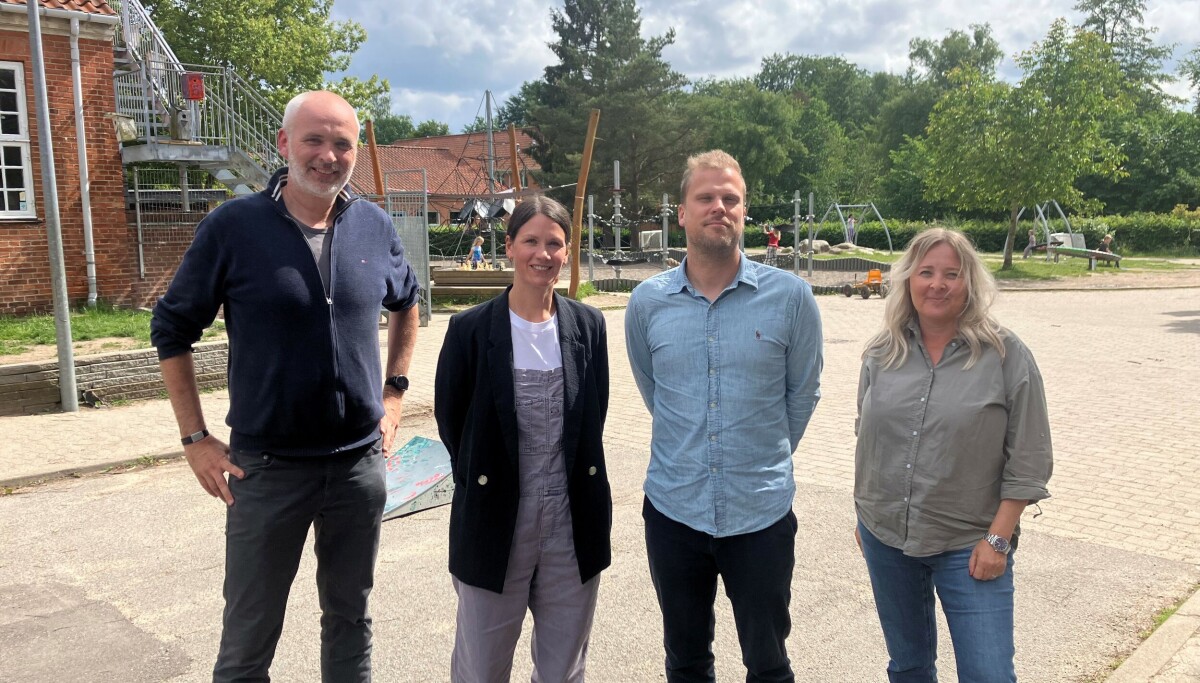
Several teachers at Hareskov Skole report that artificial intelligence such as ChatGPT challenges the relationship with students and creates ambiguity about when something counts as cheating. The teachers say that students see ChatGPT as a natural part of their information searching, and that the boundary between using it as a tool and cheating has become blurred. Especially in written assignments, it is difficult to determine whether students have written the text themselves or received help from generative AI. This creates a sense of “playing cops and robbers” with the students, which does not strengthen the teacher–student relationship.
The teachers believe the solution is not to ban AI, but to find a balance in which students learn to use the technology critically. They also call for more in-service training in AI technology, preferably in collaboration with the students, so both parties can learn to navigate this new reality. They also propose changes to teaching and assessment methods, such as more oral work and a focus on personal knowledge in assignments.
 Andreas Brøns Riise
Martin Exner, the person behind SkoleGPT, understands teachers’ frustration about AI in school. In particular, the fear of cheating breeds mistrust and strains the relationship between teacher and student. He argues that the school must adapt to this technological development, just as it did with the calculator. Instead of a hunt for cheating, the focus should be on how students can use AI for learning, while they must still learn to write themselves and reflect on AI’s results.
Andreas Brøns Riise
The latest issue of Gymnasieforskning focuses on artificial intelligence and its influence on teaching. Through interviews and research, it presents concrete experiences from gymnasiums, where generative AI both promotes learning and challenges traditional teaching methods. It examines how AI tools such as ChatGPT can strengthen students’ learning processes, but also create new challenges such as cheating and weakened critical thinking. At the same time, it explores how multilingual pedagogy can enrich language subjects by introducing students to new languages.
Below is an overview of the different articles included in the issue. Read the entire magazine at gymnasieforskning.dk.
Does artificial intelligence affect who we are and what we are to do as human beings? That has consequences for teaching and learning.
Interview with Helene Ratner and Anders Søgaard
Six gymnasiums in East Jutland have investigated the opportunities and pitfalls of using artificial intelligence in teaching. The experiences show that the opportunities also contain the risks.
Interview with Jakob Peter Thomsen and Nicolai Løvenholt
ChatGPT can remove the waiting time for students who need help.
Interview with Katrine Oxenbøll Petersen
Students have used ChatGPT to devise experimental setups in biology.
Interview with Regin Pindstrup
Students in social science become genre-aware when they give feedback on texts produced by ChatGPT.
Interview with Allan Mortensen
We can learn a great deal from the calculator’s arrival in the gymnasium when ChatGPT and other language models are to be integrated into subjects and examinations.
Interview with Tina Warming Thisgaard


On Thursday and Friday, Per and Claus will be at Uddannelsesdebatten in Nr. Nissum, where we will give a short presentation on professional grief. If you’re coming, you’re more than welcome to come and say hello. We’re happy to have a cup of coffee and talk generative AI in education.
Otherwise, you can follow along on YouTube.




A new study from Hugging Face, conducted by researchers Sasha Luccioni, Bruna Trevelin and Margaret Mitchell, shines a light on the environmental impacts of artificial intelligence. The study shows that all aspects of the AI lifecycle, from the extraction of raw materials and manufacturing of AI infrastructure to interaction with users, consume natural resources such as energy, water and minerals, and emit greenhouse gases. AI’s energy consumption now exceeds what renewable energy sources can supply, and the growing use of AI heralds significant environmental consequences.
Below we have gathered the key findings from the study. In several places they take BLOOM as a starting point, which is a large multilingual open-source language model.
The researchers from Hugging Face point out that greater transparency from tech companies is needed to gain a full picture of AI’s environmental impacts. Technical, behavioural, organisational and policy measures can help reduce AI’s environmental footprint, for example more efficient models, the use of renewable energy, measurement of energy consumption and the introduction of standards.
From a regulatory perspective, the EU is working to address AI’s environmental impacts through the European Green Deal, the AI Act and energy-efficiency directives. In the United States, a bill has been introduced to examine AI’s environmental consequences. Countries such as Spain, Canada and France are also focusing on sustainable AI in their national strategies.
Read the full study here:
See also:
Jeppe Stricker has published an insightful newsletter prompted by The Atlantic questioning Microsoft’s green image, which raises concerns about Danish educational institutions’ dependence on the tech giant. Although Microsoft has promoted itself as a sustainable company with ambitions to become carbon negative by 2030, internal documents show that the company actively supports the oil and gas industry with AI solutions that increase the production of fossil fuels. While Microsoft argues that its technology reduces emissions, the effect is minimal compared with the overall climate impact from fossil energy sources.
This double standard is problematic at a time when Danish educational institutions are committing more deeply to Microsoft’s products, especially Copilot, without accounting for the environmental and ethical consequences. With a massive roll-out of Copilot, institutions face a dilemma: How can they credibly teach sustainability and ethics while simultaneously relying on technology from a company that may be undermining those values?
The revelation raises the question of whether the education sector should reconsider its partnership with Microsoft and demand greater transparency and more sustainable alternatives. This requires a coordinated effort across the sector and a broader political debate about the role of technology in the education system.
Read Jeppe’s newsletter here:
 Jeppe Klitgaard Stricker

Microsoft has presented a series of upgrades to its Copilot AI assistant during the “Microsoft 365 Copilot: Wave 2” event, aimed at improving the user experience for both organisations and individuals. The updates include new features in the Microsoft 365 applications, including Excel, PowerPoint, Teams and Outlook.
One of the most notable additions is the “Pages” feature in BizChat, which enables users to collaborate on AI-generated insights across teams. Excel users can now also integrate Python into their spreadsheets without writing code, enabling advanced data analysis. PowerPoint has gained a feature that can generate a presentation outline based on a topic, while Teams and Outlook can now provide meeting summaries and prioritise emails by key terms.
In addition, a “Copilot Agent Builder” has been added, allowing the creation of bespoke AI agents that can automate tasks in apps such as SharePoint and Microsoft 365. Microsoft also confirmed that Copilot now uses OpenAI’s GPT-4 model for faster and more accurate responses.
 Sabrina Ortiz

 Jared Spataro

The Reuters Institute and the University of Oxford have published a comprehensive study of how ChatGPT-4, Google Gemini and Perplexity.ai handled questions and fact-checks about the UK parliamentary election in July 2024.
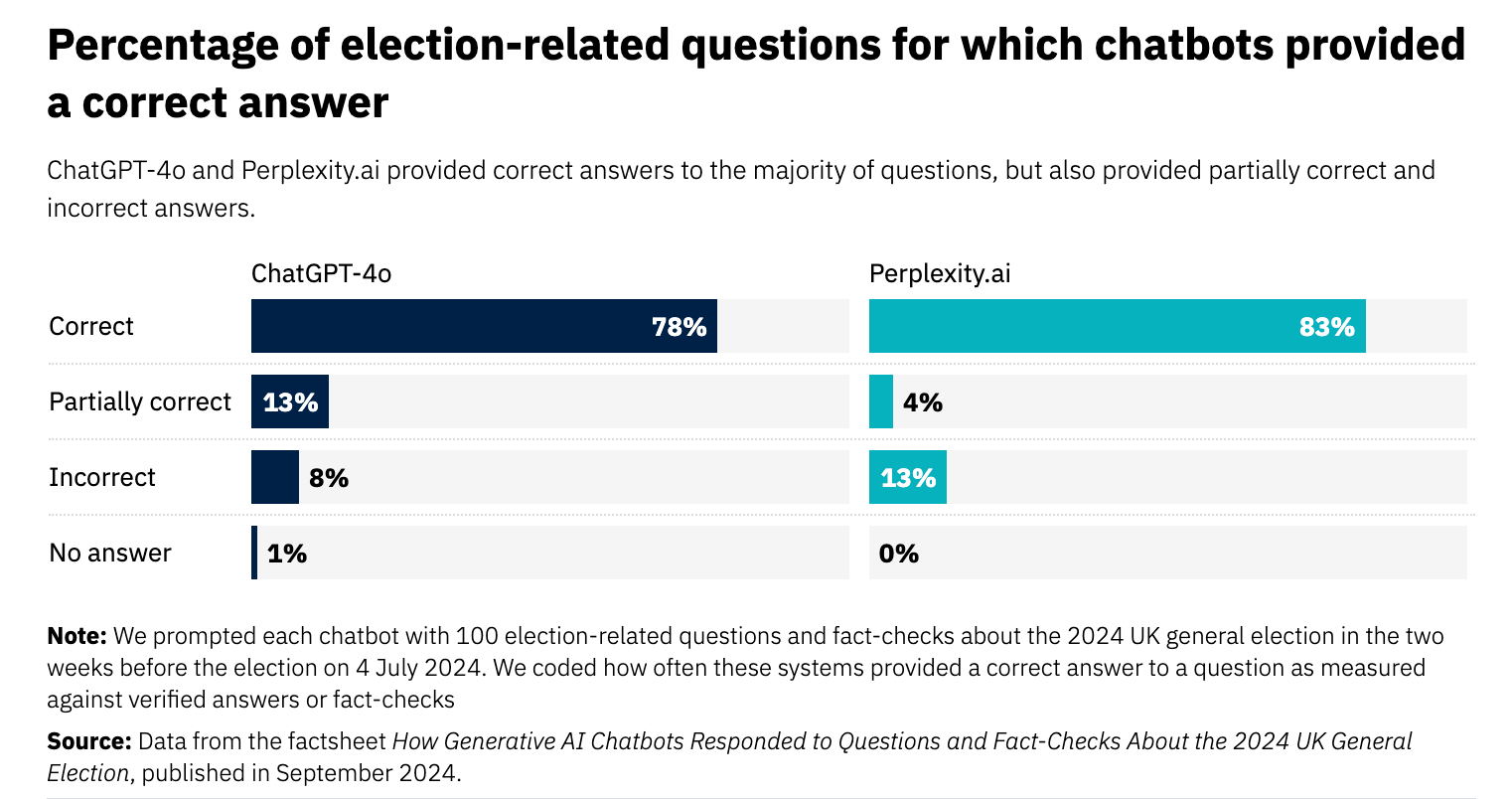
The researchers also noted that while chatbot outputs were often correct, uncertainties remain around the so-called “hallucinations”, where AI generates false information. The report emphasises that although chatbot accuracy is important, users should be alert to possible errors, especially in political contexts.
Read the full study here:
 Dr Felix Simon
In this webinar, Pat Yongpradit will give a presentation entitled Leading While Learning in an Age of AI: Practical Guidance and Policies. The webinar is aimed at educators across all subjects as well as those working in leadership and policy around education and AI.
About the webinar, which will be held in English, Pat Youngpradit says, among other things: "This webinar focuses on providing practical guidance and policies for developing the enabling conditions for AI literacy in classrooms, schools, and education systems. We will look at the opportunities and risks of AI in education, use cases and their ethical concerns, and popular AI tools that are being used in classrooms."
 Tomas Kepler, chair of Gymnasieskolernes Lærerforening (the Danish upper secondary teachers’ union)

 Claus Nygaard

 Rhiannon Williams

 Amalie Kønigsfeldt

 By Martin Ågerup, co-founder of Popoulos Analytics, author, speaker, and member of Berlingske Fonds bestyrelse (the board of the Berlingske Foundation).

 Pernille Møller Lund, Commercial Director at Visma Enterprise
 See Sine's profile







