This week's news: 90% use AI — but is it cheating or support?
9 out of 10 young people use AI in school, but over half feel it's cheating. From expulsions at AU to new opportunities for students with dyslexia. How do we ensure AI becomes a learning partner, not a shortcut?
This article has been machine-translated into English. Therefore, there may be nuances or errors in the content. The Danish version is always up-to-date and accurate. Read the original Danish article here.
Here is this week’s newsletter on artificial intelligence in education. This week’s focus is on a new study from Microsoft, which shows that 9 out of 10 young people already use AI during school hours, but that over half feel it is cheating. And perhaps it is not so surprising that students are confused.
It is, however, a challenge that the analysis was commissioned by Microsoft, because it illustrates the broader problem that arises when a commercial tech giant moves from being a supplier to also wanting to shape the pedagogical agenda. Critics point out that Microsoft is gaining an “inside track” in education policy that can shape the school according to the company’s own commercial terms.
Here I fear a skewed development in which students ultimately just learn to operate specific tools such as Copilot and thus end up equating AI with Copilot. Part of the solution could therefore be to look to alternatives. That applies not only to AI, where European models such as Mistral are rarely mentioned, but also to the basic infrastructure, from the Office suite to Windows, where open‑source alternatives such as Nextcloud and Linux have long been overlooked.
But who is actually setting the agenda for AI in education? I recommend reading Jeppe Klitgaard Stricker’s thread on LinkedIn.
But the analysis makes me wonder whether teaching in many places is continuing as before AI, creating a grey area where students are more or less left to their own devices. I think we, as a school, need to address the elephant in the room and ensure that students understand what is expected for each task. Some tasks are designed to require drilling and have built‑in friction that challenges students. Conversely, it makes no sense to remove the technology entirely, because without hands‑on experience students do not learn to recognise when AI produces bias, misinformation or fabricated sources—skills that are crucial for critical thinking in an AI‑driven world.
It is possible to learn about AI without working with the technology, but to me it is a bit like when we tried to teach pupils in the Danish primary and lower secondary school (folkeskole) breaststroke by practising on the classroom tables (source).
Overall, it is a balance—whether teaching should be without AI, with AI, about AI or around AI—and also whether we as teachers are equipped to incorporate it.
It is therefore also noteworthy that Styrelsen for Undervisning og Kvalitet (the Danish Agency for Education and Quality, STUK) has launched an initiative entitled “AI i studieretningsopgaven i 2.g på stx” (source). It is a project that includes 75 institutions and over 10,000 students in upper secondary school (gymnasium), with the aim of developing and trialling teaching sequences in which generative AI is an integrated part of students’ work on the study programme assignment (SRO).
On Tuesday I had the opportunity to share some of my perspectives, with a particular focus on concrete tools that teachers could use to design AI learning objects. It was also very much about sketching where we are now and looking ahead to what is likely to happen over the coming years.
Some of this also came up when I took part in a panel debate in Middelfart on Thursday evening, on the theme of the AI‑competent human being. My contribution was a teacher’s perspective focusing on preserving community and what makes us human. The panel also included Ida Ebbensgaard, teacher and author, and David Guldager, tech journalist and podcast host. The event was part of the project "AI til uddannelse og job", launched by TietgenSkolen, SOSU Syd, SDU and Campus Vejle, which works on developing teachers’ competences in AI (source).
From the panel debate in Middelfart about the AI‑competent human being, where the focus was on community and human judgement.
A central claim discussed was that "an AI‑competent student must be able to evaluate and use AI output critically, especially in health and service subjects, where human judgement is crucial". At the same time, we must not educate young people to be AI illiterate or let AI take over all human thinking. This underlines the importance of not seeing AI merely as an “answer machine”, but as a pedagogical tool that can create a focused space for immersion. Increasingly, the only thing we can rely on is what happens in the physical space, where people learn together.
Last week Mikkel Aslak Andersen received the Stinus Prize. Over the years he has worked to bridge technology and pedagogy, with a focus on how AI can scaffold students’ learning without taking over the cognitive process. Mikkel consistently demonstrates how teachers can use technology to create more differentiated teaching, provide more precise feedback and free up time for deeper conversations with students.
That leaves us with the big question: How do we ensure that technology strengthens people rather than undermines them, so that they become AI‑competent?
Here are this week’s three key takeaways:
From cheating to tool: We must redefine what learning means now that AI has become everyday technology
Cognitive training is crucial: AI must be a training partner, not a shortcut—otherwise we lose the ability to think
Systemic choices ahead: Will AI lead to surveillance and unemployment, or can we shape it to strengthen people?
We continuously collect news about AI in education at viden.ai/nyheder if you want to keep up between newsletters.
9 out of 10 young people use AI during school hours
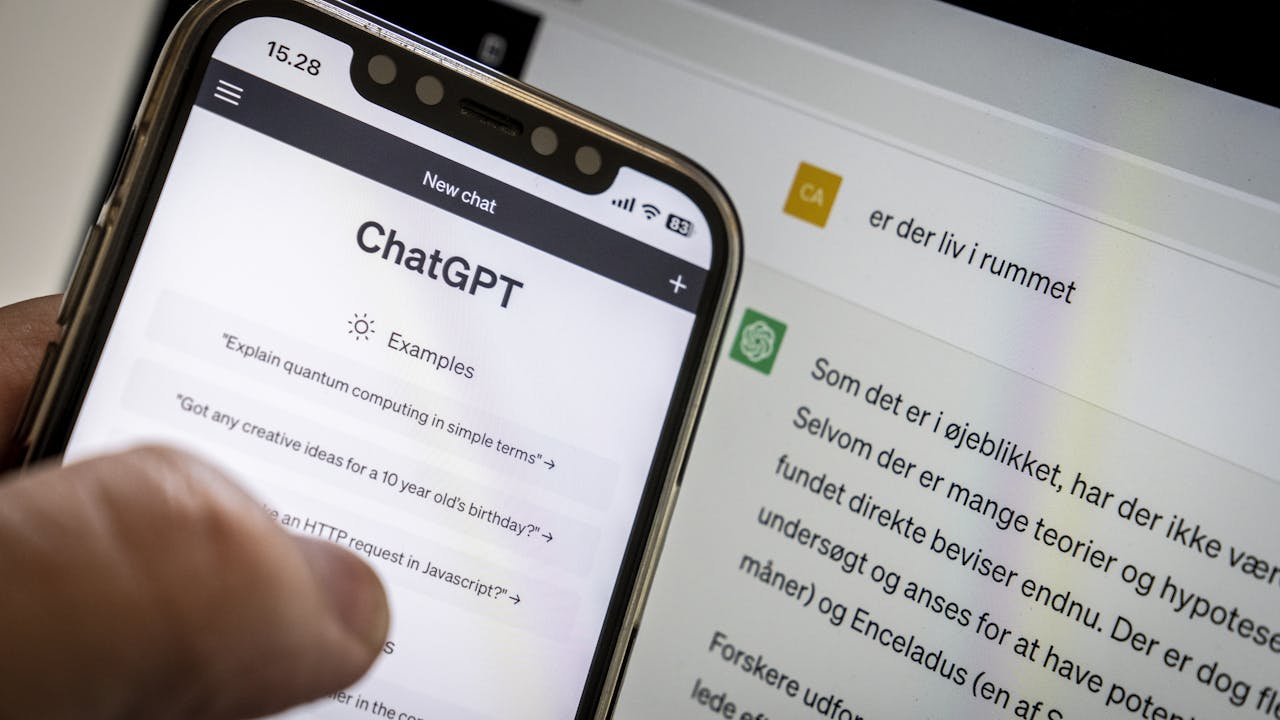
A new survey from Microsoft Denmark shows that 90 percent of young people aged 15 to 18 use AI during school hours. The technology is especially used as a digital teaching assistant when students work on homework independently. Many find that AI provides a better overview, increases productivity and makes it easier to understand difficult topics. At the same time, more than half feel it can seem like cheating, which holds them back from using the technology more often.
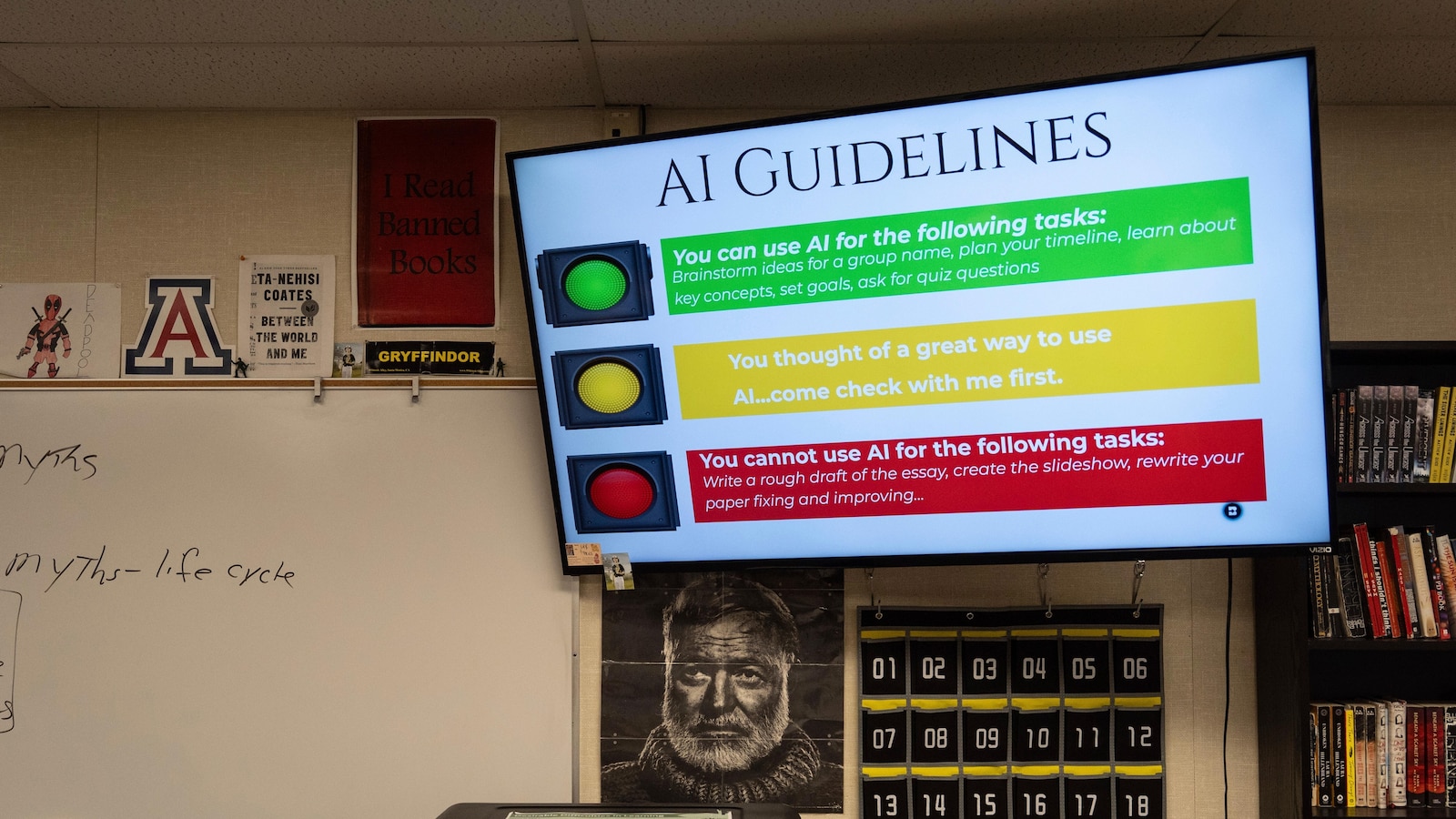
According to Microsoft’s managing director in Denmark, Mette Kaagaard, the challenge is that schools still lack clear guidelines. She emphasises that AI must be used with care and should never replace human judgement.
Sine Zambach points out that both teachers and schools have a responsibility to take the technology seriously and use it pedagogically. She highlights that AI can particularly support weaker students by providing explanations, feedback and subject‑matter dialogue, as long as the technology is used as an aid and not as a shortcut to finished answers.
AI boosts educational opportunities for people with dyslexia
In an opinion piece in Uddannelsesmonitor, Jesper Petersen, who is dyslexic and runs the website ordklar.dk, writes that AI is a groundbreaking opportunity for people with dyslexia, but that the education sector is too conservative and slow to adopt the technology. He describes how tools such as text-to-speech, spelling assistance and dictation have transformed his everyday life, and he believes these tools should be a natural part of teaching.
At the same time, he points out that AI can break down significant barriers for people with dyslexia by making reading and writing more accessible, boosting confidence, providing individual support and, at the same time, offering a financial advantage for schools. However, he highlights that scepticism towards technology, teachers’ limited familiarity with AI, and a traditional approach to teaching are holding back progress.
Aarhus Universitet (Aarhus University) has expelled ten students for using AI tools such as ChatGPT to cheat in the spring exams. The number may rise further, as 60 cases are still being processed. By comparison, only four students were expelled last year.
In total, 97 cases of suspected exam cheating were reported. The majority concerned unauthorised use of generative AI and plagiarism. Of the 37 cases already concluded, 32 resulted in sanctions ranging from warnings to expulsions.
In an opinion piece in Avisen Danmark, Anastasia Milthers, national chair of Radikal Ungdom (the youth wing of the Danish Social Liberal Party), argues that it is time to rethink the education system’s focus on grades. She points out that AI changes the conditions for learning because pupils and students can easily use the technology to complete tasks and thereby avoid the requirement to master the material themselves.
Admitting that, as a former straight‑A student, she would probably have used AI to secure high grades had the technology been available at the time, Anastasia Milthers stresses that the problem is not that young people use AI, but that grades themselves have become the goal of education. When the goal is the number rather than the learning, it is natural to seek the easiest route — and AI is an obvious tool.
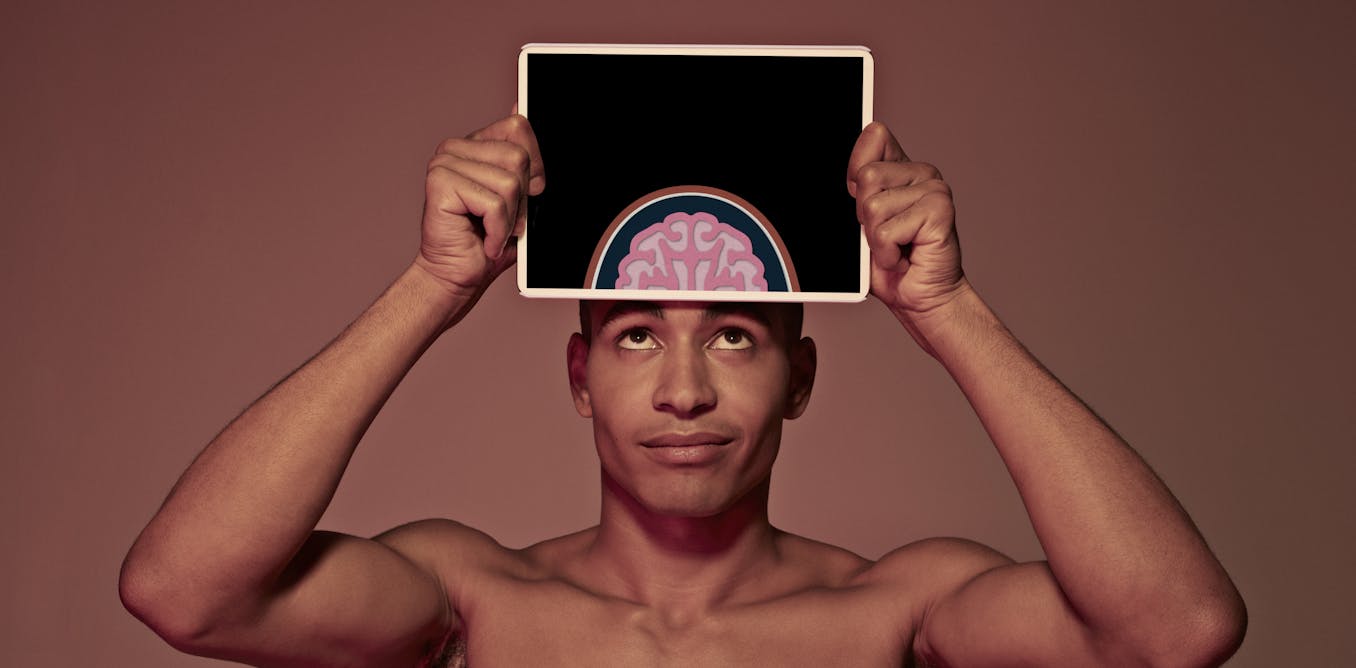
Brian W. Stone, a cognitive psychologist, highlights in an article in The Conversation that AI can both help and hinder learning, depending on how it is used. When AI takes over too much of the cognitive work, students risk losing the mental training needed to build deep understanding and skills. Put simply, the brain works like a muscle that only develops when it is exerted.
Research shows, for example, that students who use ChatGPT for information seeking often display less critical thinking than those who seek knowledge through more traditional methods. In that way, AI can act as a shortcut that reduces the effort but also the learning outcome.
On the other hand, AI holds considerable potential as a learning support. Used as a personal coach, the technology can support Socratic dialogue, ask questions and challenge students to think and reflect for themselves. It is therefore crucial to develop AI tools that do not take over the work but instead scaffold learning and strengthen students’ own cognitive effort. At the same time, students must learn to use AI consciously and with discipline, not as a substitute but as a framework for development.
Award for Mikkel Aslak for developing new technology in teaching
Mikkel Aslak Andersen, teacher, educational consultant and author, has received Stinusprisen in 2025. The prize is awarded by Danmarks Lærerforening (the Danish Union of Teachers) every other year to a person who has made a special contribution to the Danish primary and lower secondary school (folkeskole). He receives it for his many years of work exploring, developing and communicating how new technology can enhance the quality of teaching.
Danmarks Lærerforening emphasises that digitalisation in schools presents both opportunities and challenges, and that Mikkel Aslak Andersen’s approach makes an important contribution to efforts to navigate this field. He has also worked on IT strategies at multiple levels and, in 2024, was a member of the expert group that advised the ministry on new forms of examinations in a time shaped by AI. His work therefore plays a central role in showing how new technology can be used thoughtfully in teaching.
Geoffrey Hinton: AI will create massive unemployment
The British-Canadian computer scientist Geoffrey Hinton, known as the "godfather of AI" and a Nobel Prize winner, warns of sweeping changes in the labour market as a result of AI. According to Geoffrey Hinton, the technology will lead to increased profits for the richest and rising unemployment because companies will replace employees with AI. However, he emphasises that the problem is not AI itself, but the capitalist system that drives this development.
Geoffrey Hinton points out that jobs with routine tasks in particular will disappear, while more complex positions are more likely to be retained. He highlights healthcare as an exception, where AI can make doctors significantly more efficient without reducing the demand for healthcare services. By contrast, he believes that university graduates and recent graduates in entry-level roles are particularly vulnerable.
Chat control faces criticism over risk of mass surveillance in the EU
Two Danish researchers and educators, Diego F. Aranha from Aarhus Universitet (Aarhus University) and Carsten Baum from Danmarks Tekniske Universitet (Technical University of Denmark), warn against the EU’s proposal on chat control, known as CSAR. The proposal aims to combat child sexual abuse, but entails that all digital communication in the EU, including images and videos, could be scanned by surveillance programs.
They point out that there is no technology capable of scanning such vast amounts of communication without serious errors. The result would be many false alarms and a significant waste of resources, while criminals can easily evade the system. They emphasise that the proposal could, in practice, lead to mass surveillance of all citizens and increase the risk of misuse in future political contexts.
A new approach to detecting AI hallucinations in real time
Researchers have developed a method to detect hallucinations in AI models as they generate text. Hallucinations arise when a model invents information, for example names, dates, or sources that do not exist. This is a growing problem, especially in longer texts, where AI often generates many details.
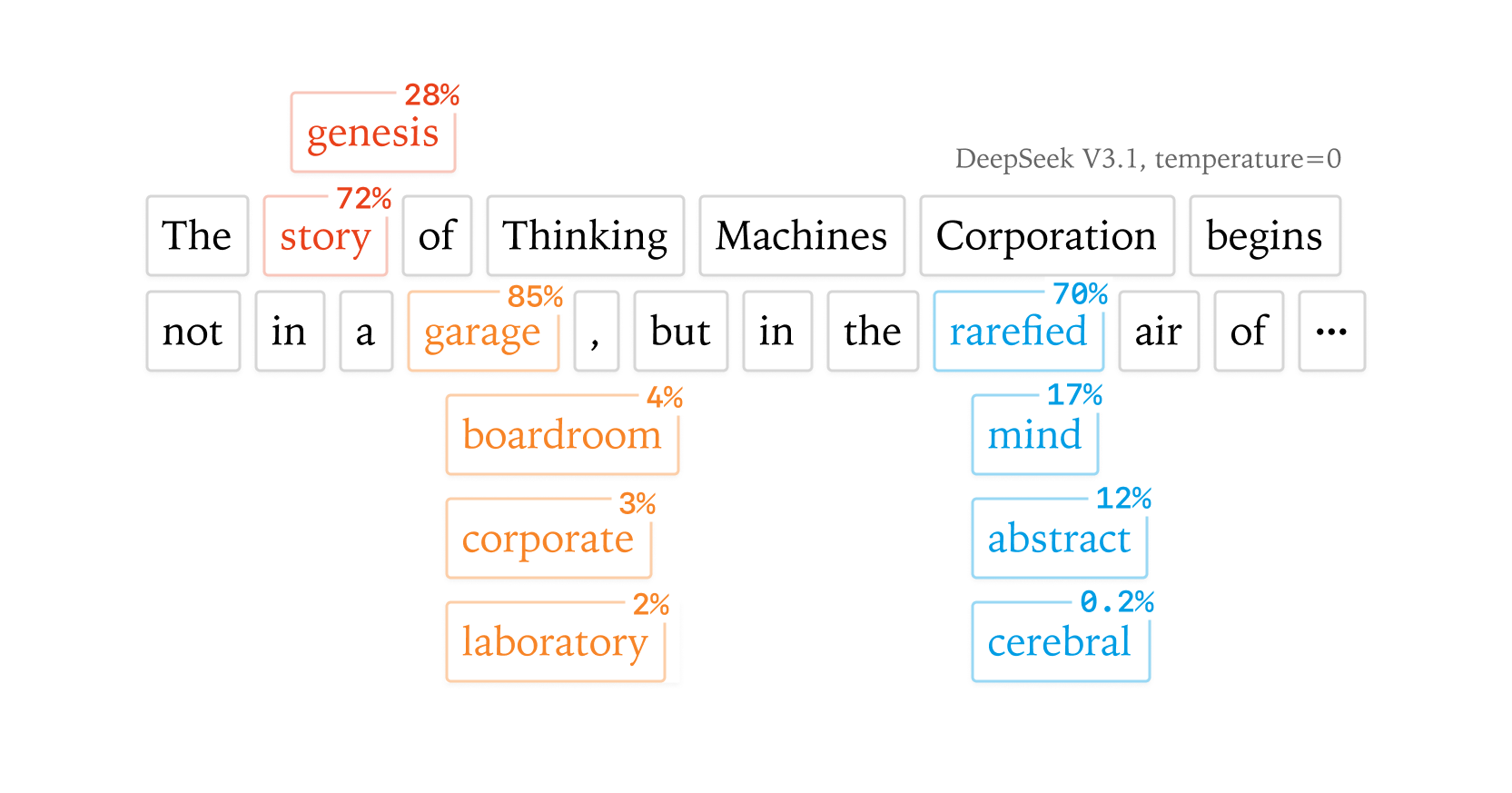
The new method focuses at the entity level rather than on whole claims. This means the system can flag individual tokens (words or numbers) that appear to be fabricated, rather than checking entire sentences. To do this, the researchers developed a dataset in which a large model with access to web search annotated which parts of AI-generated text were correct or fabricated. These data were used to train lightweight classifiers, called linear probes, that can detect hallucinations efficiently and cheaply in real time.