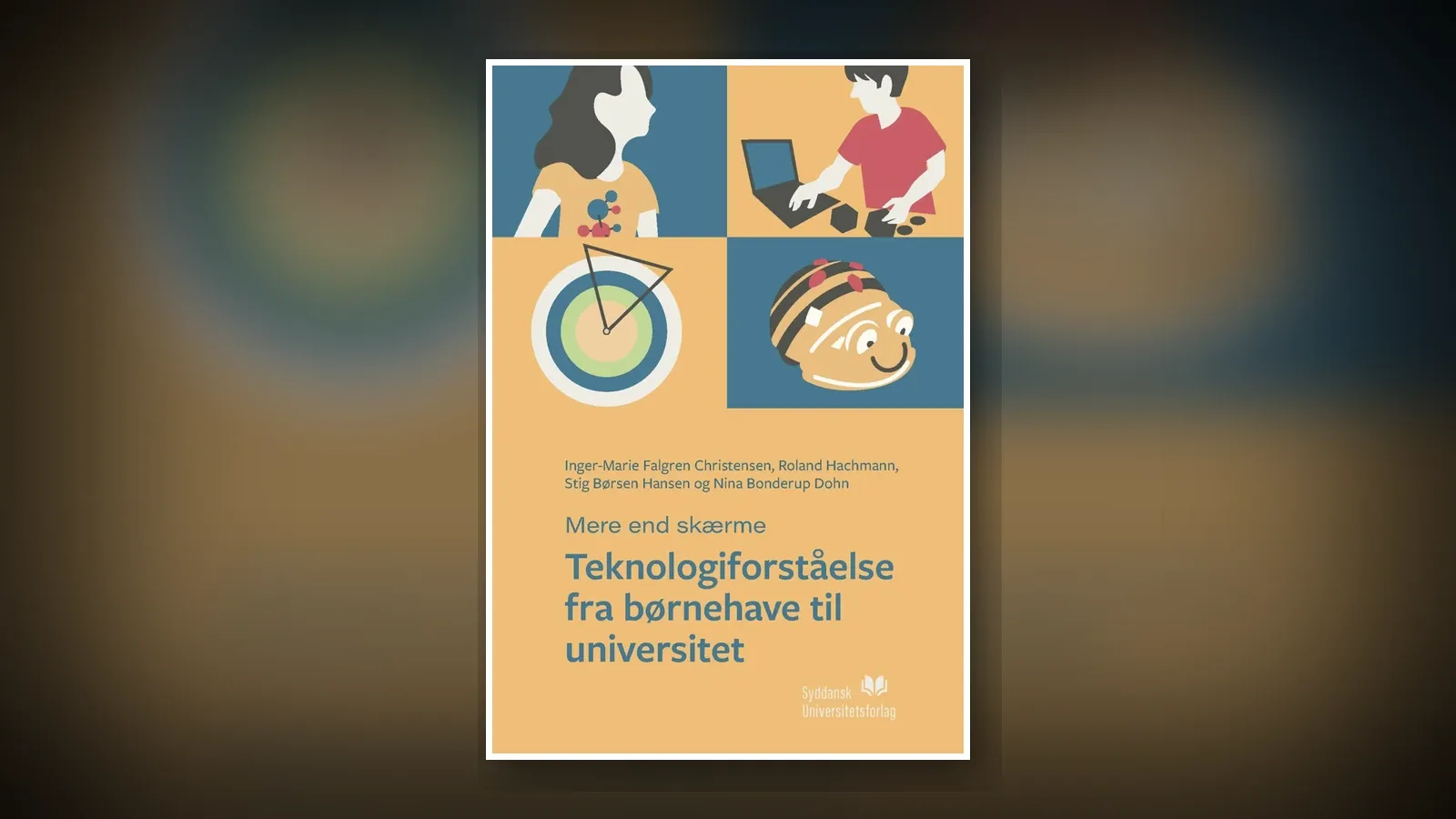
This article has been machine-translated into English. Therefore, there may be nuances or errors in the content. The Danish version is always up-to-date and accurate. Read the original Danish article here. A book for anyone who wants to incorporate computational things and take a more nuanced approach to technological understanding – in pre-school, in primary and lower secondary school, in upper secondary school (gymnasium) or in higher education.
This book offers a nuanced perspective on technological understanding and explains how not only screen-based technologies but also computational things can be incorporated into pedagogical activities in pre-school and into teaching in primary and lower secondary school, upper secondary school (gymnasium) and higher education. The book clarifies key concepts and provides examples that illustrate possible practices with computational things. Computational things are physical things that can be used to carry out algorithmic processes: they are found in robots, in paper-based decision trees – and in the learners themselves, when they physically model these processes. Computational things can be used in embodied learning processes across all subjects and curriculum themes and contribute to a nuanced understanding of technology.
The book is intended for anyone who wants to incorporate computational things and work with technological understanding in a more nuanced way – from pre-school to university.
Language: Danish
Authors: Inger-Marie Falgren Christensen, Roland Hachmann, Stig Børsen Hansen, Nina Bonderup Dohn
Publication date: 2026
ISBN13: 978-87-408-3615-8
Publisher: Syddansk Universitetsforlag (University Press of Southern Denmark)