Professional Grief: When AI Changes Relationships in the Classroom

•
13 min read



In the previous articles, I have examined how artificial intelligence can affect the teacher’s professional identity and, for example, create a sense of powerlessness. If you have not read the other articles, you can find them here:
In this fourth article in the series on professional grief, I will delve into what the new technology means for relationships in the classroom. How do AI tools such as ChatGPT affect the way students and teachers interact and communicate? What happens to human dynamics when algorithms become part of the equation?
To shed light on these questions, I draw on my own experiences from teaching and the many conversations I have had with both colleagues and students about the use of AI. As in the previous articles, my point of departure is not scientific studies, but rather the experiences and reflections I gather from everyday life in the upper secondary school (gymnasium). My hope is that the article – despite its subjective starting point – can contribute to a broader discussion about AI in education.
When it comes to changes in academic and social relationships, it is interesting to note how students’ use of artificial intelligence can affect dialogue in the classroom. From the students’ perspective, interaction with an artificial intelligence may be more inviting, as the chatbot does not aim to evaluate their performance. Therefore, students can ask a range of questions without fearing that the teacher is judging their academic ability. This makes it easier and less demanding to have a conversation, and language models are indeed quite polite in how they communicate. At the same time, they (often) do not shut down conversations or get tired of having to explain the same thing over and over.
However, I see a challenge in that this may mean the teacher loses some of the academic dialogue that normally takes place in the classroom. As I described in my first article, this loss of relational contact can be a source of professional grief for the teacher, and it can affect the relationship between the teacher and the students when the technology takes over many of the answers or the guidance the teacher would normally provide. One may experience losing a sense of students’ academic capability when they are constantly discussing with a third “person” – the AI. This affects not only the teacher’s relationship with the students, but also the students’ academic relationships with one another.
Over lunch, an English teacher shared her frustration about how AI is affecting her teaching, and her experience clearly illustrates some of the challenges faced by several teachers. She said she has observed a trend of students increasingly using ChatGPT for their assignments, especially for small, routine tasks. In her view, students do not understand that every single task, regardless of scope, helps strengthen their learning. Instead, she finds that many more often opt for the easiest solution rather than engaging deeply with the material themselves.
The English teacher expressed concern that the consequences of excessive use of language models as a crutch may be problematic, because when students suddenly face exams and are left to their own abilities, they risk being unprepared and lacking the subject knowledge. She feared that the scaffolding teachers gradually build and remove in teaching to support students’ development could end up being in vain.
This point aligns with Sarah Martin’s experience, which I also referred to in my earlier article (Grose, 2024). Martin noted that her students lack “grit”, i.e., the capacity to persevere with difficult tasks, because they are used to technology’s quick fixes. Both the English teacher and I wondered whether part of the explanation might lie in students’ busy everyday lives, where school is just one among many competing priorities such as sport, work, social media and parties. We recognise, however, that this is a complex issue which requires more extensive studies before drawing firm conclusions.
The conversation also touched on the problem of students who “prompt” their way to higher grades than their actual academic level warrants. The English teacher was concerned that this could create a sense of unfairness among classmates and undermine trust in the assessment system. She wondered whether differences in grades might suddenly be attributed to the ability to exploit AI rather than genuine subject knowledge, which in her view constitutes a significant challenge.
In a conversation with another English teacher, I encountered a different approach to the issue. This teacher expressed great confidence that her students did not use AI in their work, and therefore she marked all assignments as if they were solely the student’s own work. By choosing not to take a position on whether students used AI, she explained that she could focus on maintaining a good and trust-based relationship with her students.
It is worth noting that doubts can still arise when assignments suddenly contain passages in an unusually elevated style or are grammatically flawless at a level that does not match the student’s previous performance. It seems likely that even though the teacher has chosen not to take a direct stance on the use of AI, it may be almost impossible to avoid wondering whether there is more at play than meets the eye.
The English teacher also said that, in her judgement, she could readily see when a submission was dull and lacked authenticity. The question is whether this judgement will increasingly be challenged as AI technology becomes more advanced and harder to detect. One could argue that the risk is that, over time, students will become better at exploiting the technology in ways that even the most experienced teacher cannot distinguish between the student’s own work and input from a language model. With the right techniques, I would argue that this is already possible.
Whether this trust-based approach is the right way forward is difficult to say with certainty. These two teachers’ experiences clearly illustrate the dilemma many educators face. We must consider: Should one confront the new reality and actively engage with AI’s entry into the classroom? Or is it better to maintain trust in students and focus on the relationship, even at the risk of being misled?
Based on my observations and conversations with colleagues, it seems that the teaching space becomes even more complex with AI. There are many relationships in a modern classroom, and with the introduction of various technologies – and now AI – it all seems to become even more complex.
There are many relationships in a modern teaching space, and with the introduction of various technologies – and now AI – it all becomes even more complex.
To illustrate this complexity, I have borrowed and further developed a model from Simon Skov Fougt’s work with den scenariedidaktiske relationsmodel (Fougt, 2020, part 2). There he has illustrated the many relationships that exist in a modern teaching space, and I have taken the liberty of adding generative AI as a new dimension while pushing scenario didactics a little into the background. I recommend delving into the full walkthrough of the model in the book Lærernes scenariekompetencer.

How to read the model
Based on my observations and conversations with colleagues, I will below discuss some of the changes in relationships I have noticed in teaching, and reflect on the challenges and opportunities they may bring. Here I focus on the points that, in my view, make sense to discuss when AI is included in teaching.
AI can become the teacher’s new sparring partner and help with lesson planning and assessment. AI tools such as Copilot or ChatGPT can, for example, help develop ideas for teaching, find relevant materials, or suggest differentiated tasks. Conversely, the technology can also challenge the teacher’s role as the primary source of knowledge. Some teachers have expressed concern that if students increasingly obtain answers and explanations from AI, it undermines the teacher’s authority and expertise.
In this context, it is relevant to mention Steen Beck and Svende Claus Svendsen’s (2024) op-ed in Information, in which they argue that the teacher should assume a guiding role and help students take a critical stance towards AI-generated content. They propose that the relationship should be forged through the subject work rather than as something separate. In their view, teachers should use AI to support students’ academic development, focus and independent thinking – not as a substitute for the human relationship. This aligns with the point from my earlier article that AI can challenge the teacher’s professional identity and self-understanding.
When a student uses generative AI as a source of quick answers, it can potentially affect the personal relationship between student and teacher. This can create distance, with the student feeling less need to approach the teacher. Instead of seeking help and guidance from the teacher when in doubt, students may increasingly turn to ChatGPT. This can undermine trust, while also posing a risk that students become less independent and more reliant on the technology. Here it becomes the teacher’s task to steer students’ curiosity, critical thinking and desire to delve deeply into the material – even when a quick AI solution is within reach. As I described in the third article, students’ use of AI can indeed create a sense of powerlessness among some teachers when the technology short-circuits the learning process.
In my own teaching I also encounter another phenomenon: students who actively opt out of working with other students in group work because they use generative AI for the tasks. This generates both a fear among students that the teacher will regard the whole group as cheats, and an internal selection among students based on who can contribute what. This tendency can create new hierarchies in the class, where students who master AI tools suddenly attain higher status than those who prefer to work without them. Conversely, students who use AI may also be looked down upon by their classmates, based on an assumption that they are cheating or taking shortcuts in their learning.
Also read about the student types we wrote about in an earlier article:
 Per Størup Lauridsen
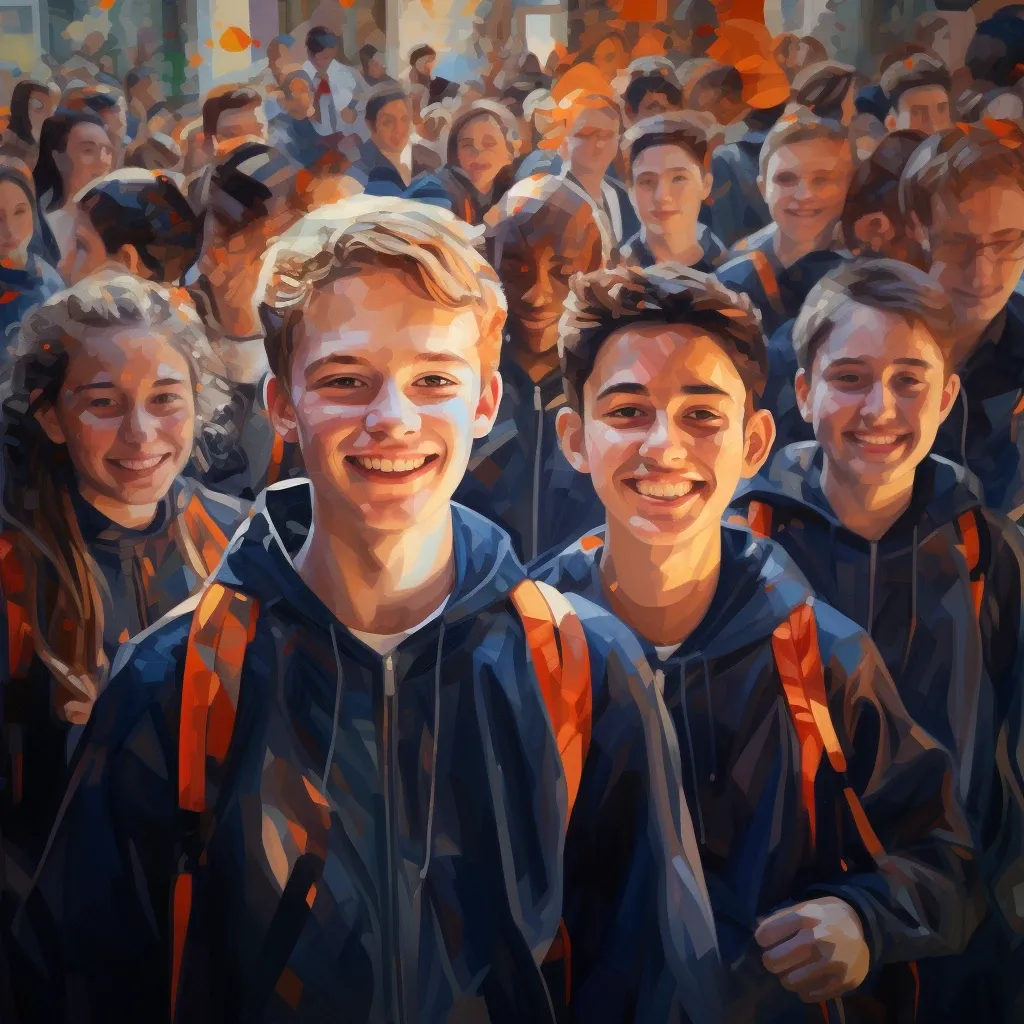
With AI in teaching, the classroom becomes more interactive, but it can at the same time create a dependency and shift focus away from the human aspects of learning. On the one hand, AI tools such as ChatGPT or text-to-image models can open up creative and engaging forms of teaching, where students can, for example, work with image analysis, storytelling or language in new ways. On the other hand, there is a potential danger that the technology gets out of hand, and that the interplay between teacher and students is pushed into the background. As a teacher, one must constantly consider when AI is meaningful for learning, and when it becomes a hindrance to human contact and deep engagement.
When the subject matter is adapted and individualised by AI, it can lead to some students being less engaged in understanding the material in depth, as they can make do with using AI superficially. If each student follows their own AI-generated path through the subject’s texts, it can become harder to build shared understanding and whole-class discussion.
But individualisation can also hold positive possibilities if handled correctly. By letting AI help tailor the subject matter to each student’s level and interests, we may be able to engage those who otherwise struggle to keep up or feel demotivated by a “one size fits all” approach to teaching.
In teaching, AI can also be used to monitor and report on students’ progress so that no students fall behind. We already have adaptive learning systems that adjust to each student’s level and pace. While this form of individualised learning can have its advantages, there is also a possible risk that students become more concerned with satisfying the algorithm’s requirements than with developing their judgement, creativity and collaboration skills.
If a student largely seeks validation and guidance from an AI for assignments, projects or presentations, it can affect the trust and closeness in the relationship with the teacher. The student may feel they do not need the teacher’s professional input and human support to the same extent, because the AI seemingly provides the answers and feedback they need. Over time, this can create a sense of alienation and distance, with the student perhaps coming to see the teacher more as a controller.
At the same time, teachers may feel sidelined and redundant if students constantly turn to the AI instead of seeking the teacher’s help and guidance. It can be painful and demotivating to experience that one’s professional expertise and care can apparently be replaced by an algorithm. Without ongoing, close contact and dialogue, it can become harder for the teacher to build an authentic and trusting relationship with each student.
One important thing to keep in mind is that the teaching environment can become even more complex when we introduce a technology such as generative AI, even if we may not wish to use it in teaching. Every single relationship is affected in one way or another, and navigating this new landscape requires a conscious stance on the part of the teacher. The art lies in harnessing the opportunities AI offers to strengthen relationships and learning, while remaining alert to the pitfalls and undesirable changes the technology can also bring. But it is about more than merely incorporating AI as a new technological tool. It is about rethinking the very foundations of our pedagogical practice at a time when intelligent machines, consciously and unconsciously, become an integral part of teaching. Which competences and values do we want to promote in students? How do we create a learning environment that brings together the best of human and machine? What characterises a good teacher–student relationship in an AI age?
These questions have no straightforward answers, but call for ongoing, collective reflection among educators. We need to develop a shared language and be in open dialogue about potentials, dilemmas and concerns alike. Only by standing together and sharing our experiences can we navigate the complexity that AI brings to teaching. Constant reflection on, and adjustment of, our practice will be necessary to maintain the human focus in education. But it also requires that we as educators are given the time, backing and professional development needed to embrace AI in a pedagogically meaningful way. We need an education system that prioritises the human factor just as highly as technological innovation.
As educators, this complex new reality with AI in the classroom can easily leave us with a sense of powerlessness. Our familiar didactic tools and strategies can suddenly seem inadequate when confronted with AI technology. In the first article in this series, I argued that we should see this as an invitation to rethink our practice and find new ways to engage and motivate students. But within the language subjects it is probably not always obvious how this rethinking should be approached.
One way forward could be to share our experiences and frustrations more with one another and, together, explore how best to navigate this shifting landscape. The goal must be to find a balance where AI is used as a tool to strengthen students’ learning rather than as an opponent that undermines our professional expertise. That requires the courage to experiment, fail and adjust along the way.
At the same time, it is crucial that we address the new inequalities that may arise between students. Perhaps it is about creating space for honest conversations in class about how we use these tools in an ethical and fair way. About building a culture in which we celebrate deeper understanding, process and the capacity for independent work, rather than the ability to exploit an efficient AI prompt. Ultimately, it is about finding a balance in which AI tools add value to learning and do not end up becoming a barrier to the relationship between teacher and student. The classroom may, to an even greater extent, become an important free space for students for academic immersion and social contact.
Artificial intelligence changes not only the content of teaching, but also the very relationship and communication between teacher and student. In the next article I look at how these changes demand new competences and lifelong learning. If the teacher is no longer the primary source of knowledge and feedback, what then constitutes the teacher’s particular expertise and authority? And which concrete skills will be crucial for planning and delivering up-to-date teaching? I will seek to shed light on these questions in the coming article, where I take a closer look at the future teacher’s role and the competences required to embrace AI in a pedagogical and ethical way.
Beck, S. (2024, August 21). The solution to young people’s loss of identity is not to turn upper secondary school (gymnasium) teachers into care workers. Dagbladet Information. https://www.information.dk/debat/2024/08/loesningen-paa-unges-identitetstab-goere-gymnasielaerere-omsorgsarbejdere
Fougt, S. S. (2020). The teacher’s scenario competence (L. Kamuk (ed.)). Akademisk Forlag.
Grose, J. (2024, August 14). What Teachers Told Me About A.I. in School. The New York Times. https://www.nytimes.com/2024/08/14/opinion/ai-schools-teachers-students.html?unlocked_article_code=1