Newsletter January 2023

•
5 min read



New technological opportunities have greatly impacted the end of 2022, and students have already embraced OpenAI's ChatGPT as an assistive tool. 2023 will be a wild tech year that will change our entire perception of how teaching can be adapted to the new digital reality - but also when we should go analog and digitize our teaching.
We are in the process of writing several new articles that will be published in January. At the same time, we have received promises of more people who would like to write to the site.
At the beginning of January, an article will be published that deals with the challenges of plagiarism and GPT, and here we gather several good tips for spotting whether ChatGPT has been used in texts. At the same time, we have tested several tools that can investigate whether texts are written by artificial intelligence. However, the challenge is that such an article also provides the perfect recipe for creating assignments written by ChatGPT without it being apparent that you have been helped by artificial intelligence.
In addition, we are currently writing the following articles, and they will be published in January:
In addition to the articles, we are working on making many instructional videos for the various tools - always focusing on how they can be used in teaching or as a tool for the teacher.
Karin Eckersberg from IntoLearning has some good observations about ChatGPT in education and how we need to adjust our teaching to the new reality.
 Name*
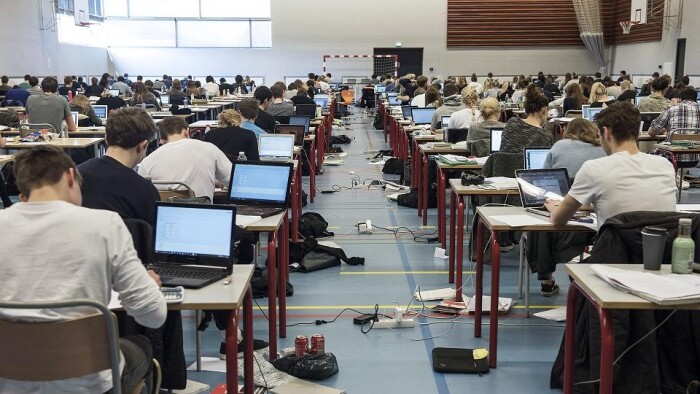
High school students and teachers fear that ChatGPT will be used to cheat in exams, and therefore, the Association of Danish High School Students wants to introduce rules for the use of ChatGPT in connection with exams.
Professor Mike Sharples from the UK used the GPT-3 AI language model to write a master's-level assignment to show the possibility that students can cheat by using AI to generate their work. While AI can be used as a powerful teaching assistant or a tool for creativity, it can also potentially disrupt traditional teaching methods centered around tasks as a way to teach students to research, think, and write.
 Stephen Marche
It is an interesting perspective that speaks of cheating as a state of mind. The blog post also points out that cheating is not only about using certain tools or techniques but also about breaking one's academic integrity and undermining the learning process.
 December 28, 2022

Balder Asmussen and Arne Terp Andersen write in Gymnasieskolen about the major challenges we face as teachers, especially that written examinations are meaningless, and that in the future we will look at new ways of communicating the material.
 Balder Asmussen

Hans-Petter Nygard-Hansen from the Norwegian communication agency KommFram has written about the new challenges teachers face in the Norwegian school system. He is very positive about the new technology and encourages teachers to see the possibilities in the new technology before the challengers.
 14. desember 2022 av Hans-Petter Nygard-Hansen






