Newsletter: Artificial intelligence - cheating or learning?

•
9 min read



Here is newsletter no. 2 for week 45, where we round up the stories there wasn’t room for in the first newsletter.
Meanwhile, Claus has just published an article on shared knowledge and the challenges that arise in an age of generative artificial intelligence. This is particularly pertinent given that some students regard language models as a valid source of knowledge without themselves exercising source criticism.
Read it here:
 Claus Scheuer-Larsen

What is the sensible use of generative artificial intelligence in an educational context? How do you avoid cheating yourself when using AI as a support tool? Watch below to hear what upper secondary school (gymnasium) students at Aabenraa Statsskole learned from a workshop on artificial intelligence and learning.
In September 2024, the outreach initiative VidenSkaber of Videnskabernes Selskab (the Royal Danish Academy of Sciences and Letters) ran a workshop for a 3rd-year class at Aabenraa Statsskole together with Ane Qvortrup, Professor of Education at SDU (University of Southern Denmark), Magnus Høholt Kaspersen, Postdoc at Videnscenter for teknologiforståelse (the Knowledge Centre for Technology Understanding), and a group of students from Cognitive Science at Aarhus Universitet (Aarhus University).
VidenSkaber is supported by the Carlsbergfondet, Lundbeckfonden and Novo Nordisk Fonden.
Read more at videnskaber.dk, where you can also find podcasts, articles and videos on VidenSkaber’s theme “how is artificial intelligence changing our society?”


The BBC recently published an article about a student named Hannah who regrets having used artificial intelligence to cheat. She shares her experience of using generative AI to finish an assignment under the pressure of illness and tight deadlines. Although AI helped her submit the task, her use was detected through AI detection, which led to an investigation for academic misconduct. She avoided severe penalties, but the experience left her with deep regret and shame.
Hannah’s story highlights the complex challenges of integrating AI into higher education, where the technology can be both a valuable tool and a potentially problematic temptation.
Read the article here:
 Ben Moore

Several leading universities in the UK report an explosive increase in cases of students using artificial intelligence (AI) such as ChatGPT to cheat. According to new data from Times Higher Education, for example, the University of Sheffield saw a rise from just 6 suspected cases in 2022–23 to 92 in 2023–24. Other universities, such as Queen Mary University and the University of Glasgow, have seen similarly sharp increases and sanctioned almost all suspected cases with penalties such as warnings or grade reductions.
Data from 24 Russell Group universities, however, point to large differences in the handling of AI cheating. While some institutions have detailed breakdowns of AI-related cheating, others do not record these cases at all or leave the handling to individual faculties. Some institutions, such as the University of Southampton, have no data distinguishing AI cheating from other academic misconduct, which, according to expert Thomas Lancaster, underscores uneven practice and a lack of traceability.
According to researchers, universities face challenges in defining and detecting AI cheating, as it can be hard to prove. Michael Veale from UCL points out that centralising procedures could make cases harder to process, as assessing AI cheating often requires subject-matter expertise. Des Fitzgerald from University College Cork argues that the problem stems from the tech sector’s rapid roll-out of these tools and believes that traditional plagiarism policies are not sufficient to address AI-related challenges in assessment environments. He recommends a broader re-evaluation of assessment forms and a national AI policy for higher education, which is already underway in Ireland.
 Jack Grove
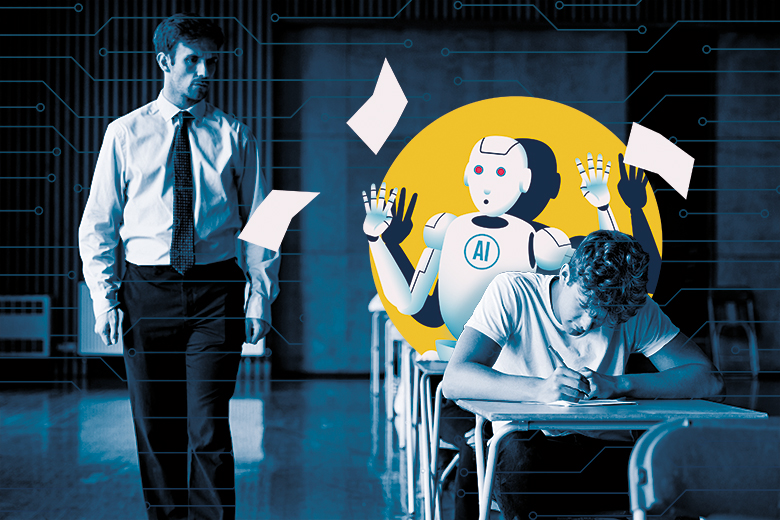
As generative AI offers quick answers to almost anything, the ability to understand and assess information becomes crucial. In higher education, critical thinking is already a central goal, but the advent of AI challenges how we understand and practise this competence. The article argues that critical thinking is not only about spotting misinformation; it also requires deep domain-specific knowledge. This expertise enables us to evaluate AI-generated content and distinguish between valuable insight and potentially misleading information.
Jeppe Klitgaard Stricker suggests that the education system should be rethought in light of AI’s role, rather than merely adapting existing structures. Institutions should experiment with AI in teaching and develop solutions through practice and continuous learning over time. The challenge is to convince students that in-depth knowledge is still crucial—even at a time when AI can quickly deliver ready-made answers.
 Jeppe Klitgaard Stricker

A study conducted at Harvard University compares AI-based tutoring with active learning in physics teaching for university students. The results show that students who used the AI tutor achieved more than double the learning gains in less time compared with students who took part in active classroom instruction. The study was conducted as a crossover experiment, in which groups of students experienced both modes of instruction and were tested before and after each lesson.
The researchers behind the study point out that AI tutors can be used to introduce new topics, enabling teachers to focus on advanced skills such as problem-solving and critical thinking during class time.
 Dr Philippa Hardman

Although the Harvard study highlights promising results for the use of AI tutors in physics teaching, substantial criticism has arisen regarding the study’s conclusions and method. Associate Professor Mikala Hansbøl questions whether the reported results are representative of the learning field more generally, and warns that the hype around AI-based learning tools can lead to superficial and misleading expectations about the role of technology in education. Her critique highlights the need to look beyond the immediate results and instead examine how theoretical perspectives on learning and pedagogy can contribute to a more nuanced understanding of AI’s potential in the teaching context.
For Mikala Hansbøl, the article is an example of how AI hype can create inflated expectations without sufficient scientific substance. She urges her network to avoid the uncritical dissemination of non–peer-reviewed articles and stresses the need for AI and learning researchers to work with greater theoretical depth and a more nuanced understanding of learning processes.
 Mikala Hansbøl

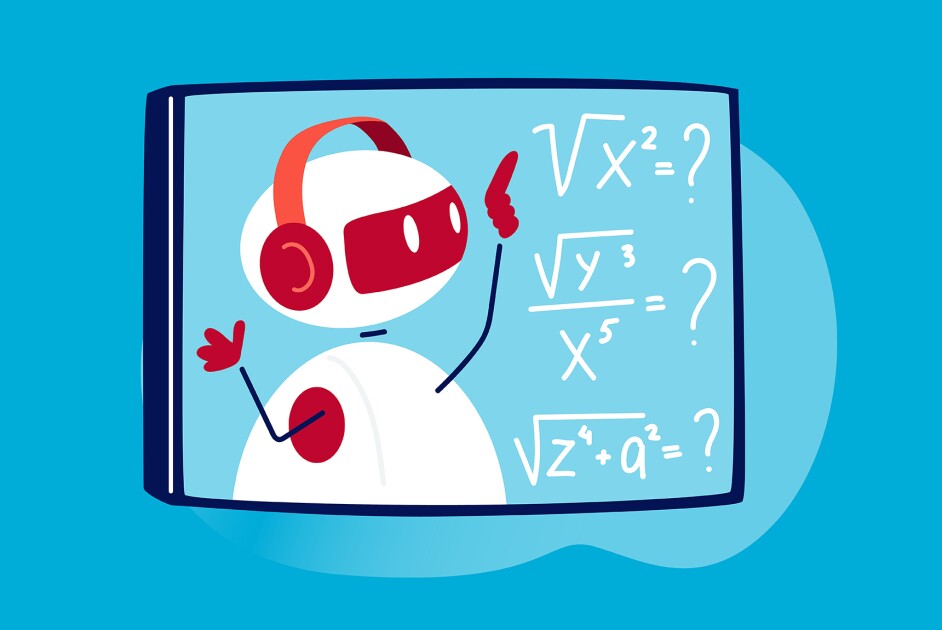
Stanford researchers have developed Tutor CoPilot – an AI assistant that raises the quality of mathematics teaching. The system guides tutors in real time with suggestions for pedagogical strategies, so they ask the right questions and help students find the solution themselves.
Students whose tutor used Tutor CoPilot achieved mastery 66% of the time, compared with 62% without AI support. For inexperienced tutors, the effect was particularly pronounced, with a 9% increase in success rate. Tutor CoPilot also improved tutors’ language, leading them to ask more guiding questions rather than giving the answers.
"AI should support, not replace, teachers," the researchers emphasise. With AI as a pedagogical sparring partner, the vital teacher–student relationship is preserved, while teaching becomes more targeted and students become more independent. Tutor CoPilot illustrates the potential of AI tools as accessible supports that help educators foster more engaged and independent students.
 Lauraine Langreo
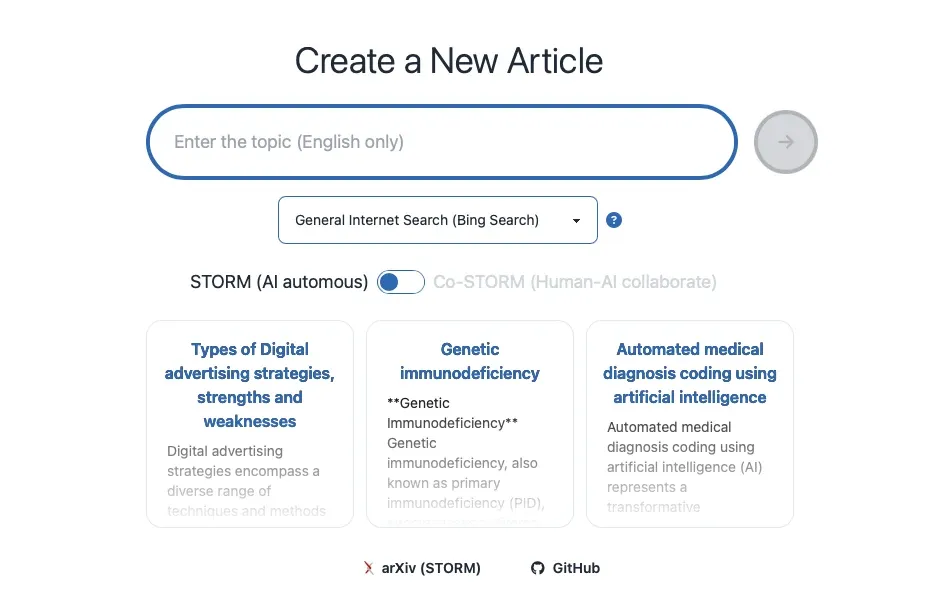
The article above introduces STORM, a system developed to help large language models write well-structured and well-grounded articles based on reliable sources, in the style of Wikipedia. The STORM system focuses specifically on the complex planning phase, in which the topic is researched and a comprehensive outline is produced. This phase involves gathering diverse perspectives and simulating conversations to create deeper insight into the topic.
You can try STORM yourself below by clicking the image (login required).
 Yijia Shao