Matomo

Books

Here we have collected a number of books that we find interesting and that deal with AI and education. Contains affiliate links that support Viden.AI.

The AI Era – How Artificial Intelligence Will Revolutionize the Future

The AI Era – How Artificial Intelligence Will Revolutionize the Future

This article has been machine-translated into English. Therefore, there may be nuances or errors in the content. The Danish version is always up-to-date and accurate. Read the original Danish article here.

With “AI Epoken: Sådan vil kunstig intelligens revolutionere fremtiden”, Anders Bæk has created an accessible entry point to understanding how the technology will transform our society. The book serves as a solid introduction for readers who want to understand AI’s potential impact on areas such as education, the labour market and everyday life – without requiring prior in-depth technical knowledge.

Anders Bæk, who holds a Master’s degree in engineering and is a recognised AI expert, covers both AI’s historical roots and its future possibilities. He addresses both the positive and negative aspects of the technology and discusses central questions such as AGI (Artificial General Intelligence) as well as the future labour market. However, the book’s section on the education sector is rather brief and reflects that the author does not work day to day in the pedagogical and didactic sphere. Here he attributes far too much significance to AI, thereby losing readers who had hoped for more concrete suggestions for AI in teaching.

The book is well written and informative, but you can also sense that, in certain respects, Anders Bæk shows considerable enthusiasm for the technology. At times, this can give the impression of a somewhat overly optimistic approach to AI’s problem-solving potential, where the complexity of implementation does not always receive the depth it deserves. For readers within the education and AI fields, this is worth bearing in mind.

AI Epoken is, however, a solid book that can be used to gain a fundamental understanding of artificial intelligence and how it may come to affect society.

Title: AI Epoken - Sådan vil kunstig intelligens revolutionere fremtiden
Language: Danish 
Publication date: 04-06-2024
ISBN-13: 9788773395585
Publisher: Grønningen 1
Ægte - A Little Book on Artificial Intelligence

Ægte - A Little Book on Artificial Intelligence

This article has been machine-translated into English. Therefore, there may be nuances or errors in the content. The Danish version is always up-to-date and accurate. Read the original Danish article here.

Ida Ebbensgaard's Ægte - En lille bog om kunstig intelligens guides the reader through AI’s complex landscape with a calm and nuanced approach.

The book explores four central themes:

  • Deepfakes as a challenge to democratic trust - focusing on how fake videos can undermine public trust.
  • The possibilities and pitfalls of generative AI.
  • Trust relationships in a digital society.
  • The human being’s irreplaceable role in an AI world - where Ebbensgaard points out that "the more machine, the more human", and that empathy, critical thinking and authenticity are becoming increasingly important.

Ida Ebbensgaard adopts a stance marked by critical optimism. AI is not seen as a threat to humanity, but as a potential amplifier of human potential. At the same time, she clearly warns against issues such as bias, hallucinations and lack of transparency.

Reviewers highlight the book as an excellent introduction to AI and society’s ethical challenges. Ugeskrift for Læger (the Journal of the Danish Medical Association) calls it an excellent introduction for readers without a technical background. Kulturkapellet (the online culture magazine) highlights trust as a form of critical infrastructure in the book’s context.

Overall, Ægte is a well-written and relevant book for anyone interested in AI from a societal perspective.

Language: Danish 
Publication date: 28-02-2025
ISBN13: 9788793761681
Publisher: Zetland
AI in Schools

AI in Schools

This article has been machine-translated into English. Therefore, there may be nuances or errors in the content. The Danish version is always up-to-date and accurate. Read the original Danish article here.

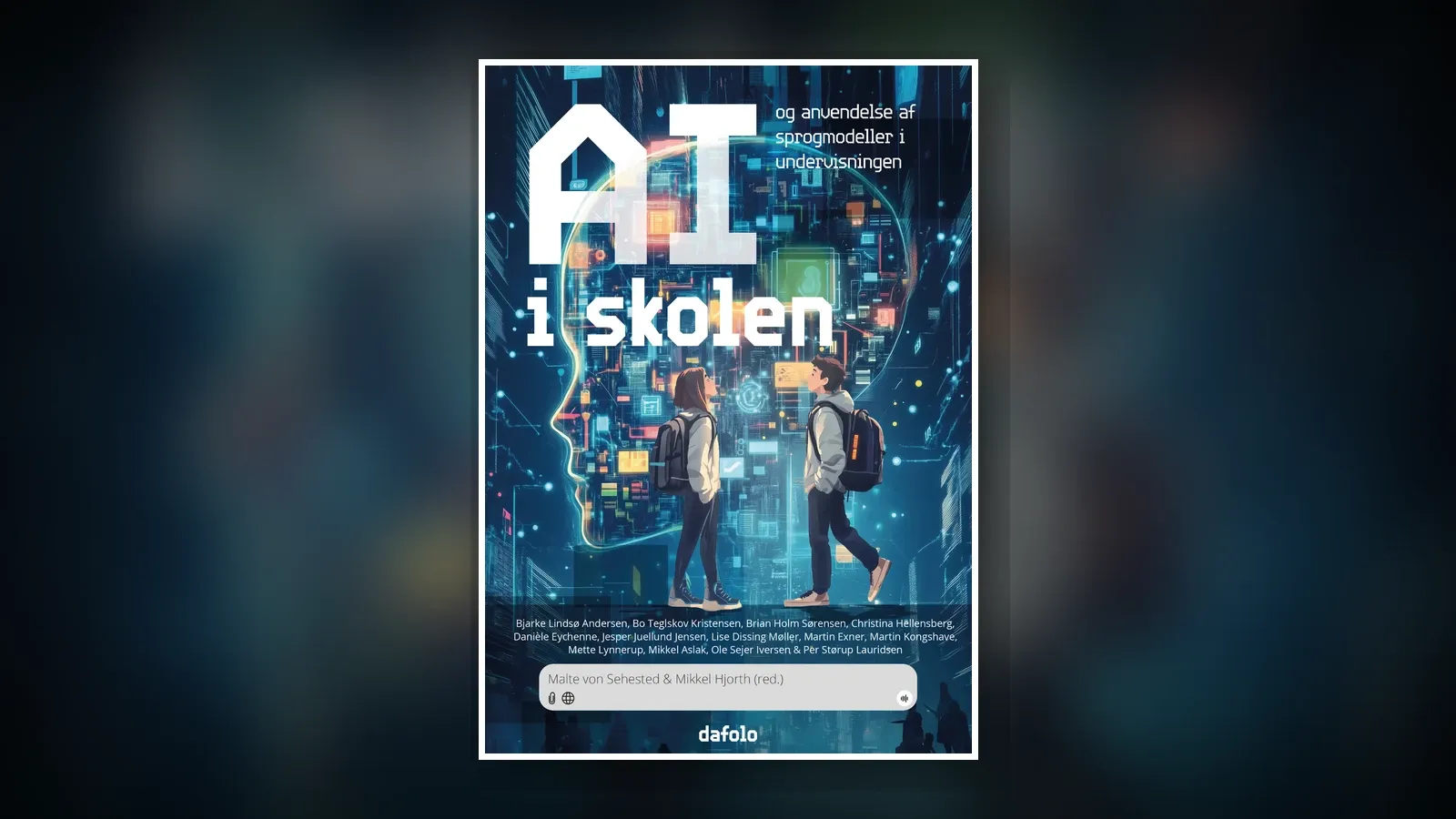
AI i skolen describes how AI and language models such as ChatGPT both challenge traditional forms of teaching and create new opportunities in school. The point is that the technology not only changes the way pupils work, but also places new demands on teachers' pedagogical choices, pupils' critical thinking and the school's overall approach to teaching. At the same time, AI is highlighted as a tool that can enhance learning, differentiation and creativity when used thoughtfully and responsibly.

Language: Danish 
Publication date: 02-04-2025
ISBN13: 9788772343907
Publisher: Dafolo
Beneficial Intelligence

Beneficial Intelligence

This article has been machine-translated into English. Therefore, there may be nuances or errors in the content. The Danish version is always up-to-date and accurate. Read the original Danish article here.

In the book Gunstig intelligens by Carsten Lund Pedersen and Thomas Ritter, readers are offered a practical, business-oriented guide to navigating artificial intelligence (AI). The book addresses the gap between the often abstract expectations of AI and the concrete, realisable value that an organisation can achieve.

The core of the book is the introduction of the so-called G.U.N.S.T.I.G. logic. It is a structured process model designed to ensure that the implementation of AI projects is well considered and delivers real value.

It is aimed particularly at leaders, IT specialists and consultants, but also at anyone working to translate the potential of artificial intelligence into practical organisational and business development.

Language: Danish 
Publication date: 08-04-2025
ISBN13: 9788759344972
Publisher: Samfundslitteratur
40 AI Activities for Your Classroom

40 AI Activities for Your Classroom

This article has been machine-translated into English. Therefore, there may be nuances or errors in the content. The Danish version is always up-to-date and accurate. Read the original Danish article here.

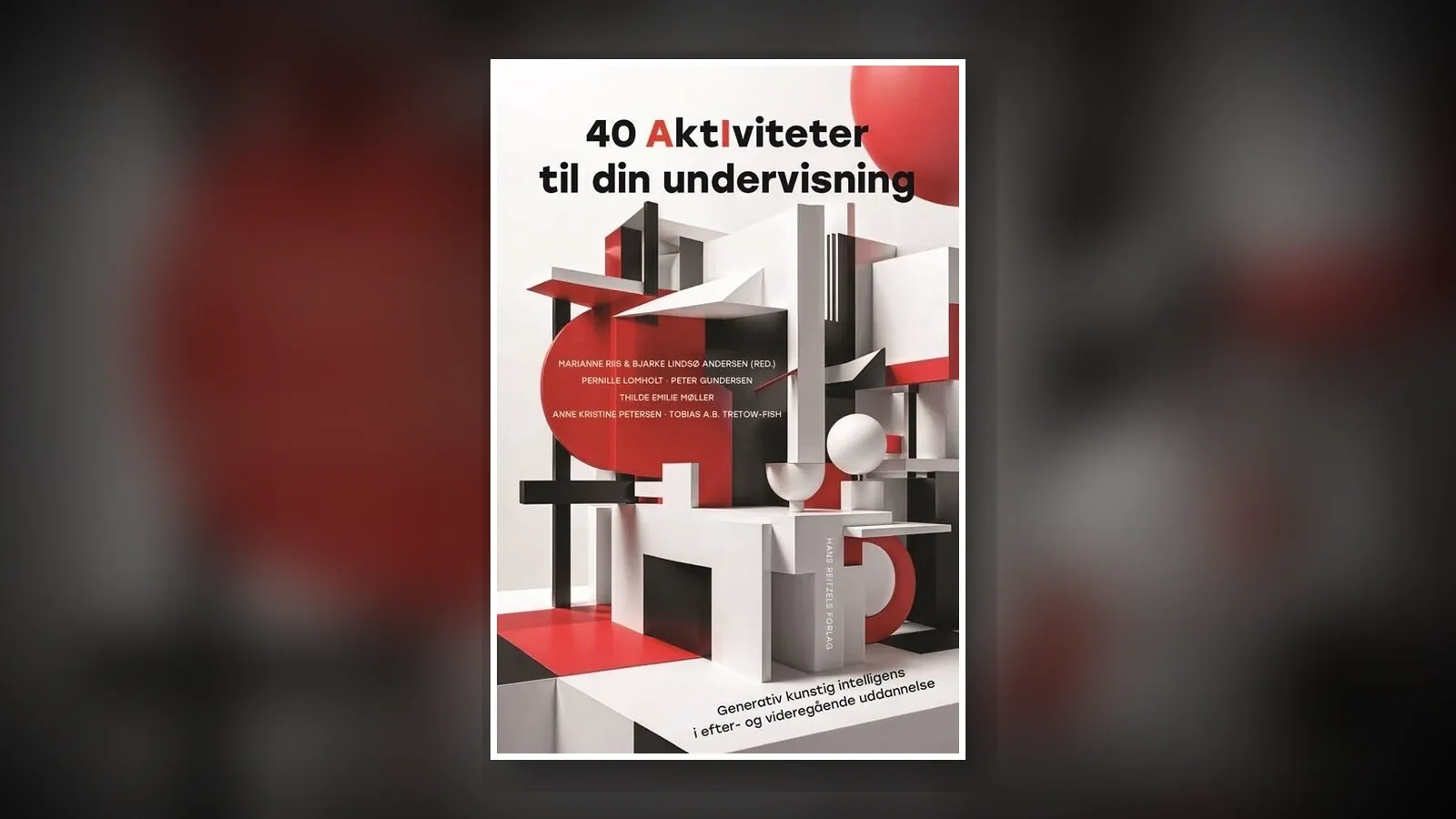
The book is aimed at educators who want to work more actively with AI but are looking for a safe place to start. It explains how generative AI can be used in teaching in ways that are critical, creative and pedagogically responsible. The starting point is that many educators are curious about the technology, yet unsure how, in practical terms, it can be used.

The content is organised around 40 practice-oriented activities that show how AI can be integrated before, during and after teaching across subject areas. The book emphasises that AI can be used not only to support learning and assessment, but also as an opportunity to develop students’ technological understanding. At the same time, readers gain a basic understanding of how the technology works and the ethical and subject-related challenges that accompany the use of AI.

Language: Danish 
Publication date: 23-05-2025
ISBN13: 9788702434064
Publisher: Hans Reitzels Forlag
The Dilemmas of Working Life

The Dilemmas of Working Life

This article has been machine-translated into English. Therefore, there may be nuances or errors in the content. The Danish version is always up-to-date and accurate. Read the original Danish article here.

In this book, Christiane Vejlø focuses on how both optimism and concern shape our relationship with new technology. We become curious and optimistic when AI handles the cumbersome and tedious tasks for us. But the prospect of AI taking over jobs and making us redundant gives rise to concern and fear. According to Christiane Vejlø, both reactions are entirely justified.

Language: Danish 
Publication date: 03-06-2025
ISBN13: 9788771859010
Publisher: Dansk Psykologisk Forlag
Your Guide to Studying Smarter with AI

Your Guide to Studying Smarter with AI

This article has been machine-translated into English. Therefore, there may be nuances or errors in the content. The Danish version is always up-to-date and accurate. Read the original Danish article here.

A guide to effective study habits and wellbeing at universities and in higher education.

The book is primarily intended as a reference work for students at university and in higher education. It is structured around many short chapters, checklists and exercises, which make it easy to dive into exactly the topic you need – whether that is study techniques, the critical use of AI, or ethical considerations.

Assessment: It works best as a practical handbook to return to throughout your studies, rather than a book to read from cover to cover. For students, it offers plenty of practical strategies for using AI wisely day to day, while lecturers can use it especially to understand how their students engage with the technology.

Language: Danish 
Publication date: 31-07-2025
ISBN13: 9788740984392
Publisher: Bookmundo 
AI at Work

AI at Work

This article has been machine-translated into English. Therefore, there may be nuances or errors in the content. The Danish version is always up-to-date and accurate. Read the original Danish article here.

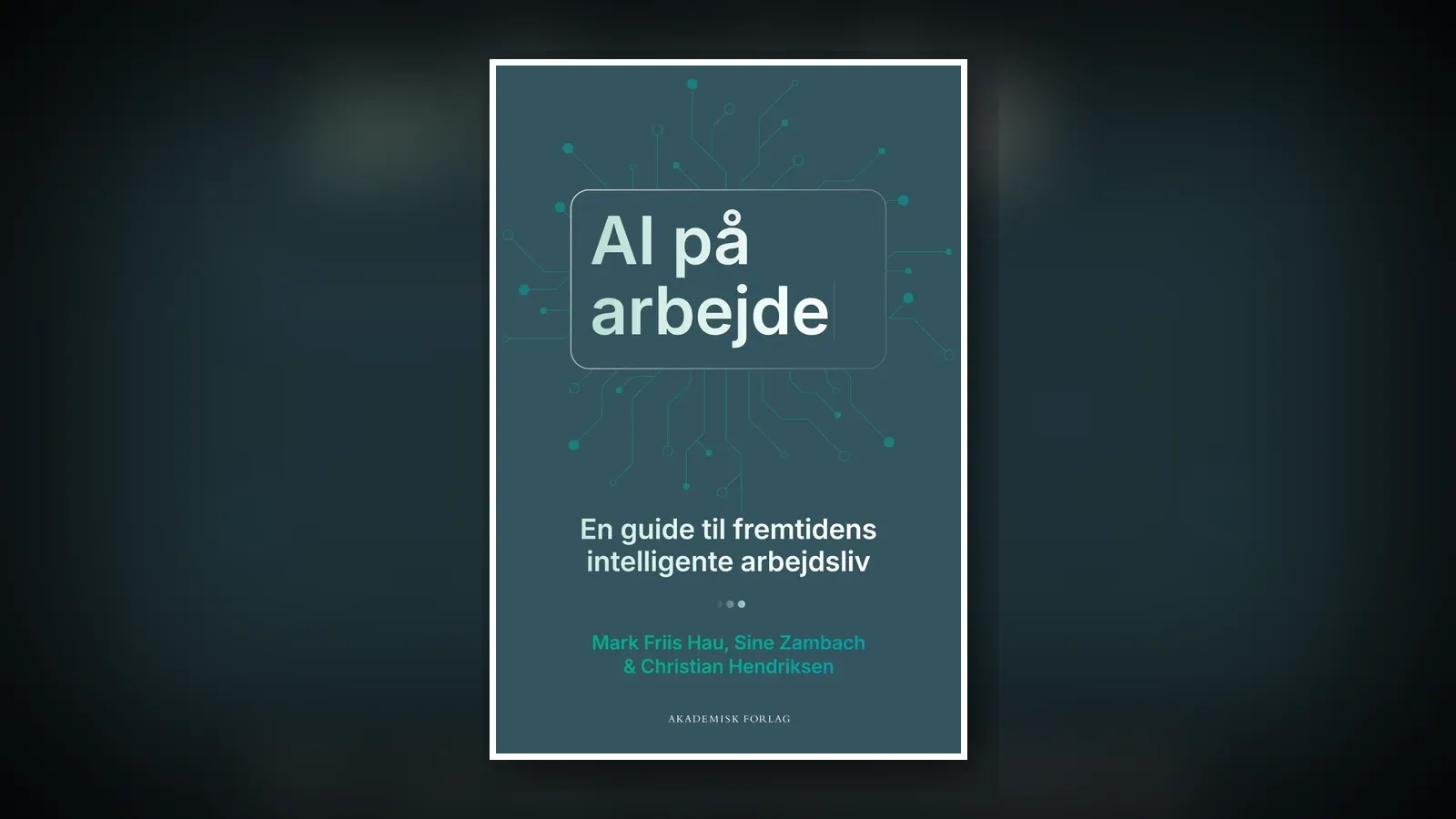
In the book AI på arbejde, the authors discuss how generative AI can be used as a practical and responsible partner in day-to-day work. The book shows how AI can make work faster and more efficient, while at the same time emphasising that this requires an understanding of the technology’s limitations and a responsible focus on quality, data and professional values.

The book combines concrete examples, guides and research, and equips readers with tools to write better prompts, avoid common pitfalls, and assess when AI is best suited to lightening the workload, feedback and idea development, or collaboration. It is aimed at both beginners and managers, and adopts a distinctly Danish perspective on what AI means in practice in workplaces today.

Language: Danish 
Publication date: 19-08-2025
ISBN13: 9788750068006
Publisher: Akademisk Forlag
Artificial Intelligence in Danish

Artificial Intelligence in Danish

This article has been machine-translated into English. Therefore, there may be nuances or errors in the content. The Danish version is always up-to-date and accurate. Read the original Danish article here.

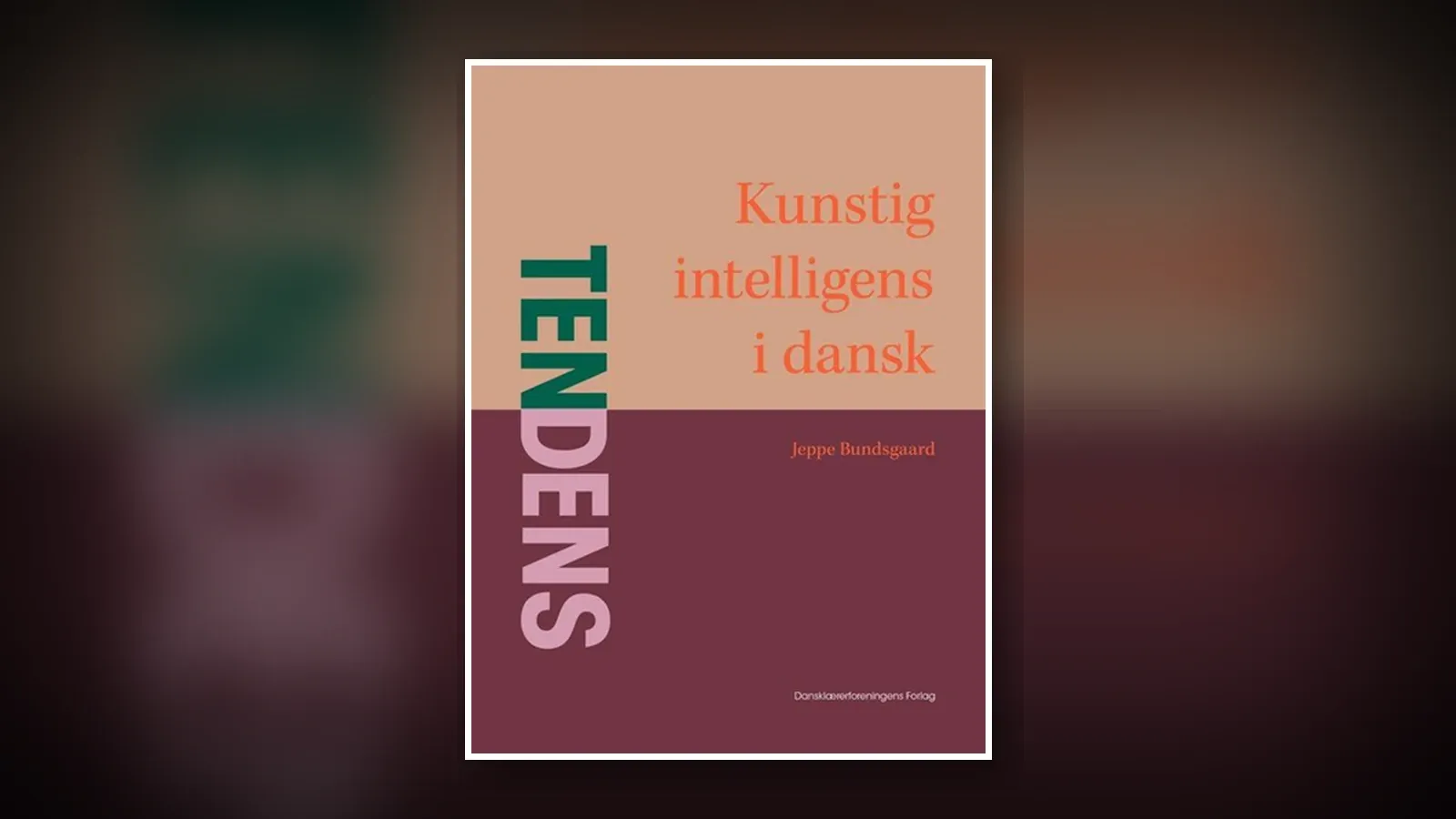
With Kunstig intelligens i dansk, Jeppe Bundsgaard, professor of the didactics of the Danish subject at DPU (the Danish School of Education), Aarhus Universitet (Aarhus University), has written a concise and practical book on how the Danish subject can approach generative artificial intelligence.

The starting point is technological understanding: Students should not just use language models, but understand how they work and be able to engage with them in an informed and responsible way.

The book is aimed at teachers in the upper years of the Danish primary and lower secondary school (folkeskole) and in upper secondary education, Danish subject advisers, as well as students in teacher education and at universities.

Language: Danish 
Publication date: 23-10-2025
ISBN-13: 9788772115658
Publisher: Dansklærerforeningens Forlag

Read a review:

Kunstig intelligens i dansk
10 Things You Should Know About Philosophy and Artificial Intelligence

10 Things You Should Know About Philosophy and Artificial Intelligence

This article has been machine-translated into English. Therefore, there may be nuances or errors in the content. The Danish version is always up-to-date and accurate. Read the original Danish article here.

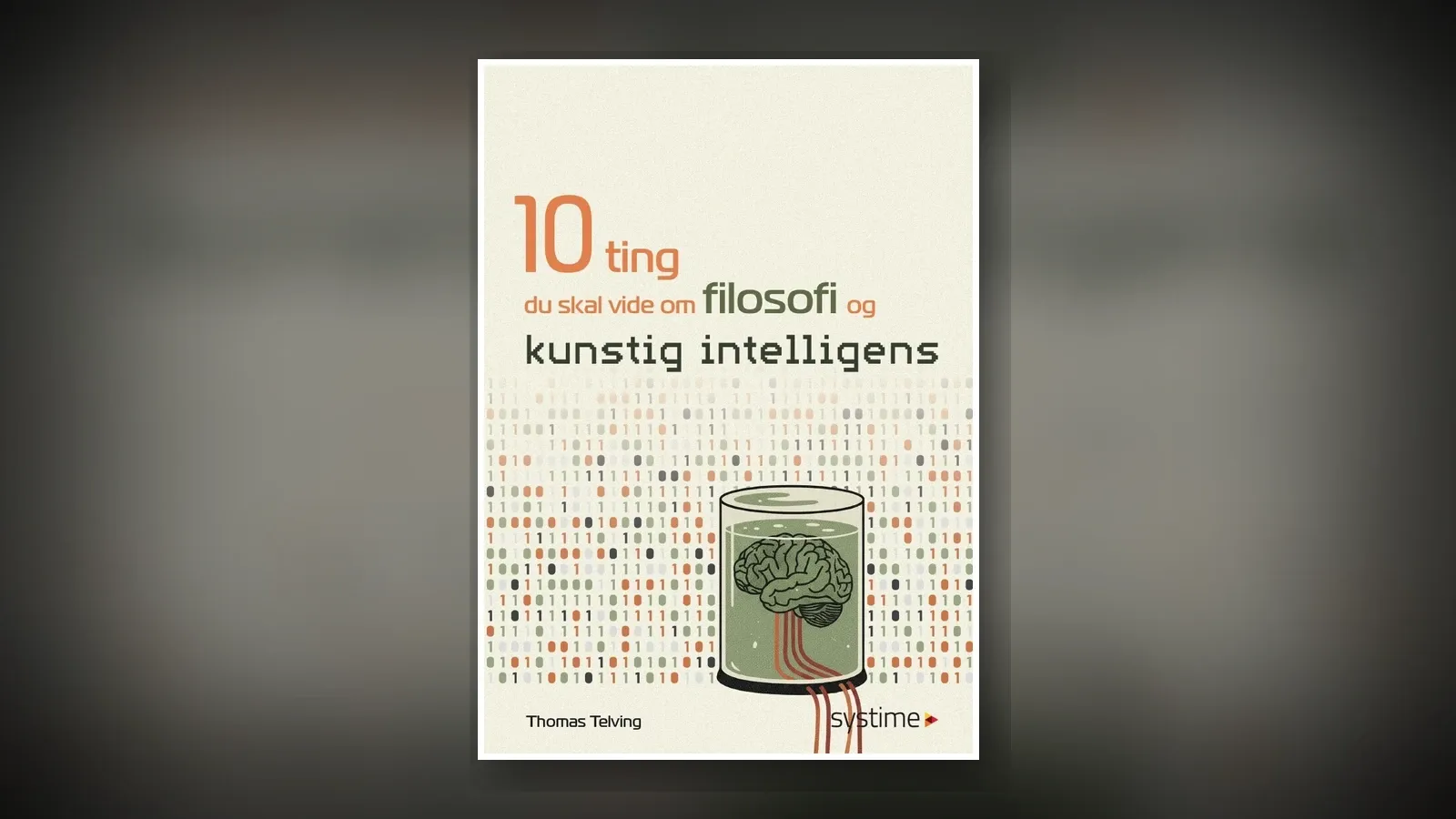
The starting point is the encounter between philosophy and AI. Through ten chapters, Thomas Telving explores how philosophical perspectives can be used to understand the big questions AI raises about consciousness, responsibility, morality, technology, and humanity’s role in the future.

Thomas Telving starts from provocative claims and shows how both classical and modern philosophy can shed light on current debates about AI. The text revolves around themes such as whether AI can possess consciousness, whether machines can be held to account, and how technology affects our attention, thinking, and way of being human. At the same time, it invites reflection on how philosophy can help us engage with a fast-moving technological development more critically and with greater nuance.

Language: Danish 
Publication date: 21-01-2026
ISBN-13: 9788743330721
Publisher: Systime
Leadership Tomorrow - Leading in the age of artificial intelligence

Leadership Tomorrow - Leading in the age of artificial intelligence

This article has been machine-translated into English. Therefore, there may be nuances or errors in the content. The Danish version is always up-to-date and accurate. Read the original Danish article here.

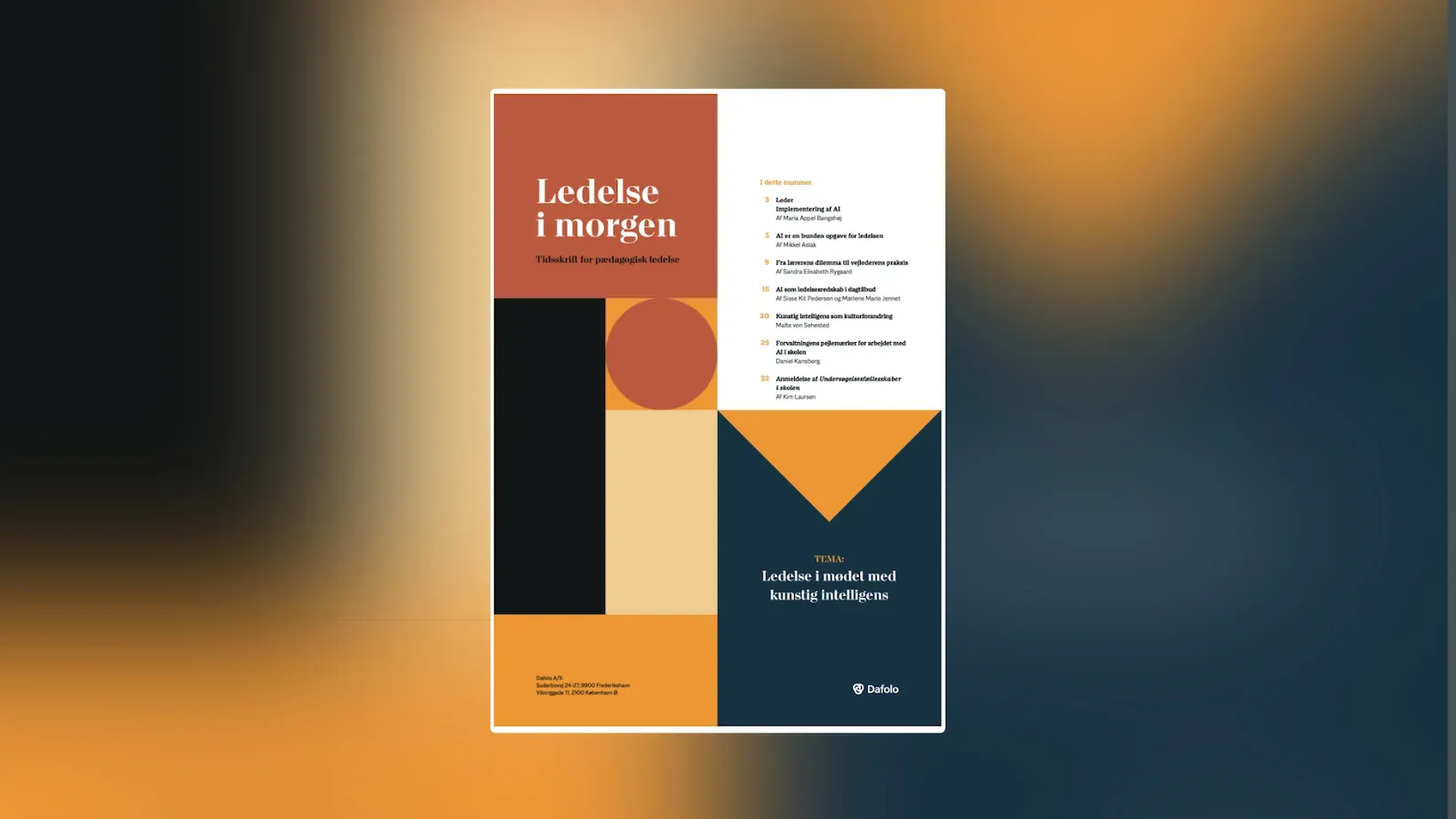
In this issue of Ledelse i Morgen, the focus is on artificial intelligence as a leadership responsibility. The articles explore how leaders can work with the technology strategically, ethically and in practical terms – both in their own leadership practice and in supporting staff in their work.

Language: Danish 
Publication date: Feb 2026
ISSN: 2446-1717
Publisher: Dafolo A/S
Qualitative Research with AI

Qualitative Research with AI

This article has been machine-translated into English. Therefore, there may be nuances or errors in the content. The Danish version is always up-to-date and accurate. Read the original Danish article here.

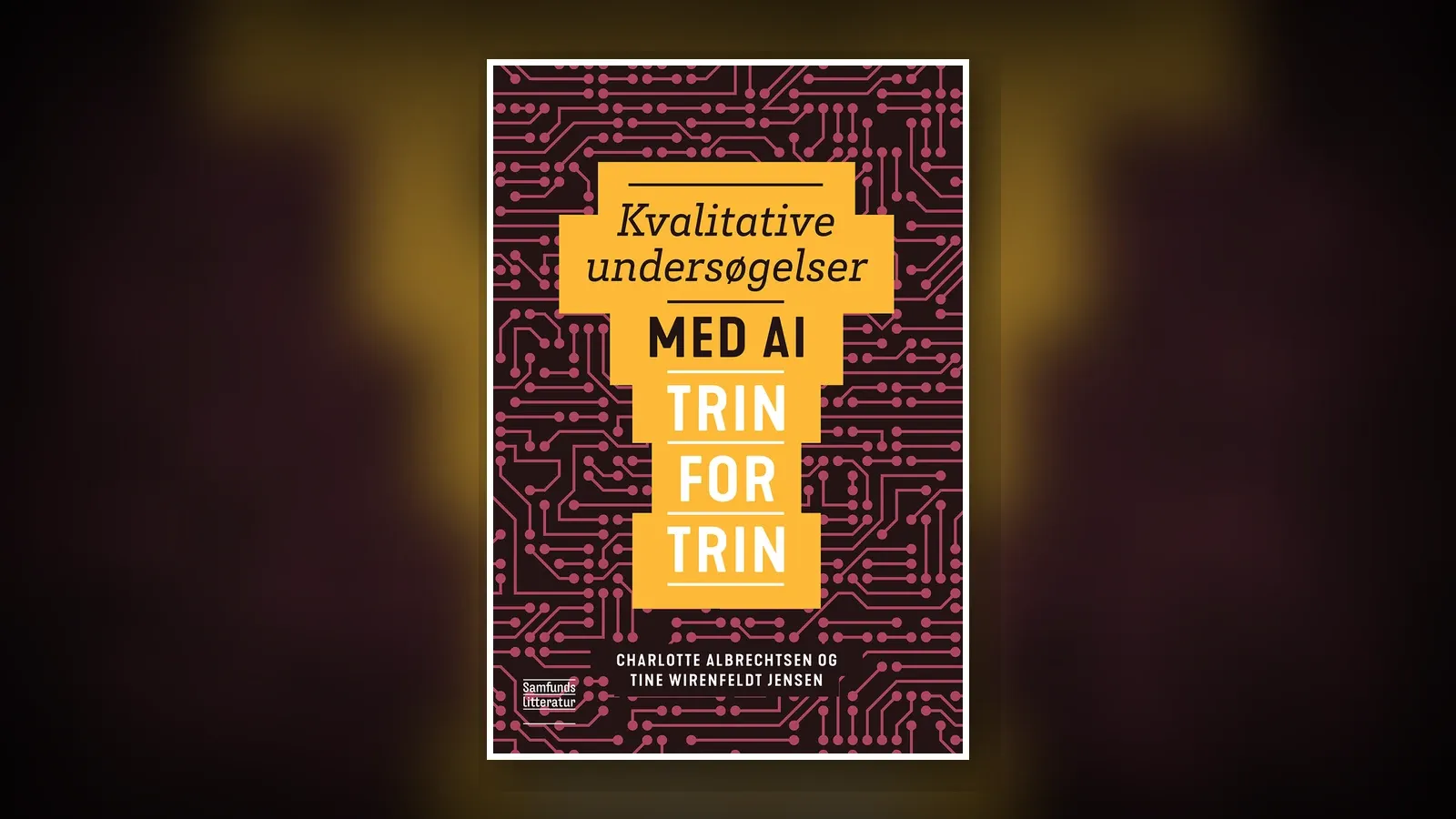
Kvalitative undersøgelser med AI provides a concise and practice-oriented introduction to how generative AI can be used in qualitative research. The key point is that AI should not deliver ready-made answers, but act as a tool that can support reflection, open up new perspectives, and enhance analytical work without weakening the methodological approach.

The book uses concrete examples, explanations and illustrations to show how AI can be integrated into different phases of qualitative projects, while also highlighting important considerations, both when conducting your own studies and when evaluating those of others. The format is brief and accessible, aimed at readers who want a quick and practical starting point for experimenting with AI in qualitative analyses.

Language: Danish 
Publication date: 13-03-2026
ISBN13: 9788759346785
Publisher: Samfundslitteratur
AI in the Humanities

AI in the Humanities

This article has been machine-translated into English. Therefore, there may be nuances or errors in the content. The Danish version is always up-to-date and accurate. Read the original Danish article here.

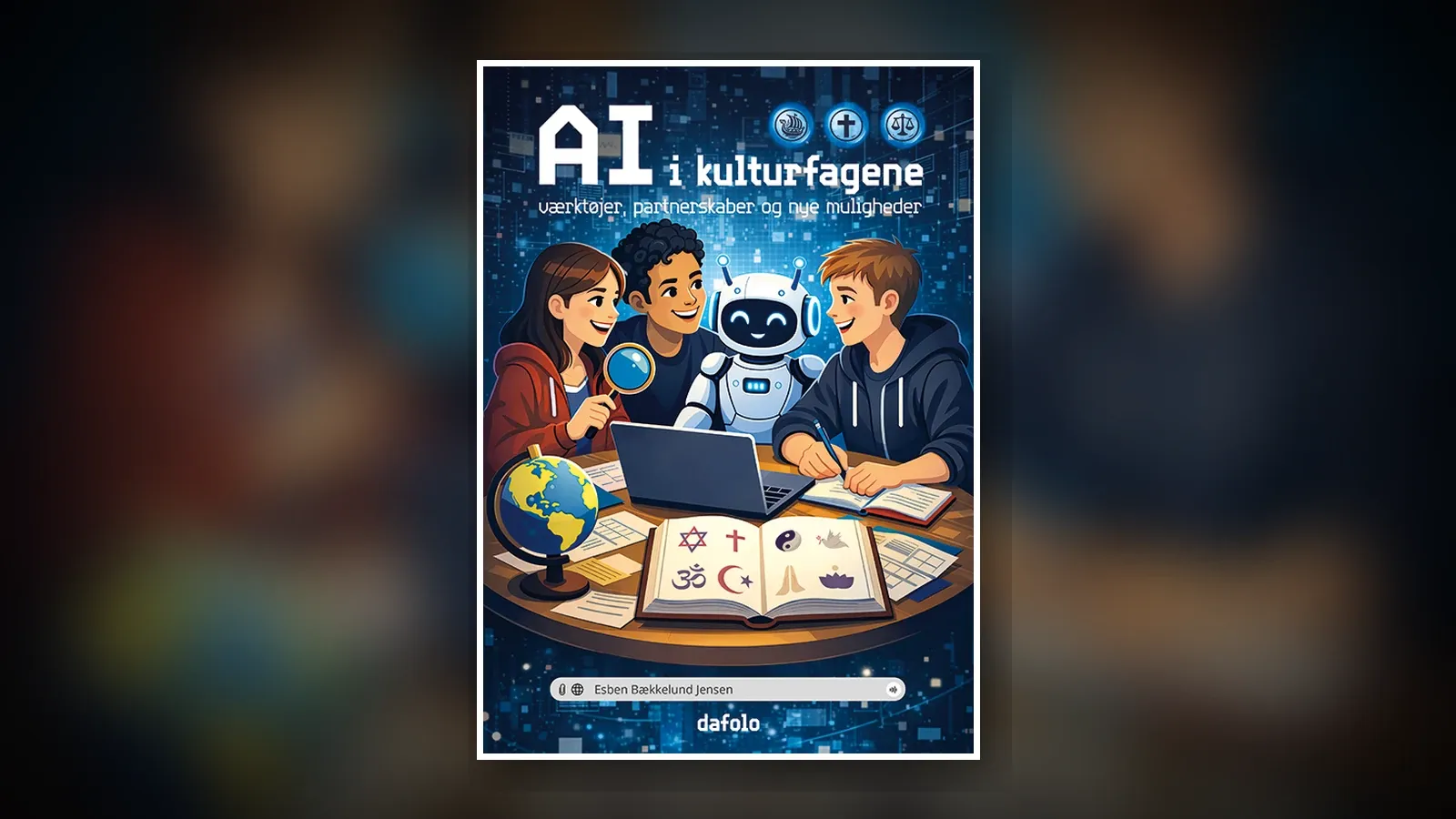
AI i kulturfagene centres on how AI can be used meaningfully in the subjects of history, social studies and Christianity studies in grundskolen (Danish primary and lower secondary education). The booklet shows how AI can serve as a tool and sparring partner in teaching, while pupils work with key disciplinary questions about source criticism, bias, framing, authenticity and credibility.

At the same time, it highlights how AI can open up reflection on ethical dilemmas, power, representation and alternative historical scenarios. The booklet thus links the use of AI closely to the core of the cultural subjects and provides teachers with concrete ways to work in an inquiry-based and subject-specific manner with the technology in teaching.

Language: Danish 
Publication date: 24-03-2026
ISBN13: 9788772345376
Publisher: Dafolo
AI in History

AI in History

This article has been machine-translated into English. Therefore, there may be nuances or errors in the content. The Danish version is always up-to-date and accurate. Read the original Danish article here.

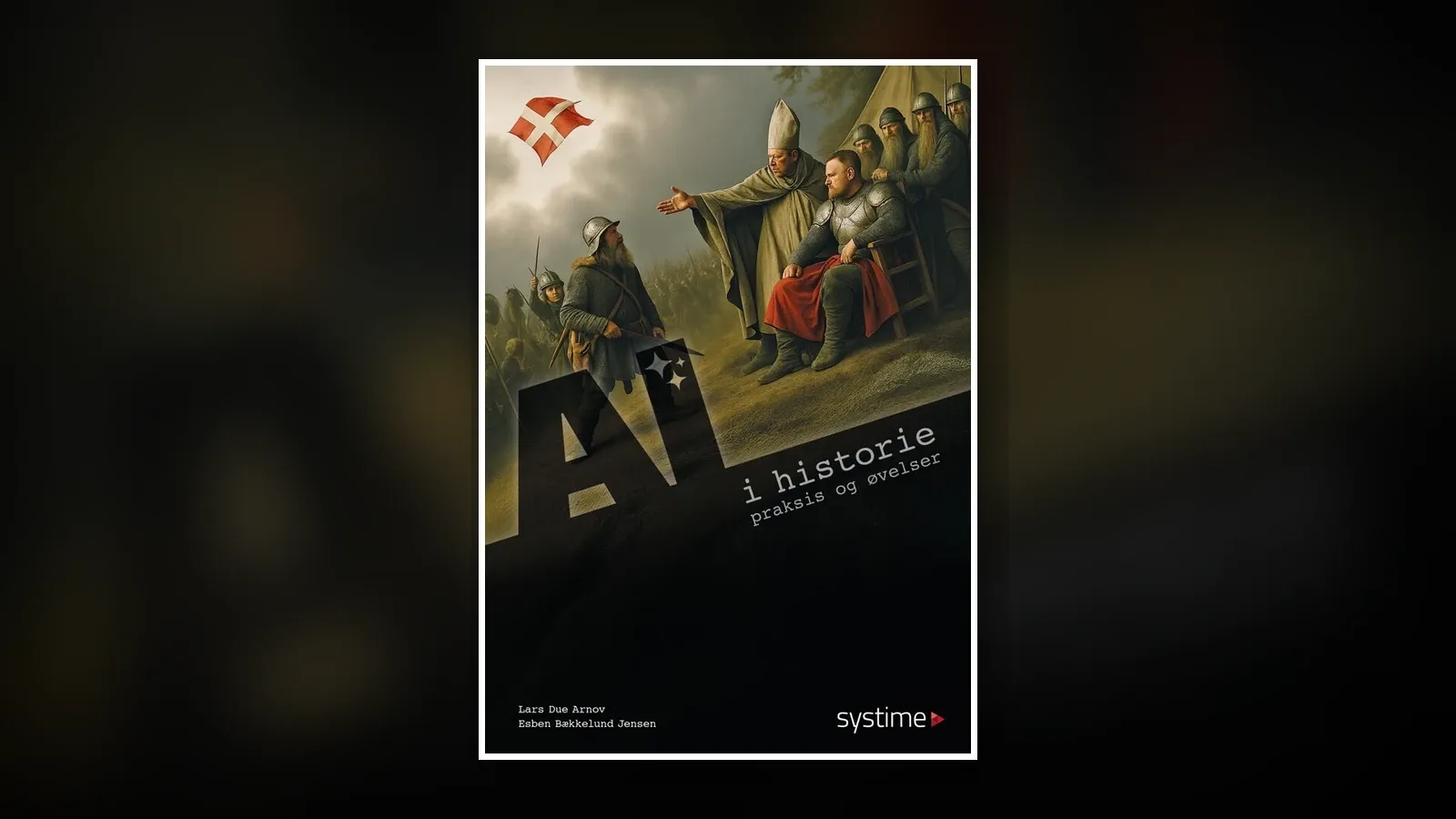
AI i historie – praksis og øvelser is written by Lars Due Arnov, who teaches at Gribskov Gymnasium (upper secondary school (gymnasium)), and Esben Bækkelund Jensen, who works as a teacher in the Danish primary and lower secondary school (folkeskole). Both authors are affiliated with Center for Undervisningsmidler (CFU, Centre for Teaching Materials), and with the book they address history teachers who wish to understand AI as both a disciplinary phenomenon and a pedagogical tool.

The book starts from the premise that students already use generative AI in their everyday lives, but often without a clear awareness of what the technology can and cannot do. The authors argue that history, with its tradition of source criticism, is an ideal place to work with AI. The content therefore focuses both on a critical approach to the technology and on the use of AI in work on uses of history and historical consciousness.

Language: Danish 
Publication date: 07-04-2026
ISBN13: 9788743331292
Publisher: Systime
AI in Lesson Planning

AI in Lesson Planning

This article has been machine-translated into English. Therefore, there may be nuances or errors in the content. The Danish version is always up-to-date and accurate. Read the original Danish article here.

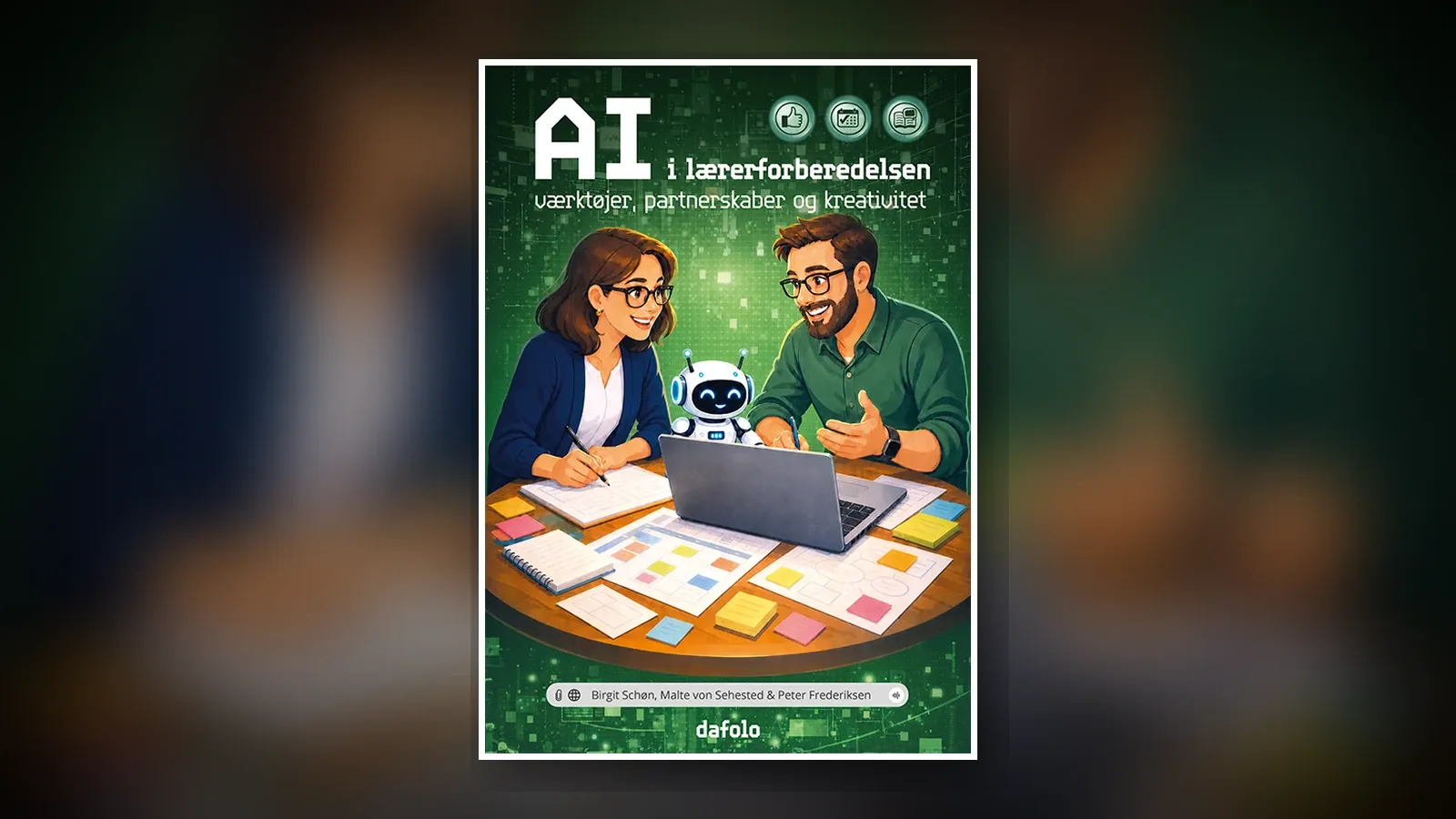
The book places AI where the pressure is felt: in the teacher’s preparation before, during and after lessons. It provides practical approaches for idea generation, structuring, differentiation and feedback, supplemented with prompts and step-by-step guides.

Its strength lies in a sober framing. AI is not presented as a replacement for the teacher’s professional expertise, but as a tool that provides an overview and informs pedagogical decision-making.

Language: Danish 
Publication date: 01-06-2026
ISBN13: 9788772345413
Publisher: Dafolo
Embarrassing Uncles — and other things we'll need in a future with AI

Embarrassing Uncles — and other things we'll need in a future with AI

This article has been machine-translated into English. Therefore, there may be nuances or errors in the content. The Danish version is always up-to-date and accurate. Read the original Danish article here.

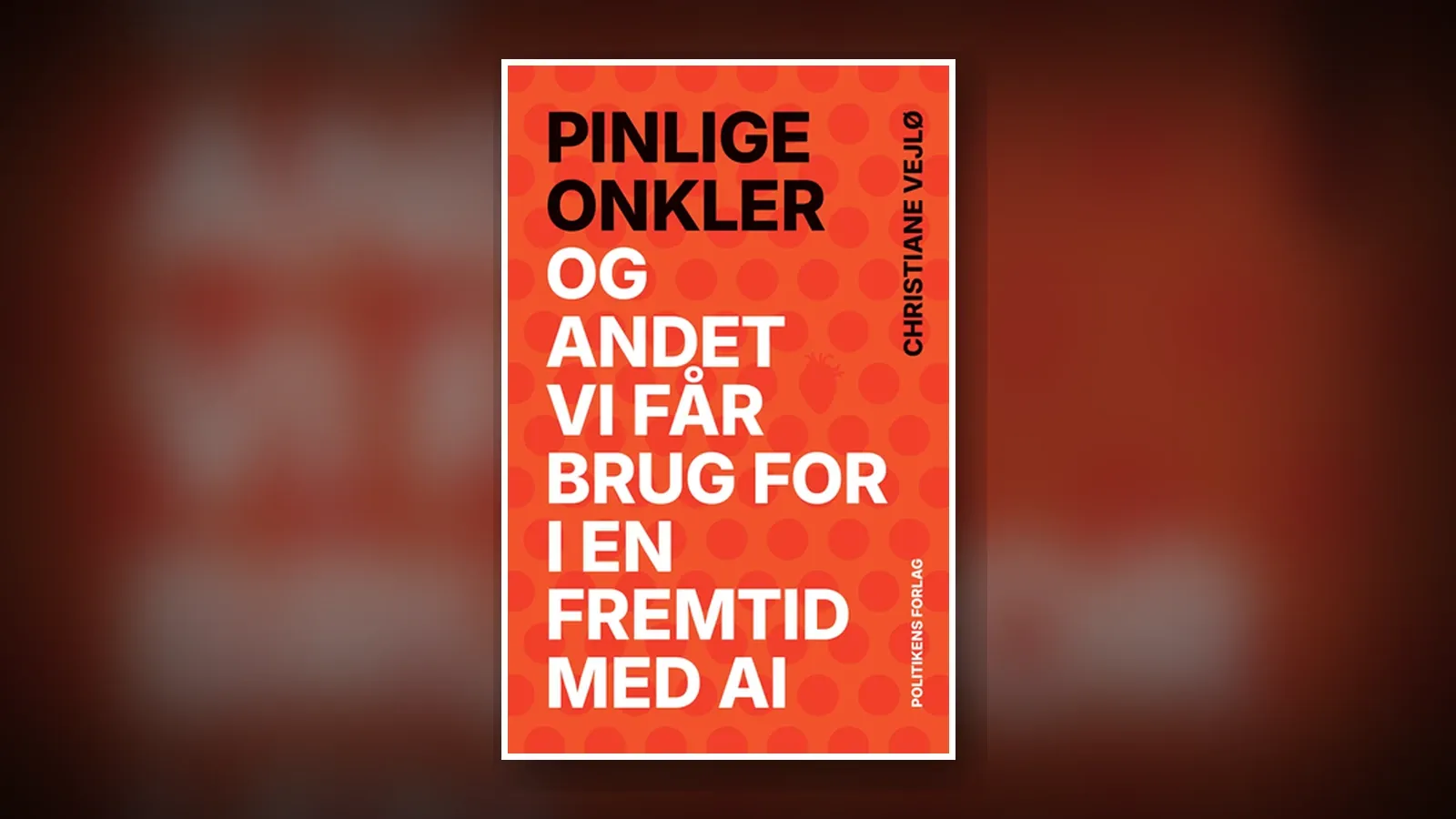
Christiane Vejlø’s Pinlige onkler (Politikens Forlag, 2026) is a book that deserves attention. It revolves around a question well worth asking right now: What happens to us as we increasingly say yes to artificial intelligence and let go of tasks and experiences that have until now been closely tied to being human?

The book’s focus is what we risk losing in the pursuit of efficiency and optimisation: doubt, boredom, friction, mistakes, and the imperfect. In other words, everything that is not necessarily measurable or useful, but which may precisely be what sets us apart from machines. The title refers to the well-liked but occasionally embarrassing uncle at the family celebration: Are we prepared to replace him with a mechanical toastmaster because we have allowed a future with no room for corny jokes and spontaneous slip-ups?

Language: Danish 
Publication date: 03-06-2026
ISBN13: 9788743901143
Publisher: JP/Politikens Forlag
Strategic Approaches to AI in Schools

Strategic Approaches to AI in Schools

This article has been machine-translated into English. Therefore, there may be nuances or errors in the content. The Danish version is always up-to-date and accurate. Read the original Danish article here.

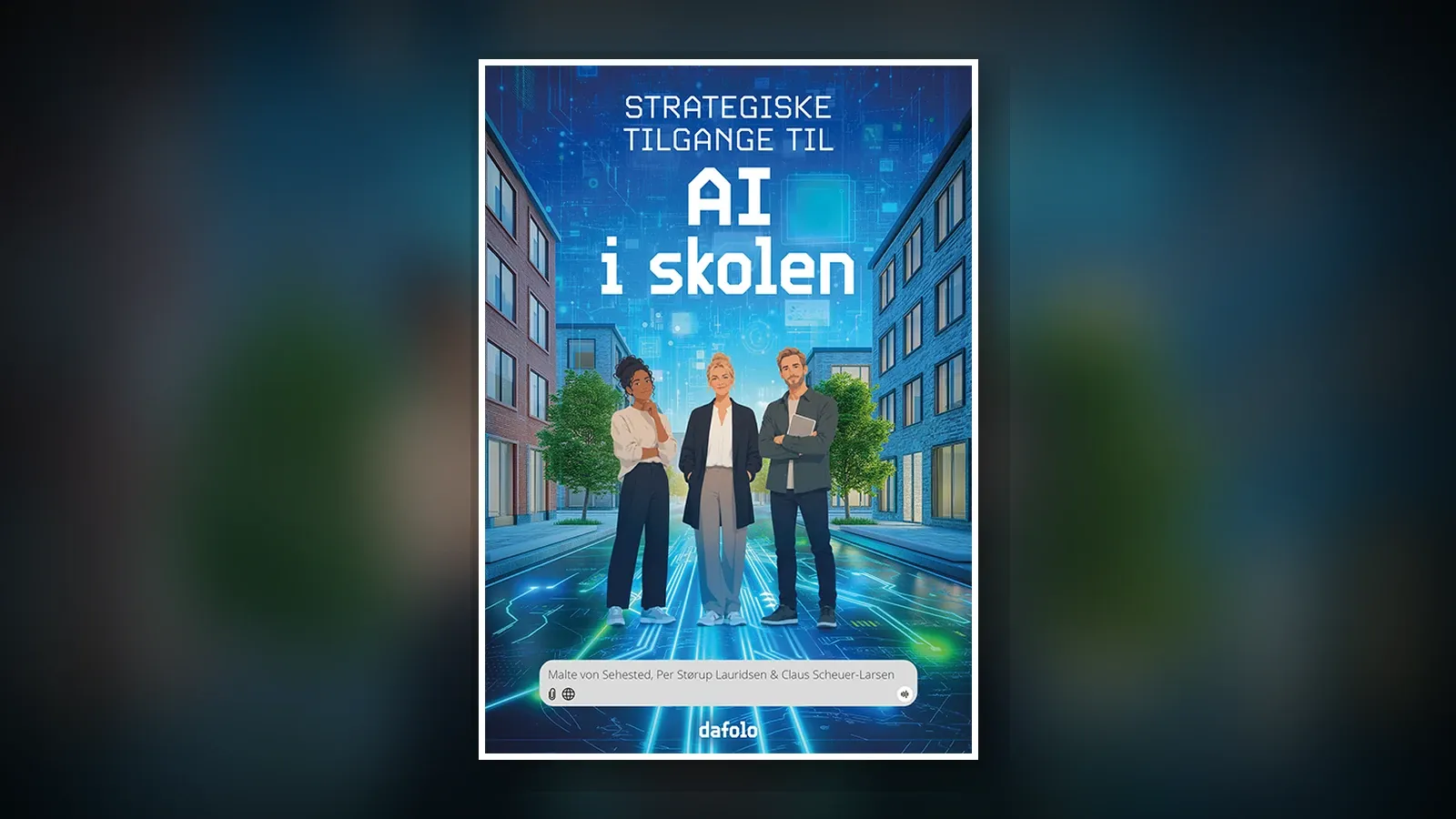
The book draws on concrete experiences from schools and municipalities that are already working with AI strategies, and shows how working with AI is about far more than technology.

The book gives you:

  • Case studies from schools and municipalities that work strategically with AI.
  • The language and overview to discuss governance, shadow AI, subject expertise, assessment and responsibility.
  • Reflective questions, workshop ideas and concrete process techniques that can be used directly in leadership teams, subject teams and educational development programmes.
Language: Danish 
Publication date: 10-06-2026
ISBN-13: 9788772345185
Publisher: Dafolo
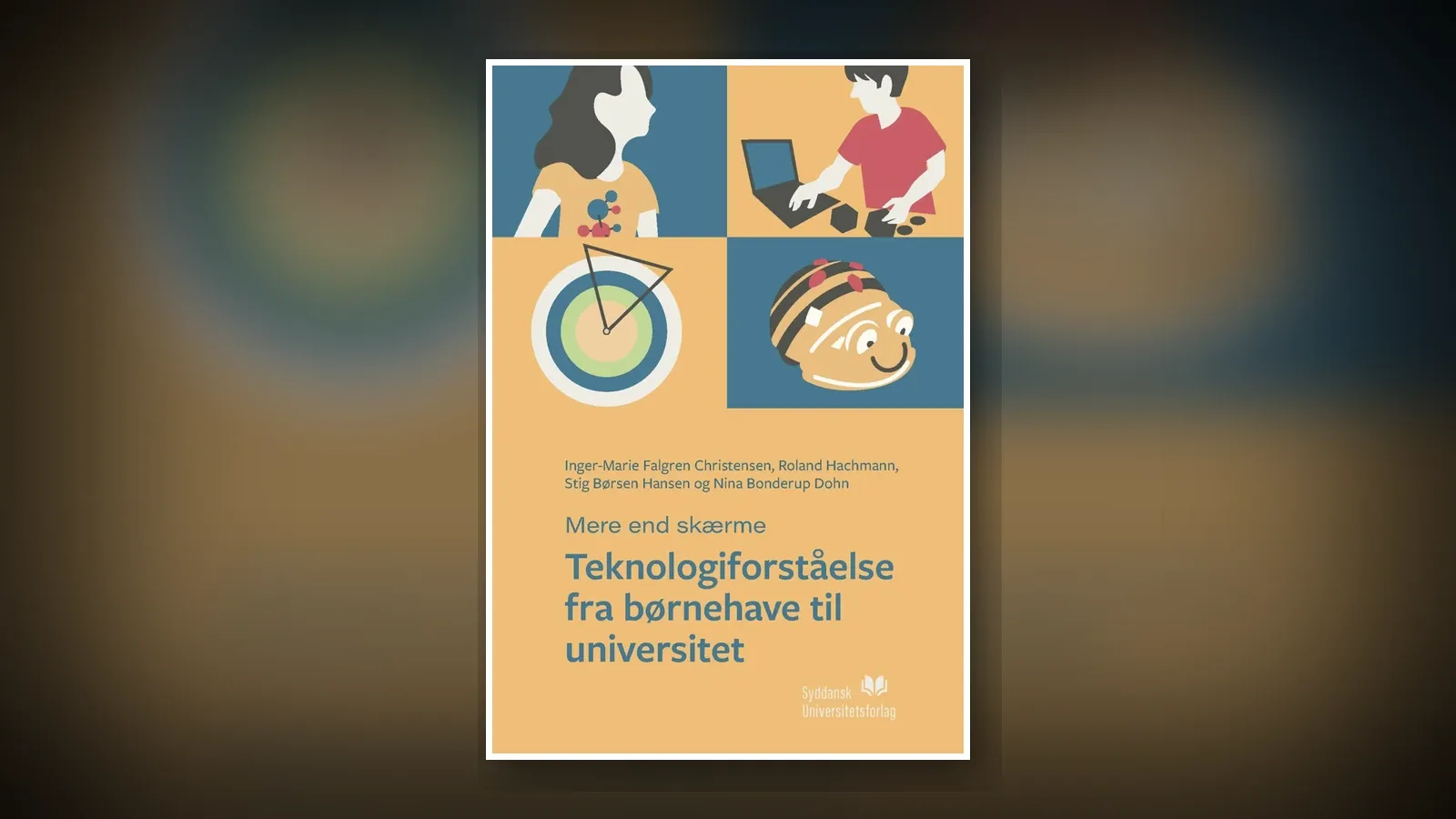
Technological Understanding from Preschool to University

Technological Understanding from Preschool to University

This article has been machine-translated into English. Therefore, there may be nuances or errors in the content. The Danish version is always up-to-date and accurate. Read the original Danish article here.

A book for anyone who wants to incorporate computational things and take a more nuanced approach to technological understanding – in pre-school, in primary and lower secondary school, in upper secondary school (gymnasium) or in higher education.

This book offers a nuanced perspective on technological understanding and explains how not only screen-based technologies but also computational things can be incorporated into pedagogical activities in pre-school and into teaching in primary and lower secondary school, upper secondary school (gymnasium) and higher education. The book clarifies key concepts and provides examples that illustrate possible practices with computational things. Computational things are physical things that can be used to carry out algorithmic processes: they are found in robots, in paper-based decision trees – and in the learners themselves, when they physically model these processes. Computational things can be used in embodied learning processes across all subjects and curriculum themes and contribute to a nuanced understanding of technology.

The book is intended for anyone who wants to incorporate computational things and work with technological understanding in a more nuanced way – from pre-school to university.

Language: Danish
Authors: Inger-Marie Falgren Christensen, Roland Hachmann, Stig Børsen Hansen, Nina Bonderup Dohn 
Publication date: 2026
ISBN13: 978-87-408-3615-8
Publisher: Syddansk Universitetsforlag (University Press of Southern Denmark)